
The colonial poisoning of the world: back to France (3/3)
The Rewilding Cultures Mobility Conversation grant supports sustainable, inclusive artistic mobility that takes account of creators’ personal circumstances. Kim Đoan Quốc, the 2025 grant recipient for ‘Foliating Memories’, talks to Makery about their project spanning Viêt Nam and France, which addresses Agent Orange pollution by blending ecological memory with visual arts research. Third and last chapter.
Kim Đoan Quốc is a visual artist working at the intersection of installation, video and performance. Their work examines the relationship between humans and their ecosystems, interweaving themes of the body and the plant kingdom into layered narratives. The concept of ‘safe space’ is central to their thinking, explored as a means of addressing social justice, ecology and collective wellbeing. In 2025, Kim travelled to Việt Nam for a six-month research trip in preparation for the project Foliating Memories, which deals with Agent Orange pollution. The following account, published in three articles, details the processes of reflection and production surrounding this piece.
I’m returning to France in December after nearly six months living in Vietnam. It’s cold and fruits here have no flavour. I’m spending a lot of time in the studio finishing the pieces in time for the exhibition and the unveiling of the memorial to the victims of Agent Orange, both of which are due to take place in the spring.
The memorial to the victims of Agent Orange and the mangrove tree
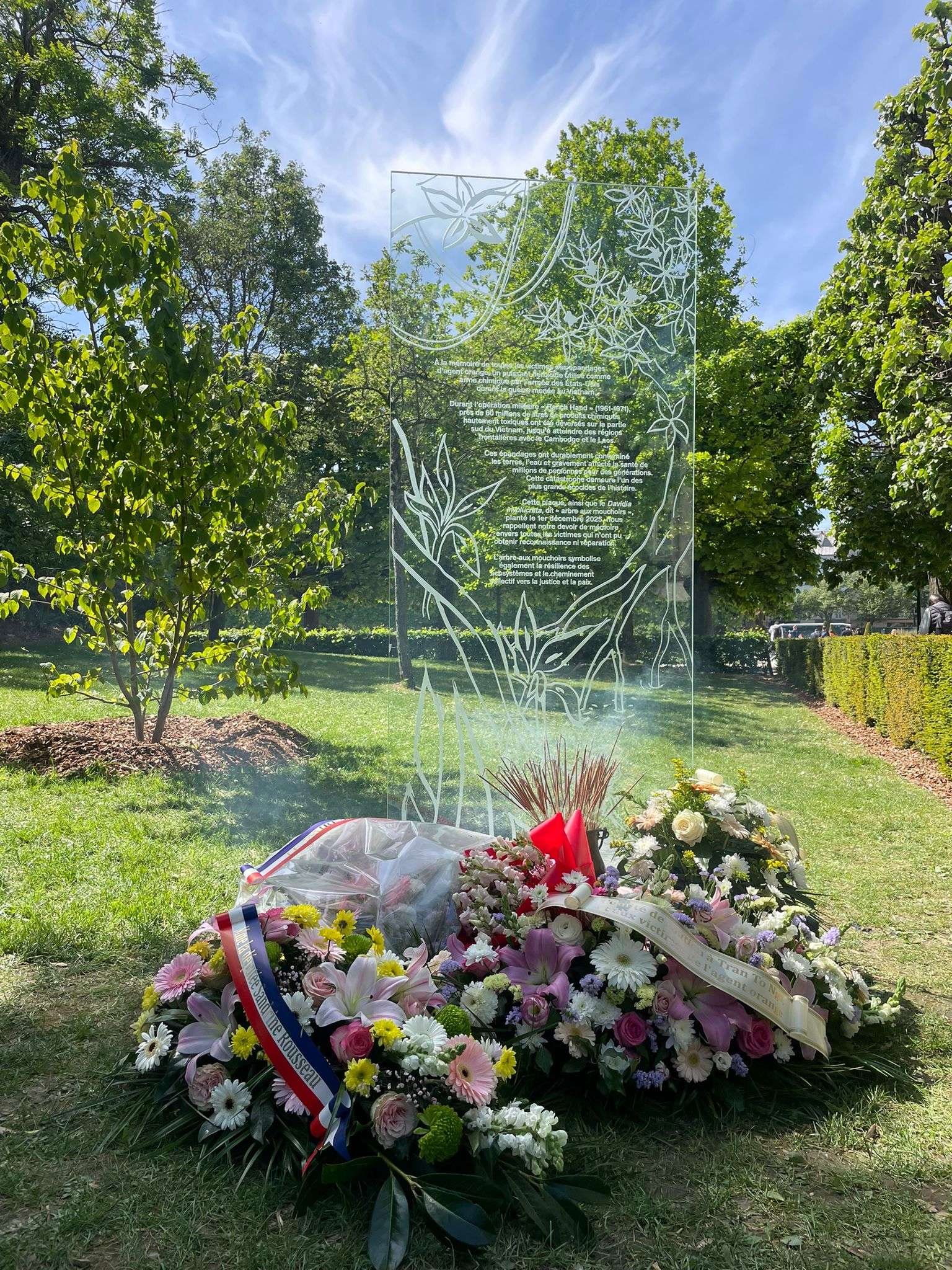
Collectif Vietnam Dioxine and Support Committee to Trần Tố Nga raised funds in collaboration with the city hall of 13th district of Paris in order to build the first monument for the victims of Agent Orange in Europe, in Choisy park. As a member of Collectif Vietnam Dioxin, I was thrilled when being asked to draw illustrations to frame the collective text and help to figure out the monument aesthetics. It was Kim Vo Dinh, one of the collective’s founding members, who rang me whilst I was still in Sài Gòn, in the midst of learning lacquer painting, to ask me to take part in the project. The neighborhood was the only one I knew in Paris from childhood, driving once a month from our village in the north of France to Tang Frères supermarket, a giant south east asian market, located a few minutes walk away from the park. 13th district of Paris is the home of South East Asian diaspora in Paris, it is where you find the best phở, the only lion dance clubs and a whole rainbow of moon cakes flavors. To participate in this monument was an honor. Being part of this monument is an honour that validates my place in the community, both as an artist and an activist; all of this means deeply me.
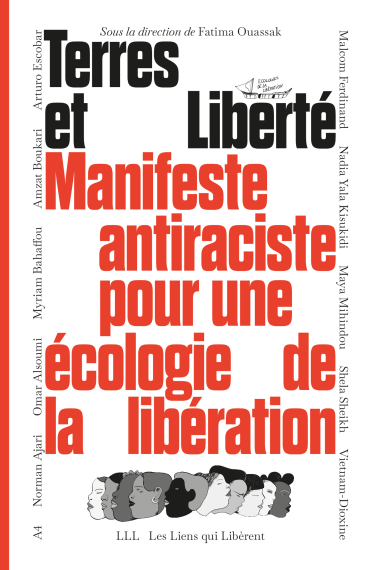
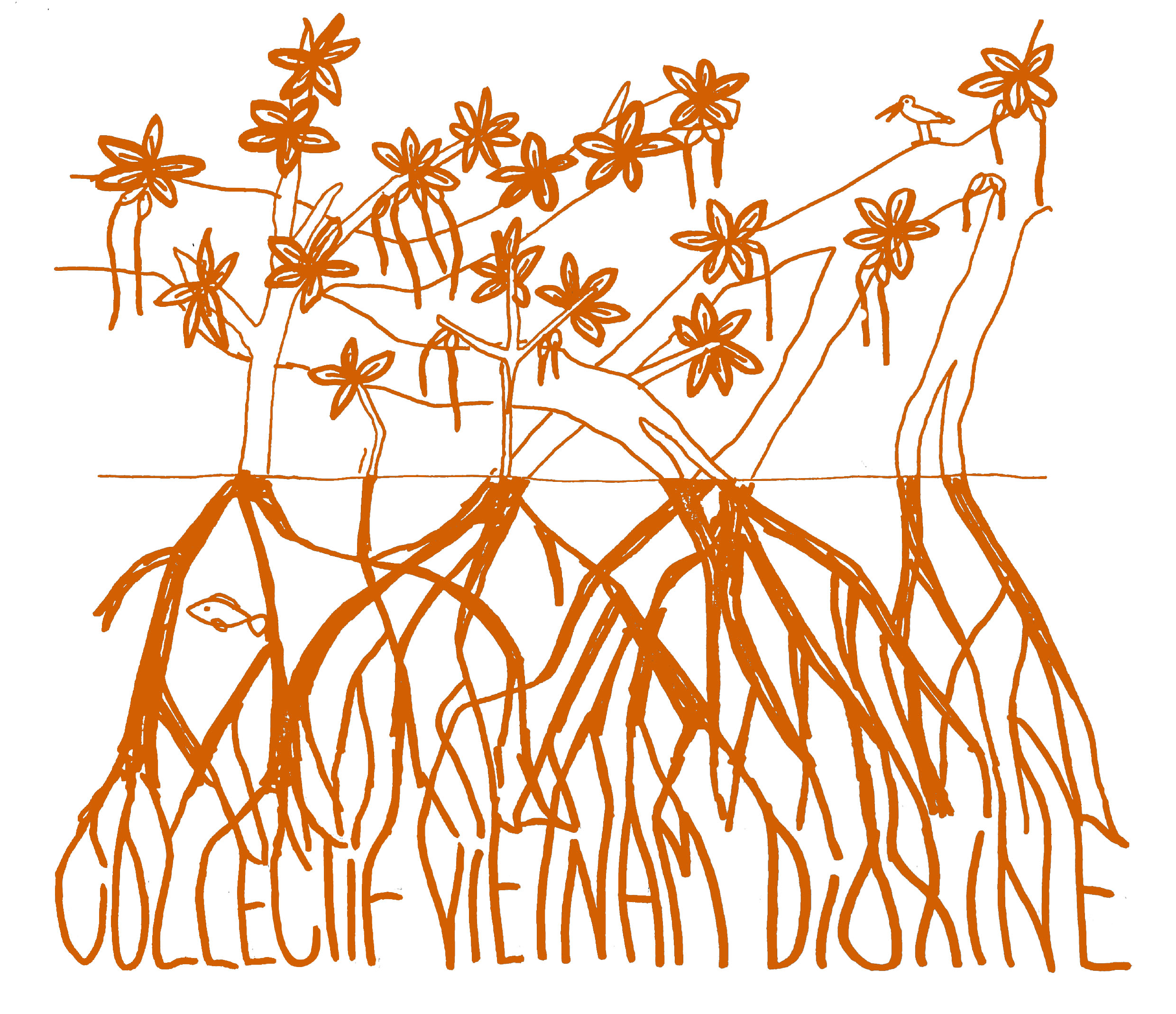
For some time now, we had been discussing mangroves within the collective. It first started in a discussion with the curator Chris Cyrille-Isaac, referring to Edouard Glissant in his project Mangrovité in collaboration with Sarah Matia Pasqualetti ; this tree would be an allegory for the Caribbeans to be the center of the world, where the diasporic propagulas from everywhere all end up, as we were talking about Chlordecone and Agent Orange and where our paths would cross from Việt Nam to Reunion. Then we discussed with my friends Orian Castelli and Marvin Freyne what Mangroves are : trees without roots, only propagulas that allows them to cross oceans and grow on every paradise beach from South America to Caribbeans and Việt Nam. They used this allegory in the collective text of Collective Vietnam Dioxin that was published in Terres et Liberté, Manifeste antiraciste pour une écologie de la libération (directed by Fatima Ouassak), published by Les Liens qui libèrent, 2025 .Earlier, together with graphic designer Valentin Bigel, we had also designed a T-shirt print for the collective, depicting mangroves. It was therefore a logical next step to place this tribute to the victims of this poison amongst the branches of a mangrove – the ecosystem that has recovered best from the pollution caused by the war and which is home to living beings in the air, on land and in the water – as a statement of hope and strength.
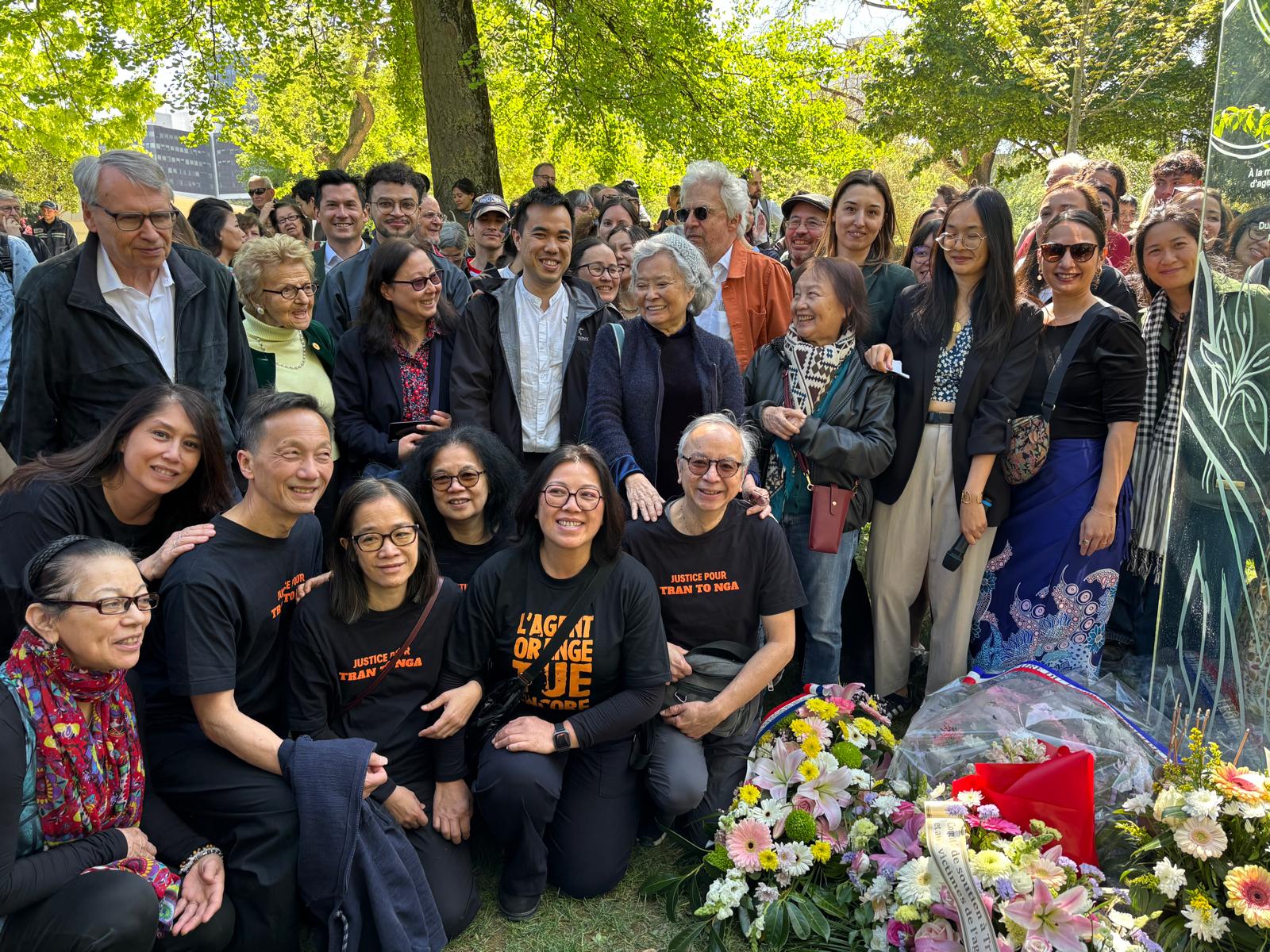
The day of the opening arrived in no time, during the exhibition at the Albert Kahn Museum. It wasn’t until I arrived on the scene that I realised so many journalists, fellow organisations, members of the Vietnamese diaspora and political figures were there. Thuy-Tiên Hô and Trần Tố Nga were there, along with the lawyers from the Bourdon law firm who are supporting the case. Our comrades from DSAVEC, who are campaigning on behalf of the victims of chlordecone, were there. A delegation from Việt Nam had also made the journey: Vietnamese activists campaigning for the recognition of Agent Orange victims had joined us in Paris. It was impressive. They work as army officers because that is how support for victims is organised in Việt Nam. For us, as decolonial and anti-militarist activists, it is special to share this special moment with them after the ceremony organised by the 13th arrondissement council. We sit around the meeting table at the Foyer Vietnam, which we know so well, with generals and colonels to organise our efforts together. Despite our different languages and methods, we are moving forward hand in hand towards recognition of the damage caused by chemical warfare, and towards building more bridges to send resources to the victims from Europe.

“Foliating Memories” installation at Albert Kahn Museum, safe spaces and trauma transmissions
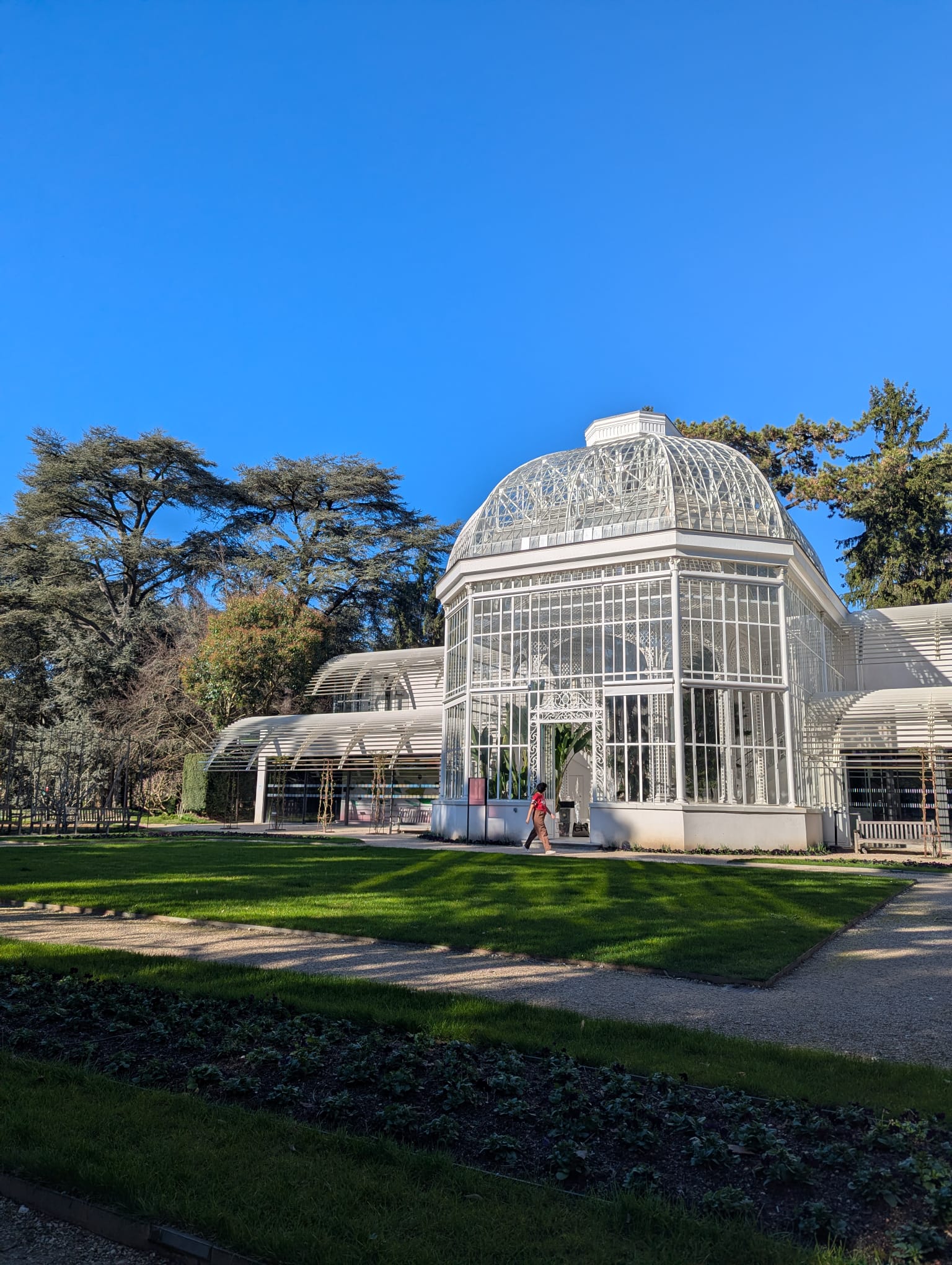
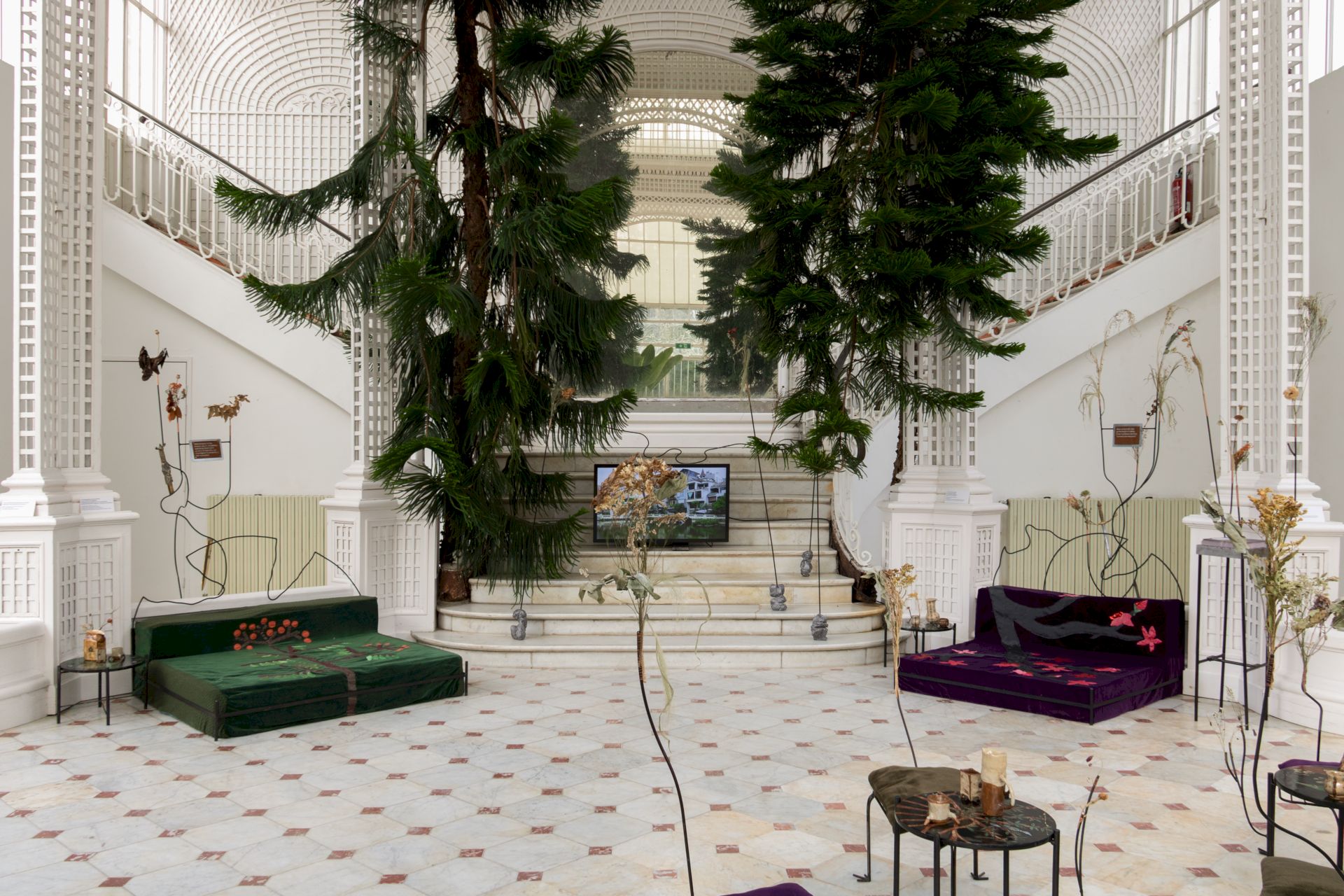
Thanks to an opportunity given by the 68th Salon de Montrouge, an exhibition was scheduled a few months after my return to France from Việt Nam in order to show the pieces I produced there and our collaboration with Marvin at Albert Kahn Museum. Albert Kahn Museum is a county museum that hosts colonial archives from the philanthropist Albert Kahn, who organized scientific and photographic missions around the world from 1900 to the 30’s in collaboration with the geographer Jean Brunhes, resulting in a very impressive and rare collection of autochromes images, a colour film photography process on glass plates. The museum is also a magnificent botanical garden, partly composed of tree and flower essences brought from those same missions by biologists. The programmation team of the museum suggested that I use the great greenhouse for the show, a giant white greenhouse built in wood in 30’s style that used to host a tea salon.
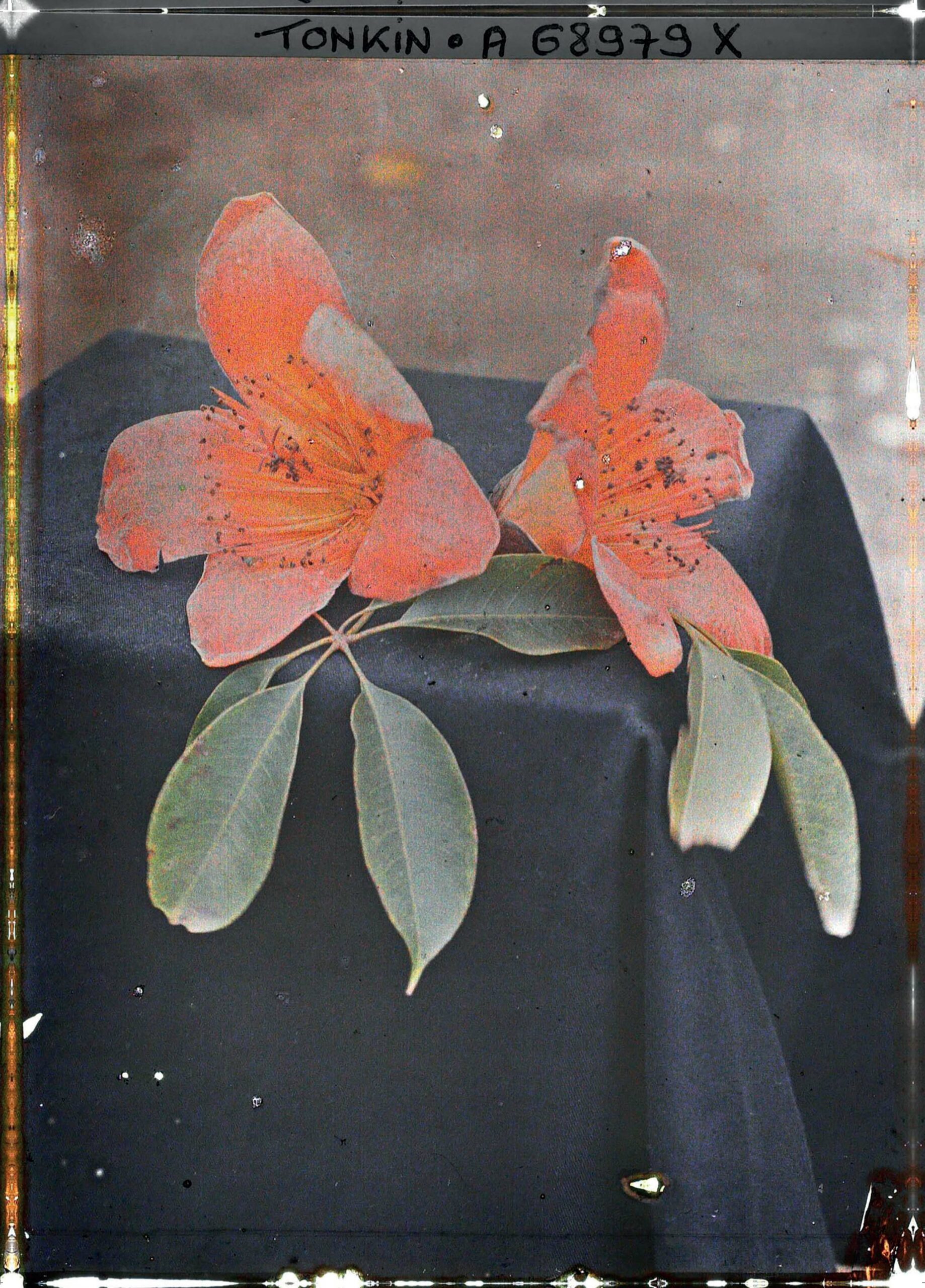
This was the perfect space for the project. The installation is thought to be a space that welcomes the audience and invites them to sit down and rest. Two couches sewed with floral patterns, one with kapok tree flowers, in relation to autochromes from the museum collection taken in Việt Nam, the other with rowan tree branches. Both trees contain mystical and folk perspectives in the regions they grow. For the occasion, I wrote an interpretation of a traditional Vietnamese folk tale “the legend of the Kapok tree” and printed paper versions with reproductions of autochromes representing those flowers to be taken by the audience. Those images were taken by a colonial administrator from the French government. The version of the tale in the installation speaks about friendships and political organisation to make violent elites fall.
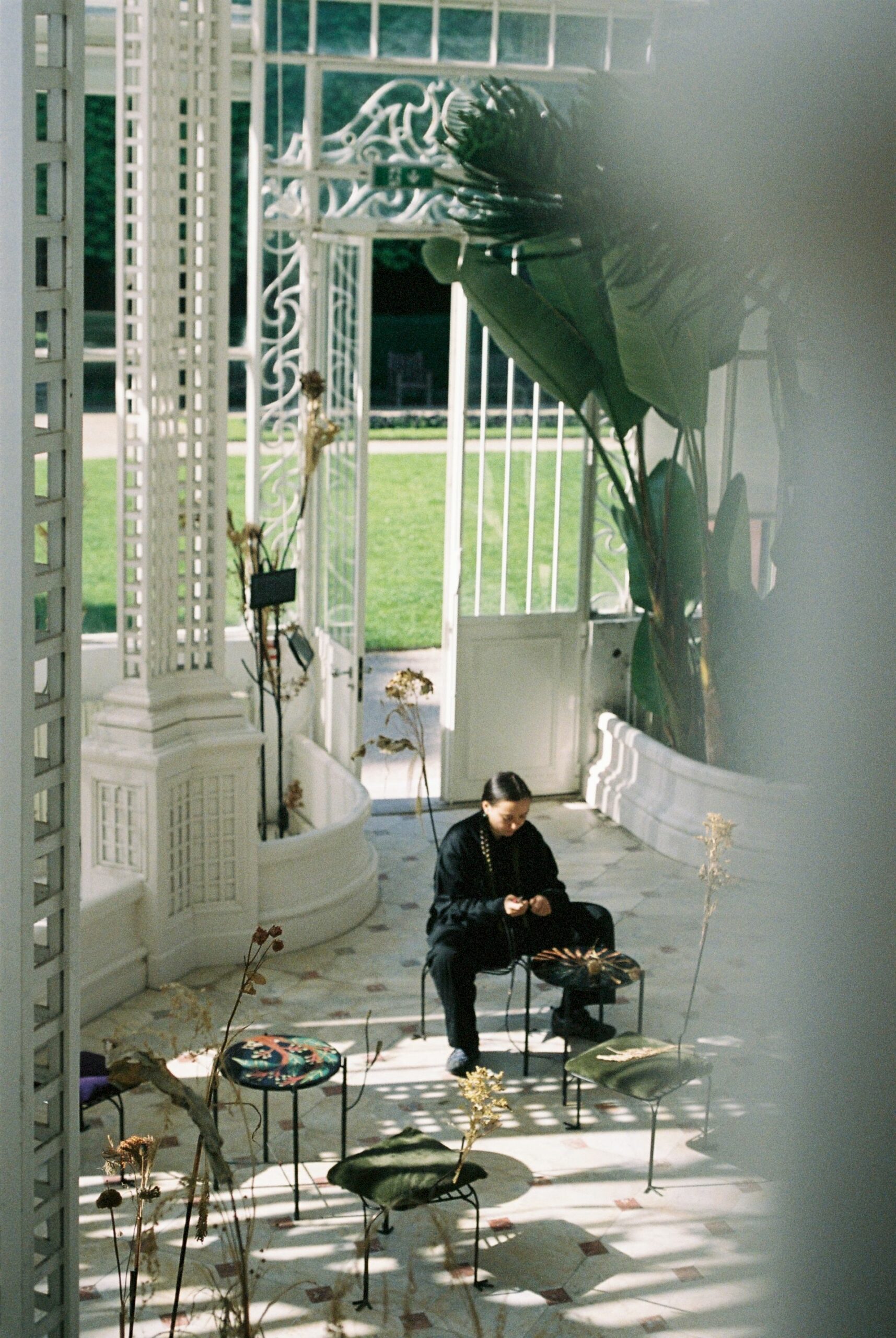
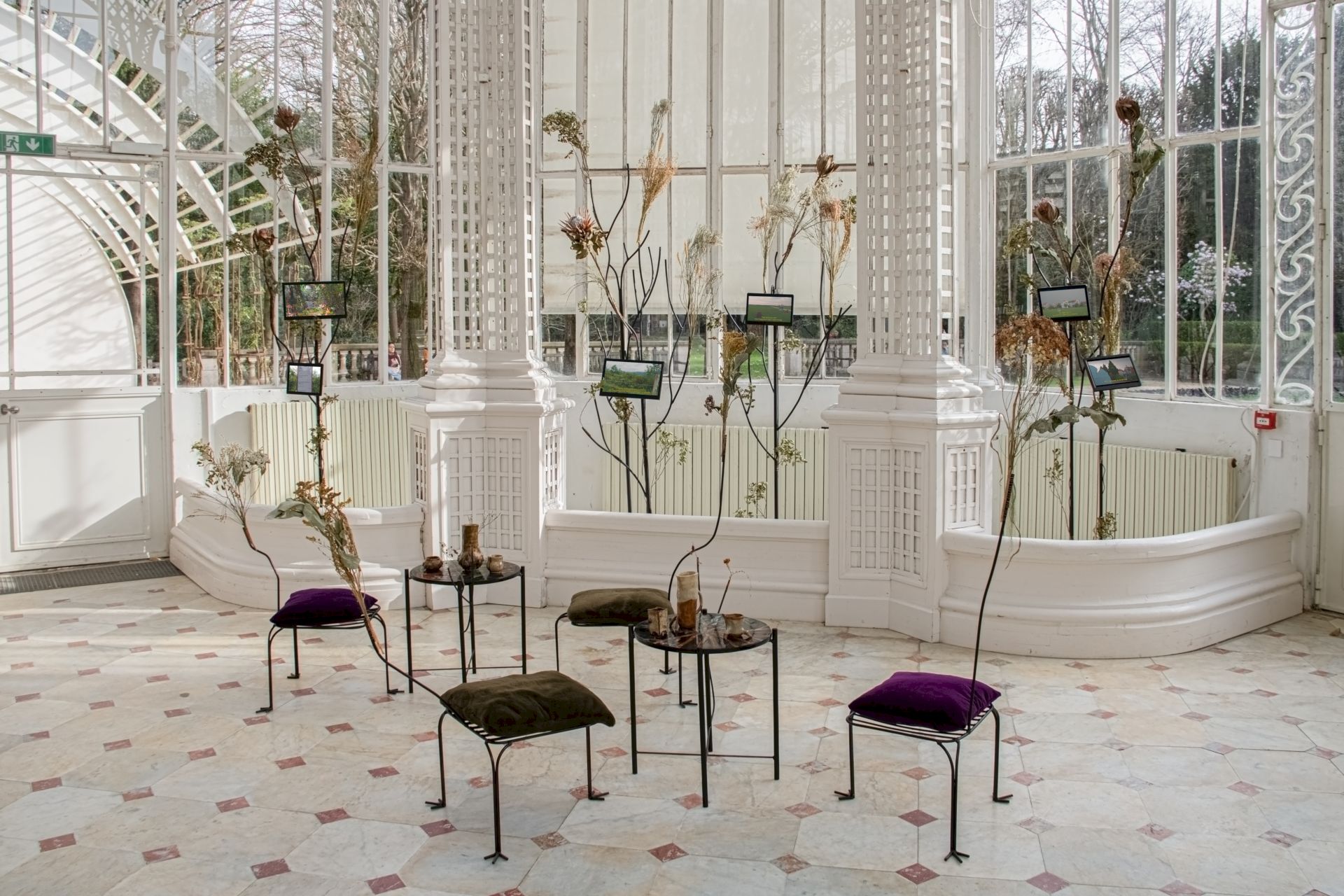
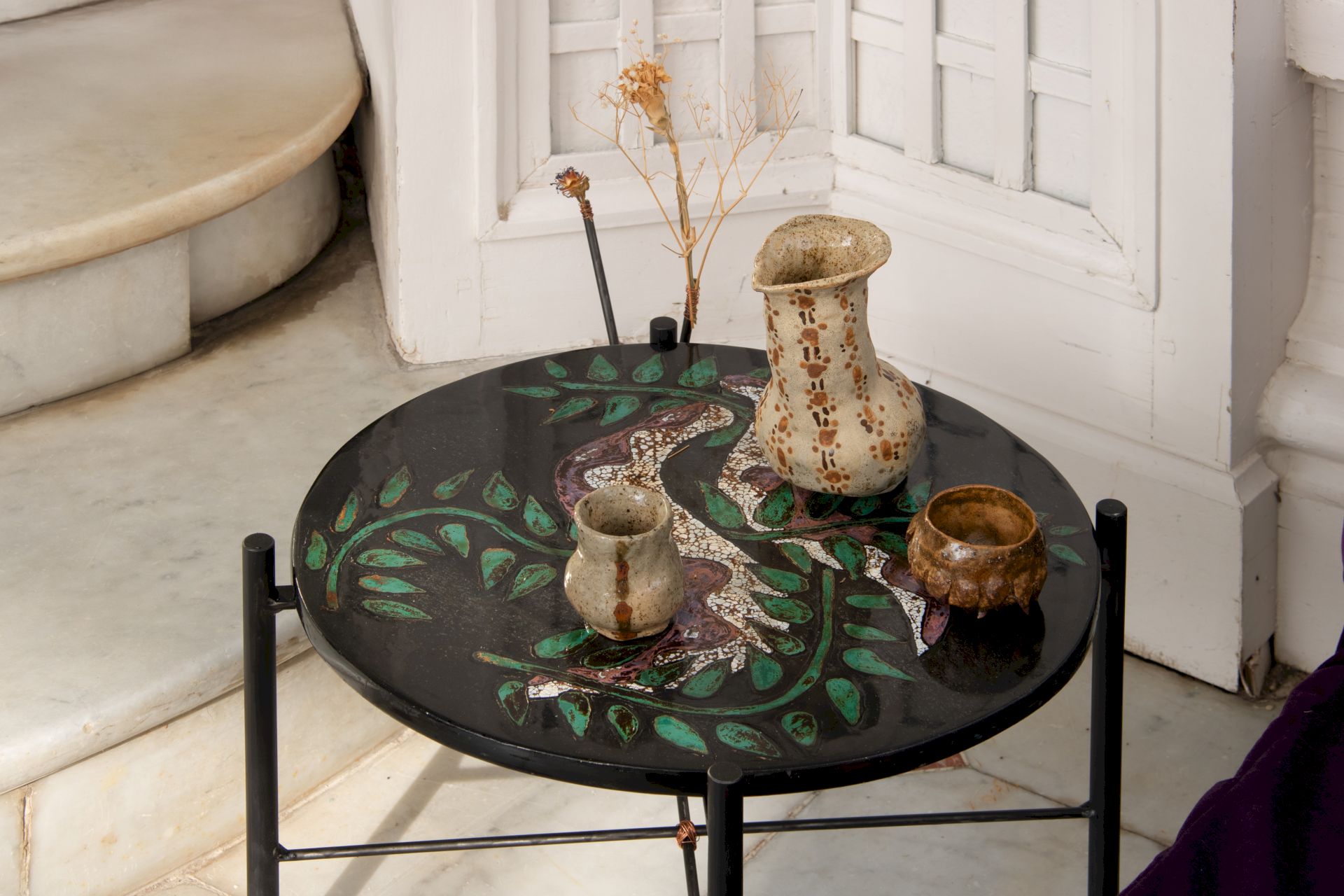
The lacquer paintings are displayed as coffee tables with steel frames and low chairs, as they can be found in Vietnamese street food places. The chairs and tables are placed to allow the audience to sit and watch six short videos. The videos are shown on screens mounted on sculptures. Each is a montage of footage filmed during field research carried out between July and December 2025 in locations linked to the Second Indochina War. Each video is accompanied by an interview, selected extracts of which appear as subtitles alongside the images. The interviews featured are with Thuy-Tiên Hô; Phùng Tửu Bôi, Nguyễn Hạc Đạm Thư, Anne Xuân Nguyen,and Mr Cua, an activist from the Vietnamese queer community who has chosen to speak under a pseudonym. The sixth video features extracts from the book My Poisoned Land by Trần Tố Nga.
We served Pr. Lương Văn Dũng tea in the ceramics made in Đà Lạt for the opening and closing of the show. The work was thought of as a domestic and resting space, encouraging the audience to spend time in the installation to rest and inform themselves about the stories told with the folk tale and the video pieces. Inspired by Fanny Sosa and Navild Acosta’s work Black Power Naps, Foliating Memories starts from the statement that it is possible to deal with complex and difficult stories only when we feel well, that rest is political. Trying to create a safe and relaxed space where generations share their narrative about an international conflict that changed and still is challenging international laws and ways to represent war worldwide.
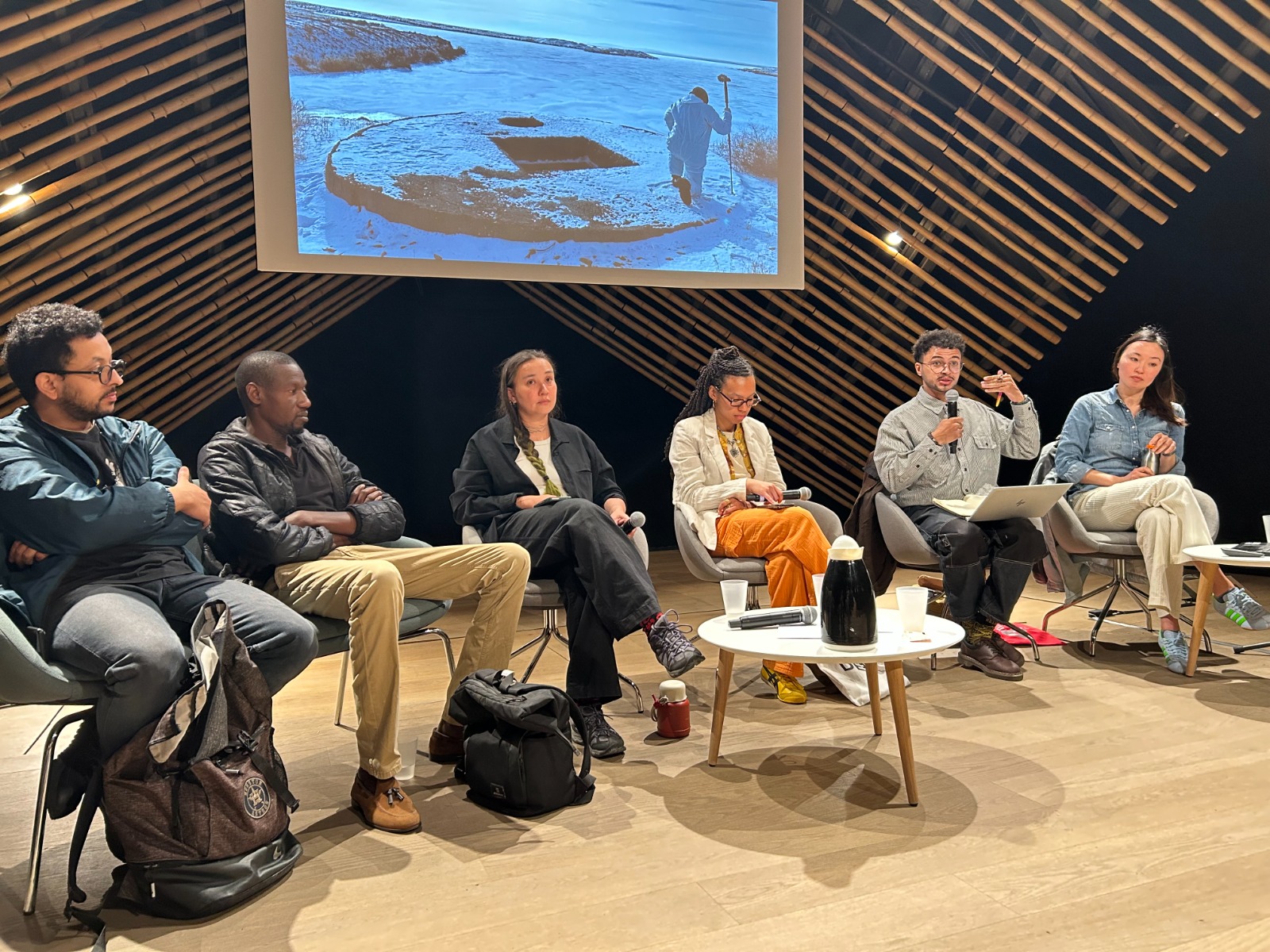
In that perspective, Marvin and I organised a panel discussion about decolonial ecology as a closing event for the exhibition. “Foliating Memories : Networks of memories of the poisoning of the world” with Association A4, Dilda Ramazan, Dr. Ruby Lecoq and Zola Chichmintseva-Kondamambou was a discussion held with a Central Asian researcher about Russian nuclear tests and its consequences, a specialist about chlordecone pollution in the Caribbean and an association of people in exile in French who decided to confront systemic racism with peasantry. The discussion in French is available online here.
Our goal with Marvin, with the installation and the panel discussions, is to cross knowledge from places and people who fight the destruction of our world and find common tools and solutions about how to survive and heal after a war and pollution. This coming year, we are planning to show our work together again at the Museum of Medicine in Paris-Cite University at Ad Memoriam Institute. This step will be more focused on the panel discussions, for which we hope to gather knowledge and tools from scientific, artistic and civil society backgrounds. We are planning to go back to Việt Nam together in 2028 to deepen our common research on Marvin’s terrain in the region of Gia Lai, where the contamination of the soil is still ravaging public health. We are looking to find a way for transmissions of memory, knowledge and hope in order to transform or at least explain what he calls the « juggernaut » , the crushing of the world.