
The colonial poisoning of the world: Searching for a collective memory on ecocide (1/3)
The Rewilding Cultures Mobility Conversation grant supports sustainable, inclusive artistic mobility that takes account of creators’ personal circumstances. Kim Đoan Quốc, the 2025 grant recipient for ‘Foliating Memories’, talks to Makery about their project spanning Viêt Nam and France, which addresses Agent Orange pollution by blending ecological memory with visual arts research. A three-part series.
Kim Đoan Quốc is a visual artist working at the intersection of installation, video and performance. Their work examines the relationship between humans and their ecosystems, interweaving themes of the body and the plant kingdom into layered narratives. The concept of ‘safe space’ is central to their thinking, explored as a means of addressing social justice, ecology and collective wellbeing. In 2025, Kim travelled to Vietnam for a six-month research trip in preparation for the project Foliating Memories, which deals with Agent Orange pollution. The following account, published in three articles, details the processes of reflection and production surrounding this piece.
Some context first
About Agent Orange
During the 2nd Indochina War (1), the US army invaded Việt Nam in fear of a rise of communist power at the border of Mainland China. A few years before, the Geneva agreement was signed in 1954 by the Democratic Republic of Việt Nam and France, provisionally dividing Việt Nam along the 17th Parallel, with Ho Chi Minh’s government ruling the North from Hanoi and the former emperor allied with France, Bảo Đại’s State of Việt Nam who governed the South from Sài Gòn. The army of the Democratic Republic of Việt Nam was hiding in the jungle in order to bring support to their allies in the South, walking the Ho Chi Minh Trail.

Knowing the forest really well, the National Liberation Front had a huge terrain advantage upon G.I.s. President Kennedy, after the Hiroshima and Nagasaki catastrophe, decided to “spare” Việt Nam from nuclear war and sent “humanitarian weapons” to the front: a whole rainbow of chemical weapons, called Operation Ranch Hand. In order to find the communist resistance in the jungle, the US army sprayed 80 millions liters of defoliant, Agent Orange, on the forests of South Việt Nam. For each of their concerns was a different agent : for example, Agent Blue, Arsenic, was sprayed on rice fields to starve the people and make them surrender. Agent Orange marked history because it was the first ecocide recognized by UNO (vocabulary brought by Arthur Galston in 1970 to talk about the case). The dioxin molecule it contains is one of the most deadly for human beings, generating genetic diseases, cancers and heavy malformations. 2.1 to 4.8 million people in Việt Nam, Laos and Cambodia were directly touched by this substance; 3 million are still affected today, according to VAVA, the Việt Namese Association for the Victims of Agent Orange.

Collectif Vietnam Dioxine and Trần Tố Nga
Spreading the chemicals, US veterans also were impacted by dioxin aka Agent Orange. When they filed a complaint at the Supreme Court, Monsanto-Bayer bought their silence for 180 millions dollars. From 2004 to 2009, Vietnamese victims filed a complaint too but the case was dismissed with no further notice : there won’t be reparations for the Vietnamese victims according to US justice.
On top of that racist and unbalanced notion of justice in the country of liberty that was built on stolen land, what triggers me the most about the whole situation is that Agent Orange didn’t need to be this toxic for humans to achieve the deforestation the US intended to. Dioxin is a chemical waste that appears when the components for Agent Orange preparation (2,4-D and 2,4,5-T) are mixed together at the wrong temperature. As the product was to be used in war context and not as a defoliant in agriculture and in order to make better profits selling the product to the army, the 14 industrial companies who produced Agent Orange decided to work without care for the production temperature, creating a product that contains high levels of dioxin in full knowledge of what they were doing. Indeed, some of their employees got heavily sick and eventually died from the contamination. A note, warning about the danger of this “humanitarian weapon”, was sent to their administration and then to the US government, It has been decided to keep the production means the way they were and millions of victims are paying the price for that today in Laos, Cambodia and Việt Nam, but also in the countries where diasporas from these countries live.
It is the case of Trần Tố Nga , an 84 years old journalist and war veteran, French and Vietnamese. She was directly sprayed during the 2nd Indochina War, leading her to lose her first child at the age of 17 months and get sick from several cancers, blood diseases, tuberculosis and diabetes. She has been on trial in Paris since 2014 against the industrial companies who produced Agent Orange. The last step of this trial happened on 16th of June 2026 at Court of Cassation, resulting in the judge asking to decide about the case with the Plenary Assembly because of the challenges the case brings toward international law. That step should happen in the beginning of 2027.
Collaboration with Marvin Freyne
It is in that context that I met the anthropologist and geographer Marvin Freyne, who is also an active member of the Support Committee for Trần Tố Nga. We met during informal get-togethers after events or meetings and discussed research topics, me as a visual artist preparing a large scale installation, him as a PhD candidate in anthropology and geography at Ceped Lab at Paris-Cite University. I was interested in collective memories and finding common ground in narratives about the war from France and Việt Nam to draw a clear picture about the land. He was interested in the collaborations between French-Vietnamese diaspora associations and the Vietnamese government to rebuild the land after the war. We were both interested in finding tools about healing and building after a war. We decided to collaborate as I needed scientific input to put my work closer to reality and as he wanted art to be one of the many perspectives about the subject in his thesis. We started to work together in 2024 and still are working together today on our project “Foliating Memories”, a large scale documentary installation associated with cycles of conferences. In 2024, additionally to the Rewilding Cultures Mobility grant, we were awarded the Atomes Crochus grant by ADAGP in France which allowed us to fund a research trip together.
We went to Việt Nam together in 2025 for 6 months, interviewing people and filming rehabilitated areas together, also having our own terrains. Marvin worked in remote and still contaminated areas with associations helping victims on site, such as VAVA & VNED and I went to art residencies to learn lacquer painting, a traditional Vietnamese fine art technique and create a series of ceramic pieces. A first step of our work was shown at Museum Albert Kahn (Boulogne-Billancourt, France) in March-April 2026.
During the coming year, Marvin and I are preparing a cycle of conferences in the Museum of Medicine, inside Paris-Cite University, at the Ad Memoriam Institute. Parts of the art installation “Foliating Memories” will be shown at the Institute as the seminar happens. We are also planning on going back to Việt Nam together in 2028 in order to work further on our common research.
Amazing people we met
Thuy-Tiên Hô and Trần Tố Nga, sisterhood in activism from the French Diaspora
Thuy-Tiên Hô is a documentary film director, she supports and accompanies Trần Tố Nga in her fight for the last 10 years. I met Thuy-Tiên Hô when I joined Collectif Vietnam Dioxine. She was one of the deans of the association at the time. She’s Trần Tố Nga’s “little sister”, helping her to organize the numerous meetings she attends internationally, reasoning the many associations that invite Trần Tố Nga without considering her health issues, being fierce and uncompromising about anything that touches the needs of her sister’s goal and the trial. Thuy-Tiên Hô is our big sister. She also is a Việt Kiều .Việt Kiều are the Vietnamese from overseas, those who don’t always speak the language and grew up in different cultures, often westerners. A lot of members of Collectif Vietnam Dioxine are Việt Kiều. Thuy-Tiên Hô is the younger one of the sisters of her family, she arrived in France as a child as her sisters were fighting in the resistance against the US. She shares with us the admiration for resistance and resilience, the greatness of a country our families built without us, who grew up in the land of the oppressors ; the frustration of our parents not teaching us Vietnamese language as children, to make sure we integrate well in French society, often in vain. Thuy-Tiên Hô is about 60 years old and yet she shares the childhood wounds of us all, 2nd generation diasporic people. She shares it with the wisdom of a big sister, who welcomes Collectif Vietnam Dioxine members on holidays in her house in Normandie, sharing stories about Thomas Sankara during dinner. She blows away the fog on our histories with her brilliant work. We keep showing her work when we have the opportunity to organize projections along our talks : Vietnam: Agent Orange, a ticking time bomb, produced in 2012, was recently shown at Le Clef cinema in Paris during an event organised by Generation Panasiatique and Collectif Vietnam Dioxine.
Her relationship with Trần Tố Nga is wonderful to watch, settling a goal in my heart on activism fellowships ; on how close we can grow and how we can rely on each other. Trần Tố Nga is the face of the fight for the recognition of Agent Orange victims, while on trial against the many industrial companies that produced these chemicals during the war that made her sick, she also raises funds for adapted schools and facilities for the victims, visiting them everytime she goes to Việt Nam. Oscillating between the sweet auntie that gives candy to everyone around the table during her Support Committee reunions, the fierce war veteran that makes the lawyers of Dow Chemicals begging for her to shut up or the figurehead of an intergenerational movement so powerful that silence precedes all of her talks. Trần Tố Nga has many faces and all of them can be role models, she is a vulnerable giant, gathering people with her fights and Thuy-Tiên Hô is holding her hand at every crucial moment to share forces.
Nguyễn Hạc Đạm Thư and Phùng Tửu Bôi, Vietnamese veterans and scientists who rehabilitated the land
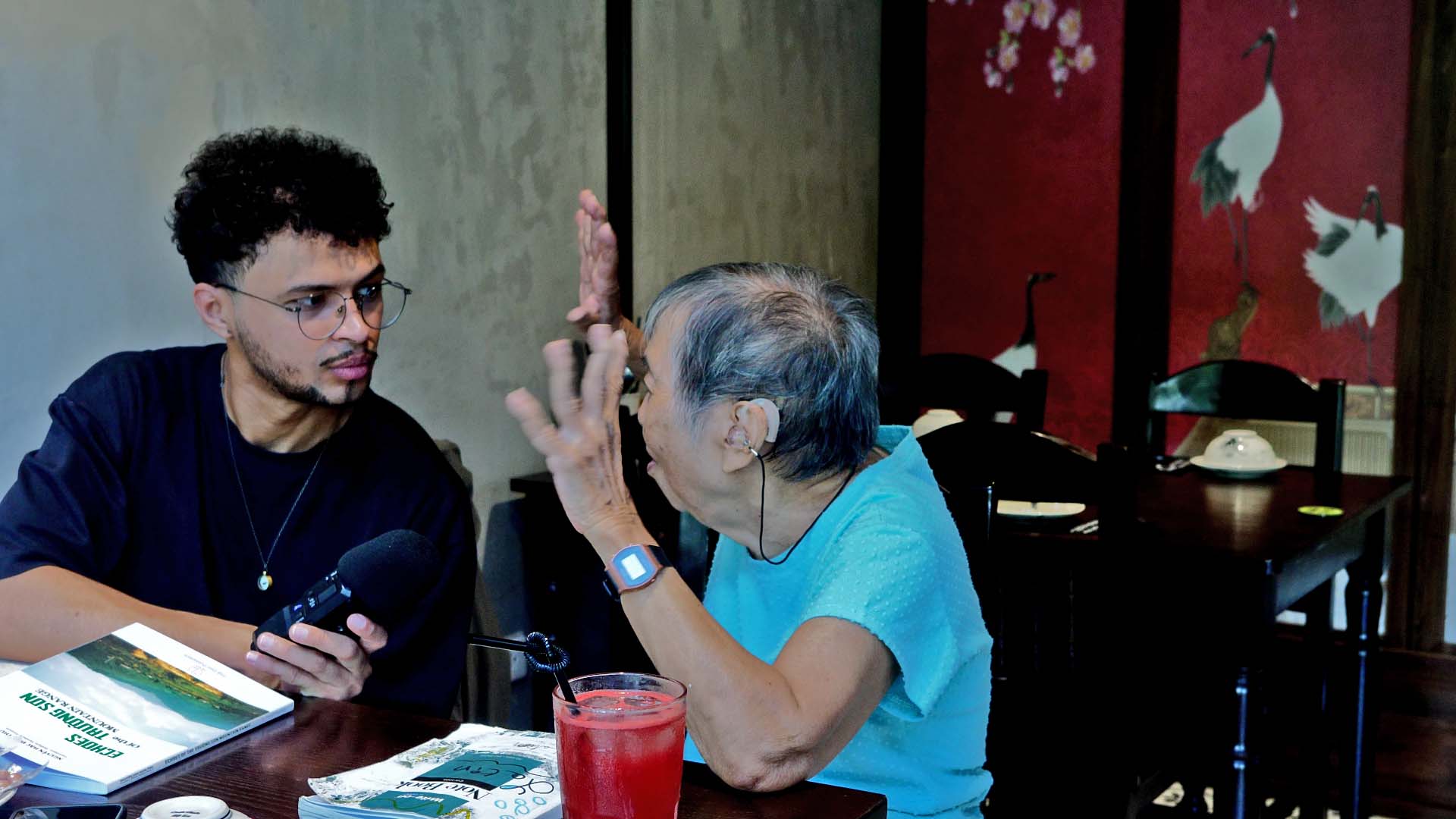
I spent the first month of my research trip in Northern Việt Nam in Hà Nội, the capital city. Marvin arrived in Hanoi 2 weeks after I did and we started to meet university people together from there. The first person we met was Nguyễn Hạc Đạm Thư, a 91 years old woman, retired chemistry professor. Marvin had known her through the network of French associations that help the victims of Agent Orange. We met her at the feet of the towers of her family apartment, in a remote and brand new suburb of Hanoi. We sat in a restaurant in her neighborhood after following her fragile but confident walk frame promenade through the alleys of parks and supermarkets surrounding the compound. As I was setting up the camera and the microphone, she started to tell us her story and her fights as she ordered glasses of fresh juice for us all. In 1959, at the age of 21, she returned to Việt Nam from France, despite the blockade that was going on in the country at the time, driven by the thought of “paying back” the farmers who fought for the country while she was studying chemistry in Paris. She started off as a chemistry teacher in Hanoi before she then made conferences to protest against the use of chemical weapons in the South during the war, not conscious at the time of the presence of dioxin or its consequences on public health. “At the time we thought it was about famine and destroying the crops” she said to us. Later, she participated in the 1975 research mission organized by the Vietnamese government to study the effects of the war on the land, along with Phùng Tửu Bôi and a crew of about 30 scientists from all disciplines. That mission would allow them to understand the consequences of Operation Ranch Hand. Once she retired as a professor, she later worked with the VNED association to help victims and, touring the country to explain the causes and effects of dioxin to enable more public education about the subject in Việt Nam. That made her collaborate with scientists from France on the subject, going back to France to study about the time Ho Chi Minh spent there. These collaborations allowed her to push on the French Institutions to send resources in order to help the rehabilitation of the land.
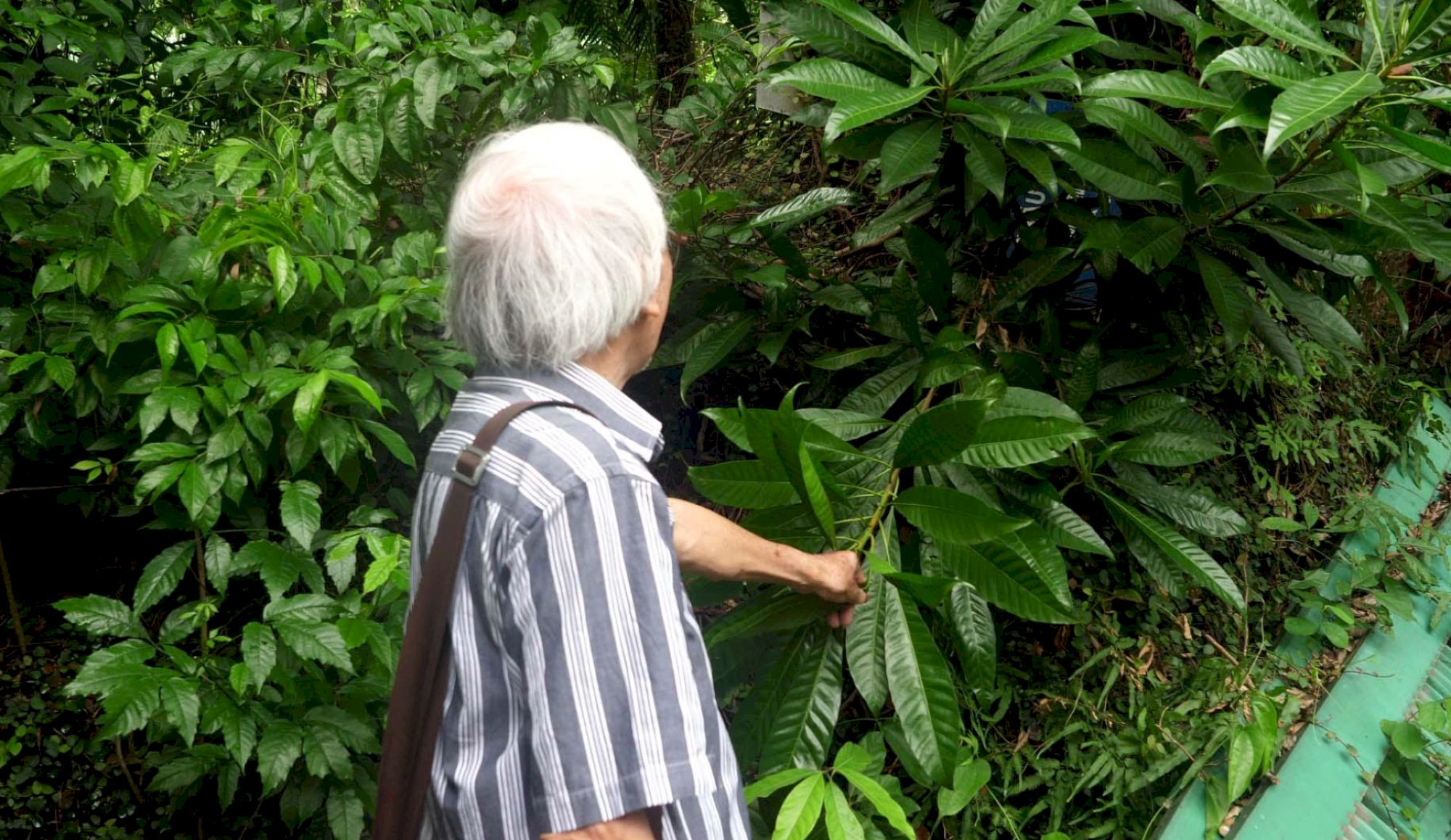
Later on, we spent some time with Phùng Tửu Bôi. I met Phùng Tửu Bôi thanks to my dear friend Dr. Anna Nguyễn Đăng Xuân, researcher at G.R.I.P. (Research and Information Group on Peace and Security) in Brussels and a specialist of Agent Orange. After we collaborated on a fanzine together with the graphic designer Valentin Bigel, going through the archives she used for her thesis in political sciences, she advised me to contact him after I explained my will to use botanical knowledge to talk about the consequences of war. Phùng Tửu Bôi was the perfect contact : a war veteran and a retired botanist, who was known for his work on rehabilitating polluted lands with forestry. He first welcomed me in his home so I could ask him my questions as he showed me some of his archives while we were sharing tea. We talked about the plants he used to make polluted areas viable for the population. To my surprise, none of the plants he used were “cleaning” the soil from dioxin. All of their applications were more mechanical than chemical. For example, he planted walls of bồ kết, which beans are traditionally used in Việt Nam for hair care, in order to fence strongly polluted zones : the huge spikes growing on the trunks of this tree made it impossible for cattle or humans to feed or hunt from contaminated soil. We talked about a hybrid Acacia tree he created that could grow fast and straight on damaged land so people could still make a living from forestry in these areas. He explained how Dipterocarpus Diery, a tall tree with strong foliage actually survived the sprayings of Agent Orange, protecting as well the forest trees and ecosystems living below them. Dioxin only lives in fat and in soil, it doesn’t mix in water, which is why Mangroves were the fastest and easiest ecosystem to heal after the war. All of these conversations inspired the patterns of the lacquer paintings I would do later during my trip : a series of 6 paintings, representing species of plants that were used to rehabilitate the land for humans after the war. These conversations also helped to identify the places to go to in order to collect soil samples I was looking for the ceramic series, following some of the footsteps from the 1975 scientific mission Đạm Thư mentioned to us as well: A So Airport, a former US military station depolluted by Veolia with US and Vietnamese financial support ;Cần Giờ Mangroves ; A Lưới Primal forest, Ma Đa Bay reforestation park…
In the following days, he invited me and Marvin for a guided visit of his arboretum in Hà Nội, in a brand new museum about Việt Nam biodiversity, showing us the many essences he brought from his studies and the various links to be made with war times. Marvin and I both noticed how enthusiastic everyone in the institution was to salute and talk to Phùng Tửu Bôi. He welcomed all the students rushing to him with a great smile, as he told us to be concerned with the work left to do to heal the land as he grows old and how important it is that younger researchers and scientists in Việt Nam seize the subject.
The new generation
One of the perspectives of my research and the collaboration with Marvin Freyne is to collect different narratives about the 2nd Indochina War in order to create a representation of a common ground about what happened and an assessment about the state of the land. The subject of Agent Orange can be delicate to look at, many diplomatic accords, big companies interests and national narratives are woven within this story. For the people we met, I can say that a significant part of the Vietnamese youth, in Việt Nam and abroad, are fed up with talking about the war. There is a sickness about presenting the country like a war victim, as it is pictured in worldly famous Hollywood blockbusters. Even though Việt Nam won the US war, as it did against Japan, France and China in the past. Some people told me there was also a point in history that the Vietnamese Government used Agent Orange as a propaganda tool in order to vilify the former South Việt Nam state, creating bitterness in the minds of the youth about this issue.
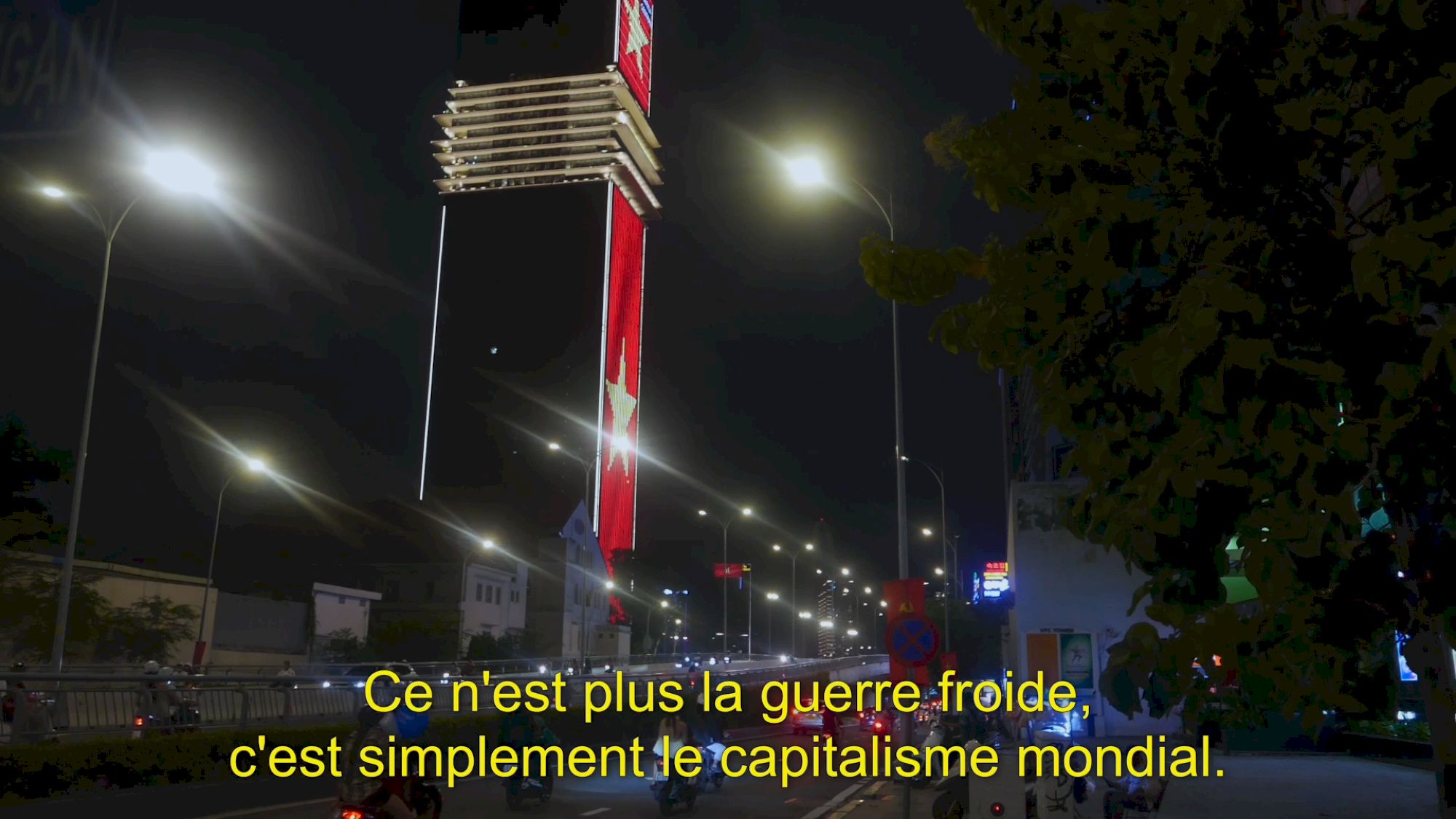
As I met a few people my age (35) and younger during my trip, it occurred to me that the concerns for many of them were definitely somewhere else. It was typhoon season and over 19 typhoons struck Việt Nam over the last year and Sài Gòn is sinking between 1 and 2 cm per year into the sea. Talking about decolonial ecology with a dear friend, they laughed a bit. “Decolonial matters more to diasporas in the west than to us here, we don’t think much about it here.” The bridges are there though, more and more Việt Kiềus are going back to Việt Nam for other things than family affairs, learning the culture for themselves, participating to the culture as well with more or less consciousness about their western privileges, building an international community of Vietnamese descent to exchange about their common roots as westerners. It was amazing to me to discover through this research, the immense number of university researchers, artists, curators, entrepreneurs who study and unpack the bridges and the holes within their double (or more) cultures. This process, in collaboration with the Vietnamese youth, creates a wonderful corpus of objects and studies that states a common ground and collective memory. To cite only a few, I was really happy to see the work of Marine Bachelot Nguyen, a brilliant french vietnamese theater director whose work talks about Trần Tố Nga, the story of Boat People but also create bridges and strong links between diasporic women ; thrilled to meet Julien Lê Hoangan a doctor in sociology who studies migrations within the diaspora and care for elders and the amazing dancer Lệ Hà VỦ, who was learning Chăm traditional dance in Sài Gòn in order to write her new show ; fascinated by the very precious design book VIETNAMESE OBJECTS : Material Culture of Resilience in the Face of (De)colonization by Quang Vinh Nguyen and Émilie Laystary published this year by Triest Verlag and ECAL, and of course the research publication of my brilliant friend Anna Nguyễn Đăng Xuân.
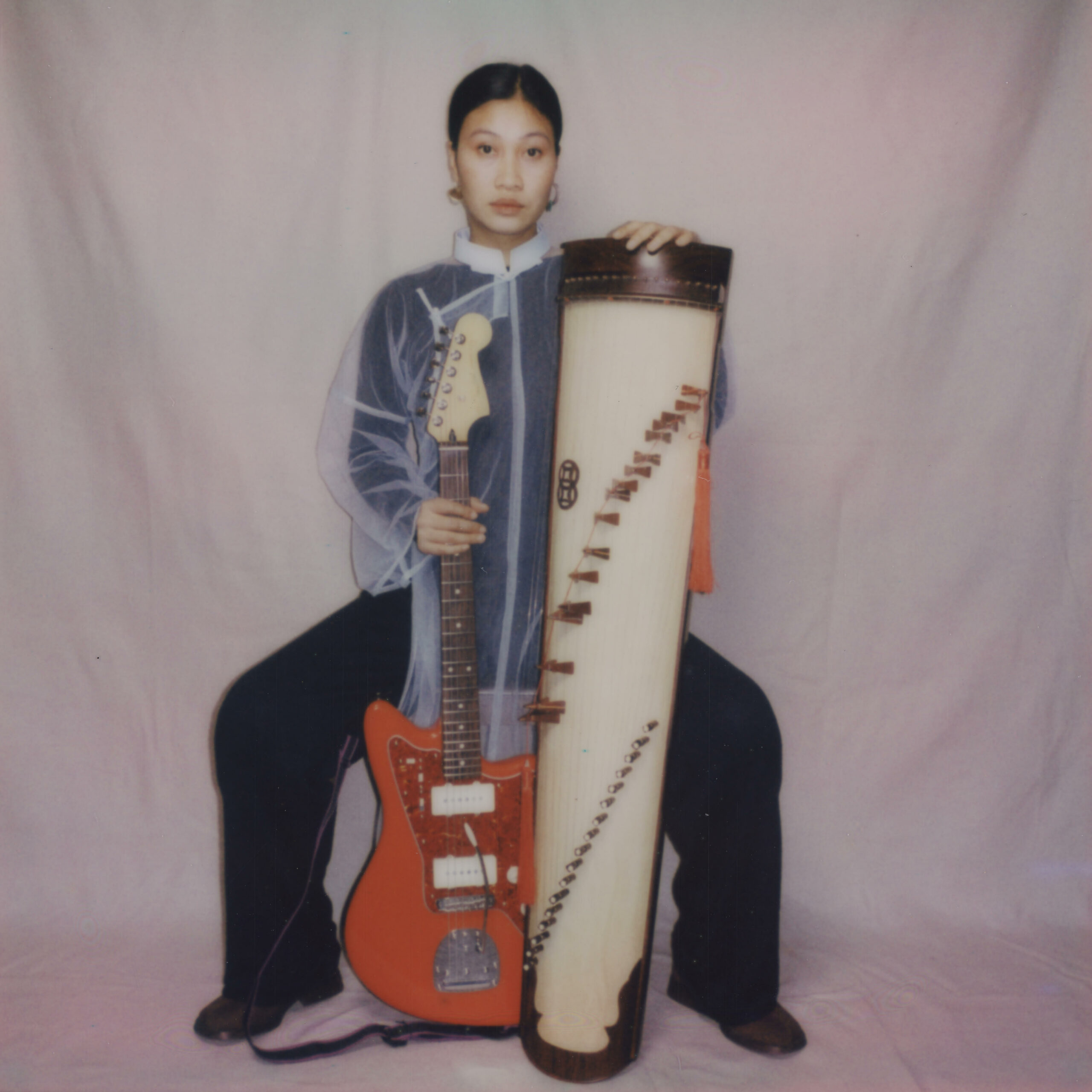
Whilst not all of these works deal specifically with the healing of the land, they chart a path towards healing for the collective memory and for individuals, which will always be linked to the land. It is a matter of connecting the dots in the wake of the traumas of war, lost brothers and sisters, and erased chapters of history, by rediscovering threads within shared silences and the multiplicity of perspectives. The research and work I present here form part of this weaving. Representations of the territory and those who live there are central to remembering the damaged lands we have left behind – lands that are sometimes forgotten, yet which are today inhabited, either in the doubt of contamination or whilst bearing the full brunt of the poison’s consequences.
The second part of the story will follow next week.
Discover Kim Đoan Quốc’s work on their website.