
Lines to Follow—Soils to Gather: A living artwork ferments its way across the seas
An international collective artwork concluding the Soil Assembly #3 at Kochi–Muziris Biennale 2025 follows ancient spice routes from India to Europe, combining food forest harvesting, communal cooking, fermentation, and low-carbon sail transport as a convivial, political and ecological gesture.
This slow-metabolizing artwork follows historic oceanic spice routes, carrying fermented foods from India to Europe by sail aboard the artist ship Arka Kinari. Bringing together harvesting in a food forest, convivial cooking practices, and low-carbon maritime transport, the project treats food circulation as both artistic process and ecological statement.
Conceived as a cultural vessel, Lines to Follow, Soils to Gather embodies the shared values of an international network of artists, farmers, sailors and researchers. Initiated as a collateral project of Soil Assembly #3 at the Kochi–Muziris Biennale 2025 in Kerala, the work has since unfolded as a collective political gesture, linking successive actions across land, sea, and community through practices of fermentation, mobility, and care.
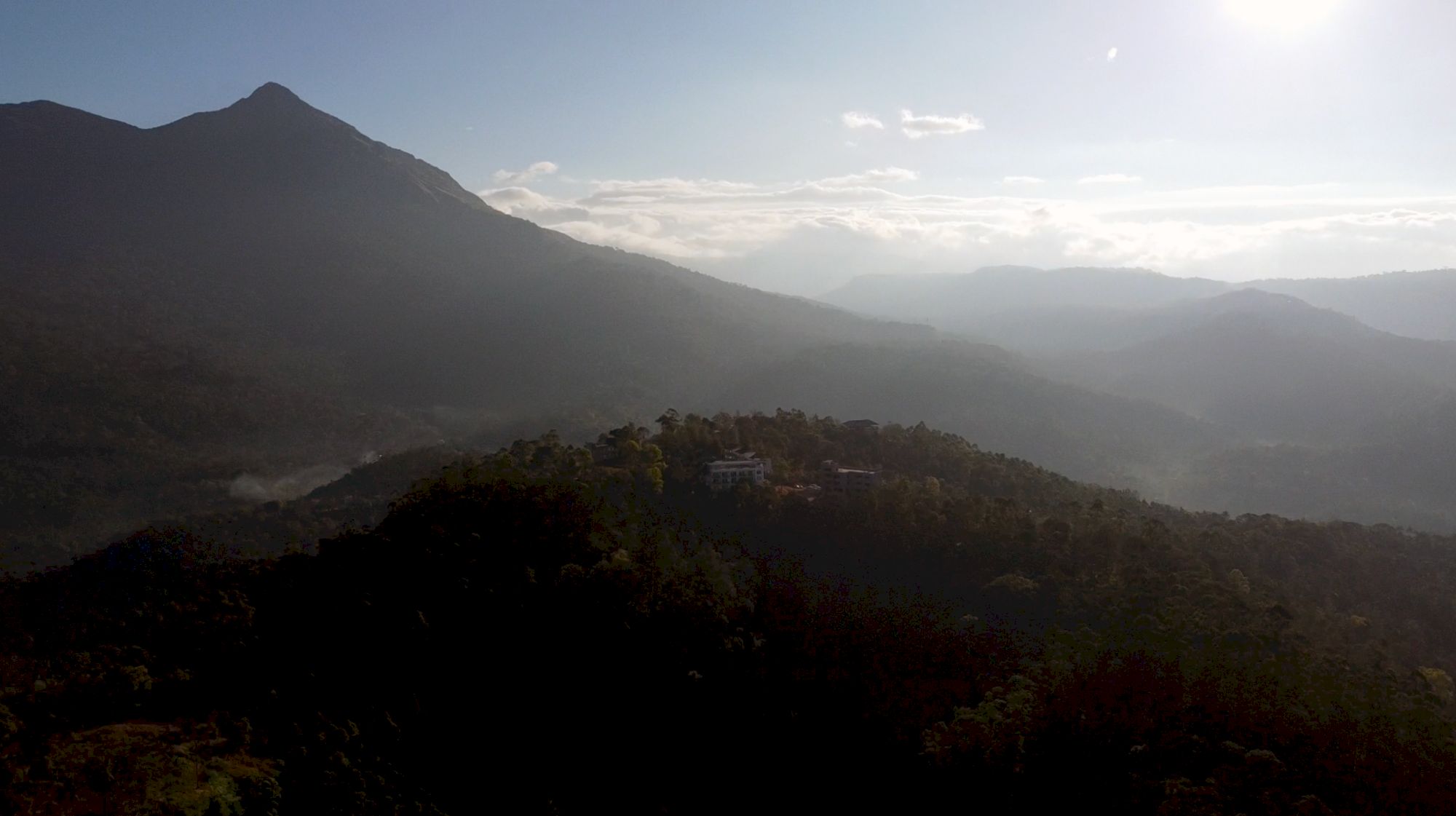
Muziris: Kerala’s ancient hub of spice trade
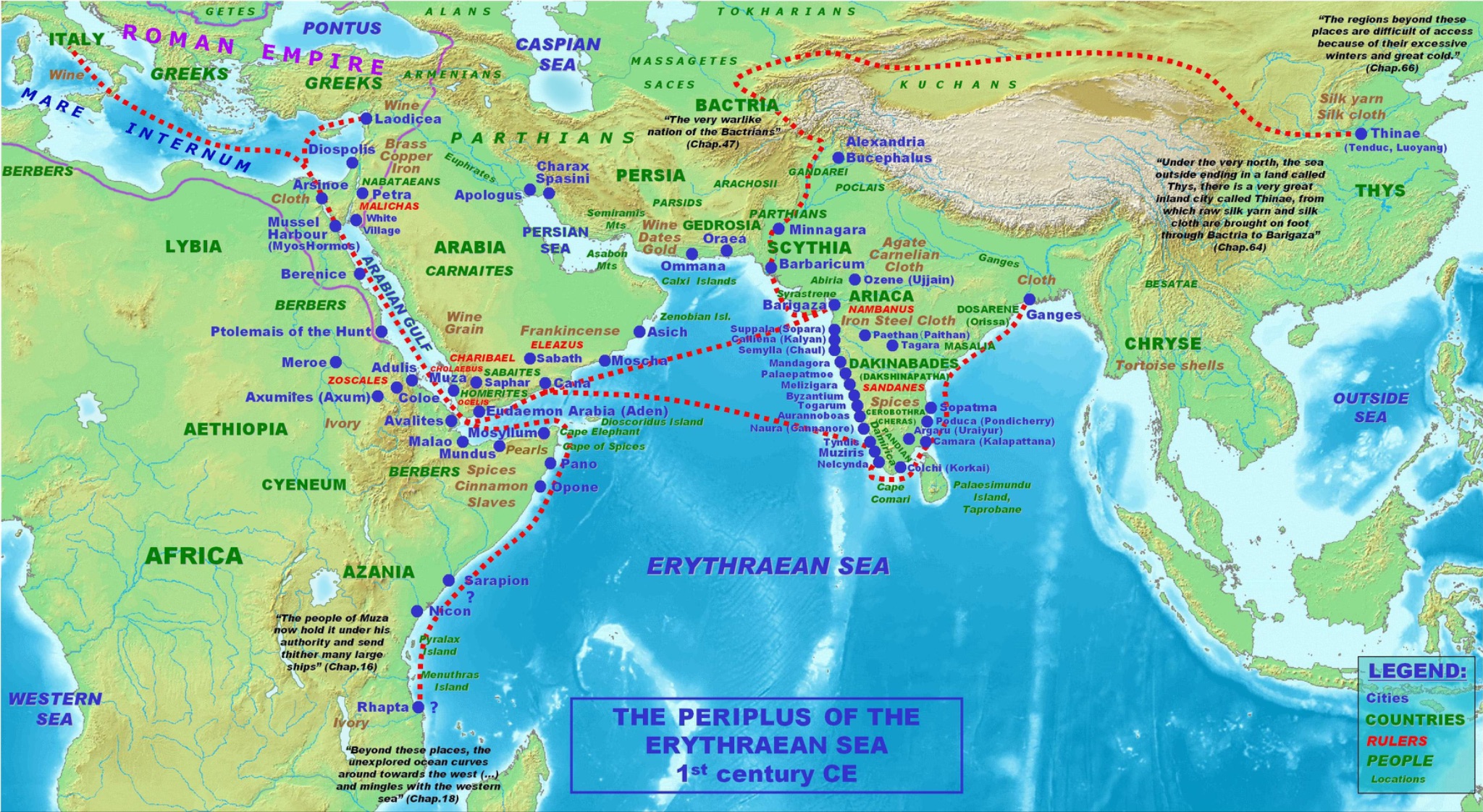
Before Kochi was founded, there was Muziris, a thriving port on the Malabar Coast that connected India to global trade networks long before the colonial era or fossil fuels. The port flourished under the Chera Dynasty, which oversaw maritime commerce and maintained extensive relations with Roman, Arab, and later Chinese merchants. Archaeological and textual evidence also highlights the early settlement of Jewish communities in Kerala during the 1st century CE, as well as the arrival of the Apostle Thomas, traditionally credited with introducing Christianity to the region. These local historical threads intersect with Mediterranean sources, including the Roman map Tabula Peutingeriana, Roman and Egyptian trade records from ancient Alexandria, and the 1st-century navigation guide Periplus of the Erythraean Sea, which documents the monsoon spice route connecting the Malabar Coast to the Red Sea. (The precise location of Muziris remains a subject of debate among historians and archaeologists.)
For centuries, Muziris functioned as a major trading post, presumably until the devastating floods of the Periyar River in 1341. After the flood Muziris declined due to silting and changing coastlines and local rulers established the settlement of Kochi as a new port city. Today, Muziris embodies the thousand-year history and spirit of independence of the port city of Kochi, as reflected in the name of the Kochi-Muziris Biennale.
In a context where, today, food transportation alone accounts for nearly 20% of emissions from the global agri-food system, ART2M and Udumbanchola Circle proposed a final emblematic action, Lines to Follow – Soils to Gather, to close the Soil Assembly #3 at the Kochi-Muziris Biennale : a social fermentation of two weeks focusing on agroecology, food circulation, farming, cooking, low climate impact, and, more broadly, what French philosopher Michel de Certeau described as the “practice of everyday life.”
From the mountain to the sea
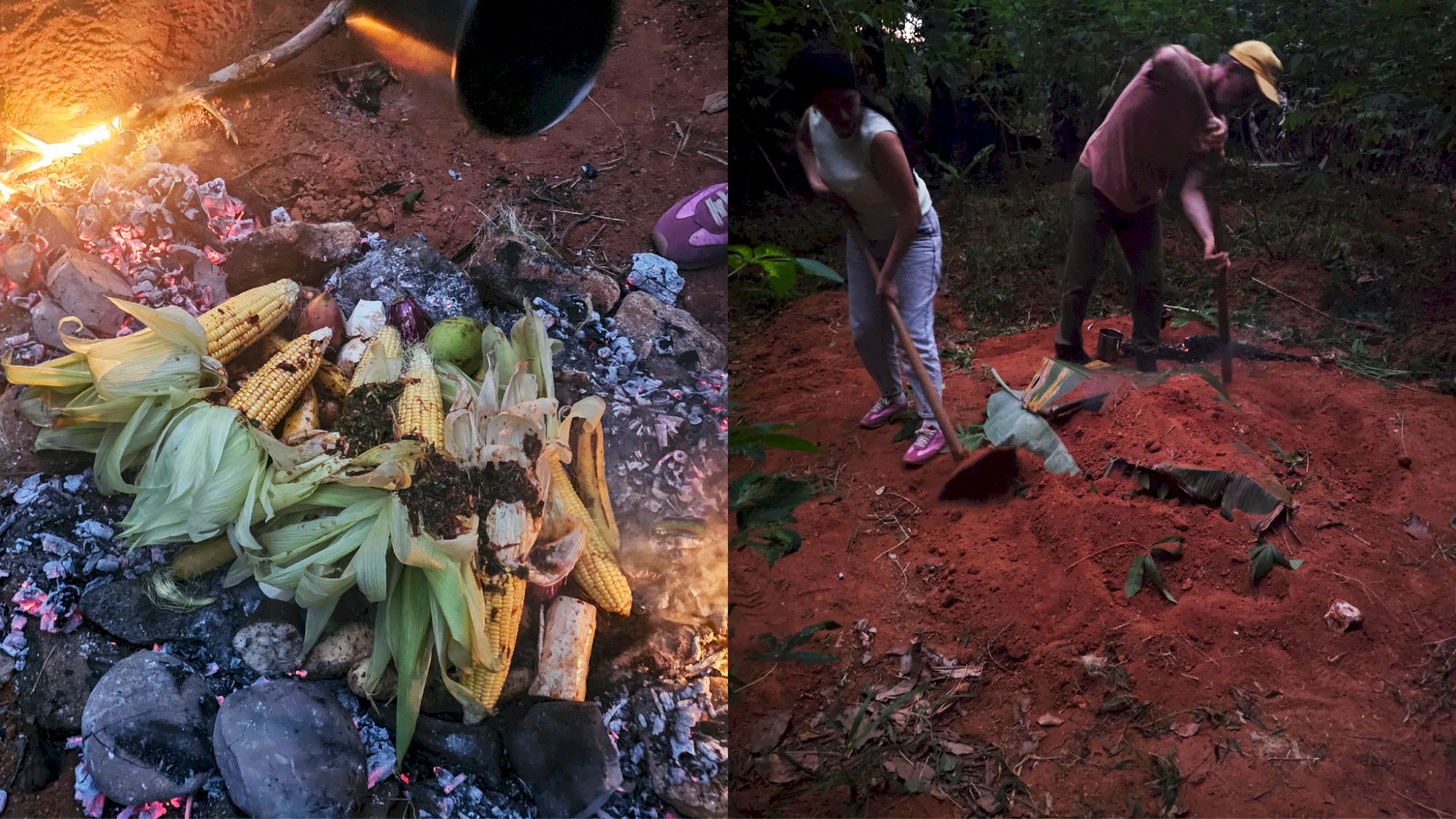
The first phase brought participants to organic farms in the Western Ghats mountains of Kerala, where they met custodian farmers and took part in a harvest at artist Vivek Vilasini’s food forest (read Vilasini in Makery). This experience, which highlighted the edible biodiversity nurtured by farmers, artists, and activists, was also an opportunity to have a conversation about food sovereignty between India and Latin America with Nora Hauswirth (Tera Kuno Institute Brazil). It concluded with a convivial ceremony centered on a vegan version of the Peruvian Pachamanca, led by artist Daniela Zambrano Almidón. Dating back to pre-Incan times and traditionally used in religious festivities and celebrations, the Pachamanca is a form of earth-fire cooking that honors Pachamama, the Incan earth goddess.
Spices in Indian culture carry the history of ancient trade routes—linking Muziris to Alexandria—as well as the weight of colonial exploitation. For centuries, black pepper was found only in Kerala and commanded exorbitant prices in trade between India, Arabia, and the Mediterranean. Pepper, nutmeg, and other spices fueled colonial enterprises and plantation systems (read Makery’s interview with Amitav Ghosh). The history of spices in South and Southeast Asia is thus deeply marked by extraction and capitalist expansion, to the extent that the term “Plantationocene” has been proposed to describe the global geo-climatic impact of plantation economies (Haraway and Tsing, 2015).
Even today, from tea to cardamone, many plants and spices in Kerala are referred to locally as “cash crops,” bearing witness to the persistence of colonial logics in food production and trade. At the same time, ancient spice routes also testify to human desires to enrich tables and palates, and to the formation of global food systems through migrating merchants. As Michael Pollan observes in The Botany of Desire, although food mediates our oldest contract with plants and animals, this contract, however, has been eroded by technocratic systems of control, packaging, and dependence on globalized supply chains.
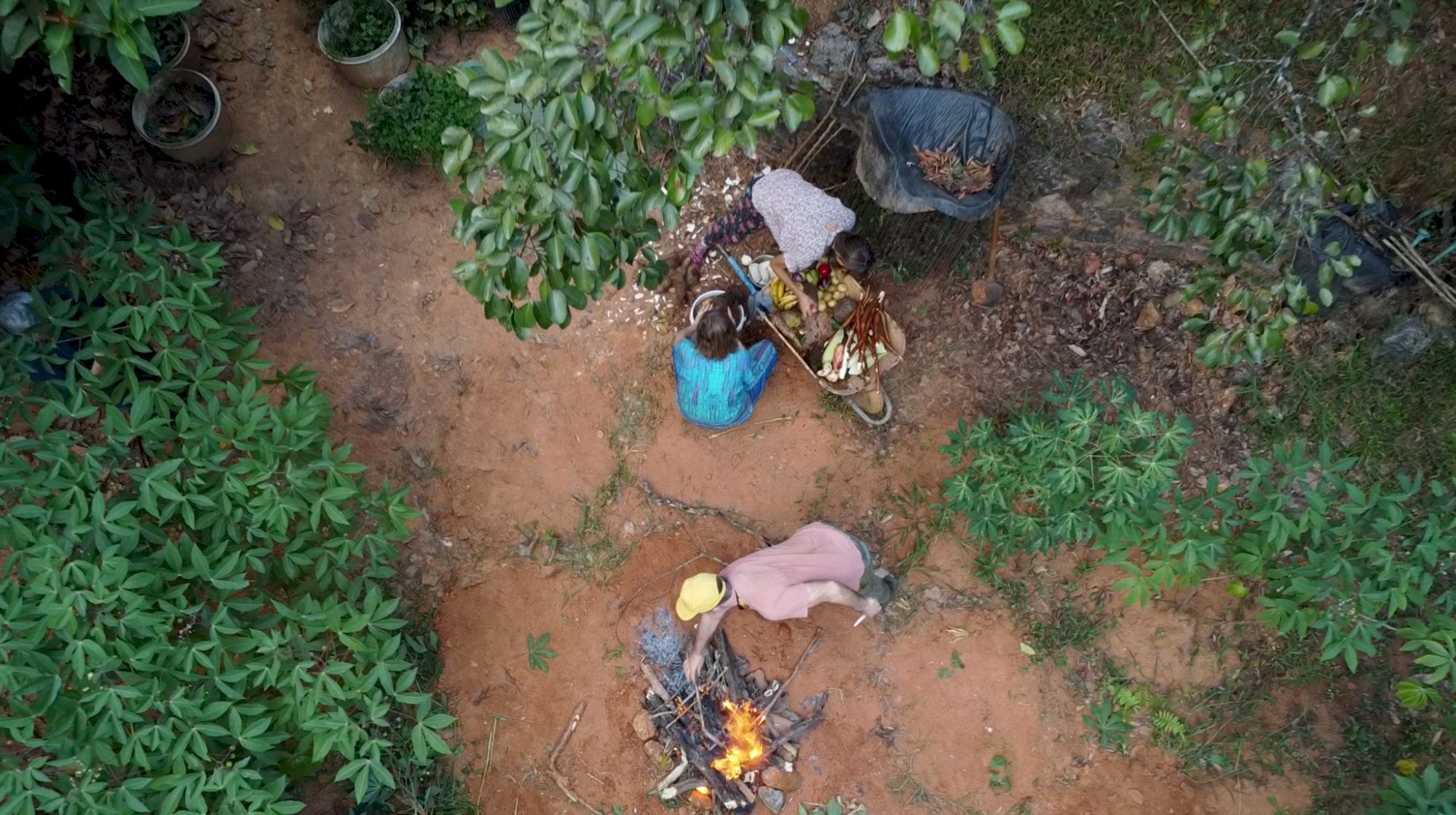
Social fermentation
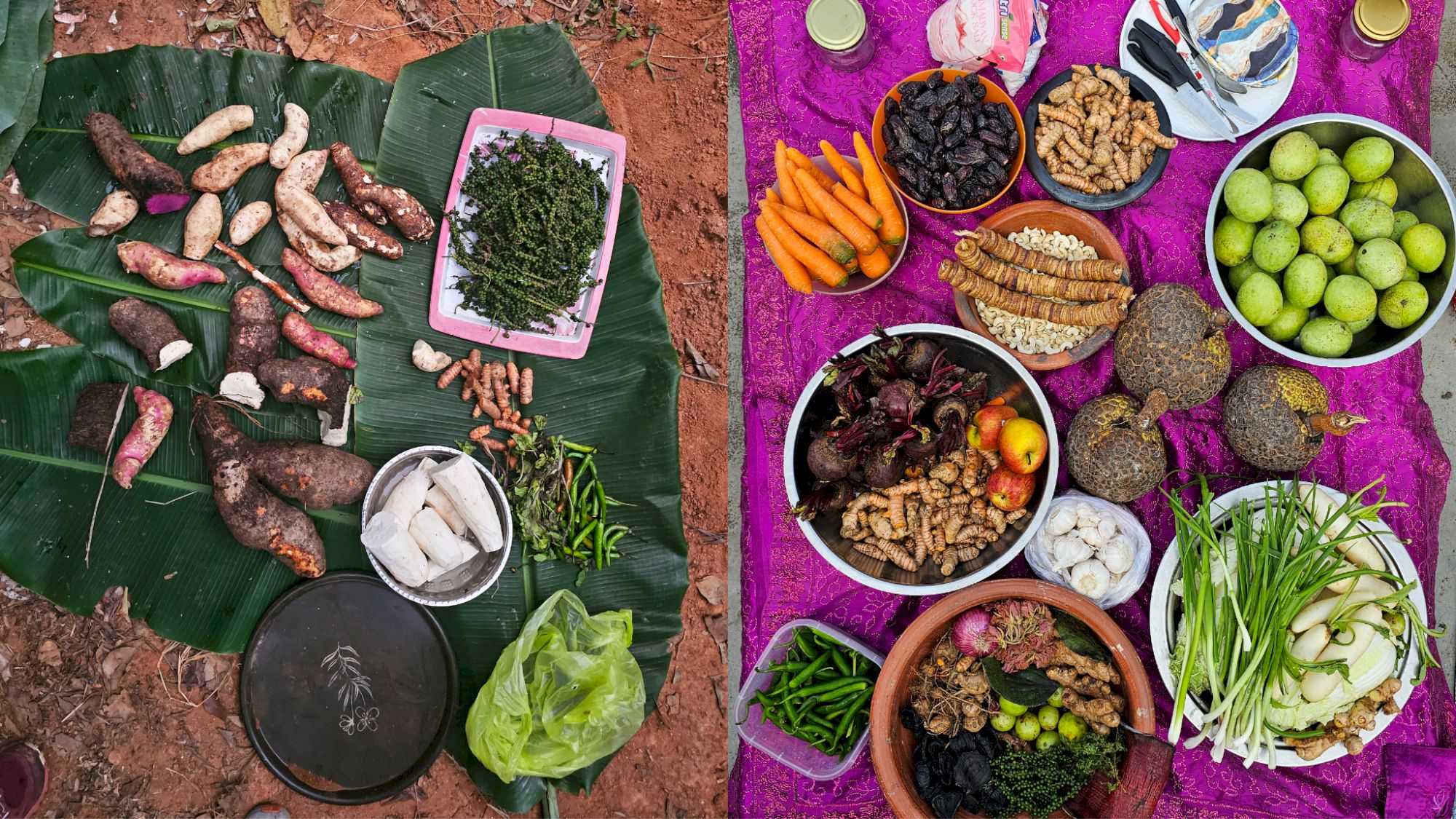
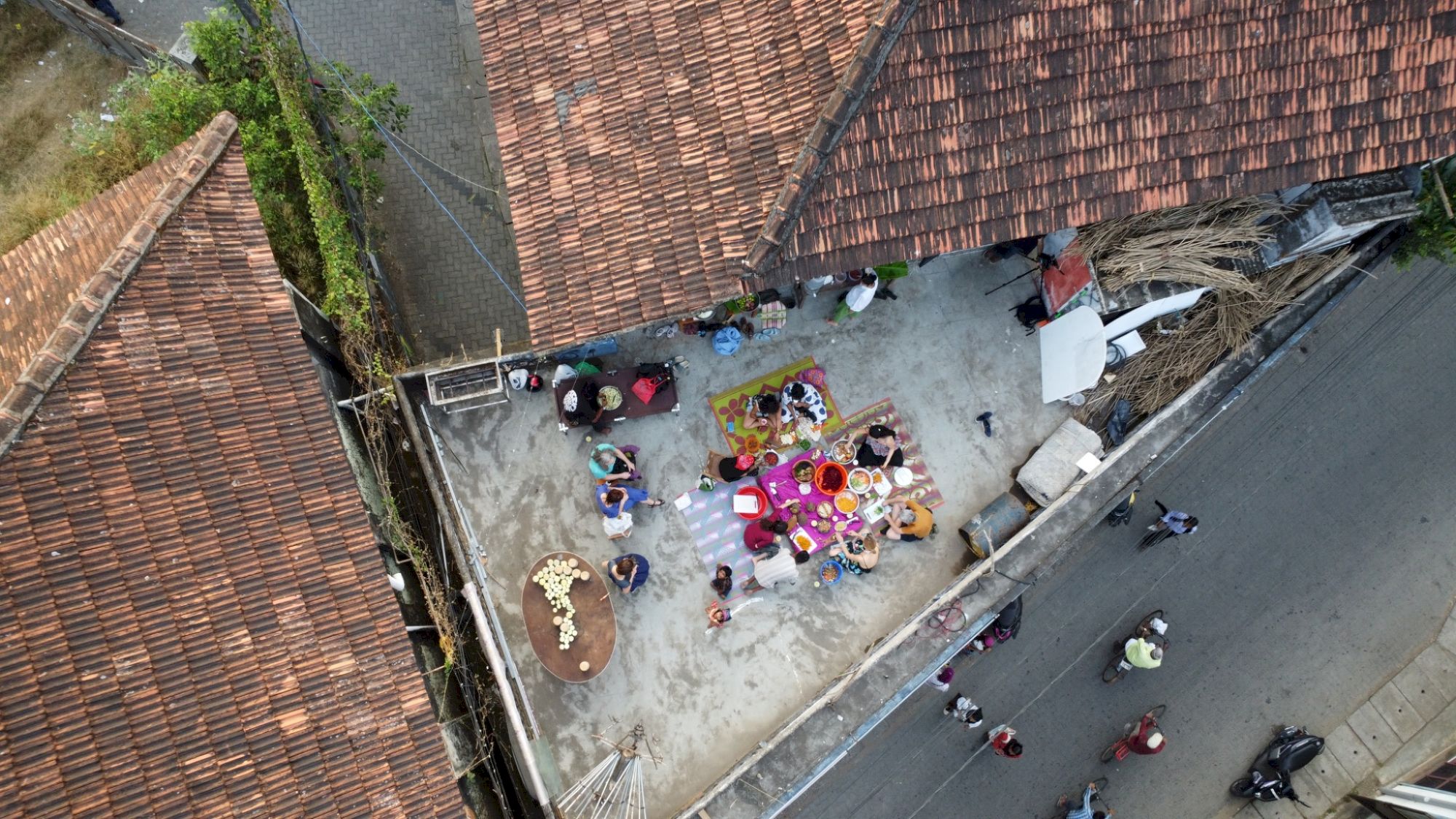
After harvesting at Vivek Vilasini’s food forest, in search of low carbon impact, the team transported the fruits and roots to Kochi using various public land and sea transport, finally joining by e-rickshaws the Forplay Society in Mattancherry at Fort Kochi. Fresh curcuma roots, green peppers, scramberries (known in India as lubika), green mangoes, beetroots, and dates were then turned into pickles for low-impact preservation in a workhop led by food artist Maya Minder and the Kitchen Alchemy collective. Fermentation is an ancient, hyperlocal method that predates refrigerators, cold chains, and their energy-intensive infrastructure.
Maya Minder frames fermentation as a more-than-human entanglement within the decolonization of food practices. Food sovereignty, microbial action, and long-term preservation constitute forms of cultural resistance. Fermentation advocates for slow food systems in the face of the accelerating global food industry and emphasizes the interdependence of healthy soils and healthy guts.
Preparing Indian-style pickles is an art form, and Minder has joined forces with the Forplay Society’s Kitchen Alchemy collective in a rich collaboration. Kitchen Alchemy occupies (until March 31st) the art space wwith a live kitchen installation, positioning the domestic kitchen as a relational site where lived experience and everyday forms of knowledge take shape. Rooted in domestic life, the project draws on its routines and material textures as a mode of artistic inquiry.
Cultural poaching
In the 1970s, as a counterpoint to Michel Foucault’s vision of the panopticon and top-down control, Michel de Certeau proposed a reading of the world “from below,” shaped by discreet tactics and acts of cultural poaching—modest gestures capable of subverting established orders.
Lines to Follow – Soils to Gather aligns with this legacy. Collective harvesting, conversations while walking, low-carbon transport, shared meals, cooking, fermentation, and sailing become acts of poetic and concrete resistance. These gestures trace a path of poaching that follows, questions, diverts, and re-enchants former trade and colonial routes, reconnecting them with another ecology of movement—slow, fertile, and relational.
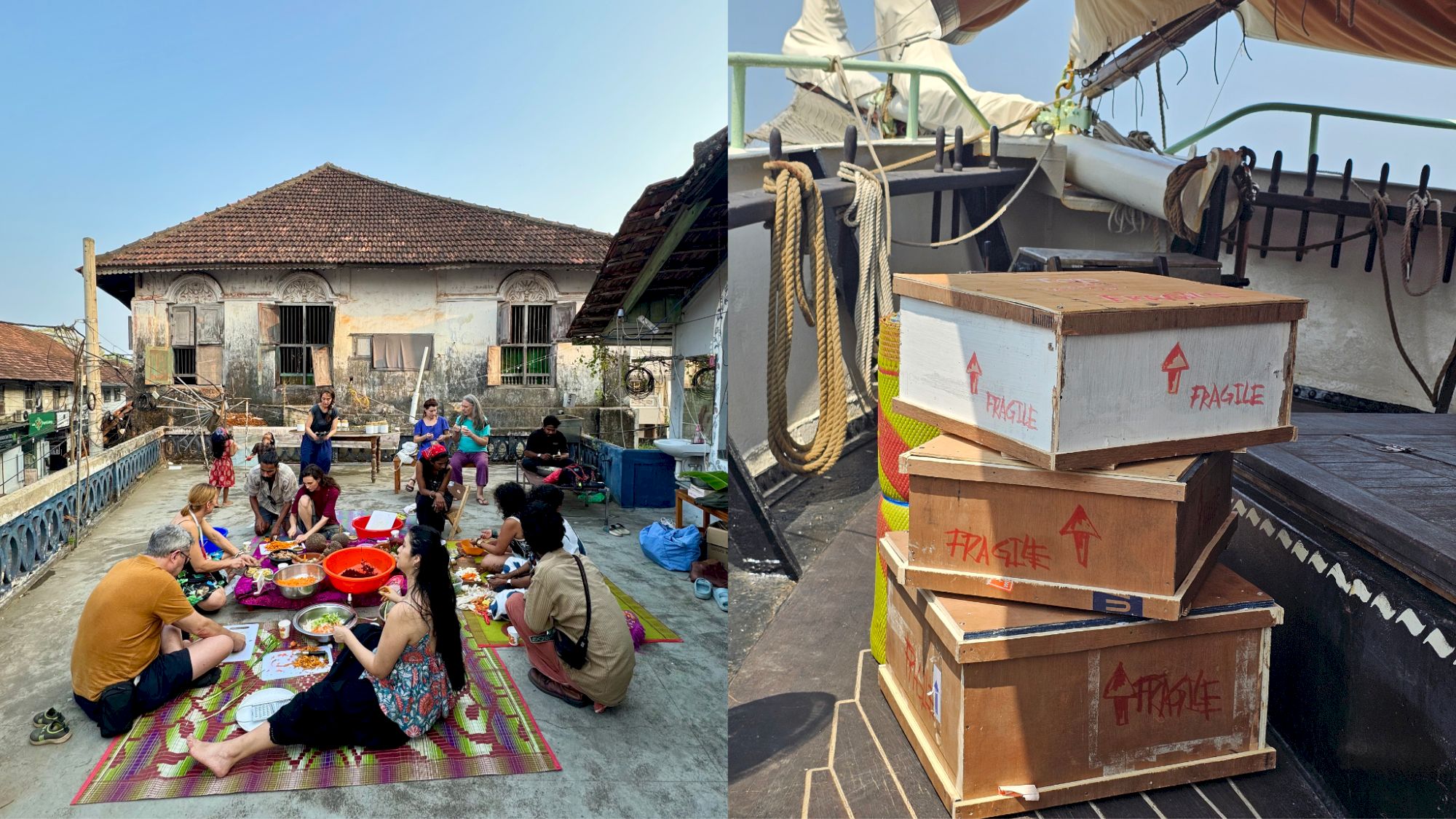
The long-term performance culminated in the delivery of the fermented foods to the Arka Kinari sailing ship, a floating art project created by musicians Filastine & Nova. The symbolic moment of handling the cargo was accompanied by a shared buffet and a music performance by French artist Quentin Aurat. Before the vessel resumed its slow voyage toward Europe as part of its round-the-world journey, following more than two years spent navigating the Indonesian archipelago.
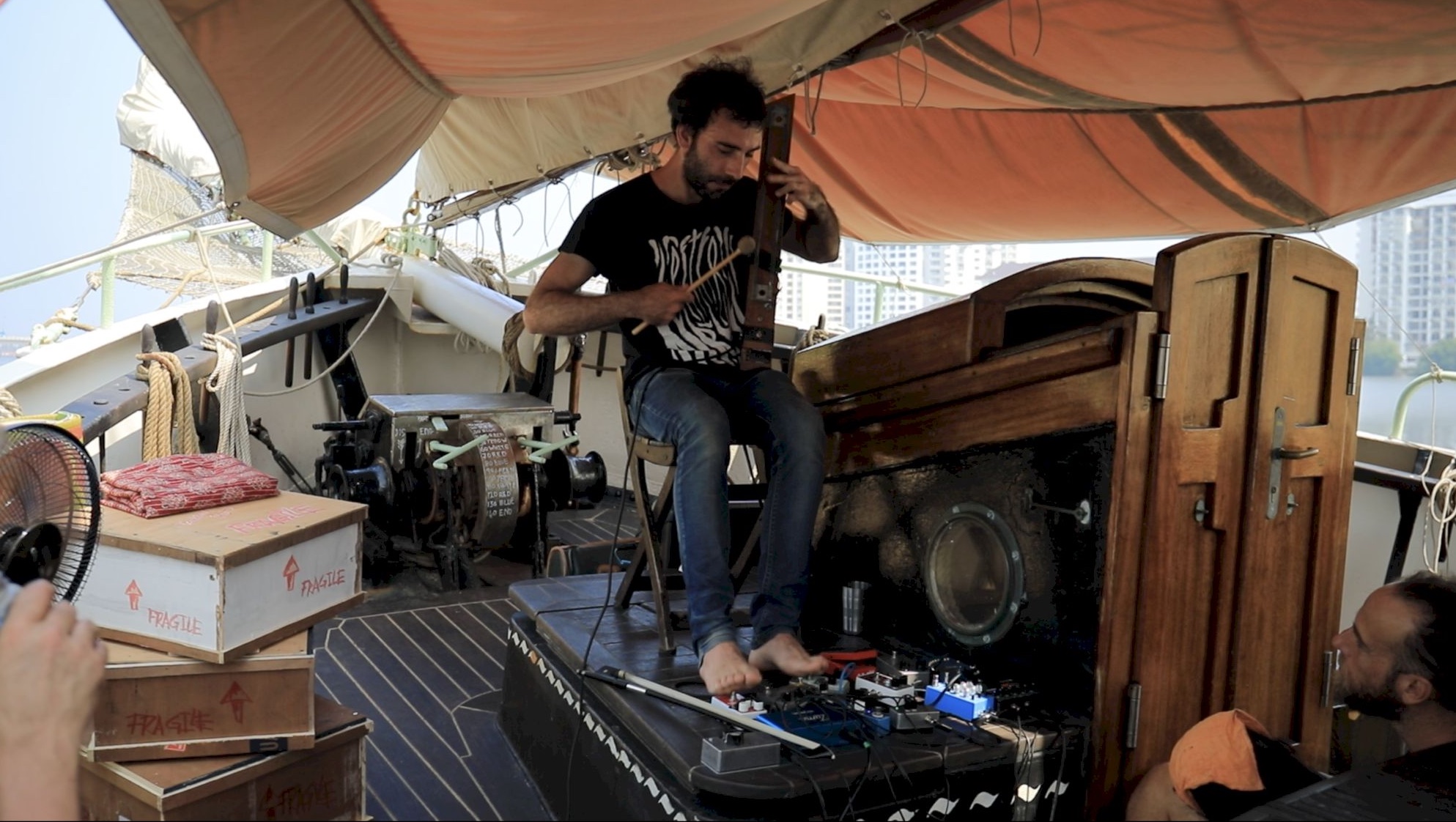
Arka Kinari, the ship’s name, combines arka (Latin for “vessel” or “to hold and defend”) and kinari (a Sanskrit term for a half-human, half-bird musician and guardian of the tree of life). Filastine & Nova use uses multimedia to transform a traditional sailing ship into a floating installation, exploring themes of ecological crisis and climate resilience by using the ship’s sails for cinematic video projections and its rigging for a custom light installation. Accompanied by a unique score blending Javanese melodies with percussions and electronic music, the project imagines a sustainable, nomadic future on the sea. The vessel hosts floating residencies and shows from transindustrial ports to remote coasts, embodying its own message of low-carbon mobility and renewed access to oceanic pathways.
Filastine & Nova, Nusa Fantasma (“Ghostly Island”), video clip directed by Dibal Ranuh of the Balinese multimedia performance studio Kitapoleng (2025):
Sail freight
This upcoming voyage, from Kerala to the Mediterranean coast of Europe, echoes the contemporary renaissance of cargo sailing, which is being redeveloped as a low-carbon mode of transport. Sail freight refers to the environmentally focused transport of cargo by wind-powered vessels, offering an alternative to fuel-based shipping through traditional or modern sailing technologies, sometimes supported by auxiliary engines. It revives historical practices of maritime trade while emphasizing sustainability, ethical transport, and reduced carbon footprints. Food transport is the most striking example of this, combining sustainable transport and fair trade (read our previous report at the first Soil Assembly). The Arka Kinari’s current voyage from Kerala to the Mediterranean coast of Europe echoes this contemporary revival of food transport by sail, positioning this maritime mobility as both an artistic practice and a political response to climate justice. The fermented foods will reach the Mediterranean this summer, and the slow fermentation of these collective actions from the mountains of Kerala to European harbors will be celebrated with food and music.
By proposing new narratives of global food systems, this long-term processual performance is a vehicle for shifting the semiotic meanings of ecological and geopolitical action. It will be the subject of a final creative documentary, showing how, by working with land, microbes, communities, and networks, the artists and participants explore food justice, guardianship of biodiversity, microbial agency, low-carbon transportation and decolonial ecology.
Both local and planetary in scope, the project is rooted in specific soils while responding to global ecological urgencies. It transcends climate justice to address migration, memory, and the desire to connect food with identity, place, and time. It is a shared metabolism: a slow, transformative, more-than-human performance shaped by the international network that emerged through its making.
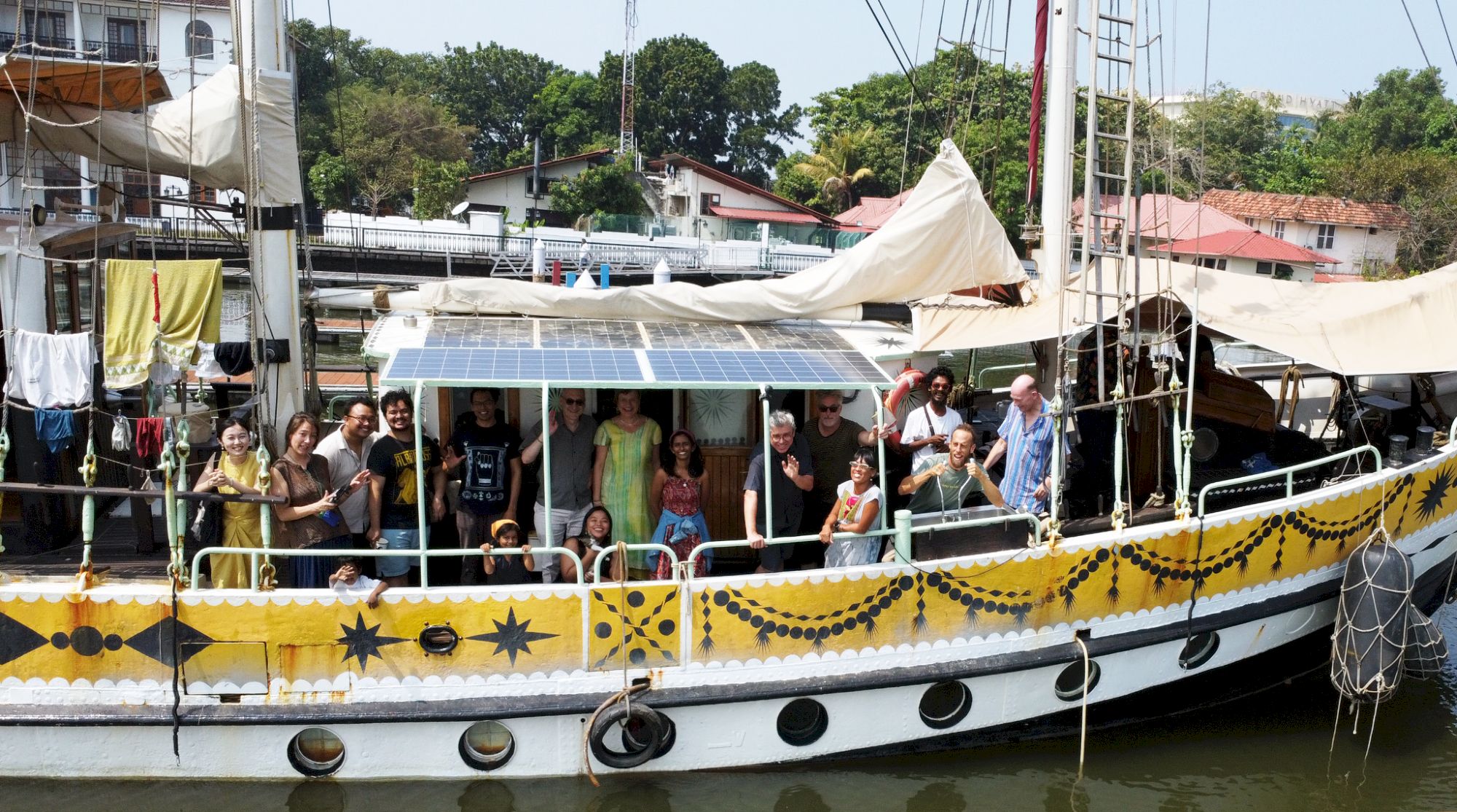
With the participation of:
Filastine & Nova and the Arka Kinari crew, Vivek Vilasini and the custodian farmers network of the Western Ghats, Ewen Chardronnet, Maya Minder, Kitchen Alchemy, Quentin Aurat, Daniela Zambrano Almidón, Shashank C, Nora Hauswirth, Tatiana Kourochkina, Alice Smits, Ramon Grendene, Jon Petter, Antje Engelmann, Lola Göller, Seljuk Rustum, Irfan Adil Navaz and the teams of Forplay Society, Udumbanchola Circle, Soil Assembly and Makery.
More on Soil Assembly and Arka Kinari.