
Kompost Festival, Rot & Roll in Berlin
For four days in early July, the Kompost Festival 2026 transformed Tempelhofer Feld and its surroundings into a temporary laboratory for soil care. More than a festival, it became a meeting place where gardeners, compost practitioners, artists, scientists and activists came together around a deceptively simple question: What can compost teach us?
Makery interviewed the festival’s main organizers, Severin Halder and Julian Chollet. Their paths had developed through different practices and networks, but converged around a shared interest in compost as both a material process and a way of thinking.
Makery: How did you get in contact with soil, and what eventually brought you to organize this year’s Kompost Festival together?
Severin Halder: My journey with compost began in childhood, when I became interested in plants. That interest eventually led me to the community gardens and favelas of Rio de Janeiro, where I wrote my geography thesis. From there, it continued through community gardens and various forms of supporting urban agriculture in Europe, Latin America and Africa. The most recent major step was the beginning of the Kompost Zone Research Project and the first Kompost Festival in Münster in 2021. I started the festival as a way of using compost both as a practice and as a metaphor for thinking about socio-ecological transformation, particularly in urban contexts. The idea was to bring together artistic, practical, activist, and scientific contributions in an experimental format.
I had also lived in Berlin for more than ten years and was deeply involved in the community-garden movement there. I co-founded the Allmende-Kontor, worked in education, participatory research and networking around community gardens, and developed a large network of people and initiatives in the city. That history eventually became one of the reasons for bringing the festival back to Berlin.
Julian Chollet: My own journey started somewhat similarly. I also grew up in the countryside and ate earthworms as a child – so the connection to soil was certainly there. Then I spent a lot of time in cities and lost that connection. Toward the end of my twenties, I started trying to establish a garden and grow veggies – which, to be honest, wasn’t easy for me. At the same time, I became more involved with Hackteria, giving workshops and moving beyond the academic world of molecular biology I had been working in until then.
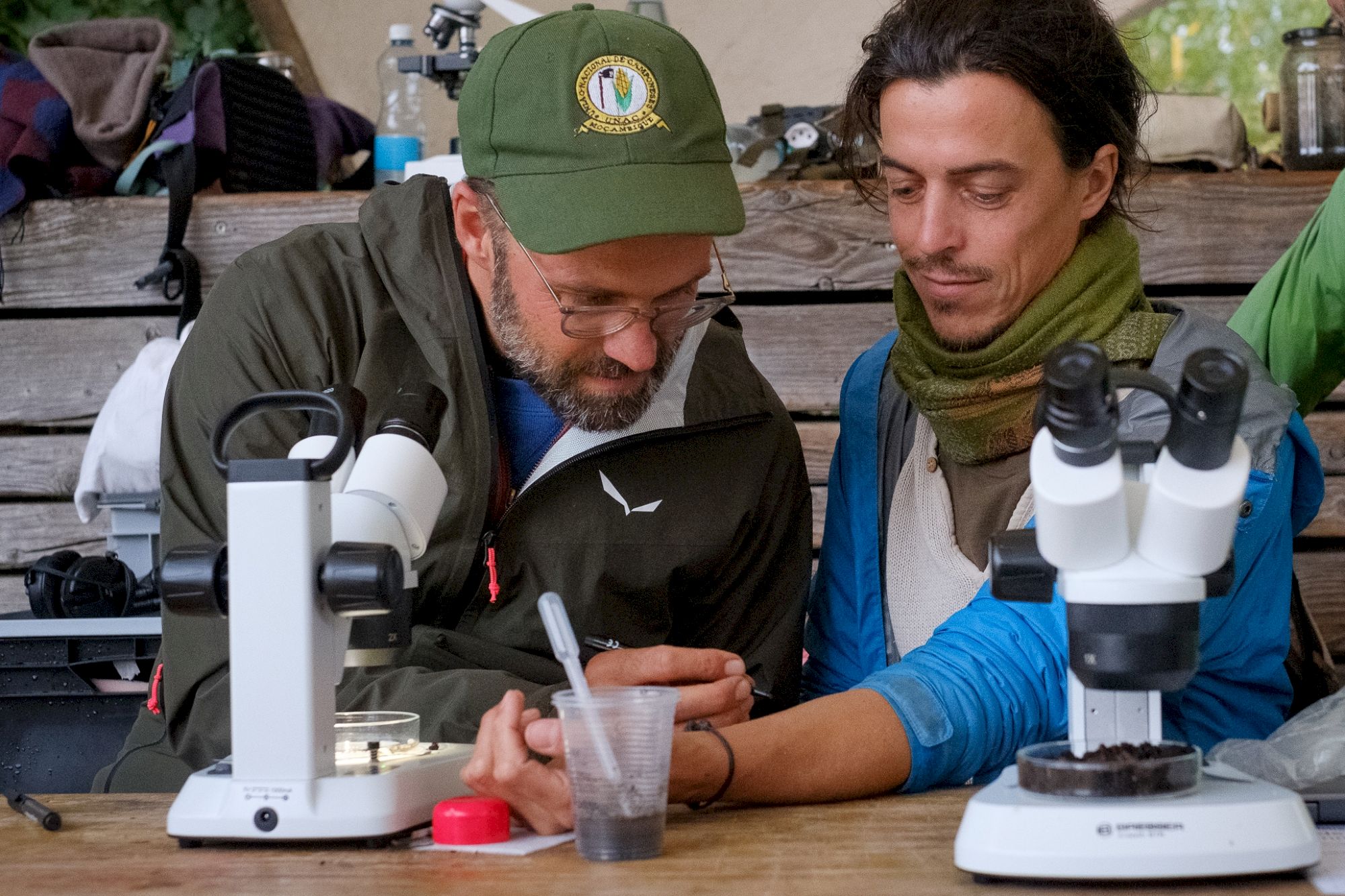
My new interest in gardening also made me realize how little I actually knew about all of this. I started looking at soil and compost samples with a microscope and was immediately fascinated by what I saw. Microscopy became something of an obsession, which catalyzed both the founding of mikroBIOMIK and the initiation of the HUMUS sapiens project – a close collaboration with Hackteria. In 2018 and 2019, we organized several small retreats, most of them in rural settings but some also in cities. Those gatherings became important spaces for meeting people, experimenting with practices, and developing guides and workshops. They also laid the groundwork for my later collaboration with Severin.
Severin Halder: I came across mikroBIOMIK through a workshop and found your approach to participatory soil science very interesting. What you are doing stands out to me because it comes from a different starting point and is far from a conventional university project. The more I looked into it, the more I discovered a whole different world around it – The Laboratory Planet newspaper, the people involved in the Soil Assembly, and this wider network of projects and initiatives. I realized that there were all these connections to things I was already working on.
Julian Chollet: Yeah, and then you invited us to the Kompost Festival, but we never managed to come. So instead, we just went ahead and organized our own edition together.
What made you decide to bring the Kompost Festival to Berlin?
Severin Halder: I had been organizing the festival in Münster for four years. Developing innovative formats for interaction between civil society and science, often with artistic elements, was part of my academic job at StadtLabor, and the Kompost Festival emerged from that. But I increasingly felt that the festival had potential for a larger stage. Berlin seemed like a place where it could develop in a different way.
There is already a strong network of urban agriculture and green commons actors around the Tempelhofer Feld, so it made sense to work with what was already there rather than simply choosing a venue and dropping a festival into it. We also deliberately wanted to connect people who were already active locally with an international network. In that sense, the festival was not something imposed from outside. It grew out of existing relationships and networks.
The connection to the spaces and people was particularly important. The Tempelhofer Feld has a very specific character, and questions around soil, urban development, and land sealing are politically charged there. Bringing the topic of compost and soil into this context also had a political dimension.
Julian Chollet: What clicked for me was precisely how much was already happening around Tempelhofer Feld. There are community gardens and people who have been doing this work for years or even decades. Rather than creating something completely new, we could build on that existing work and connect it to our other networks. I really liked that combination.
If you had to describe the Kompost Festival to someone who wasn’t there – beyond the program and individual events – what kind of spaces or situations did you create?
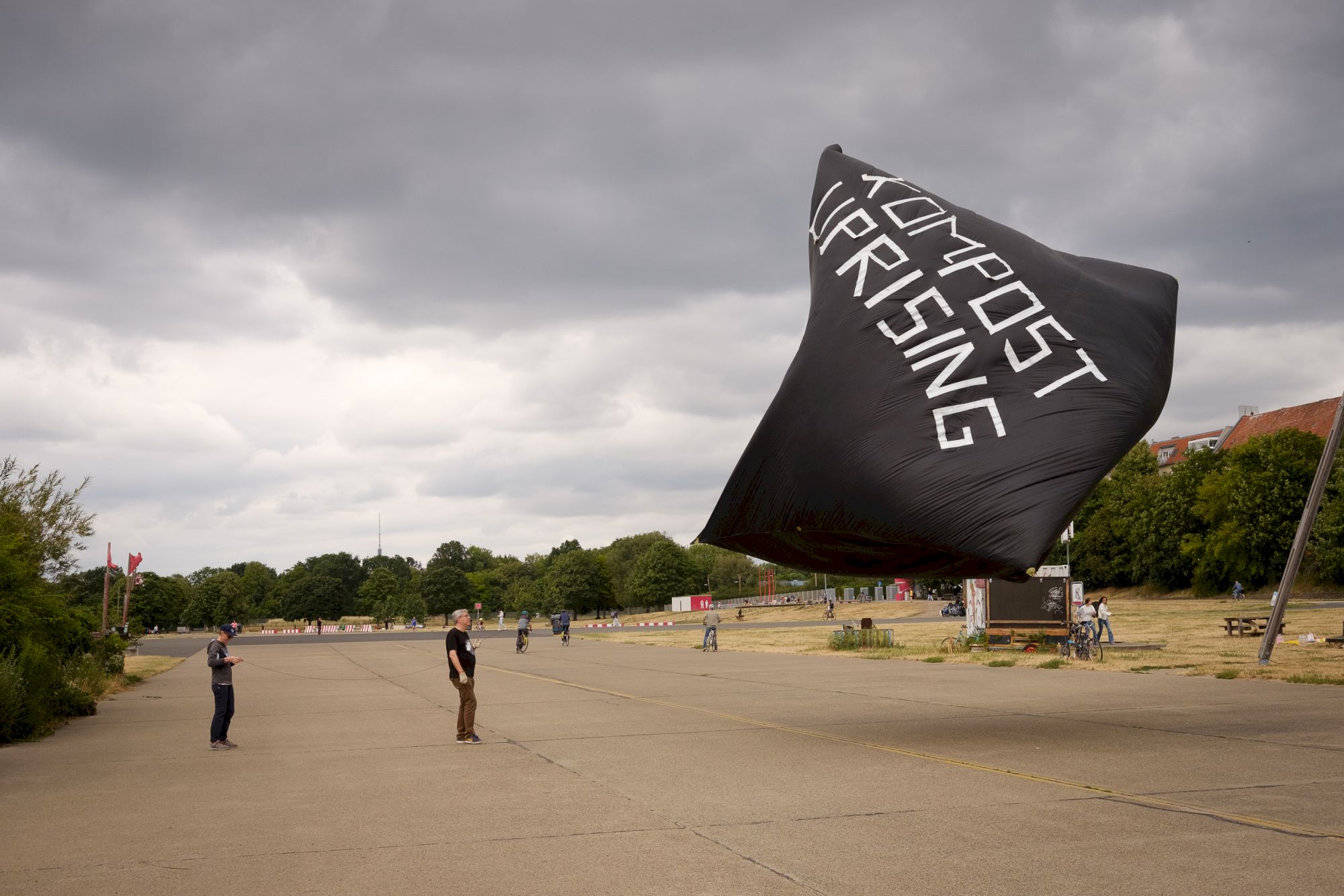
Julian Chollet: I would say the target group wasn’t the random person walking past who had never thought about compost before. The core audience were people who were already interested in soil, compost, gardening, ecology, or related practices. At the same time, the Kompost Festival was very open and experimental, and each day was different.
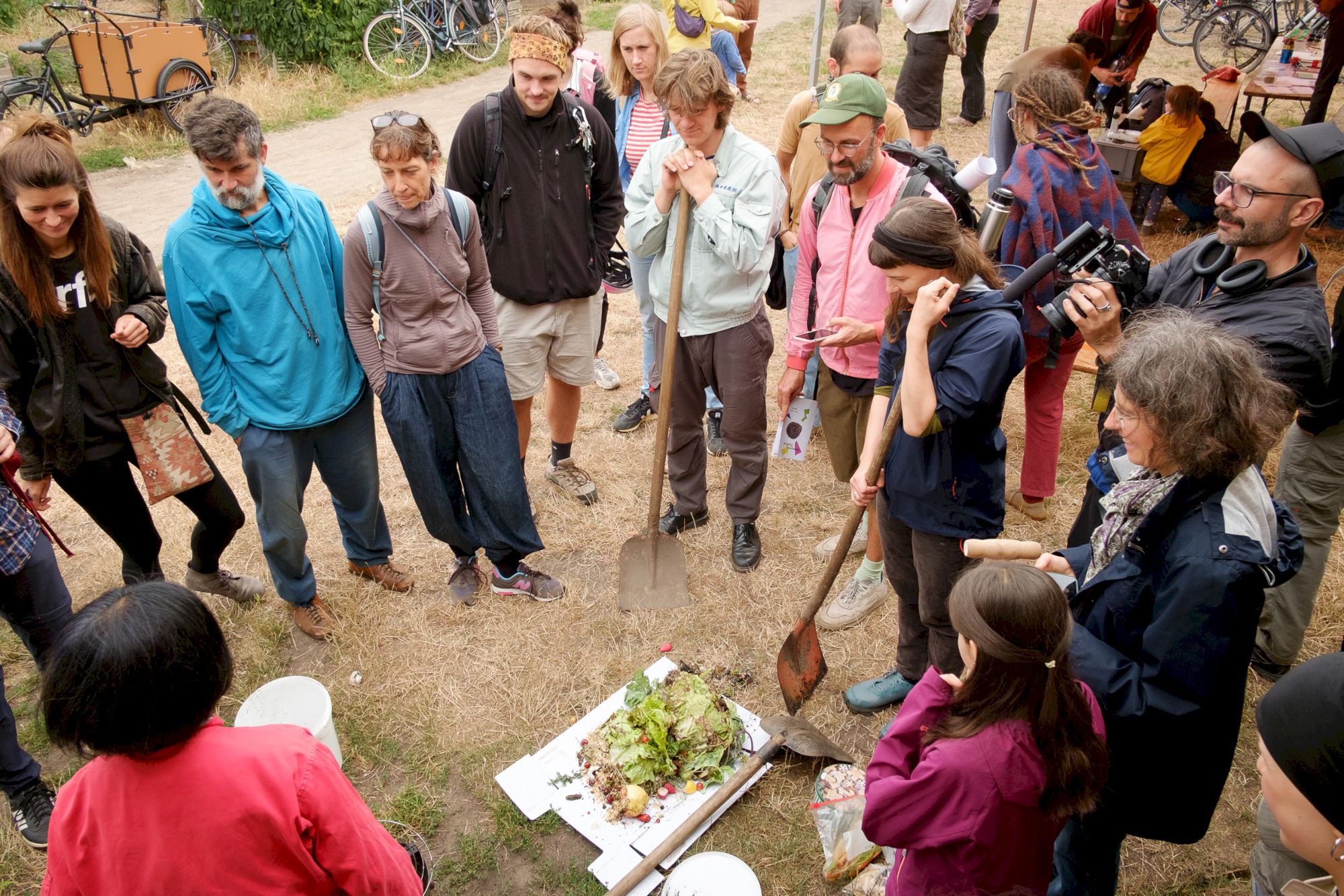
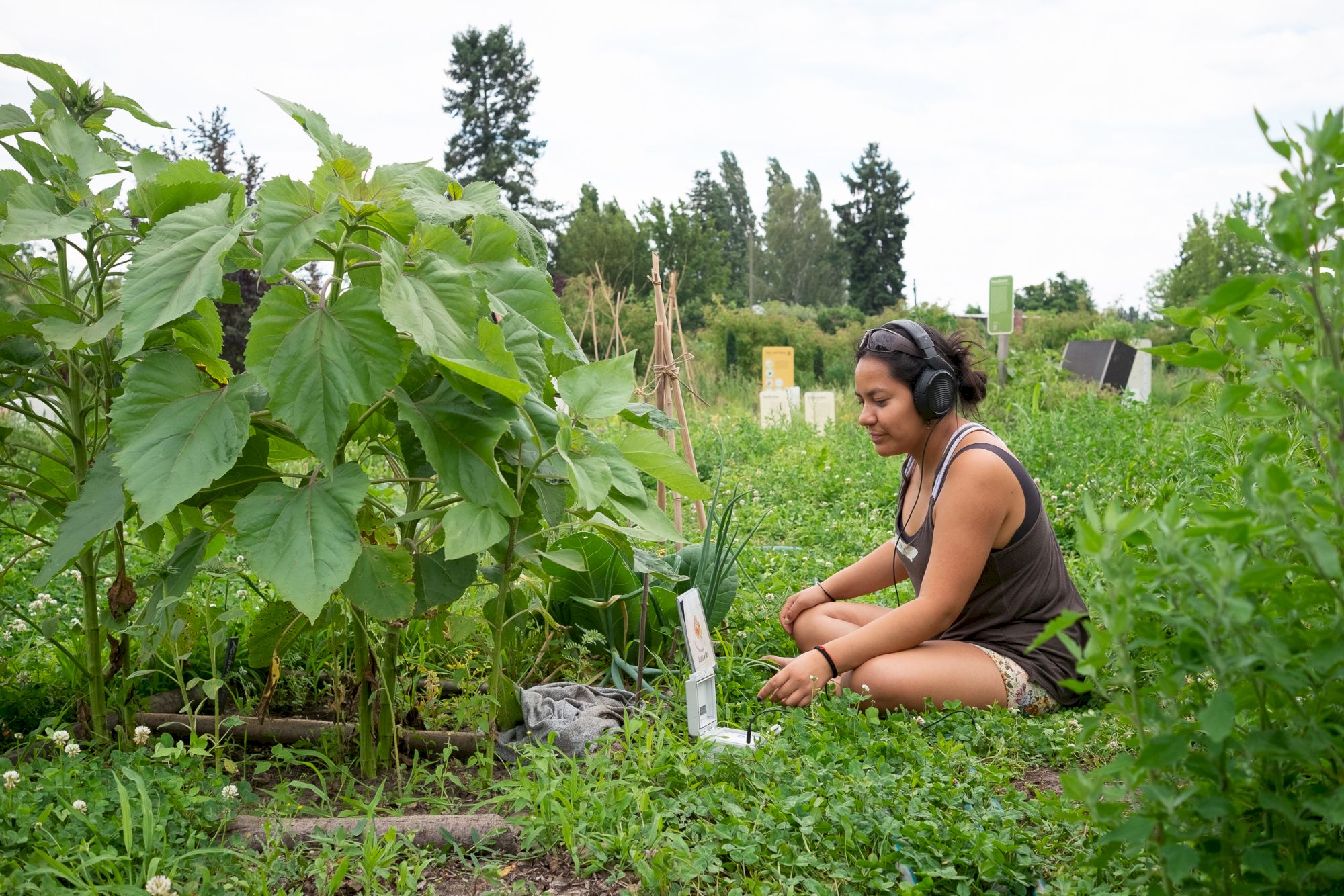
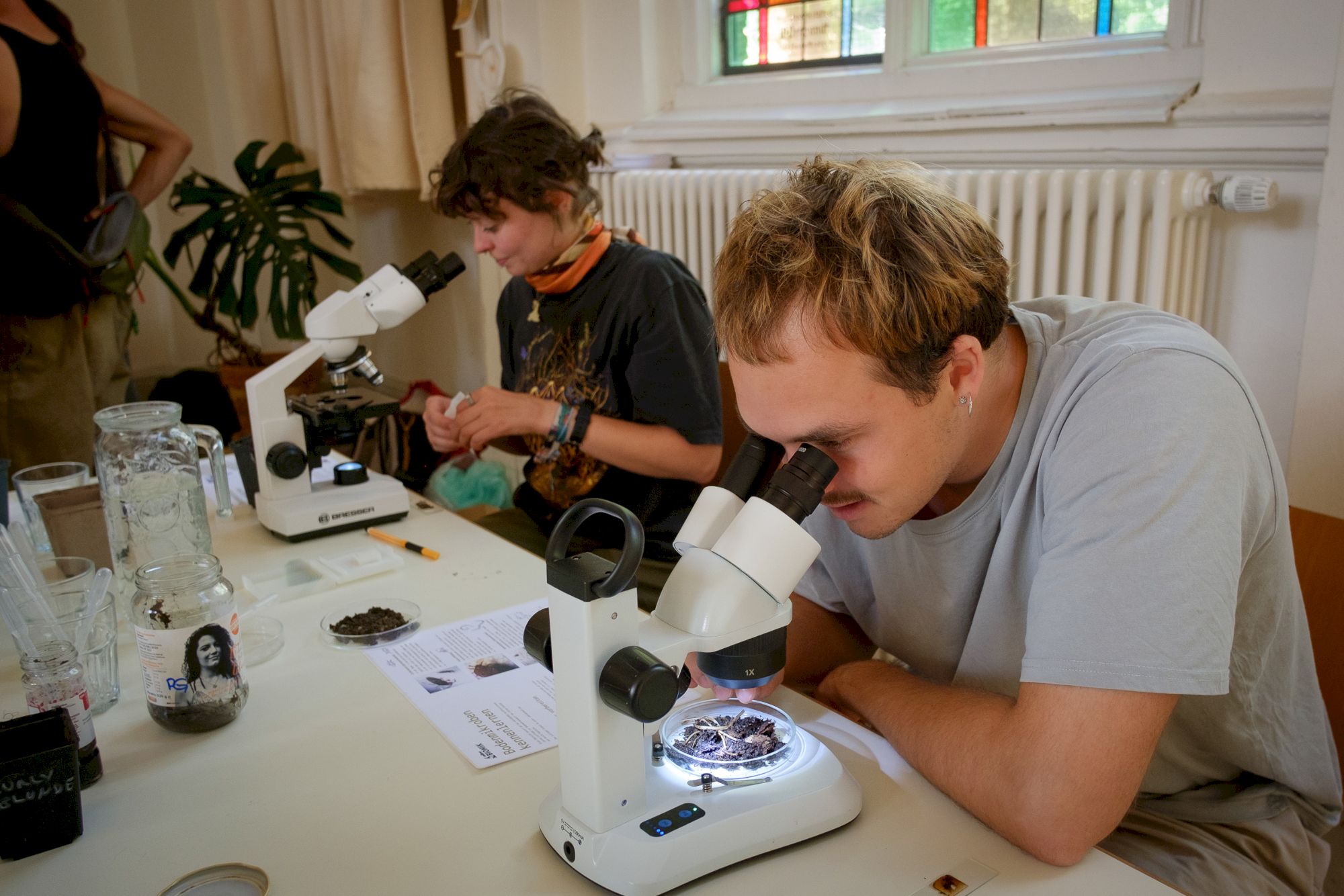
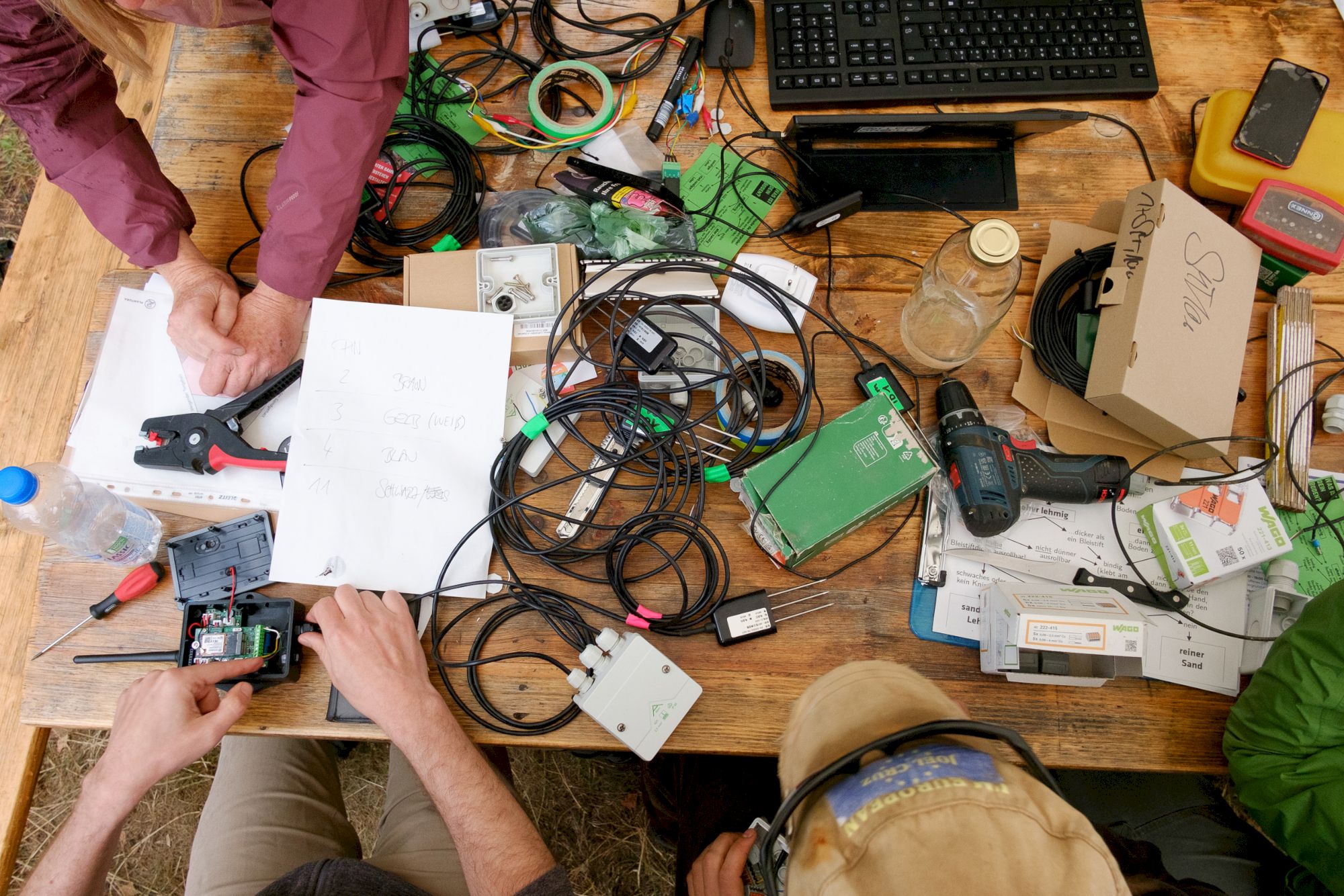
On Friday evening, for example, there was a clear way through the program: you could listen to creatures in the ground, look at them under a microscope, taste some soil and compost, then attend talks and enjoy a performance. On Saturday it was much more chaotic – in a good way. You might arrive and find 3 people dancing on a compost pile, a group soldering moisture sensors in one corner, and others making biochar and cooking soup. For a compost nerd, that was probably paradise, but some might get a bit lost.
Severin Halder: Yes, and I think that experimental character is really central. The word “festival” can create a misleading image because this isn’t a completely organized, top-down, curated event. It is much more a space that invites people to participate and co-create. It is self-organized, experimental, and, in some ways, speculative.
There was an extremely broad range of activities. There was music and dance, but also microscopy, poetry, compost tasting and painting, gardening, cooking and fermenting. The common thread was compost. But that thread isn’t necessarily obvious at first. You have to engage with it and figure out for yourself how all these things belong together. It isn’t pre-digested. You can’t simply consume the festival and immediately understand everything. In that sense, it can be demanding.
Julian Chollet: And what might also have been a bit of a challenge was the fact that the Kompost Festival moved around. You had to follow it from place to place, and that meant constantly entering different spaces and communities. But I think that was also what made it interesting: you could start somewhere with one particular activity and end up somewhere completely different, encountering people and practices you might not otherwise have come across.
Severin Halder: That was very intentional, the nomadic character is part of the concept. We wanted to create a kind of movement space – to bring together people who might already be working on related things but don’t necessarily see themselves as part of the same movement. Someone might be focused on their own garden or project without seeing how it connects to what someone else is doing. The Kompost Festival created situations where those connections could become visible.
At the same time, there were different levels of engagement: you could go deeply into the nerdy side of things, or simply arrive with your child, encounter something strange and join in. So it could be specific and challenging, while still remaining open.
Why compost? What made you choose compost as the central starting point of the festival?
Severin Halder: I think that accessibility is one of the key reasons compost became so central. Through our collective work with orangotango, especially participatory mapping and public-space projects, we learned a lot about communication and about what kinds of concepts people can actually connect with. Compost is an incredibly rich term. It is an object, a practice, and a metaphor all at once.
It connects very basic, essential aspects of life on this planet. It is something extremely ordinary – almost everyone can relate to it – but at the same time it has something slightly disturbing or even disgusting about it. That can be useful, too, because it immediately creates attention and curiosity.
There is also an enormous metaphorical potential. Compost allows us to think about different cosmologies and ways of understanding life. It can connect to ideas from thinkers such as Donna Haraway and Bruno Latour, but also to indigenous cosmovisions from the Andes or to the words of Bayo Akomolafe. That’s what makes compost such a powerful starting point. A term like “soil festival,” for example, might sound like something for a particular group of specialists. “Kompost Festival” is strange enough to make people ask: What is that? And that question creates an opening.
Julian Chollet: For me, compost is first of all something very concrete and accessible. Most people understand what a compost heap is, or have at least thrown something onto one. It also carries a very strong idea of transformation: something that has been discarded becomes something valuable – the “gardener’s gold” – something useful that you then distribute carefully in the garden because you value it.
But as Severin mentioned, there is also a more abstract level. Compost can be understood as a model for transdisciplinary work: you bring together very different elements, approaches, and forms of knowledge, put them into the same heap, add a little moisture, and see what happens. Things decompose, transform, and something new emerges. And then there is the fact that compost combines human intention and labor with the work of more-than-human beings – microorganisms, fungi, insects, and so on. They have their own autonomy and dynamics. Humans just create the conditions to support the process.
The Kompost Festival was part of the International Soil Assembly. What does it mean when a very local practice like composting becomes part of an international network?
Julian Chollet: From India to Ecuador to Germany, composting is happening everywhere. The specific practices may differ from one place to another, but the broader goal and the fundamental microbiological process are essentially the same. That makes it a connecting element between very different contexts. And it also gives us a chance to learn from those differences: to see what people are doing elsewhere, why they are doing it that way, and what we might learn from their experience.
I also like thinking about humus in this context. There can never really be too much of it. It can keep building up, and the more humus there is, the better the soil becomes. And since compost supports humus formation, there can also never be too much compost.
Severin Halder: I sometimes think that the legacy of humanity could be measured by the amount of humus we leave behind – or the amount we destroy. So perhaps the only really sensible thing humanity can do is build humus. And in that sense, compost offers a very simple answer to some very complex crises. There is something almost magical about that. At the same time, there are much bigger questions inside it: how do human and more-than-human life interact? How do we think about life and death, growth and decay? Can we move beyond these binary categories and think about them differently? That is where I think compost becomes particularly interesting. It contains another form of social-ecological organisation at its core.
And coming back to the festival: for me it is part of a larger process of connecting people who are working on related questions. Making those connections visible. You can say to people in Berlin: what you’re doing here is great, and you’re not alone, look to the Andes, look to the Amazon, check out what happens in Ukraine, Singapore…. Knowing that can give people a lot of energy.
That is also why I see the festival as only one part of a much larger process. It is part of the Soil Assembly, but also part of our book project [Planet Kompost – planned for publication in early 2027] and the work we have been doing with orangotango: creating tools or moments through which people can connect and a topic can gain attention. The festival was one such moment.
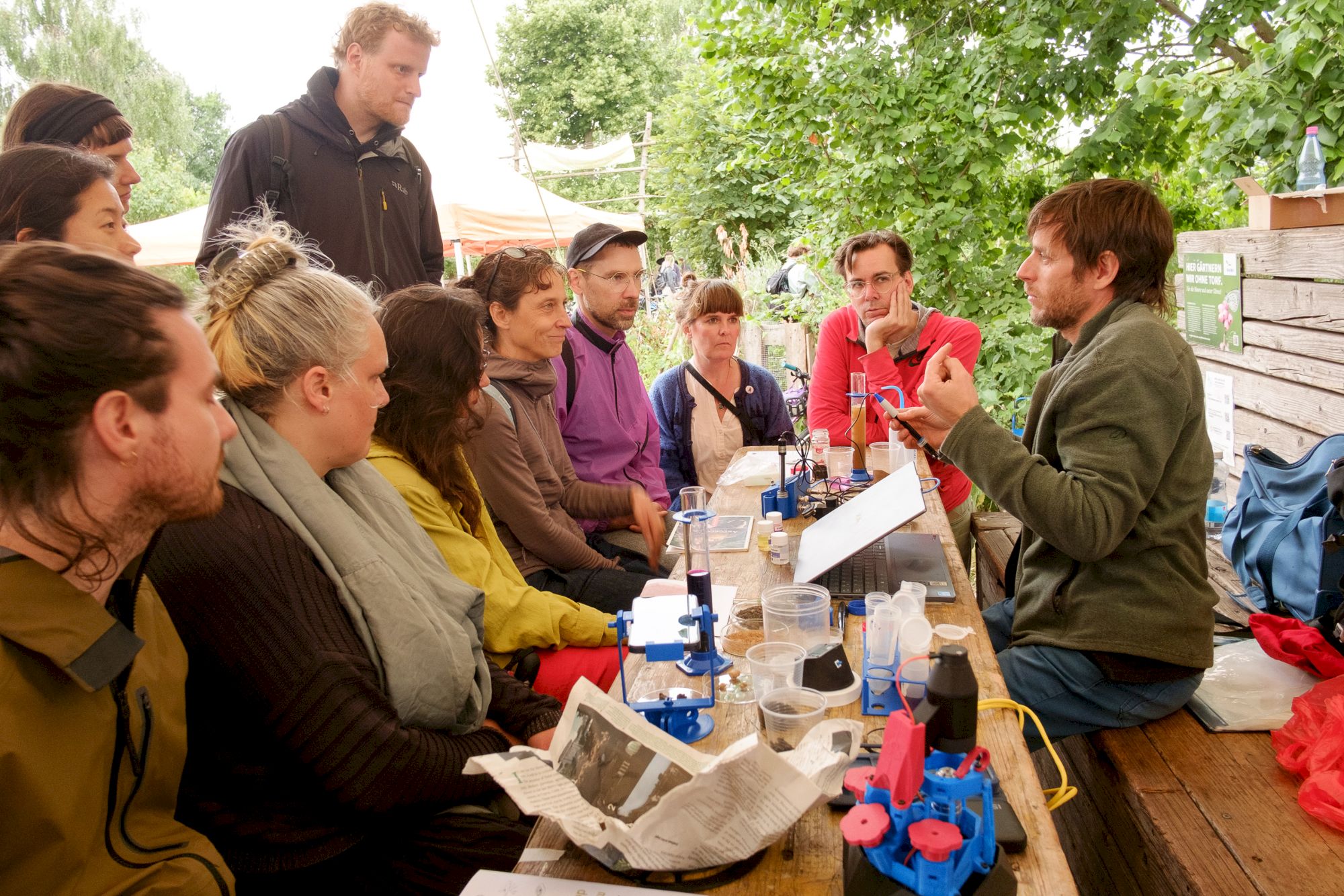
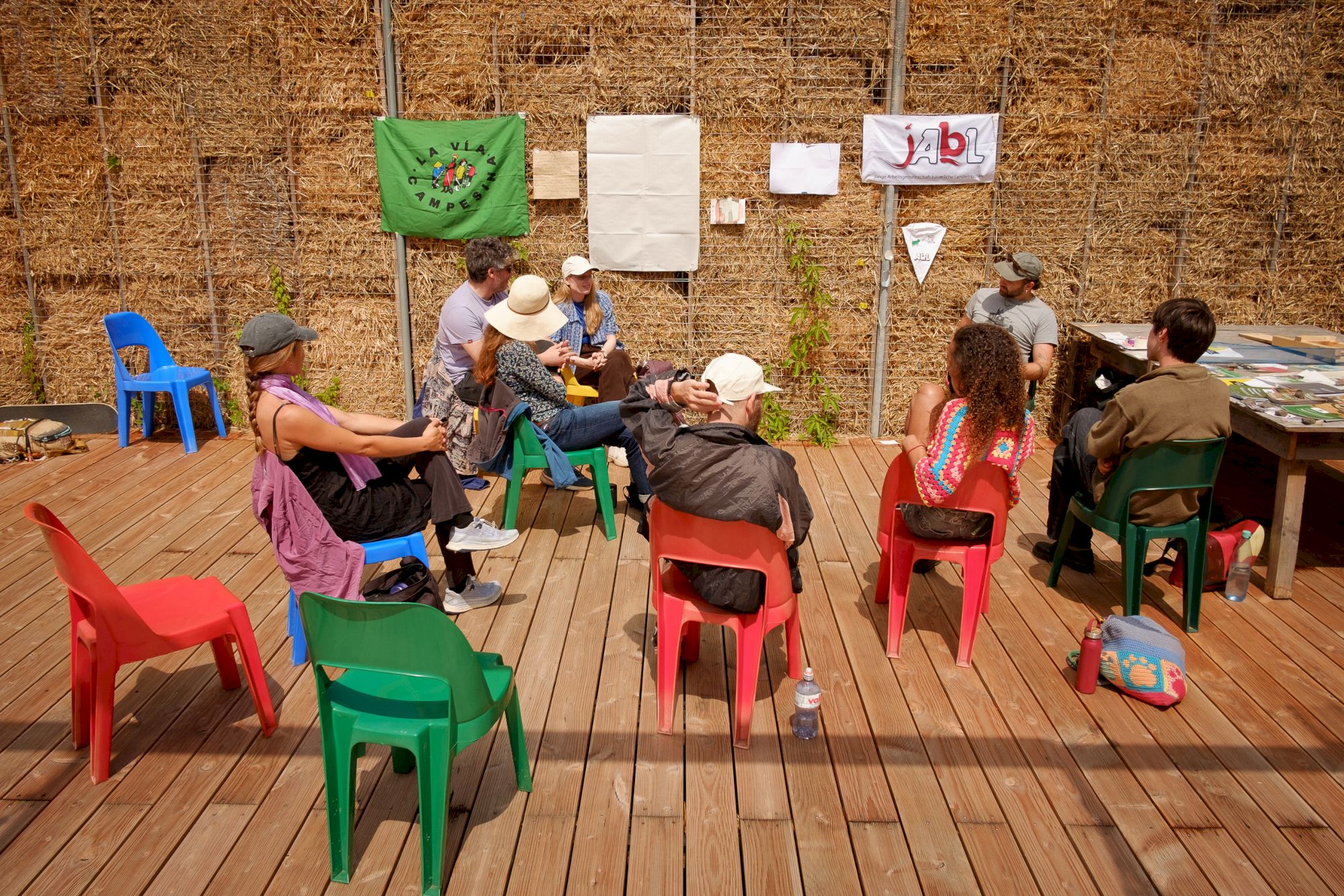
Let’s turn to the festival itself. Each of the four days took place in a different setting and had a different atmosphere. Rather than going through the whole program, what moments or places have stayed with you?
Julian Chollet: The chromatography workshop was definitely a highlight for me. I was really impressed by the dedication and curiosity people brought with them. It was a two-day workshop with a limited number of participants, who had registered and even filled out a questionnaire beforehand. Everyone showed up. One participant brought soils from his farm, another from the community garden down the street. Johannes from Finizio even arrived with bags of compost made from human shit. What impressed me most was people’s patience. Soil chromatography is, in principle, a fairly simple method, but for most of the workshop nothing particularly spectacular happens. The real magic only unfolds towards the end of the second day, when the chromas finally emerge.
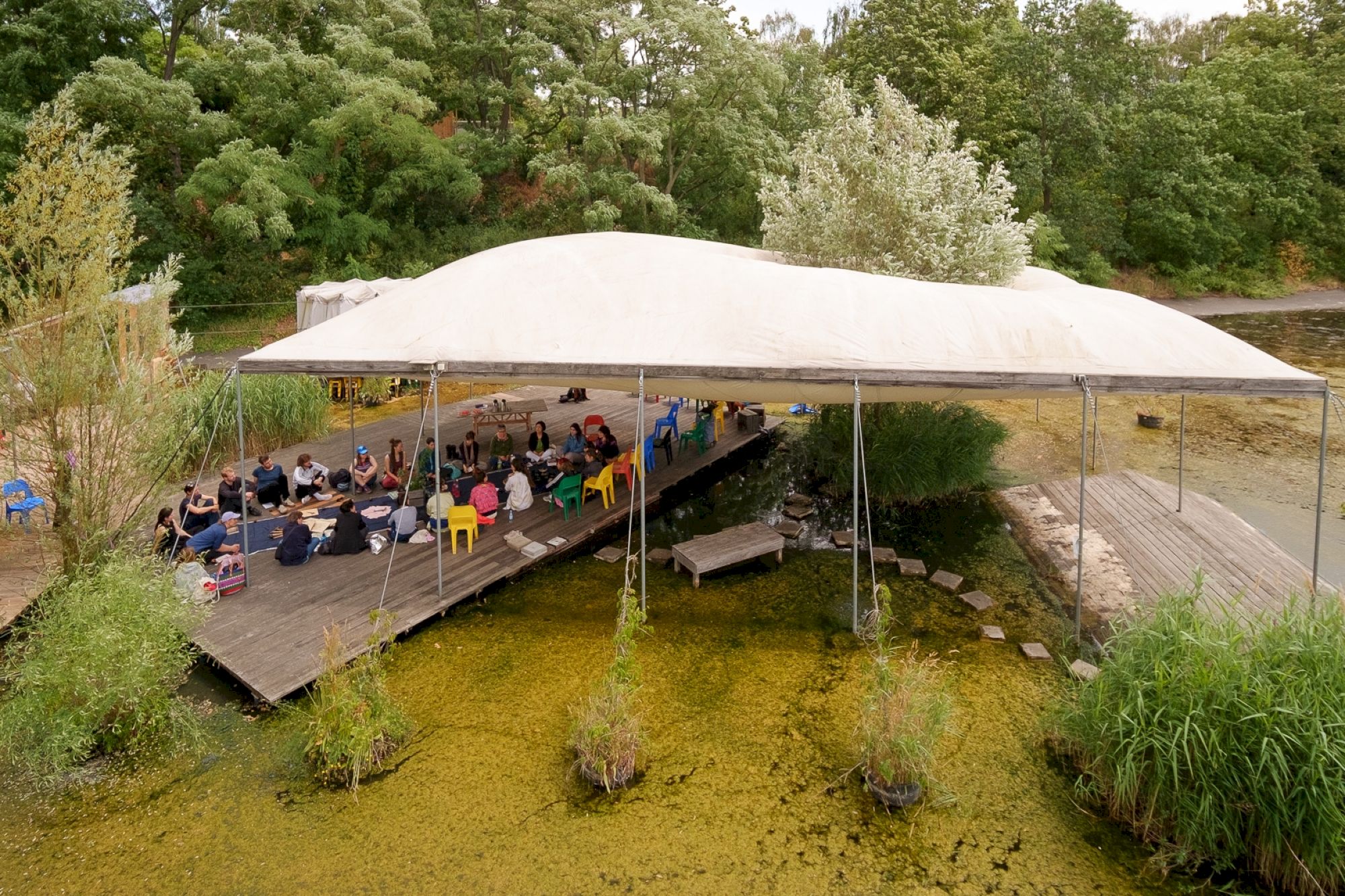
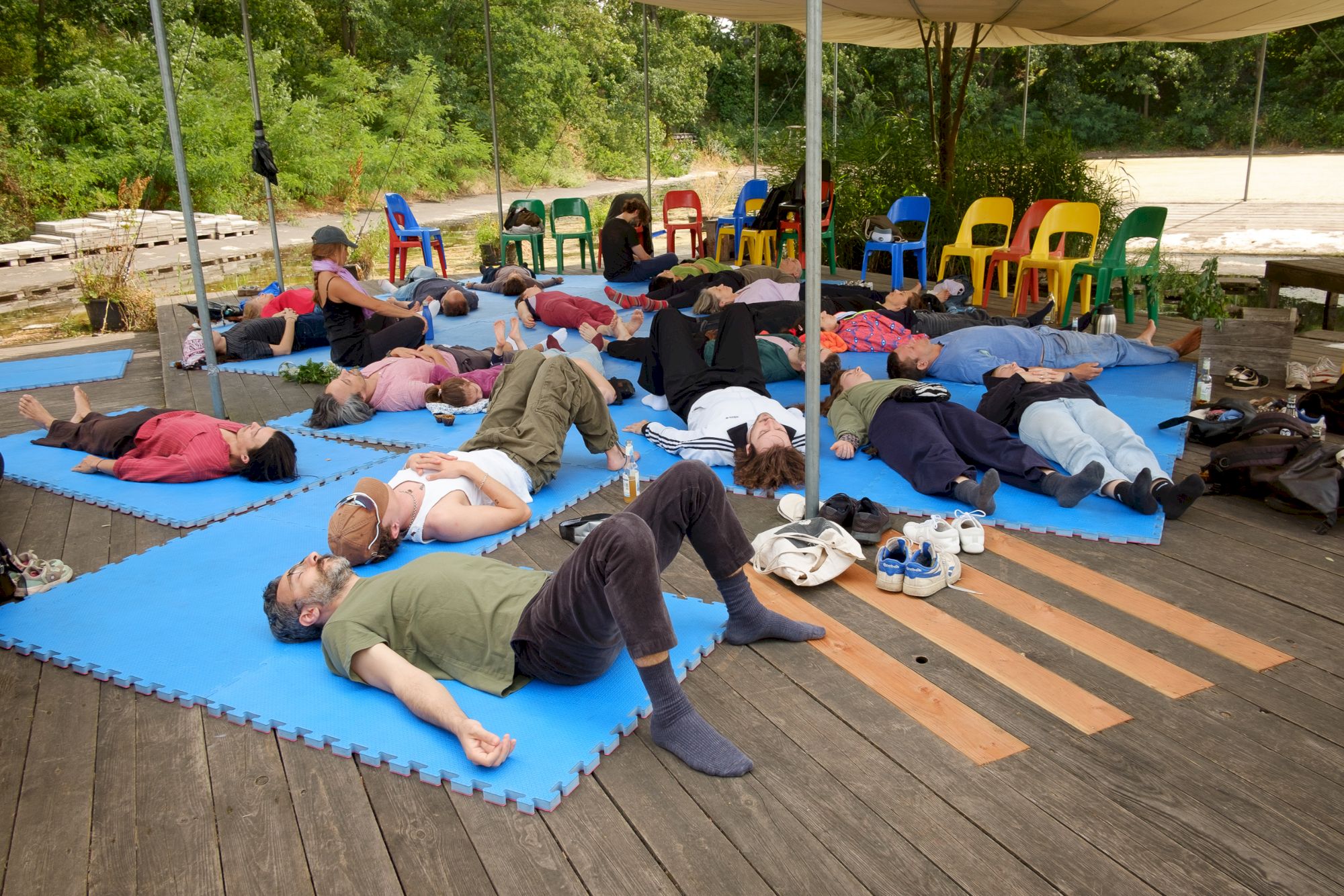
Another highlight was Saturday at Allmende-Kontor. It had a very particular atmosphere. It was surprisingly cold and sometimes a bit rainy, so instead of everyone spreading out across the field, people ended up gathering under the small roofs and pavilions. It became much more intimate than it might have been on a sunny day.
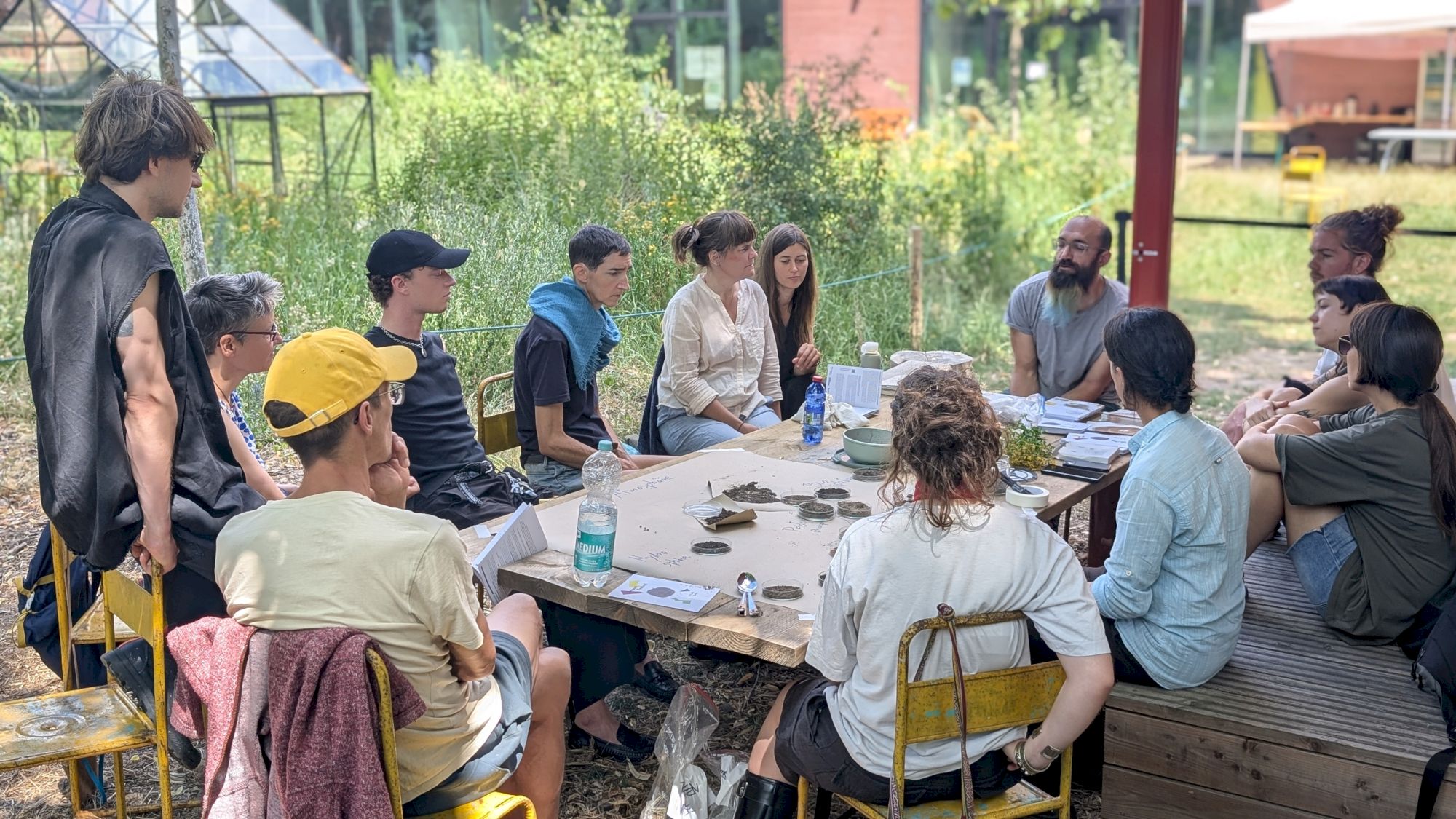
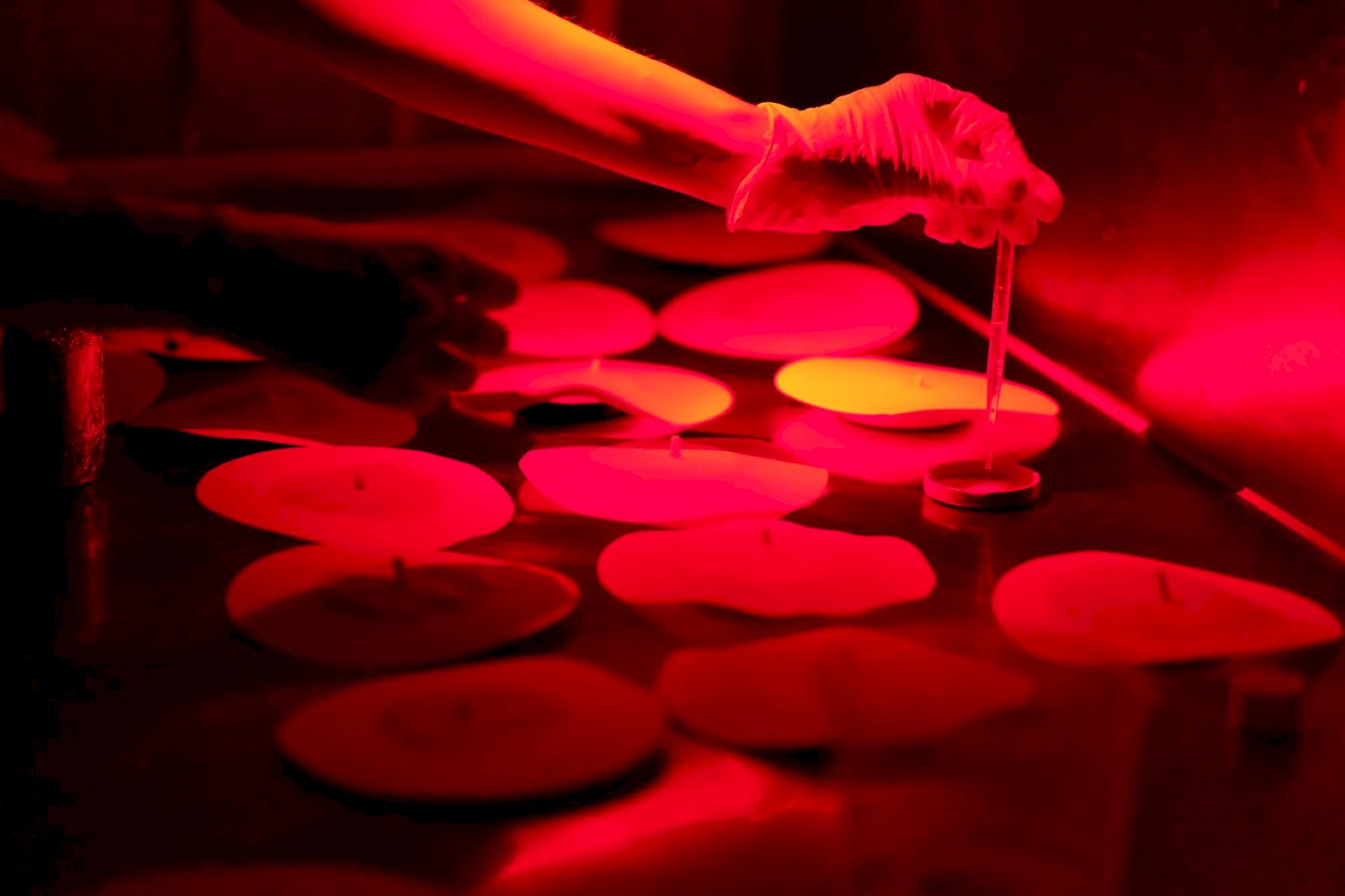
Severin Halder: For me, that Saturday had something very warm about it. It was a community event where people were really together. Instead of a thousand people passing through, the people who were there actually participated. They did the workshops, interacted with each other, and learned together. On that day, I think Ayumi’s terra preta workshop was a real highlight. I have to say, Ayumi was just amazing – her presence, and the whole concept of the workshop, with cooking and fermenting and working with biochar all at the same time. It was just a really great workshop. And she had an amazing outfit, too. Overall, there was such great energy. That was probably the workshop where I had the most fun.
I also really liked the opening at SOLID. The pub quiz gave the festival a very accessible start and the atmosphere was just great – lots of laughing, a pub, good food. It was fun and you didn’t feel like you had to do anything you didn’t want to do. You could just come, eat, drink a beer and have a good time. It was a really nice community building moment. And there were all these people working around food, regional and solidarity-based agriculture, biodiversity and soil. I thought it was nice to bring those people into the program and, in a way, to say: you are part of this too.
I also had a lot of fun with it myself. I like being a slightly annoying quiz host and asking people some nasty trick questions. So that was definitely a highlight for me.
The program was deliberately very open. How much of what happened was planned, and how much emerged during the process?
Severin Halder: A lot of it emerged in the process. We didn’t have a master plan with a fixed list of people who had to be there. We shaped it together, in the process, with everyone involved, with the places and with whatever was happening. That processual quality – this radical openness, creativity and spontaneity – is really important to me and part of the concept of the festival. Sometimes it is a bit exhausting, for example when a new workshop is added a day before the program goes to print. But that is also what makes it possible for the program to evolve on the go.
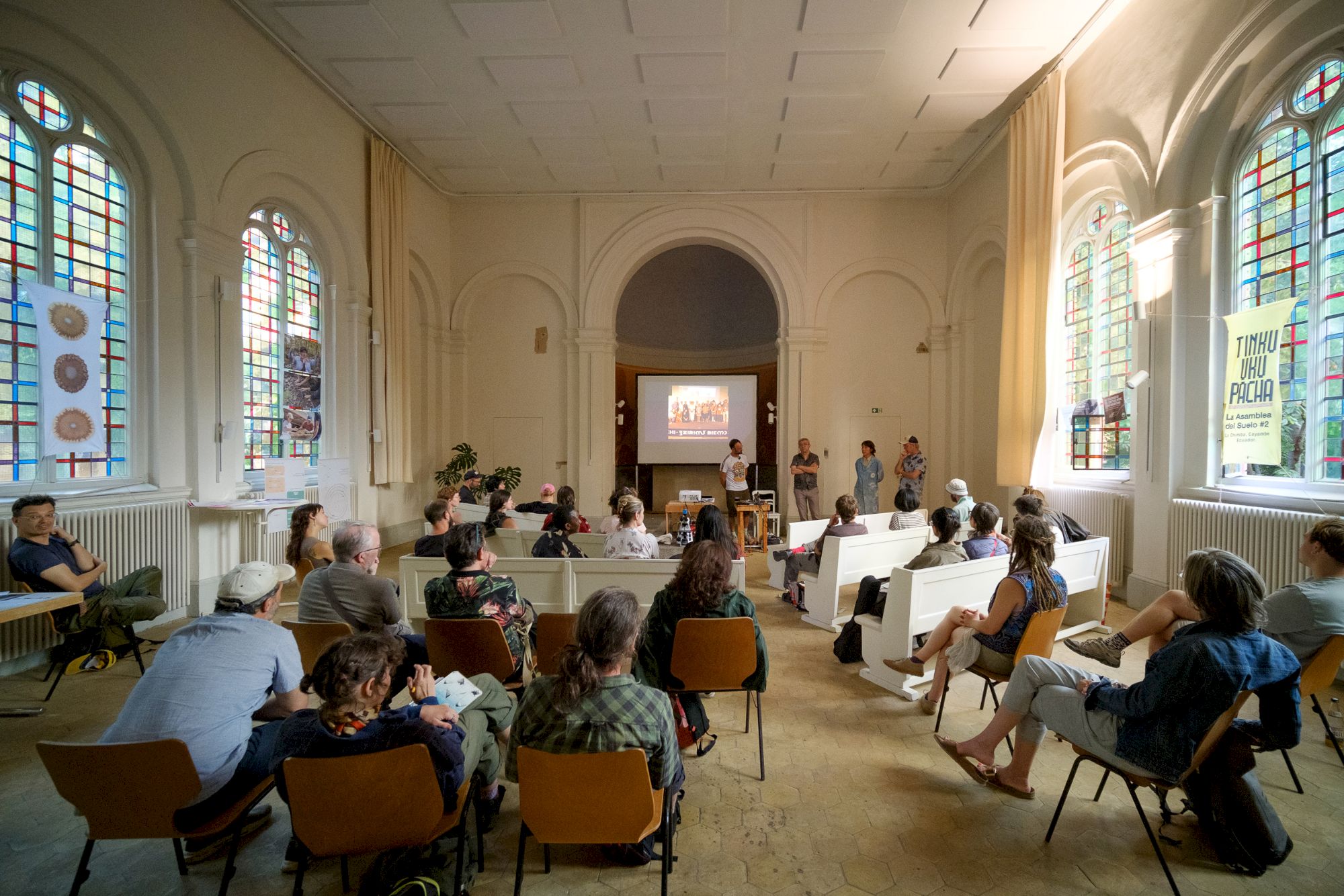
Julian Chollet: I think the evening at Kiezkapelle was a turning point for me. At the beginning of the festival, I was still quite stressed because I wasn’t sure whether everything would really work out. But then people started arriving and interacting, and I thought: okay, this works. After that, I could relax a bit.
Severin Halder: That was definitely a crucial moment for me too. I had a lot of respect for that part of the festival, and I was really under pressure there. Friday at the Kiezkapelle really carried our own signature: we brought together very different actors and perspectives: open-source soil research, agroecology, bioremediation, the soil laboratory, but also things like compost tasting, soil sounds and the microscopes. For me, it was a real “movement moment”.
Looking back, what do you think the festival actually set in motion? What remains after those four days?
Severin Halder: For me, the most important thing is that the festival was not an isolated event. It is part of a larger process. We created a situation where all these different people and practices could come together. I put a lot of energy into these things because I want people to come away thinking: wow, this was great, because they genuinely enjoyed being there and being part of it. Seeing that happen, seeing everyone having a good time and being happy to be there.
And there are also very concrete things that remain. For example, we built community composting infrastructure at Feld Food Forest. That will stay there and, ideally, be used for decades.
Julian Chollet: I think it’s important to mention that the people who came weren’t just an audience. Many of them were already deeply involved in soil care, community gardening, agroecology or related practices. The festival brought some of these existing strands into contact and created a shared experience around them. Those encounters have since continued in different ways – many beyond our own projects – and some will be feeding into the Soil Assembly in Berlin in January 2027. In that sense, the festival helped create relationships and conversations that the Assembly can build on.
Would you do it again?
Julian Chollet: Yes, I would. I like the idea of letting the format change and building on the nomadic character of the festival. It could be smaller, bigger, or take place somewhere completely different – on a farm, or somewhere in the woods. But whatever shape it takes in the future, let’s not forget that this is only possible because so many people contribute, support, and put their time, energy and care into making it happen. So, a huge thank you to everyone who was part of it this year!!
Severin Halder: Honestly, this was really great. I don’t usually like repeating things, but I can definitely imagine doing something similar again. I think the format has a lot of potential. And I’m amazed that it worked so well: we didn’t kill each other, we didn’t completely blow the budget, and we’re not in jail. So I would call it a success.
Learn more about Kompost Festival & Soil Assembly . The initatives are supported by SoilTribes and the European Union.