
Epistemic sludge: the ontology of the post-institutional lab
As the first public “Arai-Eek Co-Laboratory” sessions of the new program launched by the International Hackteria Society, tomorrow.lab and Pa Rang Art Company start next weekend in Chiang Mai, Thailand, curator and researcher Nupur Doshi looks back on the program’s inaugural street workshop there last February.
“The “Technobiological Futures Co-Laboratories” programme (February 2026 — August 2027) is a multi-phase initiative spanning Thailand, Switzerland, Indonesia, and India. Co-funded by the Synergies of the Swiss Arts Council Pro Helvetia, the Co-Laboratories catalyse South-South collaborations that bypass traditional North-mediated routes, building sustainable networks for art-science-technology exchange across the Global South.
Correspondance,
I land at DMK Bangkok on a red-eye flight carrying two suitcases brimming with non-biomaterials and some beans from my monastery garden. I am enthusiastically ushered to breakfast by the Co-Lab team and then, right after and with nominal consent, Dr. Adam Zaretsky (Ionian University, Greece) suggests that I accompany him to learn about his research at the Biology Department at Mahidol University. There I am introduced to Dr. Puey Ounjai, a biophysicist and polymath with Yale and Berkeley on his CV, who in turn proceeds to introduce us to every passing individual, often punctuating these encounters with obligatory photographs. As someone periodically cast in the role of a muse, I acquiesce easily, the first and last of this kind on the trip.
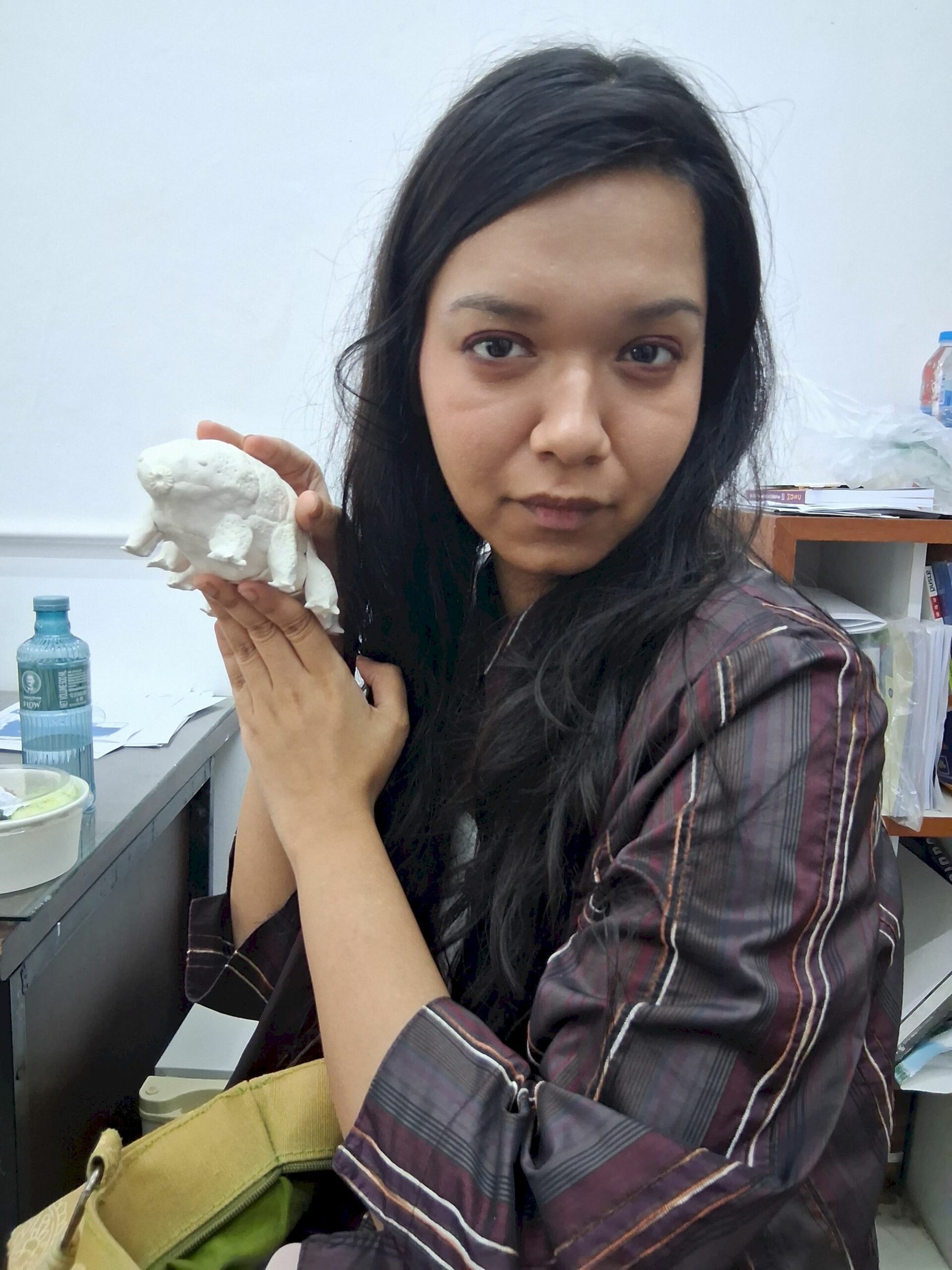
In my efforts to understand Dr. Zatersky’s research, we have the opportunity to meet Dr. Nisamanee Charoenchon, a brilliant ultra-fashionable Pathobiology lab director, who was researching Plai, a Thai breed of turmeric and popular supplement and the deformities (i.e. mouthlessness) they were causing in the faces of developing zebrafish embryos with questions of environmental toxicology and effects on the development of unborn children still in the womb. I had some fun-time with my new friend, a 3D printed tardigrade, while my colleague tried to convince Dr. Nisa to: 1) visit the microinjectors in the animal facility and; 2) microinject tobiko with gelman-filtered sterile solution of soy sauce or chili spice and place one such microinjected egg on a single grain of rice, sprinkled with spirulina powder, to be presented for imaging as Microinjection MicroSushi. Both offers were politely, but firmly, declined. But what is aspiration if not merely allowed play? (1)
BEAK is bioethics oversight for bioartists by bioartists
After a fruitful day at the Bangkok Art and Culture Center and DIB Bangkok, the latter where I encountered Indian blue-chip darlings Subodh Gupta and Alicia Kawade, I was on a flight to Chiang Mai, where I was to be stationed for the next three weeks, with an aisle seat and overweight luggage. I arrive as a chimeric part Bioart Ethical Advisory Kommission (BEAK) bioethicist (2) with the BEAK Curatorial Field Notes Assessment Division, and part institutionalised freshly-resigned museum associate curator. I am informed that my snootiness might be a problem for some of the people I am about to encounter in Thailand, who are very anti-institutional, anti-establishment, do-it-yourself etc. I am a bit offended at the suggestion, after all I have read Gramsci, and many of my friends back home have a certain Western anarcho-Marxist cynicism towards public and private institutions; nevertheless I make my way into my room, at a lovely artist homestay run by Korean curator Bora, with a fish pond, a cat, a dog and the best barista in the world.
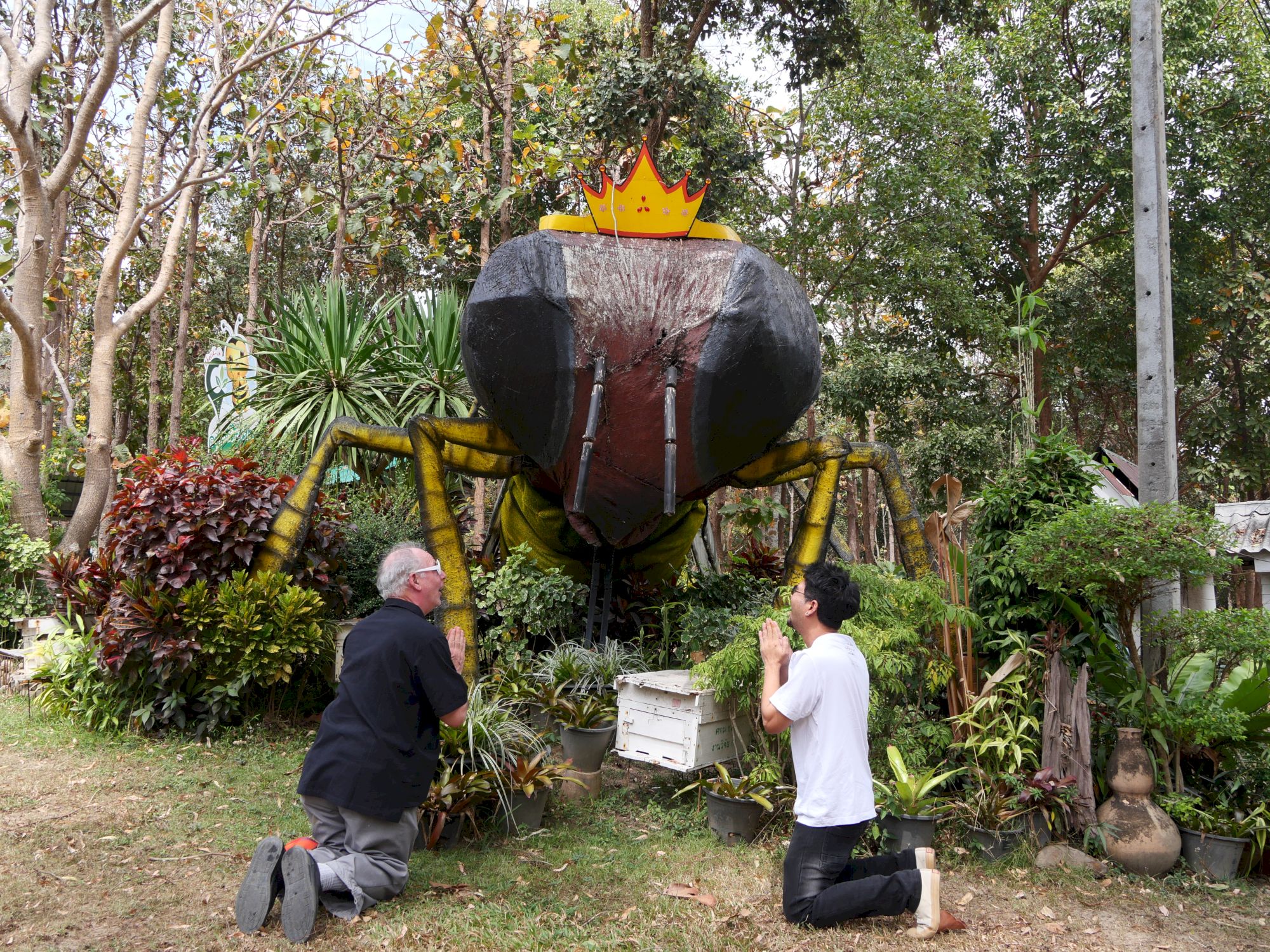
We kickstart the very next day. I wake up jet-lagged and head straight to brunch, which comprises pork ear, dog meat and raw intestines. The boys, Marc Dusseiller of Hackteria, a nomadic DIY hacker and alternative coconut researcher who makes solar-powered synths (see solar punk synth Shih Wei-Chieh‘s Hacker residency documentation) and Adam Zaretsky, lone wolf bio artist and professor, have already taken over our homestay with their maximalist posters that contain more colours than the gay rainbow. The next day, curator-chic Bora politely and understandably asks them to bring it down.
There is an artist talk and performance showcase at the Department of Media Arts, Chiang Mai University, that we are invited to, where we meet Patrick Hartono, a brilliant generative computational electro-acoustic musician and discuss academic relations at Goldsmiths as well as the UK arts education landscape at large. The audio-visual durational works are a concatenation of industrial, psychedelic, neo-Kraftwerk, proto-nu-metal Berlin appeal, but instead of snorting GHB in a warehouse, we were drinking beer on the terrace, with periodic machinic airplane interruptions or rather, special effects.
Do-It-With-Others-Outside-Institutions-In-Your-Garage
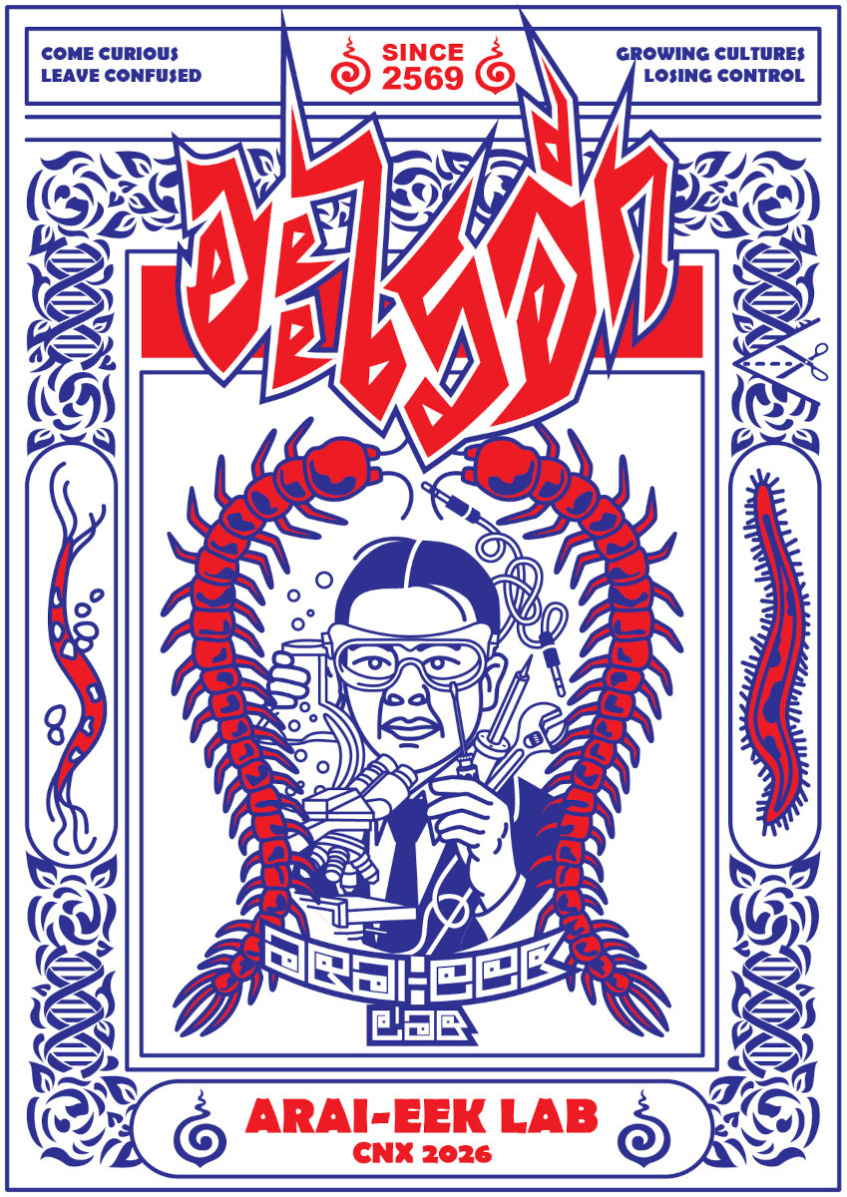
The next day, the boys return from a shopping excursion for lab supplies for the DNA-isolation workshop, with bags full of test tubes, cables, contact lens solution, baking soda, pipettes and the second-best gin in the whole world, Tanqueray (apparently, they were out of Bombay Sapphire due to the Lunar New Year celebrations). The poster for this Do-It-With-Others-Outside-Institutions-In-Your-Garage is uploaded and shared vivaciously across all Meta platforms. It is a montage of glitch-core aesthetics from the point of view of an 80s kid mixed with a “screengrab” of a geo-drop of the homestay. Participants are asked to bring a sample of a “living” being or some form of DNA with them. It is assumed that all other materials and instruments will be provided, or rather, not needed. After all, isn’t machinic dependence a symptom of late-stage capitalism?
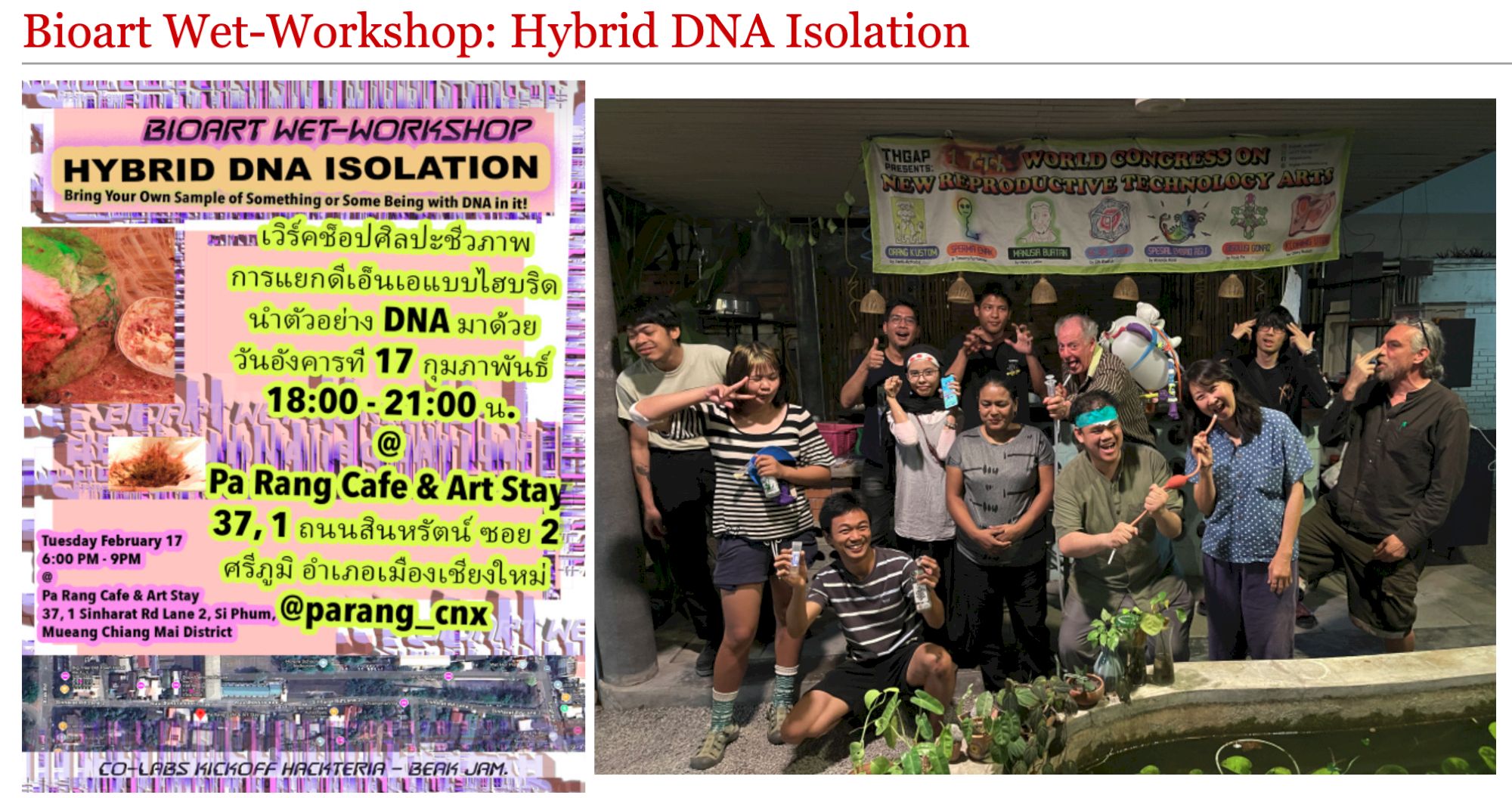
I assumed the workshop would be another of many, where the mere presence of male sperm and female menstrual blood is considered transgressive. I correctly predict that the tame participants will bring hair, nails, etc. and the edgelord ones will, at maximum, utilize some excretory fluids (or solids). However, I was pleasantly surprised to find that there was a partially successful attempt at making the workshop educational (but ended at informative/ instructional) and most importantly, “fun”. A lightness in being, a skip in the step, is inherent to being “experimental”; while the politics of parties, play and rest as a form of resistance have been pressing issues in contemporary art over a considerable period now, and have been dissected across numerous thematics, pedagogies and mediums, they are very much limited to doing so within an institutional framework. What I did like about this particular hands-on bioart workshop is the brash carelessness of it all – to host a workshop in a café, no previews, no art world flair and definitely no artspeak favourites. There was a sequestering by the organisers too – people were unaware of the conductor / orchestrator / facilitator the workshop, or which body was funding it. This dissociative removal-of-the-self and anti-narcissistic zen-ness towards anti-establishment was quite refreshing.
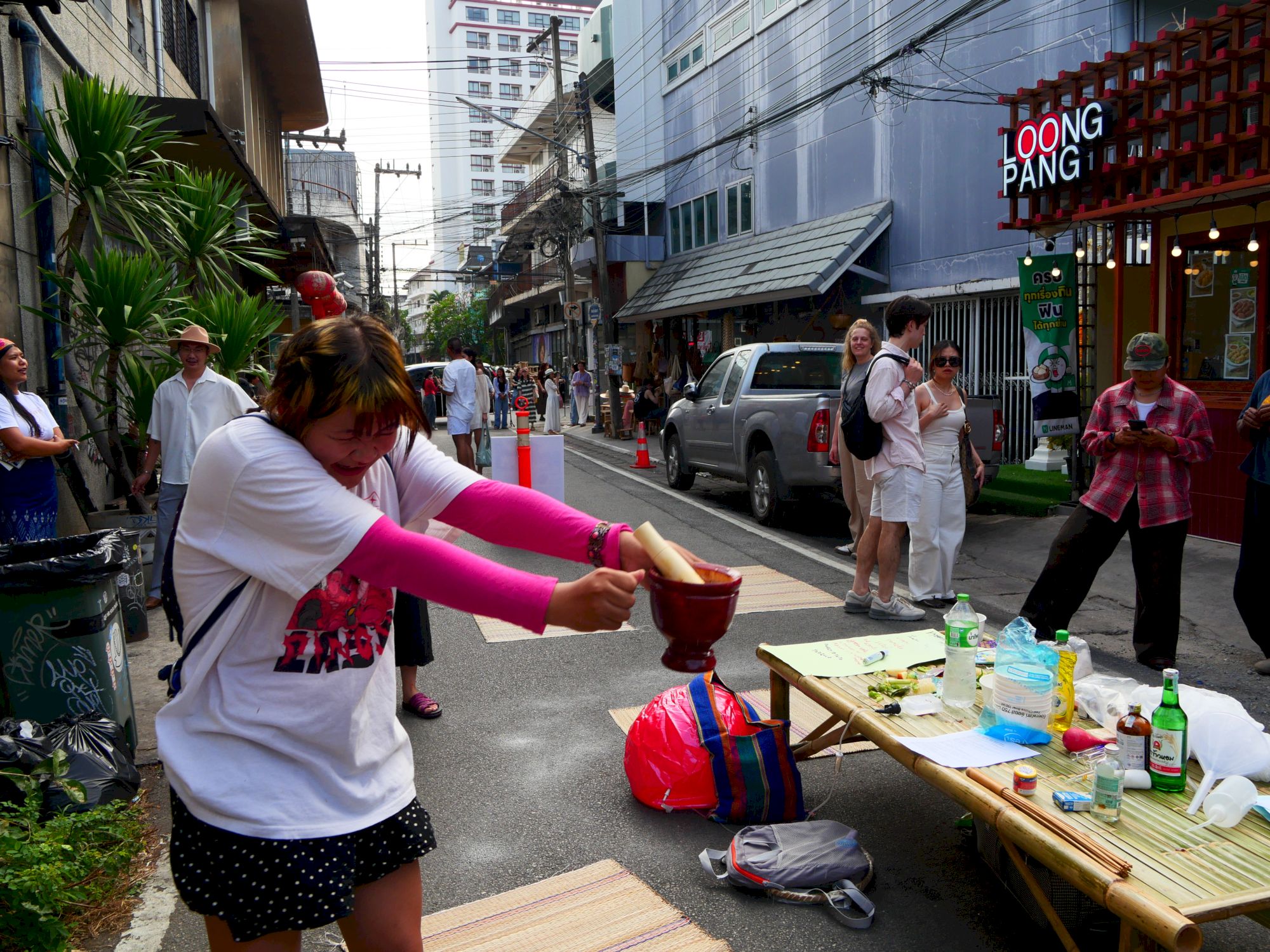
There is however, a subversive authoritarianism at play at the workshop, although the clownish expressions, cheshire cat grins, a hybrid of John Waters x Beirendonck costumes, graffiti-sprayed lab coats and endearing sparkling baldness act as subterfuge to the contrary. The most annoying archetype in the art world is the managerial bureaucratic PR glorified-admin-called-curator, but a close second is the artist-turned-facilitator-turned-curator-turned-pretend-teacher. While the former is extractivist in nature and acquires cultural capital by (enviously) remaining in proximity to artists, the latter obfuscates his processes under the guise of a workshop, often-times providing meaningless absurdist directions accompanied by empty platitudes, a bit like a Grab passenger booking a taxi on GrabDriver.
Live Action RolePlay come to life
Participants combine, in an almost-Haraway impulse towards multispecies entanglement, all their anthropocentric and non-human “DNA” samples – avocado, money flower, fruit eggs, mandarin Chinese orange, apple, fermented bamboo juice, marijuana – until a big sludge is formed. The entire aim of the workshop now becomes that one must “isolate” this DNA through osmosis, lysis, digestion, etc. Of course, how one tests the accuracy of their result is kept a bit in the dark – what is the composition of this “DNA” that I isolated? It could be very likely that the entire workshop was actually a fabrication, a performance, a roleplay, speculative fiction or LARP come to life, which would perhaps add a bit more legitimacy to it from a contemporary art perspective (we do love our gimmicks, after all), had aesthetics or even anti-aesthetics been even a slight consideration in this entire processual piece. Rather, the visual was disregarded completely, and the only semblance of artistic value was aural, in a fabulously curated flautist-centred Andre 3000 playlist; and tactile, in tender touches among slushy fingers engrossed in lab equipment.
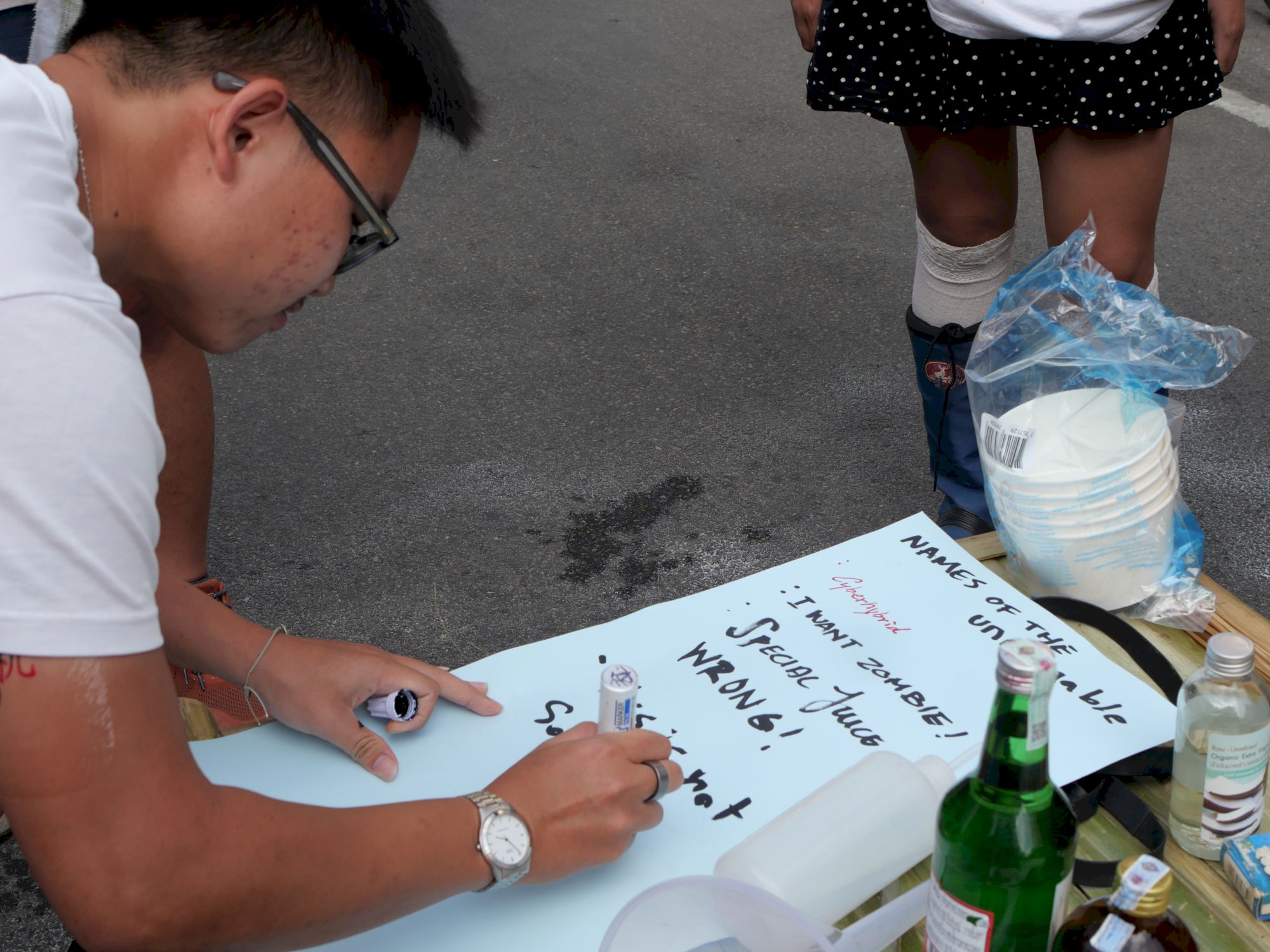
The lab is presented as a kooky, experimental workshop, which I am actually quite fond of – LSD, penicillin, SuperGlue – were all founded on errors – however, the only room for “experimentation” for the participants in this particular workshop was in how one names their DNA – a neologist golden cage. Thus, on one end, it is not quite geared towards accuracy, on the other, not towards play, and one quickly begins to wonder where the lab fits into the biosphere/noosphere of it all. Yes, it is wonderful that a complex and serious procedure like DNA isolation has been democratised and performed with materials under $400, but how is this information relevant if we do not possess the knowledge of its context, teleology and relational impact?
I am left wondering and unanswered on essential proto-knowledge as a non-biology student – What is DNA isolation? Why is it important? How can it go wrong? Is it wrong right now? Is it a highly contested or pressing contemporary issue because anything gene-centric usually tends towards anthropocentricism or eugenics? Is the elan vital behind this workshop the de-hegemonicisation or re-hegemonicisation of genes? Is this workshop the antidote the world needs right now to Sydney Sweeney’s American Eagle jeans ad?
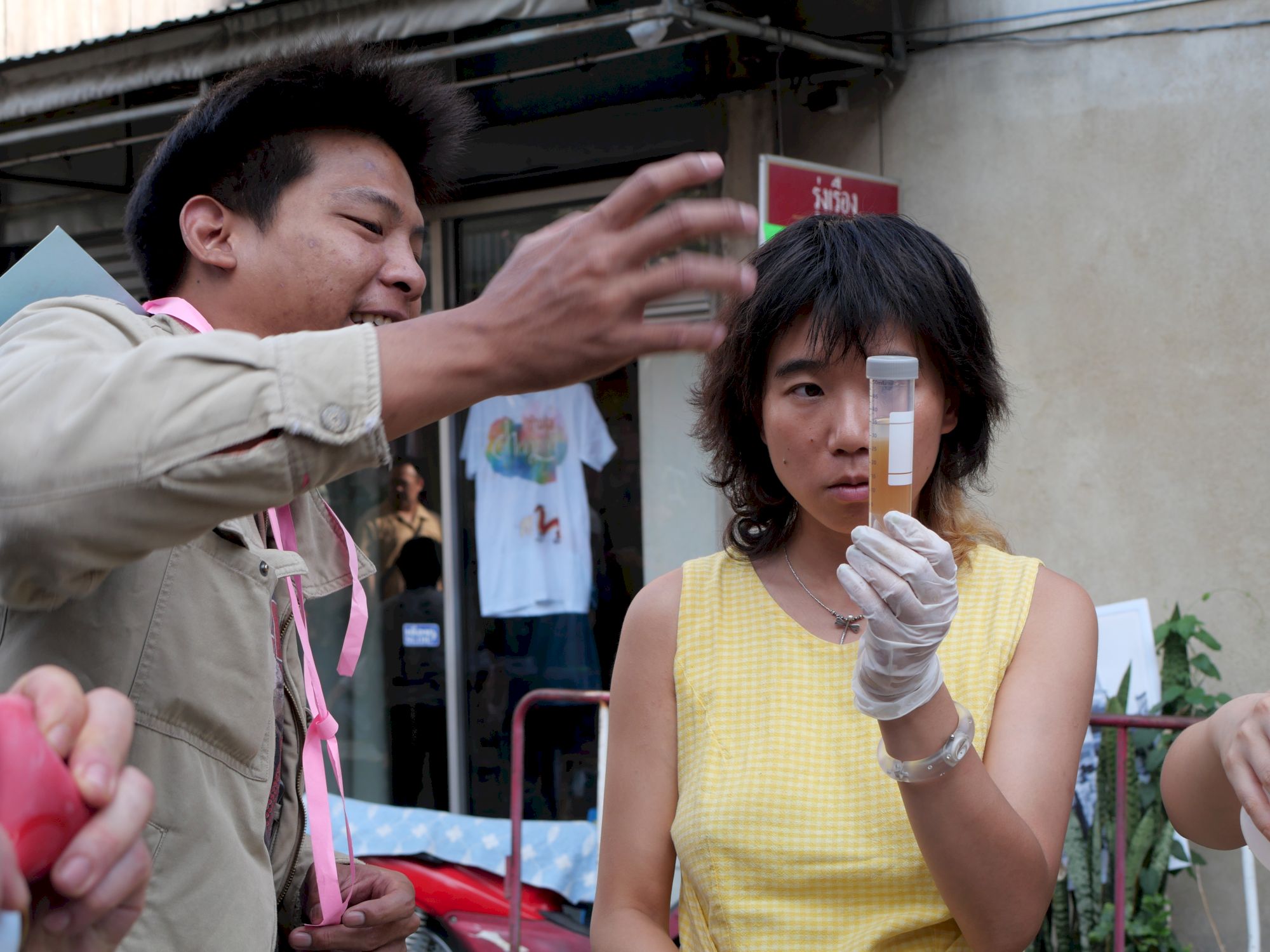
Is this science disguised as art or vice versa?
Or failed pedagogy parading as art? Or simply aestheticized non-knowledge? Or collective fiction masquerading as experiment? Or just a trickled-down wet lab version of normative transgenetic bioart inspired by the reductive genome turn in biology in the 90s? This ambiguity, the obfuscation and deliberate contrariness is wherein lies the workshop’s strongest suit. There is much to be found in this amalgamation – mistakes, errors, glitches, fugue states, confoundedness and most of all, stupidity. The workshop stands on all of these merits; many participants were bereft with rapt obedient attention, while others were restless and finding excuses to scurry off. It is, nevertheless, transgressive because it challenges conventions in such a nonchalant manner that one would be quick to dismiss it as boys being boys at first glance. There is something quite dystopian to see an othering of our own substance, genetic information is stored in our DNA, and we are altering this with our very own hands. The workshop exposes the very real reality of life as something being altered, exploited, aestheticized at this very moment, the ease and accessibility of it, and how wrong it can go. Doomsday has arrived sooner than we realised; the exterior joyousness and playfulness shields a subterranean cynicism.
There is also the larger approach that I found myself to be at a crossroads at, the primacy of doing biology in labs in the first place. It is one thing when laboratories are supplemented with rigorous theory at academic institutions, and another when a workshop flippantly dives into a hands-on approach, conflating laboratory equipment to be akin to toys. There is a deeper underlying ontology at play here, one where biology as a quantitative science, with a strong emphasis on Newtonian laws, is given more legitimacy historically and trickled down pedagogically due to the hangover from the Eclipse of Darwinism (2).
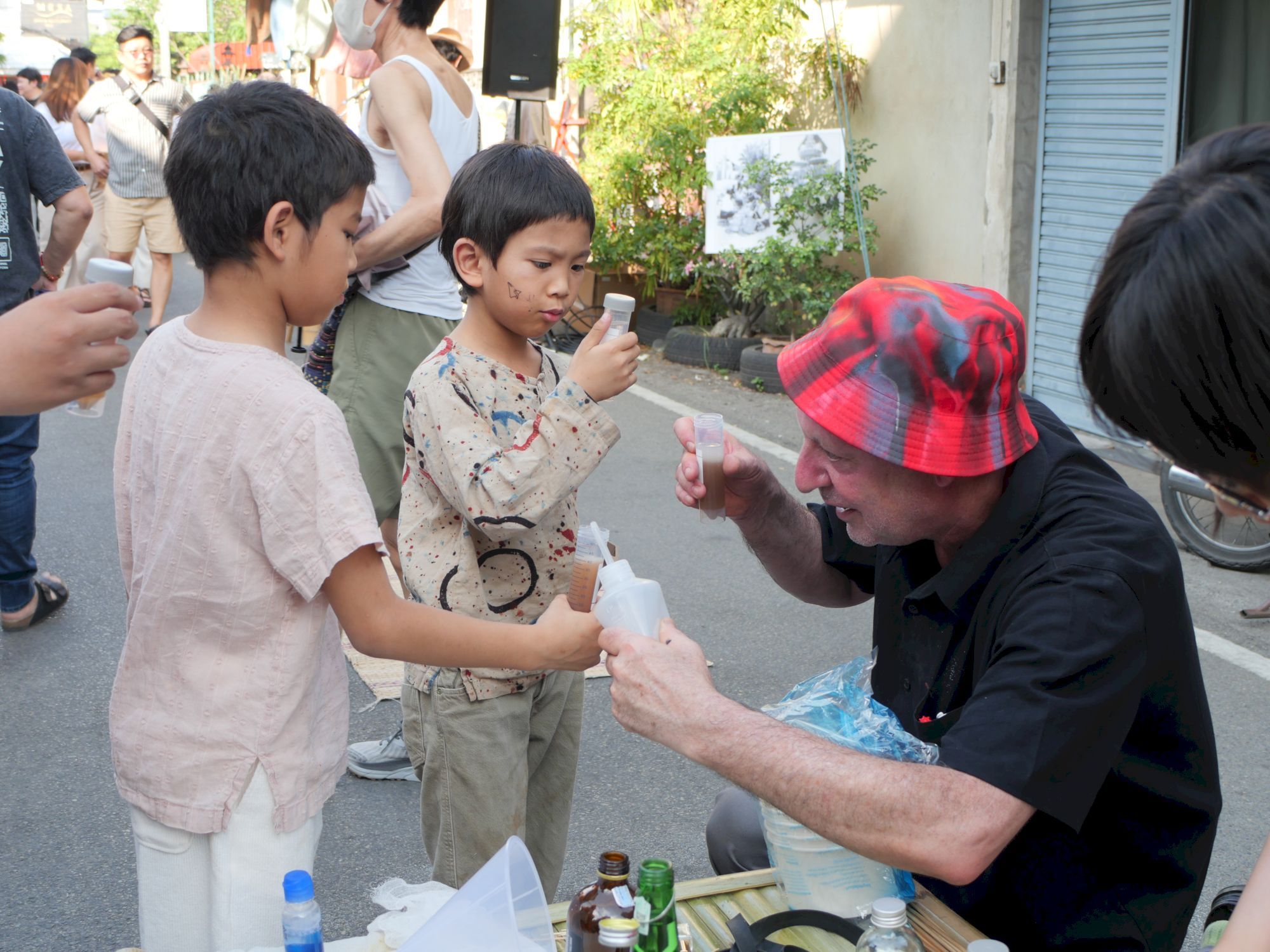
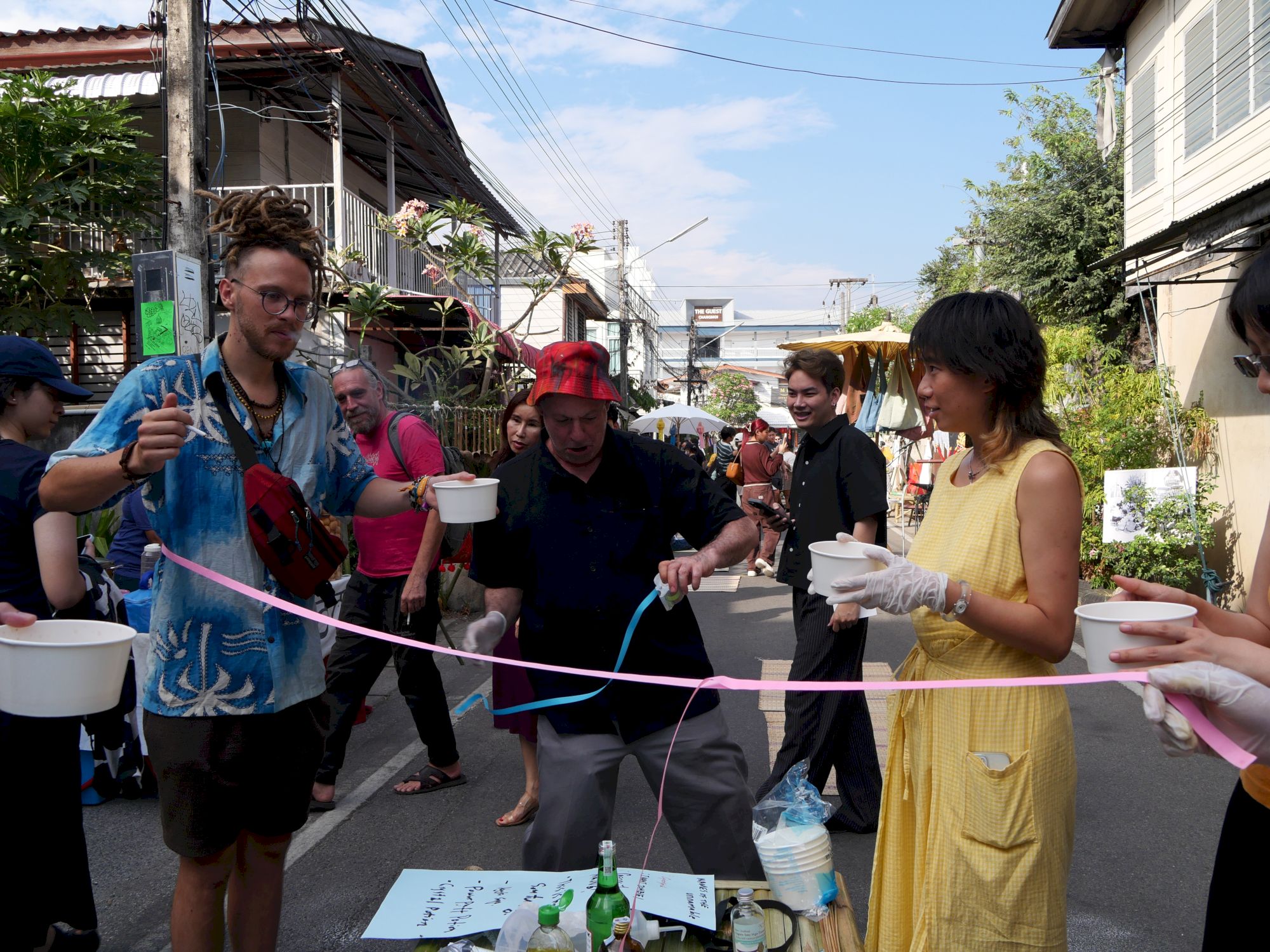
A vacancy lies in the art-science intersection, if on one hand lies object-centric formalist commercial painting and on the other Leibnizian proof-based science (3), there is a third mind path that hands-on bioworkshops lean towards. It is analogous to what relational aesthetics was to contemporary art in the 90s, where going in with the expectation of viewing an exhibition of objects, people would instead eat dinner together in a white cube. The subversion of expectations, flippant chimeric switching, mania-followed-by-freak-out-followed-by-crash-out interiority undercurrent present in the contemporary landscape externalises itself through performance, workshops and other ephemera; and is often an erratic, haphazard, multi-nodal web that eventually, after sifting through the chaos, arrives at firm, steady conclusions; although in this case, I am unsure if it lands on two steady feet (or four, or six, or hundred as we must deanthropocentricise everything). Hans Jorg Rheinberger explored the idea of experimental systems producing what he termed “epistemic things”, objects that may not be wholly complete, but lead to generative inquiry (4). In this case, however, the unknown is not a door left ajar but barricaded: it does not transcend onto further knowledge but remains contained within a closed loop of activity.
At the risk of sounding like a solutionist or rather a “finalist”, but when it comes to processual art, I am behoved to ask – what comes next? How do we integrate the learnings from the workshop towards our practice? “What next?” in a transcendental, speculative manner, not one grounded in consequentialist compulsive culmination, must be undertaken as a ritualistic self-reflexive interrogation practice, not simply on an individual scale but as a collective measure.
Hackteria presents as an instigator of international weaving of collectives, with its approach grounded in the “macro” and the “communal”, leading me to hope that while the kick-off was yet in its nascent stages, the future still seems promising, gradually progressing towards a culmination and manifestation of its idealism.
Currently happening at Technobiological Futures CoLabs:
Arai Eek Lab: A co-laboratory and residency centered around Lannafuturism – “What happens when centuries-old Lanna craft knowledge meets open-source technology, biological materials, and experimental art practice?”
Coming up next:
SGMK Homemade Summercamp 2026: A week that is open for beginners as well as experts and everyone in between interested in exploring ideas in art & technology or creating objects for sound, light or movement.
Co-Laboratories: Technobiological Futures Partners:
International Hackteria Society (Zurich, Switzerland),
tomorrow.Lab (Chiang Mai, Thailand),
Pa Rang Cafe & Art Stay (Chiang Mai, Thailand),
Swiss Mechatronic Art Society (SGMK) (Zurich, Switzerland),
HAZE (Berlin, Germany / Manila, Philippines),
Srishti Manipal Institute of Art, Design & Technology (Bengaluru, India),
Serrum (Indonesia),
BEAK (Woodstock, USA),
Makery/Myriad (Paris, France),
Futuristic Research Cluster (FREAK Lab) (Thailand),
Wise Mouse Culture (Taipei, Taiwan),
EAR – Environmental Artistic Research (Kröschenbrunnen, Switzerland)