
Soil Assembly at the Kochi-Muziris Biennale: Situated, For the Time Being
As the Kochi-Muziris Biennale is coming to its end, artist and curator Neal White explores the latest iteration of the Soil Assembly held from 20-25 January at the 6th Edition of the Biennale – titled, ‘For the Time Being’.
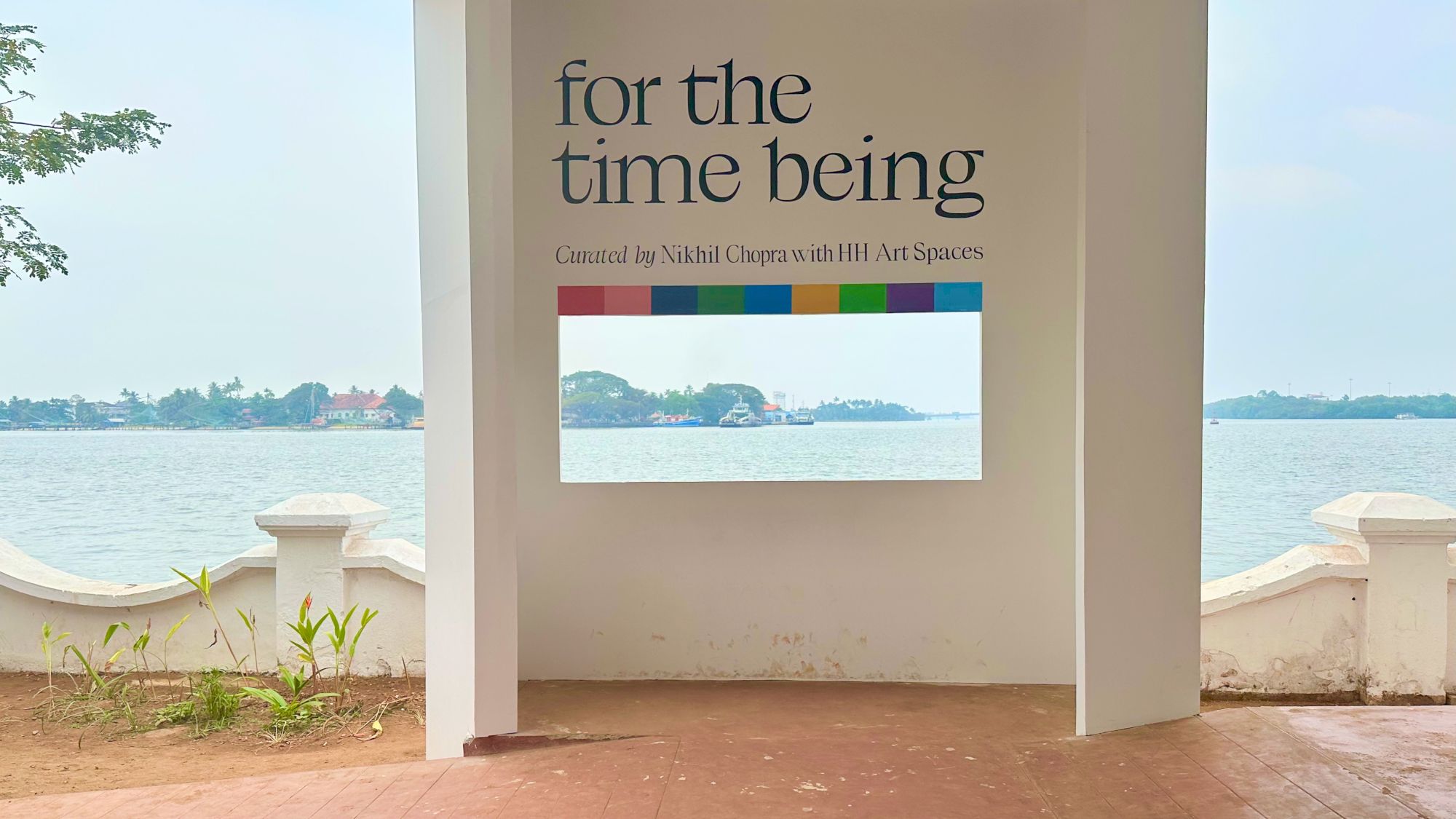
Soil Assembly #3 was held at Kochi-Muziris Biennale, Kochi, Kerala, India, from 20–25 January 2026. The sixth edition of the Biennale was curated by Nikhil Chopra with HH Art Spaces, an artist-led organisation based in Goa. It was conceived as ‘an invitation to embrace process as methodology, and to place the friendship economies that have long nurtured artist-led initiatives as the very scaffolding of the exhibition’. Soil Assembly was invited to participate as part of the curated Programme, and we owe special thanks to Mario D’Souza from HH Art Spaces and his team at the Biennale for their support. Soil Assembly #3 was curated by Meena Vari (Udumbanchola Circle, India), Maya Minder (Hackteria, Switzerland), Ewen Chardronnet (Makery’s chief editor, France), and Neal White (director at CREAM – Wetminster University and author of this article, UK) – aka the ‘Groundmakers’. They were also supported by Rustam Vania (Srishti Manipal Institute of Bangalore), Vivek Vilasini (Udumbanchola Circle) and Nora Hauswirth (Tera Kuno) for the sessions’ moderation and event facilitation. And we would also like to thank Ravi Agarwal and Shared Ecologies, a programme of the Shyama Foundation, for their vital support of the side activities and the curatorial collaborative work.
Soil as a cultural connector
In the context of Soil Assembly at the Kochi-Muziris Biennale, soil and assembly epitomise the friendship economy of artistic practice. Soil Assembly, through its previous grounded actions in India (Soil Assembly #1 at Kochi-Muziris Biennale 2022) and Ecuador (Soil Assembly #2 in 2025), builds on friendship and alliance as it has gathered artists, growers, educators, and curators into a lively and living exchange with audiences and students. Using soil as a cultural connector and as a living subject of multispecies futures, climate change and water scarcity, Soil Assembly aligned with key events in the Biennale programme.
The impetus for creating Soil Assembly three years ago was originally relatively simple; to create an event with space to explore art and artist’s relationships to soil. Soil as a subject emerged from a group discussion initiated by Rob La Frenais – who had been visiting professor at Srishti Institute of Art and Design (today Srishti Manipal Institute), in Bangalore – and the curators and artists who became what we call now the Groundmakers. With connections apparent between our own artistic research and curatorial interests around ecological practices, positioned in relation to institutions and collectives based in India, UK, France and Switzerland, soil was not intended as a definitive or limiting subject but alluded instead to concerns with Bruno Latour’s thinking within his ‘Critical Zones’ project. In this context, we refer to the term soil as it describes the thin layer of living matter, not merely as dirt or substrate, but as a thin, fragile, and extraordinarily complex living membrane that makes all terrestrial life possible. For Latour, the zone can be described as “critical” in two senses: scientifically critical (a zone of intense activity and transformation) and ecologically critical (fragile, endangered, and essential to survival). To this definition, we initially added the concept of agency, and pedagogy (or learning), that the ‘assembly’ creates by bringing together an international community of participants from across generations and cultures. Our definition of soil has since been reshaped, and is no longer limited by land alone, as our interests engage with impacts of climate change on atmospheric climates, complex hydrospheres and other effluvial conditions for life (such as ocean floors and river beds) that also inform maritime passages of trade, drive deep sea extraction and shape movement of living matter.
Integrated formally into the programme of Kochi-Muziris Biennale in 2026, Soil Assembly #3 deepened our involvement with Biennale’ selected artists, as well as our own networks coordinated in India. We invited an array of international practitioners and curators with shared interests and affinities for soil. The event was held close to the centre of Fort Kochi, that also allowed for our engaged public to follow and participate in a series of talks that covered the key Soil Assembly #3 themes; Circular Soil Economies / Multispecies Custodianship (Day 1), Hydro Soils / Transoceanic Ecologies (Day 2), and Networks of Radical Care /Ecological Futurisms (Day 3). These hybrid sessions streamed online to the wider Soil Assembly community and were integrated with performative and participatory projects. These different modalities of address to each other and the wider public, involved opportunities to explore Fort Kochi and the local environs in events led by artists. In the following sections, a taster of the many fascinating talks, worskhops and performance highlights some aspects, but we strongly encourage the reader to explore all of the events on the website in detail.
Stewardship and collective action
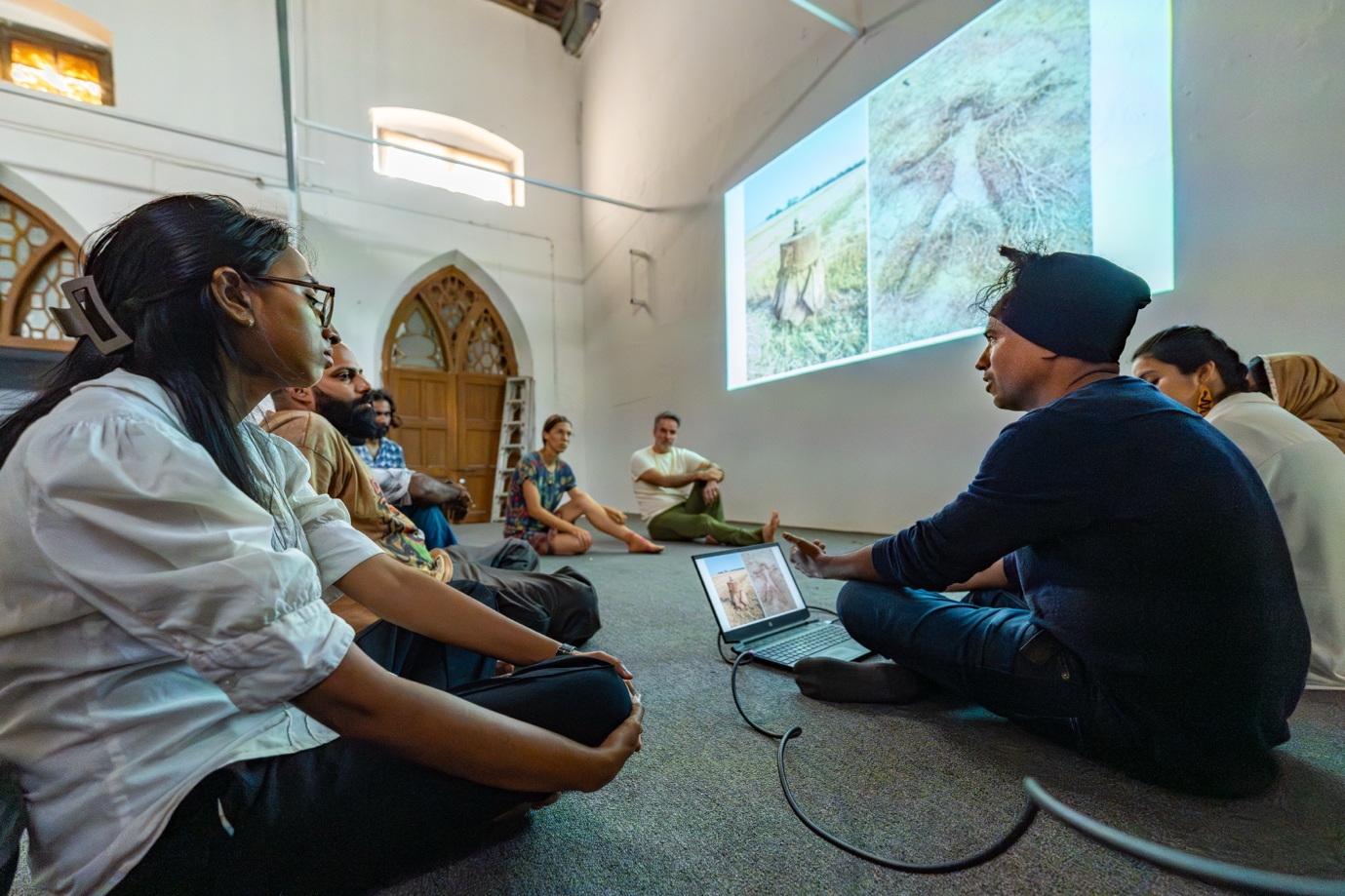
We started our event with ‘A Library of Illiterates’ led by Assam / Biha based artist Dharmendra Prasad (Anga Art Collective) at the Students Biennale’s pavilion at St. Andrews Parish Hall, that explored ecological knowledge in relation to the experiential qualities of text-free books and embodied learning rooted in toil and soil. Following on from this in Bastion Bungalow’s Pavilion, where all panels were held, Meena Vari and Bose Krishnamachari welcome was followed by an incisive discussion of stewardship and collective action. The panel “Circular Soil Economies” linked us with key emerging issues from Soil Assembly #2, with a motivating speech by coordinators Daniela Moreno Wray and Pedro Soler, live from La Chimba, near the Cayambe volcano in Ecuador (here the archives of Soil Assembly #2). Panel speakers addressed subjects ranging from the creation of a natural forest on Vypin Island with local children, a project by Manoj Kumar IB, founder of Rewild Kerala, through to high tech innovation developed to reduce degradation of soil ecologies in European climates by Ramon Grendene, from The Shift Permaculture near Zurich Lake.
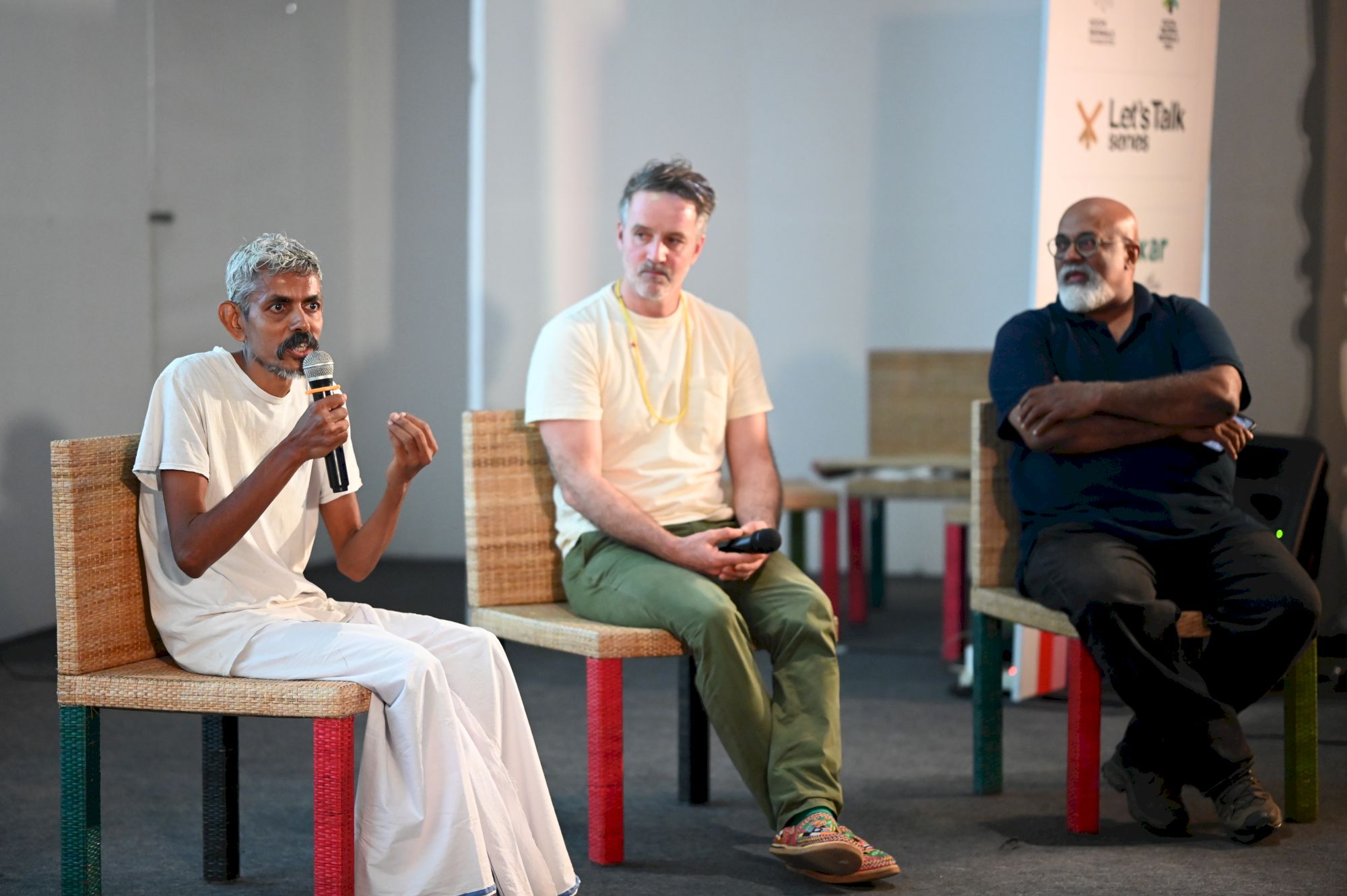
The “Multispecies Custodianship” panel addressed biodiversity and conservation issues from the perspectives of formal structures and more than human rights – dealing with the legal structures for arts organisations such Zoöp – Alice Smits from Zone2Source in Amsterdam, to self-organising and embodied spiritual attunement to environment – Tabita Rezaire at Amakaba sacred forest in French Guiana. The opening days events closed with a keynote by Eduardo Castillo Vinuesa – Director of the Academy project of the TBA21 foundation (Thyssen-Bornemisza Art Contemporary) in Madrid. Linking Kochi-Muziris Biennale and Soil Assembly with TBA21 Ocean Space in Venice, he explored how his own cultural institution seeks to act as regenerative infrastructure for artists, highlighting the role the oceans play in linking peoples and trade, as well as power and knowledge.
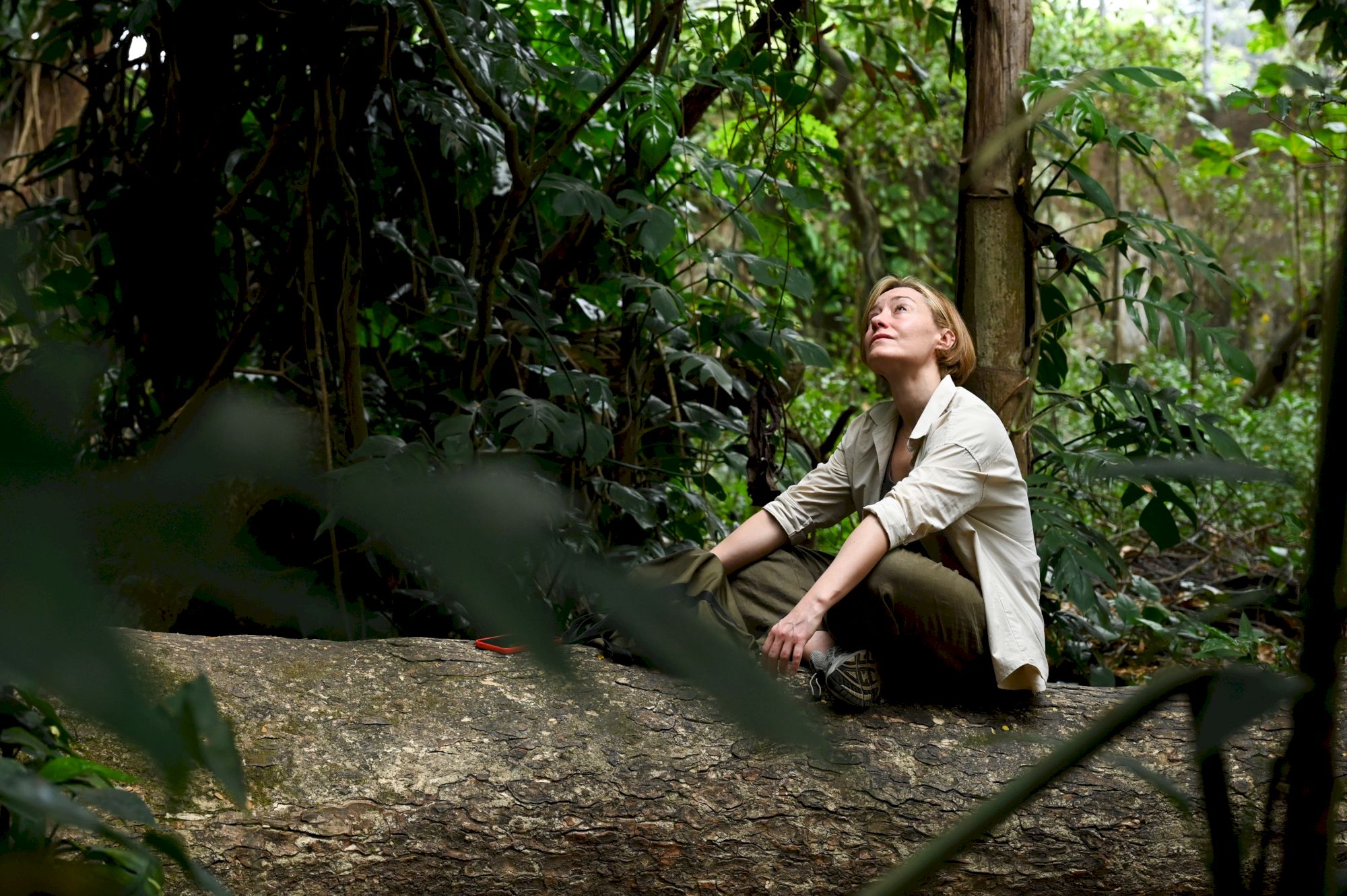
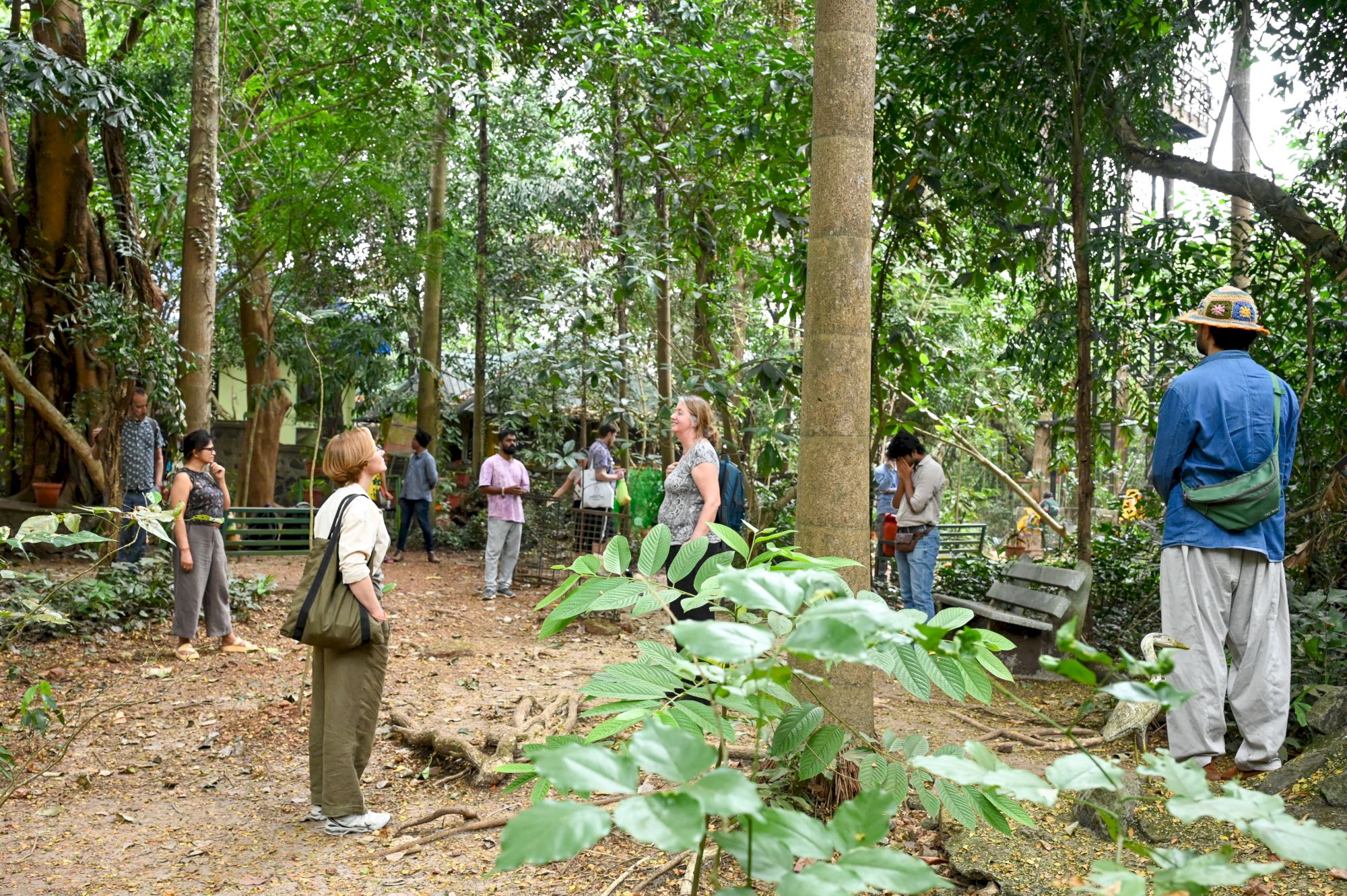
Day 2 begun a short ferry ride away from Fort Kochi to the High Court Station of Kochi Water Metro in Ernakulam. Here, “Anahata Nada (Unstruck Sound)” was developed in dialogue between artist Sonal Jain from Desire Machine Collective and myself. Travelling across the busy waterway of Vembanad Lake, we arrived at the Mangalavanam Bird Sanctuary, where participants explored deep listening as a form of collective experience, in a site subject to its own ecological precarity. Returning to the Fort Kochi, our afternoon panel “Hydro Soils: From Land to Sea”, situated our earlier journey as we examined soil and water as a continuous, interdependent system, with contributions on rewetted peatlands as time machines, a transdisciplinary glossary of water from Europe and South Asia, and the rising sea threatening Vembanad backwaters and coastal Ernakulam communities.
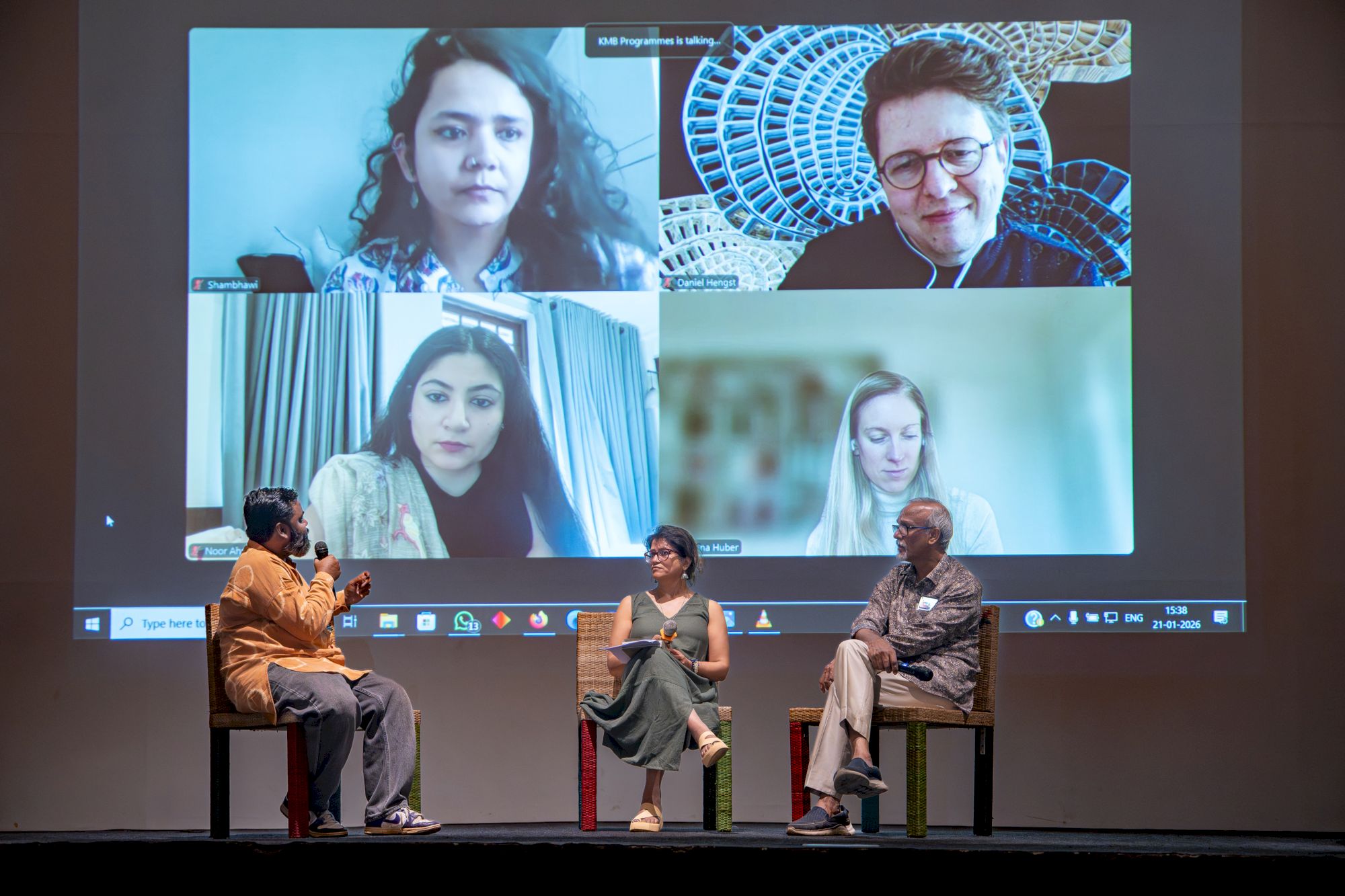
The second panel, “Transoceanic Ecologies”, explored the ocean as a politically contested space, covering topics from deep-sea mining to submerged chemical munitions and low-carbon sail voyages. The cultural sailing ship Arka Kinari, led by Grey Filastine & Nova Ruth — a floating arts platform journeying from Indonesia to the Mediterranean — presented its work. Towards the end of Day 2, local writer, illustrator, and cultural chronicler, Bony Thomas, drew in a large crowd as he addressed Kochi’s long history with water. From the 1341 Periyar flood that created the port, to today’s coastal erosion and rising sea levels. This highly localised focus illustrated how scale and situated knowledge, bind together some of the oceanic themes that linked many of the days speakers, whose practices have touched and delved deep into the (benthic) or ocean floor, as a space of inquiry where a new frontier for colonial extractive practices has begun.
Drawing on one of Soil Assembly ethos to share tactics and knowledge at a local level, Day 3 started with the Wild Food Walk, led by the initiative “Forgotten Greens” – that explored edible plants in the urban post-colonial downtown of Fort Kochi.
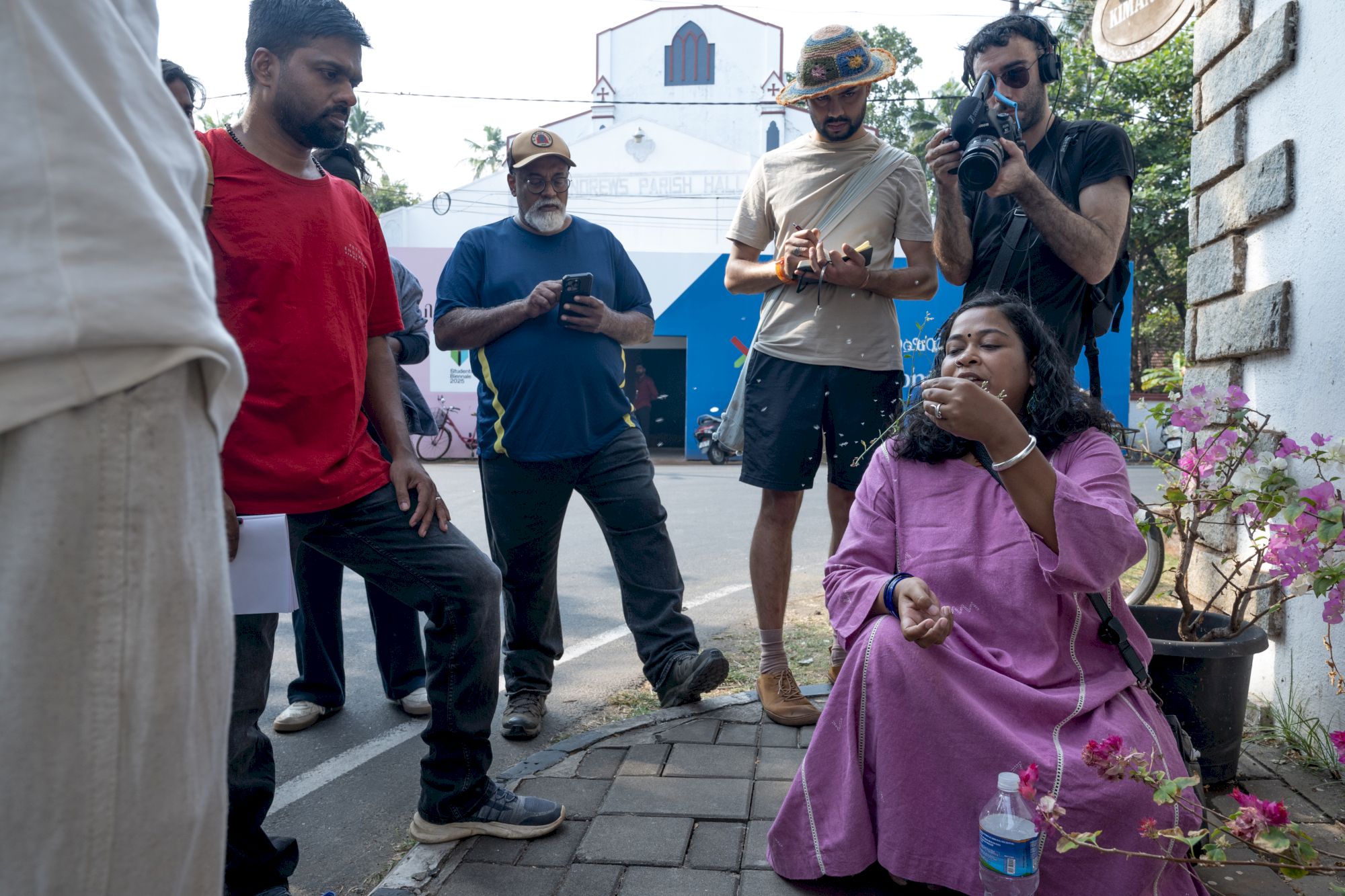
To this mix, three keynotes, one each day, linked the key themes. The afternoon panel “Mycelial Thinking: Networks of Radical Care” used fungal networks as a metaphor for radical institutional and social transformation, with talks on ecological approaches to running art institutions, industrial greenhouse automation and politics of care, and pedagogy as a mycelial system of care. The panel “Ecological Futurisms”, then linked climate damage to historical inequalities, featuring talks on land and self-determination by Radha D’Souza (IN – co-author with Jonas Staal (NL) of the Court for Intergenerational Climate Crimes), that grounded our discussions in the issue of access to, and rights of all, in relation to land. Further to this, the panel explored Andean food sovereignty and resistance to colonialism, as well as a curatorial response to Fukushima nuclear disaster’s atmospheric legacy. The panel closed with L’Internationale editors Nick Aikens (UK), Nkule Mabaso (ZA) presenting a new initiative, an ecosocial publication, called The Climate Reader. Lastly, a keynote by the Founder-Director of the Srishti School of Art Design and Technology and the Mallya Aditi International School, who kicked off our very first Soil Assembly, Dr. Geetha Narayanan, linked together Soil Assembly role through a deep philosophical position to learning, highlighting unity in sense-making across education, arts, and ecology, laying the grounds for discussions of radical care and the open table addressing Soil Assembly future on the Day 4.
Futures of the Soil Assembly
Our events at Bastion Bungalow concluded on Day 4 with the film programme that screened three works: We Have Already Lived Through Our Future, by Uriel Orlow – about ancient and future forests and children learning with nature; New Gleaning by Daniel Hengst – a journey with a time machine built on rewetted peatlands; and Uppuveedukal (Houses of Salt) by Arathi M.R., documenting the displacement of Kerala’s coastal communities due to sea-level rise. Meena Vari, who programmed both this talk, and Bony Thomas, once again reinforced the need for situating Soil Assembly focus toward local knowledge. A packed house listened to a fascinating panel discussing some of the issues, not as an abstract reality, but as a local and ongoing problem that needed to be addressed.
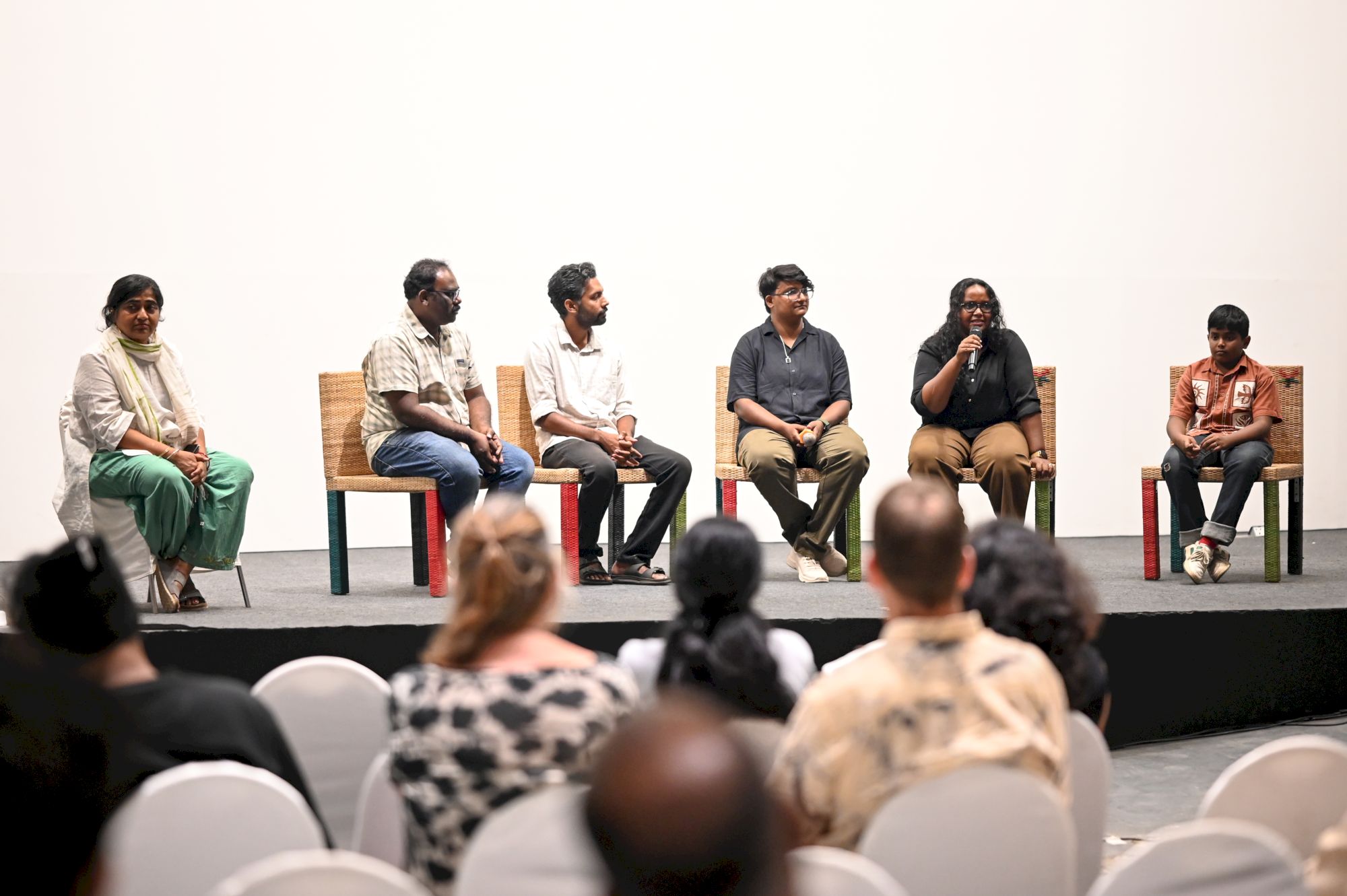
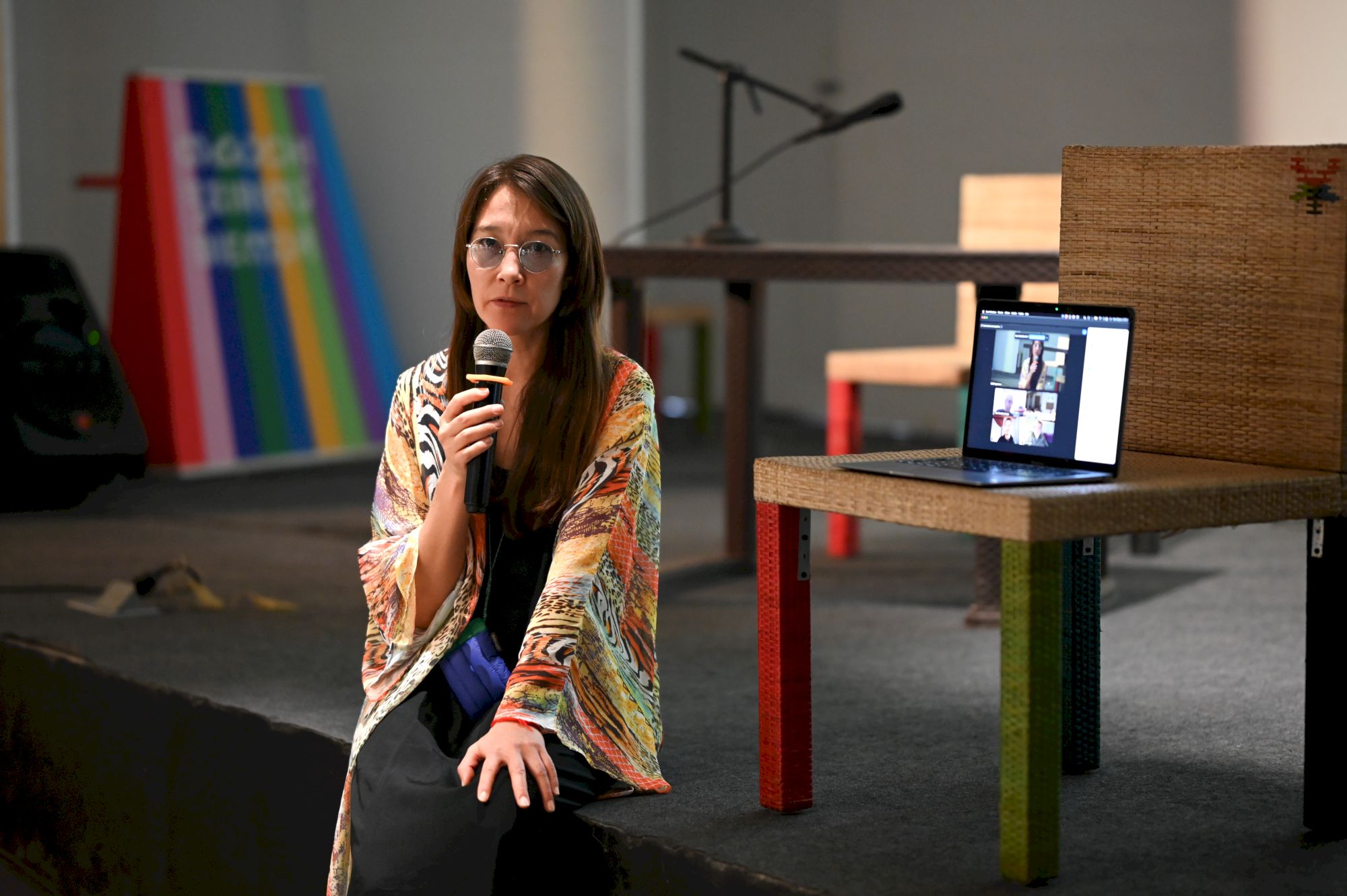
Following on from a performance “Listening in Slug Time” by Maya and Cathy Lane (UK), that meditated on multispecies listening from the perspective of people with disabling conditions during Covid in London, a Round Table event was coordinated to explore the Futures of the Soil Assembly and through which some of the closing themes of this event and a future project, to be run in Europe.
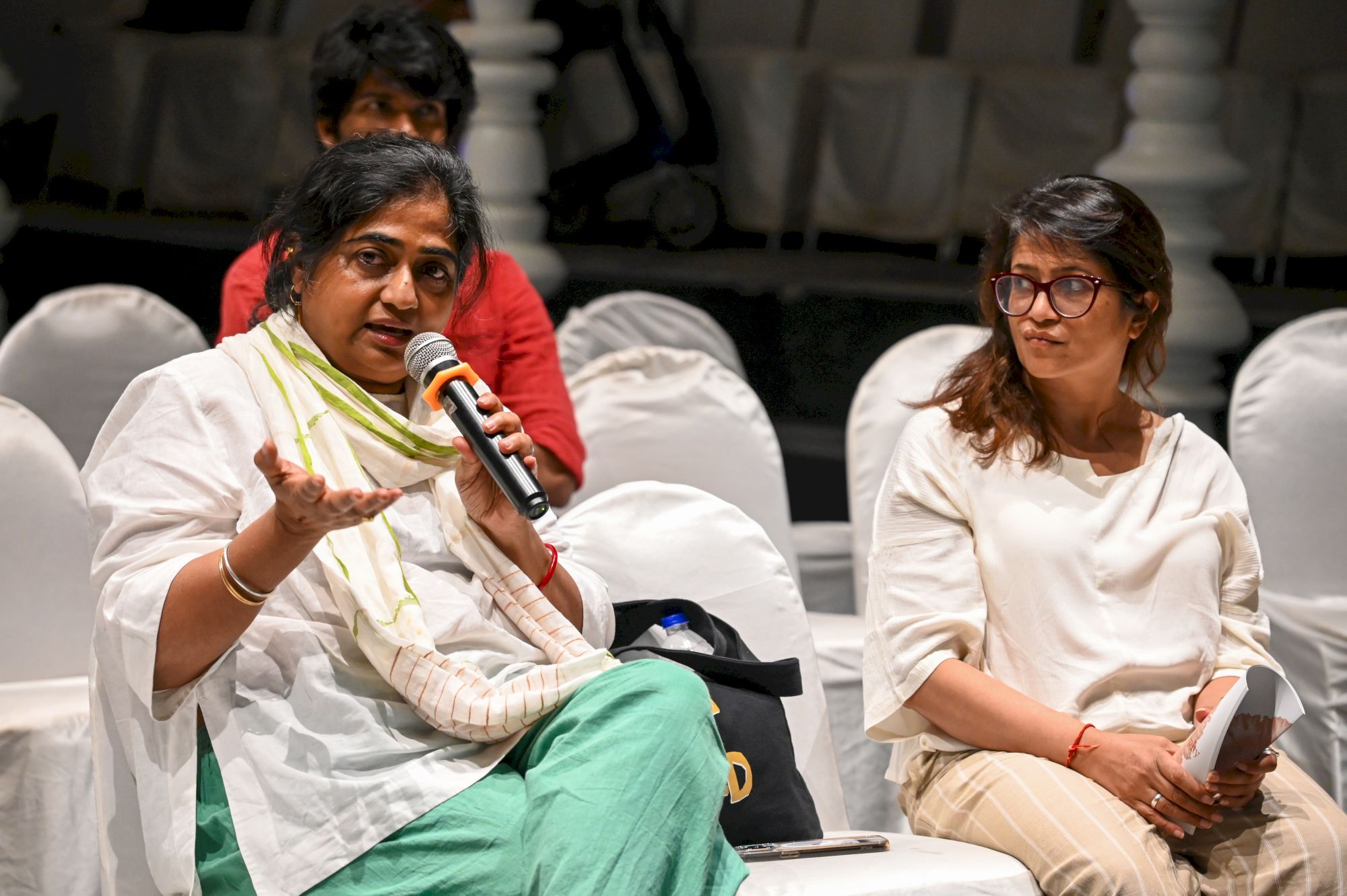
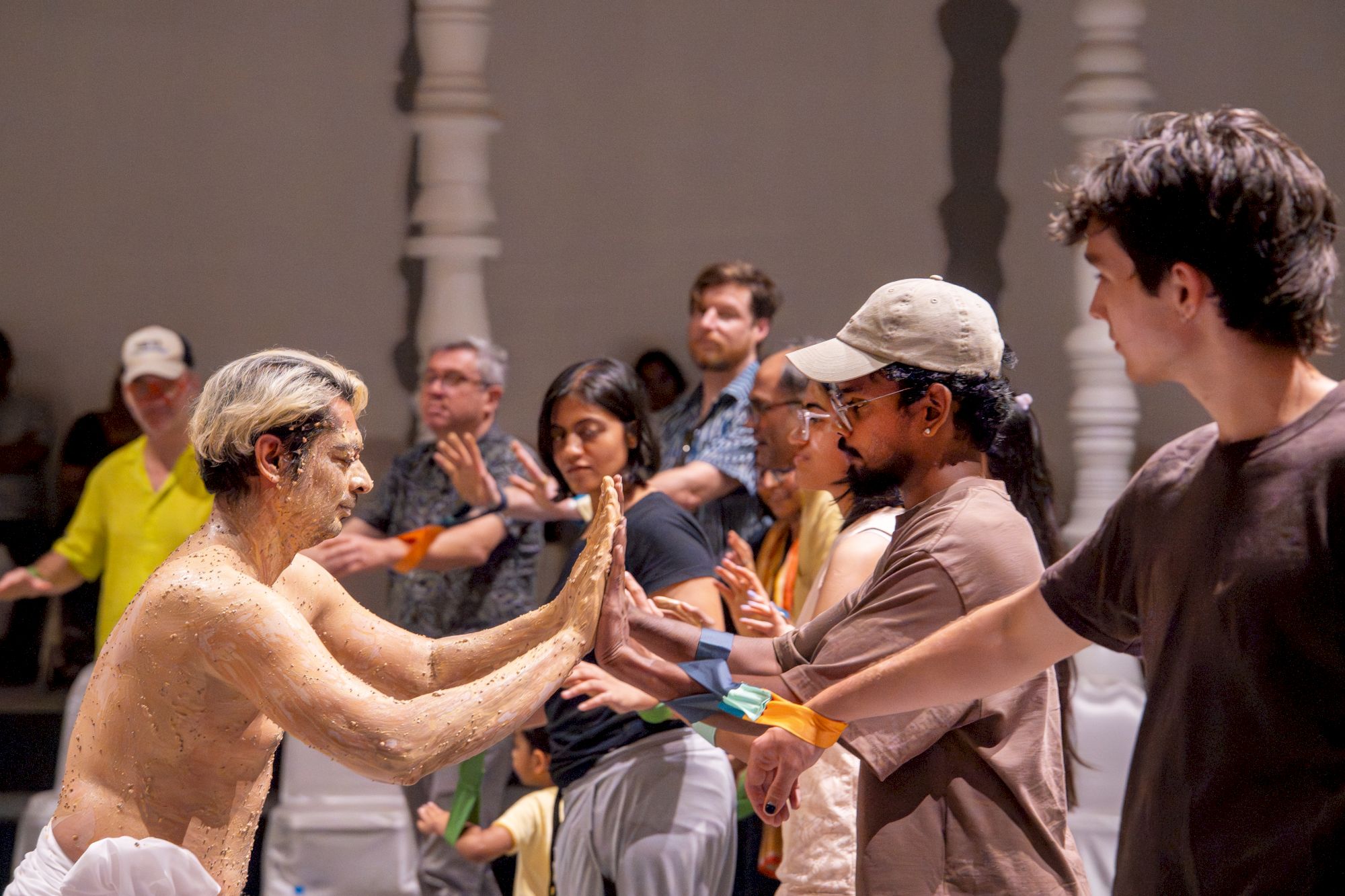
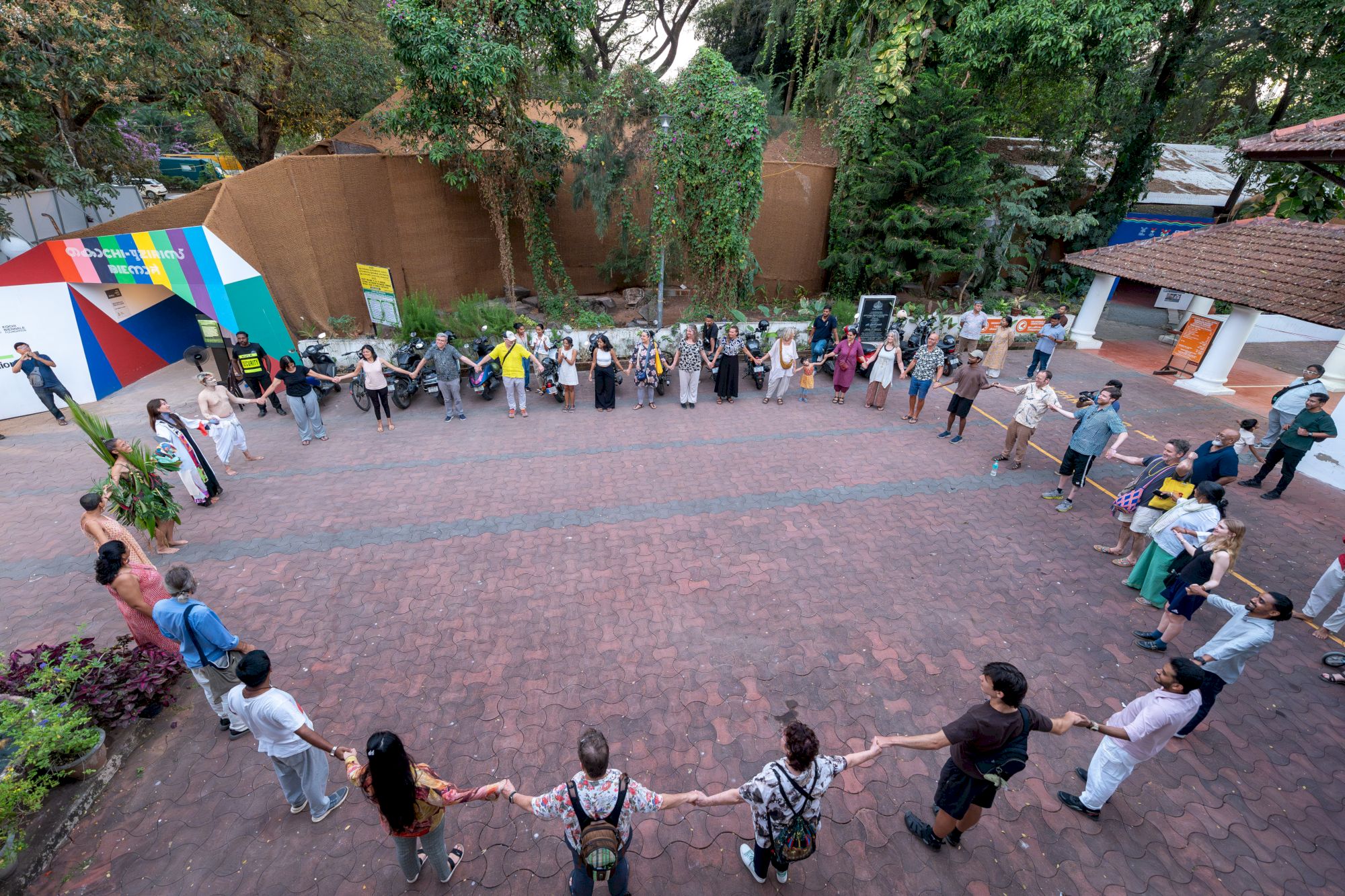
Our period of working at Bastion Bungalow was followed by the participatory performance “One That Takes Many Forms” by Arnab Basu, Nora Hauswirth, and Maya Minder — a ritual work involving soil, seeds, sound, and collective labour. Here, participants, audiences and the public joined hands together with strangers in a collective act that snaked in and out of the venue, binding and releasing each through washing and the rinsing of soil from hands.
As has already been covered in Makery, some of the team from Groundmaker’s coordinated a collateral event, in the project “Lines to Follow – Soils to Gather”. a long-term participatory performance produced by ART2M and Udumbanchola Circle. The project emerged from Soil Assembly #1 where a panel addressed how we might rethink food transport. A group of participants embarked from Fort Kochi on an expedition to food forests in the Western Ghats, encountering custodian farmers in Muvattupula and harvesting organic produce at artist Vivek Vilasini’s 2.6-hectare food forest in Anachal. The field trip included a ceremony centered on vegan version of the Peruvian Pachamanca, led by Peruvian artist Daniela Zambrano Almidón, followed by low-carbon transport of a small harvest to Kochi where its transformation into fermented pickles took place – part of the cold chain of fermentation – was coordinated and developed by Maya Minder. These were then delivered to the cultural sailing ship Arka Kinari, which will ultimately carry them to Western Europe by the summer of 2026, events permitting.
The description of the Soil Assembly is far from exhaustive but should give the reader a guide to what they might want to look out for by navigating to the website, where they can see further details and listen to talks.
Situated, ‘For the Time Being’
‘For the Time Being’ as a vision for Kocki-Muziris Biennale strongly resonates with Soil Assembly aims, as it speaks to the original impetus, and in its realisation, resonated the warmth of the wider Biennale ethos, as well as Soil Assembly aims, to become deeply rooted in the authentic values and systems being developed by the many artists whose work we are aligned with. In this respect, the themes being developed resonated with artworks being exhibited across the multiple sites, warehouses and exhibition spaces that together make up the Biennale. Amongst these, some groundbreaking work, both literally and artistically, became further points of discussion in the ongoing discussions that surrounded the meals and events that Soil Assembly participants were engaged with. Of particular note, Kulpreet Singh, (Black Marks – 2022, ongoing) and Otobong Nkanga (Soft Offerings to Scorched Lands and the Brokenhearted – 2025), showed that artworks provide deep connections to soil, land and concerns over climate change and water scarcity. Alongside Lakshmi Nivas Collective films, who also participated in Day 1 event on Multispecies Custodianship, we are reminded of the pressures that our ecosystems are under. As with those involved with Soil Assembly, these works in their presence through material realisation, show the role of artists and a wider shared concern over politics, technology and rights, through which the critical zones that we inhabit are understood.
In each iteration of Soil Assembly, we have drawn upon and situated its form to develop an understanding of shifts that are taking place as artists, along with curators, growers and communities, that adapt and challenge governance, methods and conservation of biodiverse habitats. Whilst in ‘Tinku Uku Pacha’ – (Soil Assembly #2 – 2025) this was grounded in Ecuador, the project that was led by curator Pedro Soler, we nonetheless situated the local context in relation to geopolitics and Ecuador’s reputation for protecting more-than-human rights, now under pressure. In its grounding in the indigenous community of La Chimba, the coordinators reminded us of wisdom shared by Transito Amaguaña (1909-2009), cultural figurehead for Soil Assembly #2, who stated; “Land is to the people what blood is to the body”. Towards the closing of our event in India’s largest contemporary art Biennale, Radha D’Souza, who is a Professor of Law at University of Westminster, and author of the Intergenerational Climate Crimes Act, once again reminded us of one of the most challenging issues evolved from our interests in soil as a critical zone. Our access to land, our rights in relation to its ownership and our responsibilities in respect to its future, for all living beings.
Soil Assembly whilst participating in one of the largest and exciting contemporary art Biennale was situated for its time with a deeply embedded sense of being. The event is an assembly, that has included field trips, performances and expeditions, exploring the local social, political and ecological landscape of Kerala. It is engaged with the wider issues of soil, land, water scarcity, climate change, and biodiversity, as understanding becomes more deeply situated in an exchanging of knowledge that is both local and operating at the international level through intersection with struggles, debates, tactical approaches and exchanges. Driven by artists imaginary, Soil Assembly aesthetic register is grounded by growing, in earthly materials, sensory ecosystems and transformative practices. Art here is shaped by a focus on soil, but only as a source of life – from food to biodiverse habitats, and in its nomadic state, the event is slowly growing and developing as an independent space or context for understanding multispecies justice, as well as the relationship between human rights and land.
To this end, we will further explore how this format can develop, in a new project, funded by the EU, that will situate Soil Assembly as a series of related events, culminating in Soil Assembly #4 in January 2027 at Spore Initiative, in Berlin. During this period, we will continue to provide updates, insights and share knowledge, as we piece together new strategies to underpin and root our understanding in this critical zone for all our futures.
More on previous Soil Assemblies and the Kochi-Muziris Biennale