

Guilty of What, early 80s anarcho-punk fanzine (1982-83)
To close out the year, Makery gives the floor to Karla Spiluttini, from Schmiede Hallein in Austria, for an overview of maker culture and its gender bias, an essay published in Feral Labs Node Book #2.
Humans have always been makers and tinkerers. Over time, society and its products have become more complex, leading to specialisations in making. Not everyone would produce everything, which also led towards accumulation of specified knowledge. Manual labour and distinct expertise were the foundation of our livelihood for a long time. Still, throughout time, humans have been drawn to continue making and creating things by themselves.
One thing that has been coinciding with the public discourse about making and do-it-yourself activities for a couple of hundred years are the stories being told about such activities. Flyers, construction manuals and guidebooks, exposition and retail catalogues, newspaper reports, magazines, radio and television programmes, and lately a seemingly endless number of websites, events and semi-academic publications as well as online influencers have been defining how we could be creating, making and improving things ourselves. These stories are supposed to tell us, the presumed maker, what tinkering, crafting, and making something with our own hands is supposed to look like and more importantly, what the impact of our production should be. Some of these narratives have been and continue to be gendered, specifically regarding preconceptions on which activities the female members of the population should be involved in.
Here, I present stories that subsequently pose some questions about how these prefabricated narratives go hand in hand with other socioeconomic circumstances.
Productive leisure
After the industrial revolution, manual labour was devalued and designated to lower social classes which made up/ constituted factory workforces. At the same time, the development of factory production provided people with the new concept of leisure time. As a side effect of this newfound free time, Victorian-era crafting was promoted as a pastime, aimed at women, to occupy their idle hands. It was touted as a tool to provide a productive and morally uplifting way of utilising spare time. One of the most popular pastimes was sewing, and Victorians came up with the peculiar technique of sewing washed and dried fish scales into black velvet fabrics. Since sewing held a prominent role in forming leisure activities, it went hand-in-hand with its own specialised apparatuses and machines for home use. The Singer sewing machine is claimed to be the first complex standardised technology to be mass marketed, and was reported to have sold around 11,000 machines in 1859, and within only 17 years increased their sales to 2 million units.

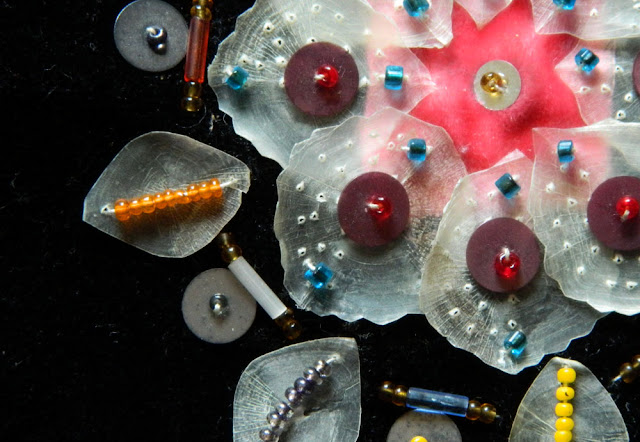
Internationally, industrialisation caused movements that would question the strained relationship between designing and making products. Collaborations with smaller workshops and individual manufacturers became an important step in re-humanising production in collectives such as the Arts and Crafts Movement in Britain or Jugendstil in Austria.
Citizen obligation
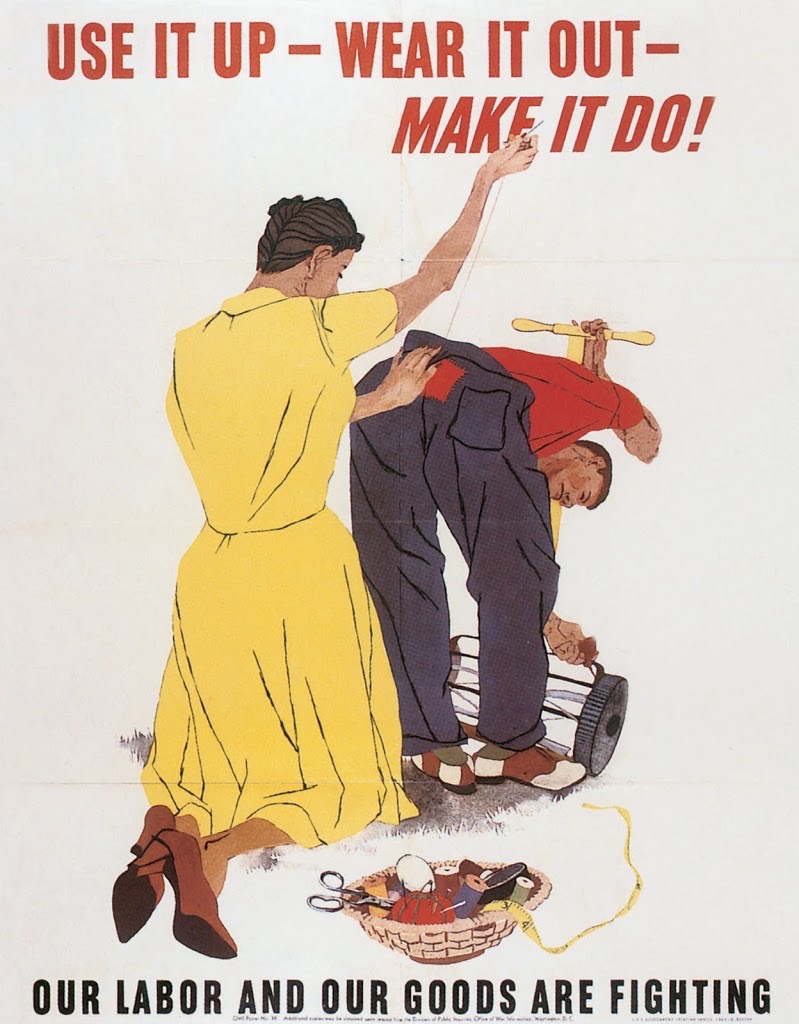
About half a century later, during the Second World War, war efforts led to a massive need for materials for the production of military goods. The respective governments felt it was important to promote an austere and sustainable lifestyle, where clothes and household items should be saved and repaired in order to be frugal with the use/ consumption of materials. Making and mending were proclaimed as patriotic activities helping with the war effort on the so-called Home Front, something that the people who stayed at home could do to contribute to military endeavours.

Family pastime
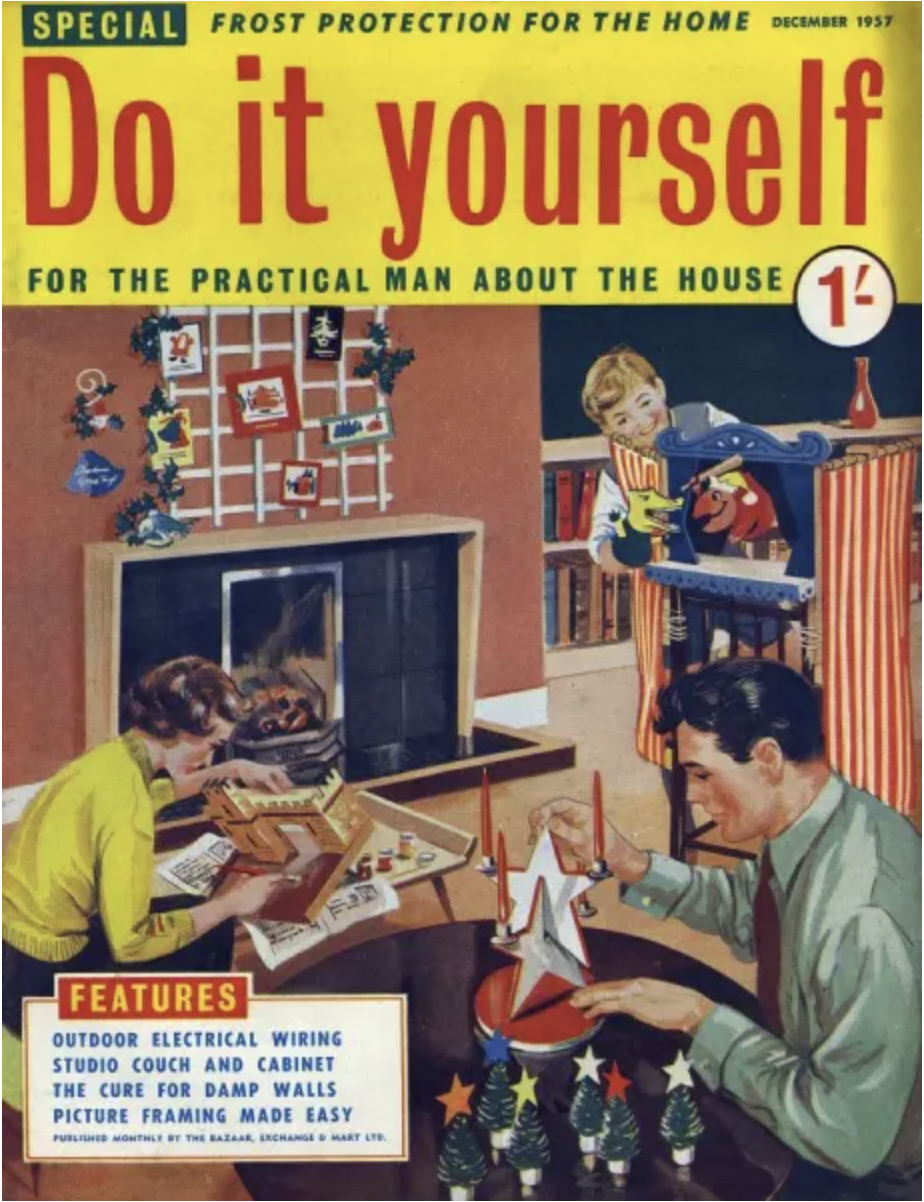
After the Second World War, the act of home improvement and tinkering again became less of a necessity and more of a social aspiration. The 1950’s in the UK and US saw a fairly big shift in production technology. Advanced materials, emulsion paint and paint rollers came on the market, electric drills, wallpaper, plywood, and resins were no longer only sold to the industry, but to individual resellers too. People could suddenly make things at home that were previously only available to those who could afford to hire an entire professional workforce to do these things.
The industry however went heavily against this trend by citing the dangers of working with electricity without proper training. Specialist magazines such as the British Do It Yourself magazine were published to inspire the motivated.

Be heard
Censorship has always been a significant part of every mode of public communication. It was meant to prevent violations of certain political and moral codes for a long time. One famed historic example of censorship is that of the Greek philosopher Socrates, who was sentenced to drink poison because his beliefs were thought to corrupt youth as he acknowledged unorthodox divinities. Of course, censorship has become more and more sophisticated over the centuries. Just as means and technology of communication evolved, censorship methods developed in parallel.
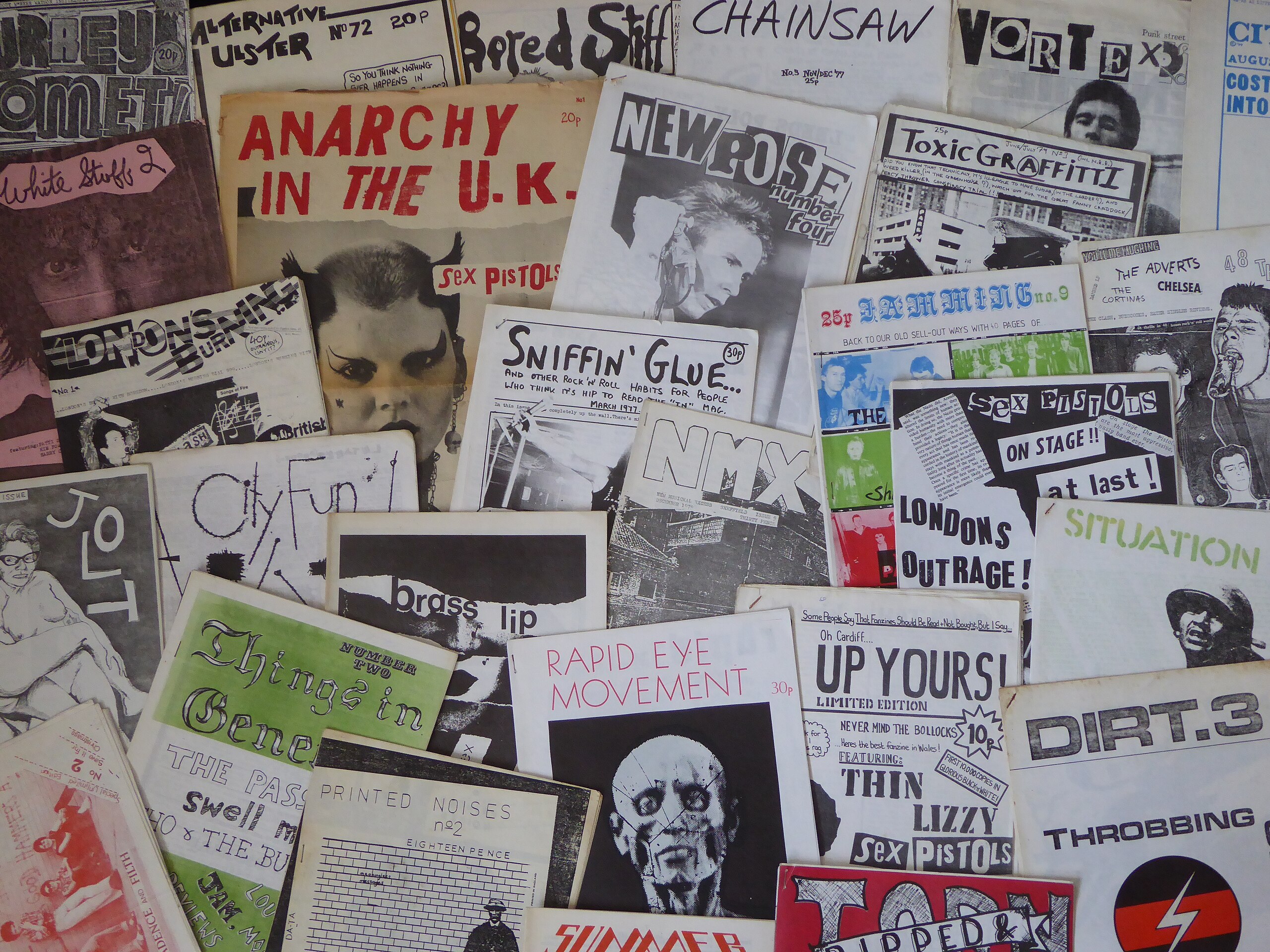
Enter Zines, self-published, cheap or free publications with limited circulation/ distribution, which were usually dedicated to one specific topic of interest and were therefore free from external manipulation or control. Zines have existed for quite a while in different forms. Between the 1940’s and 60’s they mainly addressed science fiction and horror genres/ related topics. During the 1970s however, one counteragent to mass consumerism with a strong will for self-determination evolved in the form of punk rock. The young creators wanted to produce their own anti-fashion, their very own sense of what it means to make music — basically not much: an amplifier, a guitar and the famous three cords. Luckily for punk youths, physicist and inventor Chester Carlson had invented a process called xerography a few years earlier, which made copying easy and affordable. The development of punk zines or fanzines is one of the most frequently told stories of self-publishing and empowerment, although the concept had existed for a while.

Education & polymaths
Throughout the 20th century, the importance of hands-on learning was rediscovered.
Jean Piaget was a Swiss developmental psychologist who contributed important theories on the cognitive development of children. He established the constructivist theory of learning in children and his studies led to a more child-centred approach in education, both in Europe and in the United States. Influenced by Piaget’s theory, Seymour Papert was one of the pioneers of Artificial Intelligence who recognized how important early age interaction with computers and programming would be for children. He propagated his constructionist idea in the 1980s, when he was working at the Massachusetts Institute of Technology by helping to develop a simplified programming language called LOGO to teach children how to code and interact with complex machines.
Many North American K-12 schools have since incorporated so called makerspaces into their schools and curricula. In these makerspaces, students are encouraged to develop their own knowledge by creating and interacting with physical objects. Peer-to-peer and self-directed learning is encouraged, and educators claim that these practices also lead to developing media literacy. The approach encourages continuous development of projects by introducing various degrees of iterations to the process over time. This does not only promote different forms of problem solving, but also strengthens children’s interest in the STEM subjects (Science, Technology, Engineering and Mathematics) and provides them with the skills to work in today’s multidimensional career settings. It is understandably more fun to be able to tinker, construct, build, and explore something yourself than just sitting still in a chair and listening to what other people have found out.

Promises of digital manufacturing
From 2005, selected digital production machines became widely available and affordable for individual and home use. The RepRap 3D printer was developed at the University of Bath, and at the same time, Make Magazine was launched and initiated its well-known Maker Faires only one year later. Similar to the 1950’s, the commercial availability of previously highly specialised and expensive machines to an interested public did lead—to some extent—to a democratisation of skills in the digital field. Everyone could potentially become their own producer.
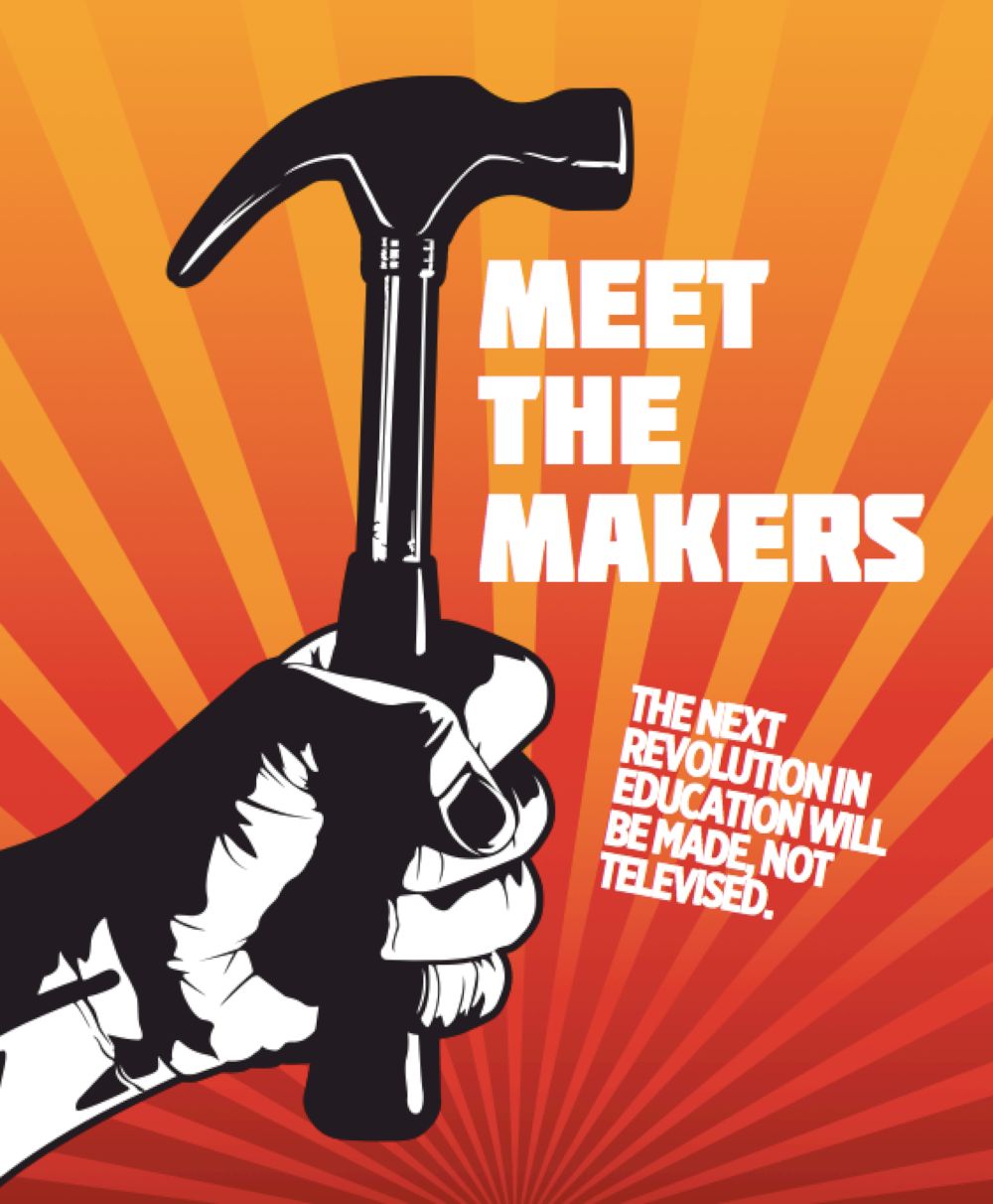
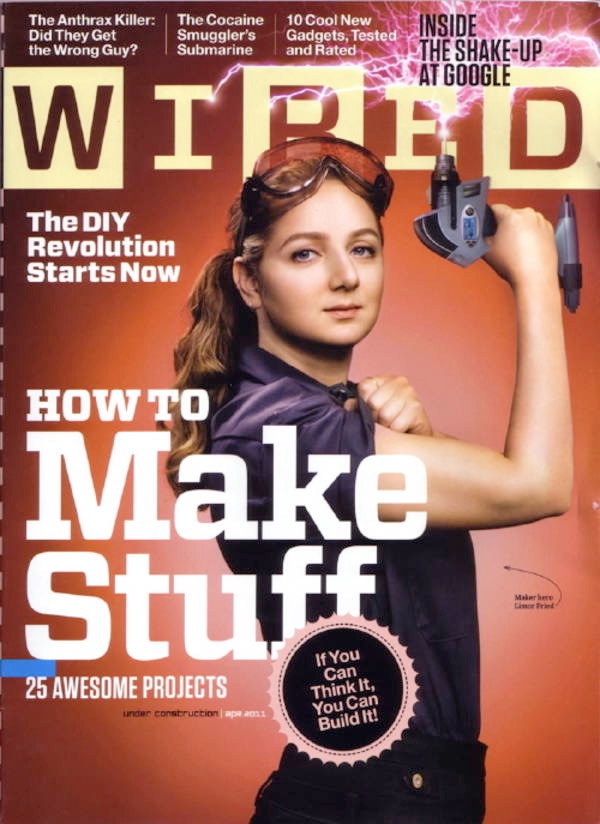
This might be the reason why, when looking at the rhetoric and visual language of the Maker Movement, one notices a specific ideological tone. Chris Anderson proclaimed a new industrial revolution in 2013 with the advent of affordable digital manufacturing machines, while the visual language of early days modern maker culture is reminiscent of revolutionary and propaganda posters.


DI(WH)Y?
One promise of the promoters of small-scale home digital production was that we could start to avoid mass produced goods and start a new age of anti-consumerism and sustainability. Means of digital production are perceived as more effortless than manual production, because it is aided by machines. Reproducing an object becomes simple because the data for production are losslessly transferable and reusable. Last but not least, the process and the results of self-made production are highly rewarding for the makers. But there is, for instance, the issue of how to recycle the waste parts of 3D printing, such as the support structures, the edges/ off-cuts and misprints that come with this production technique. Even materials which claim to be biodegradable, are only biodegradable under very specific conditions.
Arguably, these recent production technologies seem to not really replace or reduce forms of mass production. To what extent are we only increasing the number of products on the market or in our homes which end up in landfills? The costs to our environment should be carefully considered. Currently our need to prematurely replace goods before they are broken as well as planned obsolescence are a major factor in used resources and produced waste.
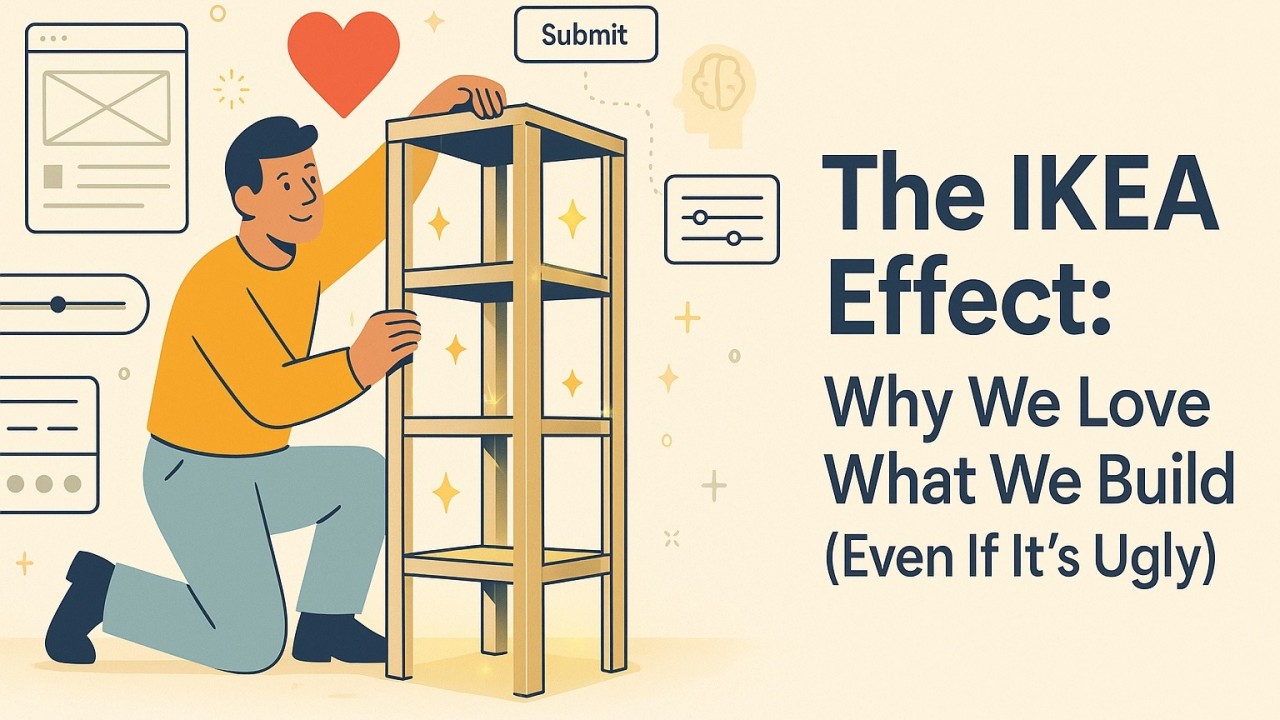
The estimated worth of the Do It Yourself market has been valued at 28 billion US dollars. Much of it comes from the home improvement sector, but there are many companies that have become very successful through the rise of maker culture. In a study entitled “The Ikea Effect: When Labour Leads to Love” one finding was that people were willing to pay 36% more for cardboard boxes that they had to self-assemble in comparison to ready-made boxes. So, involvement in creating, assembling, or building an object is perceived as upvaluation.

Psychological salvation in times of distress
An additional dramatic break was unexpectedly brought on by the Covid-19 pandemic. Housebound activities such as baking bread and fermenting gained worldwide traction throughout the Covid-19 lockdowns. The measures taken to contain the spread of the virus led to an upsurge in manual activities as real life in isolation met a concentrated social interchange via teleconferences on screen. Intense haptics, tastes and smells became important, especially for those weary of the large number of online events that were longing for analogue sensations.
Some of these homemaking aspects communicated through social media remain popular. At present, so called “tradwife” influencers are showing off their family homesteading skills and turning them into lucrative business models in a trend that addresses many preconceptions of what making should mean, especially for female populations.


Do It for Yourself and others
Whether Maker trends were imposed from the outside or have grown independently in a grassroots fashion, they seem to often be attached to a strong narrative. Even though there are numerous downsides and points of criticism to the various concepts of making, the act of producing something, anything, be it guerrilla knitting or making stencil graffiti or fermenting kimchi or creating multimedia installations actually does give us agency. In both formal and informal education settings these tangible experiences of making lead to self-empowerment on different levels.

Feral Labs at Schmiede
Nowadays, the discourse should not merely concentrate on industrialised production processes versus manual labour, but expand more on the advances of technology and its underlying processes and histories of origin. These developments gravely impact our lives, often without us being fully aware of all the implications. Often, we find our lives evidently as well as covertly influenced by algorithms, some of which remain inexplicable and do not necessarily affect us positively. Furthermore, everyone can easily be a maker but not everyone can easily be a computer scientist or mathematician, making it even more essential to make the inner workings and backgrounds that lead machines to come to certain conclusions more accessible.
In the Schmiede’s Feral Labs, the notions of making and investigating are understood as a means to diversify technological and socio-ecological empowerment. Not merely the physical but also the symbolic opening of black boxes in science and technology is vital for being able to gain agency and remain informed and independent in thought and action.
This approach is being picked up in manifold variations through the Feral Labs taking place at Schmiede Hallein, aiming to give agency to every person who is interested in peeking into black boxes and beyond.
Feminist hacking
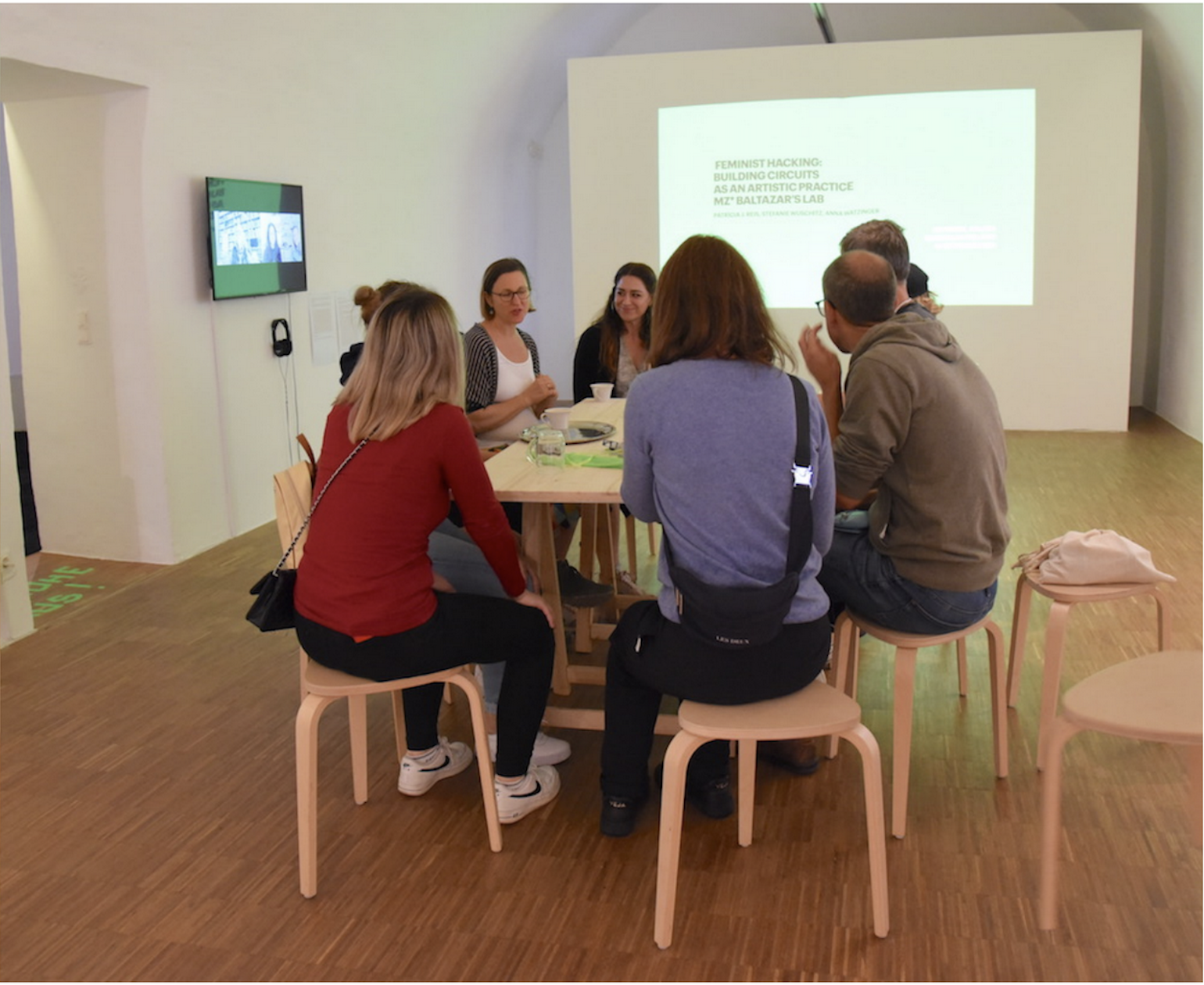
Mz*Baltazar’s Laboratory is a feminist artist collective and feminist hackerspace in Vienna, aiming to educate and empower creativity, activism and provocative thinking in their accessible, inclusive, safer and radical space using open-source technology. They have been successful in creating an environment for fearless curiosity and learning about science and technology in their Vienna studio and in workshops internationally. During Schmiede 2022, three representatives of the feminist collective Mz*Baltazar’s Lab led the Feral Lab and offered a workshop entitled “Feminist Hacking – Building Circuits as an Artistic Practice”, where they offered insights into electronic production and programming for participants with no prior experience in tinkering with electronics.

Feral tales
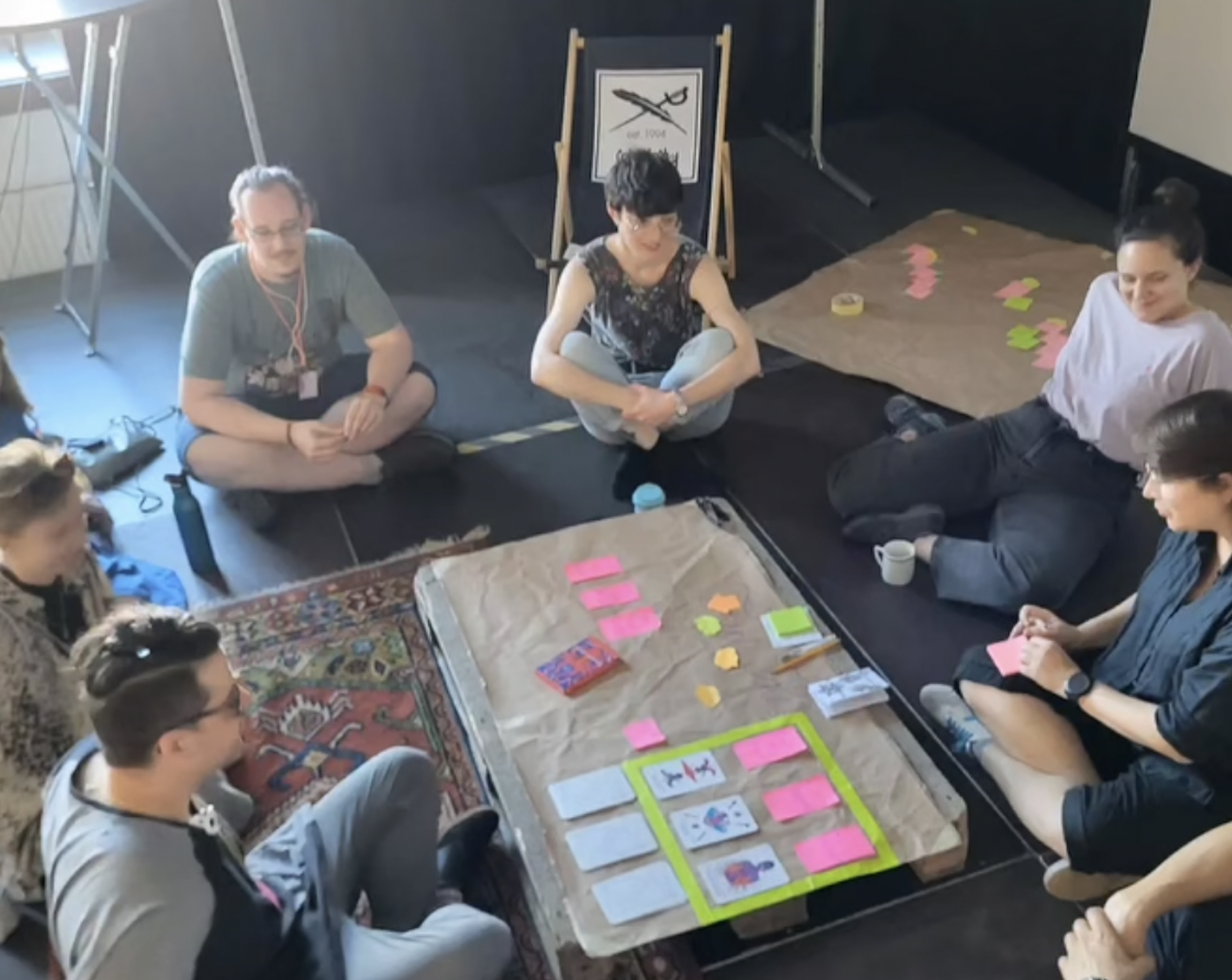
The Schmiede Feral Lab in 2023 took the concept of socio-technological empowerment further in its explorative workshops entitled Feral Tales. The idea was to use an experimental, playful process that would yield open results and encourage participants to get actively involved by creating their own stories — Feral Tales — as a starting point. This was to be achieved by utilising the laying of tarot cards, which would establish the basis for personal narratives to unfold and become the basis for further discussion of technological dispositive. The cards used for the workshop sessions come from the Instant Archetypes tarot deck, produced/ created by London design studio Superflux. They contain cards such as “The Whistleblower”, “The Hacker”, “Innovation”, “The rogue state” or “Disruption” and thereby supply a fantastic base for discussing contemporary themes and mechanisms. Participants were asked to draw cards and interlink them in a story of their choosing. The stories that evolved through the laying of the cards were subsequently an incentive for open discussions with other participants and the lab team. Results included tales that were rooted in post-technological, cyberpunk, or dystopian biological science fiction environments. These settings further intensified the discourse about the topics contained in the individual narratives, ranging from critical discussions about political decisions to envisioning alternative utopian futures and grass roots ecological movements. Topic-wise, the FeralAIR artists of 2023, Kasia Chmielinski, Patrícia Chamrazová and Hidéo Snes, added extra value from their own context in virtual reality settings and expertise surrounding machine learning.
The practice of storytelling drawing on emerging sociocultural, scientific and technological topics seems very effective in terms of finding out about individual expectations, fears and raising awareness as well as creating general proficiency in developments in emerging technology.

Make!
Empowerment through all these aforementioned diverse forms of making and investigating supports agency and promotes self-empowerment, which can lead to lowering the threshold for disadvantaged and less visible groups to engage. Involvement in DIY and maker communities and interest in life-long learning about the inner makings and histories of objects and technology encourages critical thinking and a hands-on approach to knowing and making the world, which are characteristics we should aspire to foster in everyone.
References
Atkinson, P. (ed) “Special issue ‘do it yourself, democracy and design”. Journal of Design History, 19(1). 2006.
Johansson, A., Kisch, P. and Mirata, M.“Distributed Economies – A New Engine for Innovation”. Journal of Cleaner Production 13 (10–11):971–79. 2005.
Kohtala, C., Hyysalo, S., & Whalen, J. “A taxonomy of users’ active design engagement in the 21st century”. Design Studies 67, 27–54. 2020.
Maldini, C. “Attachment, Durability and the Environmental Impact of Digital DIY” Journal of Design History, 19(1), 141-157. 2016.
Millard, J., Sorivelle, M., Deljanin, S., Unterfrauner, E., Voigt, C. “Is the Maker Movement Contributing to Sustainability?” Sustainability, MDPI. 2018
Norton, M. I., Mochon, D. and Ariely, D. “The ‘ikea effect’: when labor leads to love”. Journal of Consumer Psychology, 22(3), 453–460. 2012.
N.N. “Arts and Crafts: an introduction”, 2021.
Troxler, P. “Beyond Consenting Nerds. Lateral Design Patterns for New Manufacturing”. Hogeschool Rotterdam Uitgeverij. 2015.
More on Schmiede Hallein, Feral Labs Network and Rewilding Cultures.