
New Gleaning: Encounter on art and paludiculture with Daniel Hengst
Encounter with intermedia artist Daniel Hengst who presented ‘New Gleaning’, the first film in his ‘Paludicon’ series at the “Swamp Things! The Liveliness of Peatland Plants” exhibition of the _matter festival 2025 in Berlin.
The _matter Festival 2025 shines a new light on material agencies. From April to November 2025, it presented exhibitions, workshops and debates at eleven venues across Berlin, changing our understanding of materials as passive, ahistorical substances. The festival’s contributions demonstrate that materials are a vibrant part of our living world. They connect human and non-human agents, times and places. They are dynamic and have a memory of their own. Realizing material agencies create a sustainable alternative to prevailing extractivist and energy-consuming technologies and sparks a fresh perspective on the challenges posed by human-induced climate crisis.
Ewen Chardronnet: What is your background? And can you tell us why you have interest in peatlands?
Daniel Hengst: I am working as an artist for more than 20 years. For a long time, I was working in the performing arts mainly as video and sound artist but in some projects also as author, director and dramaturge. The experiences in theatre, dance and opera made me think a lot about representation and performativity. How is media also performing and how do modes of representation alter with the rise of omnipresent media technology? Who is represented in media and how? In 2012 I wrote and directed a theatre play based on Marshall McLuhan’s “Peace and War in the global village” as I got extremely interested in the way how the internet and its paradigms are shifting the idea of the Human, the political system and cohabitation.
I changed focus around 2015 towards visual arts, taking a step away from the performing arts and its topics. Building upon readings of texts about posthumanism, plant blindness and more then human worlds written by thinkers like Rosi Braidotti and Natasha Myers I started to see the world and experience it differently. In 2019 I had some self-organised residencies in Germany, Latvia, Lithuania, Italy, Switzerland and the UK together with the Australian curator and artist Bek Berger. Our research started with the question, on how to make art for the non-human gaze? We asked ourselves, can we create an artwork for a forest or a fox, and, if so, how would that look like?
This question intentionally pushed us to the limits of our imagination and inspired me enormously. People are often very self-centred and have little capacities to care about other living beings and their needs. Also in the arts, we are mainly dealing with ourselves – even when asking such a question as we did, we are mainly talking about ourselves: the after math of human destruction, the moral obligations, et cetera.
This change of perspective, that was based on an experience I made at Ķemeri National Park near Rīga, had enormous power and liberated me from the excessive egoism and anthropocentrism, as well as many toxic relationships I experienced in the world of German performing arts. For the first time in my life, at the age of nearly 40 years, I was standing in a peatland surrounding me up to the horizon. It sounds strange but, in that moment, I had the feeling of arriving somewhere new and being connected through and with the peatland and its plants. I felt embraced by friendly strangers – a warm and loving hug that is not released until now.
Since then, I submerged myself into peatlands, their biology and history as well as new forms of agriculture on wet land. I created several artworks using VR, XR, based on code, using video and sound, photography and most recently also through material research and objects. Artistic Research is a big part of this process.
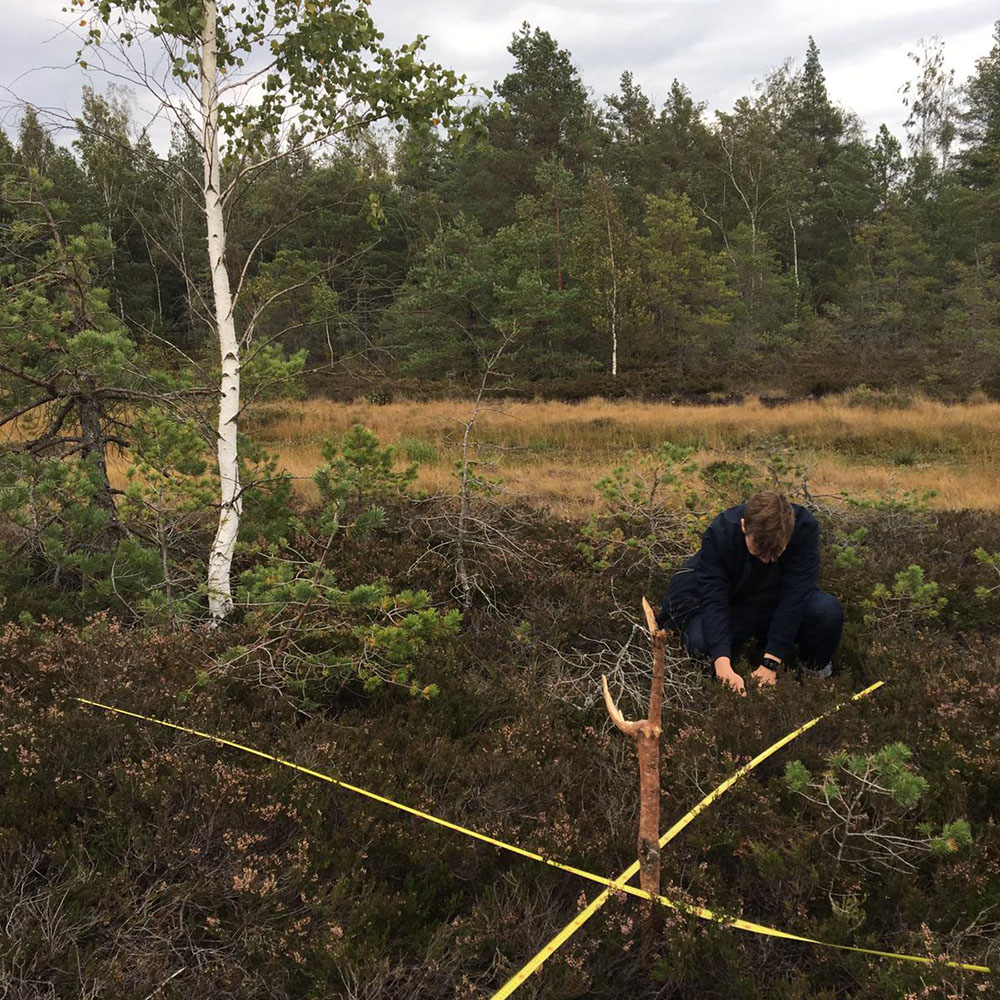
The first work I created about peatlands was Blooming Love and it was created during a residency hosted by the RIXC Gallery in Rīga funded by EMARE/EMAP. Based on artistic research and a lot of photographical work, I created an immersive environment consisting of light, sound, video and at its core a Virtual Reality. For the VR, I digitally modelled thirty plants species from peatland as realistic as possible and placed them in a virtual swamp. When installing it for the first time in Halle an der Saale (DE) at the Werkleitz Festival, I developed this idea of a greenhouse for human-plants relationships. I wanted this installation to be a place that questions our ignorance towards plants. A place to grow connections and relationships instead of dealing again and again with brutal human stories of extractivism or creating new scientific narratives that renders a plant more as an object of human knowledge production then as a living being that has a life on its own. Inside the VR the human visitor is reduced to a mere gaze, hovering at the eye level with the plants. The bog body is the human body. Rather than viewing the peatland from an elevated perspective or capturing a panoramic landscape, the visitor observes only the immediate area—approximately twenty to thirty centimetres ahead or just above where the vegetation is located. The visitors’ eyes and mind are occupied with the morphology of shrubs, lichen and mosses in direct proximity and becoming a part of an untouched peatland as a speculative non-human entanglement. For me Blooming Love is an exploration of a proximity in absence. Whenever I was exhibiting Blooming Love in Germany, I took the chance to share the story of the peatlands in the Baltics and the threat of being destroyed for peat extraction. The digital plant avatars represented Ķemeri and its plants and made a lot of visitors aware about this subject.
Video Blooming Love:
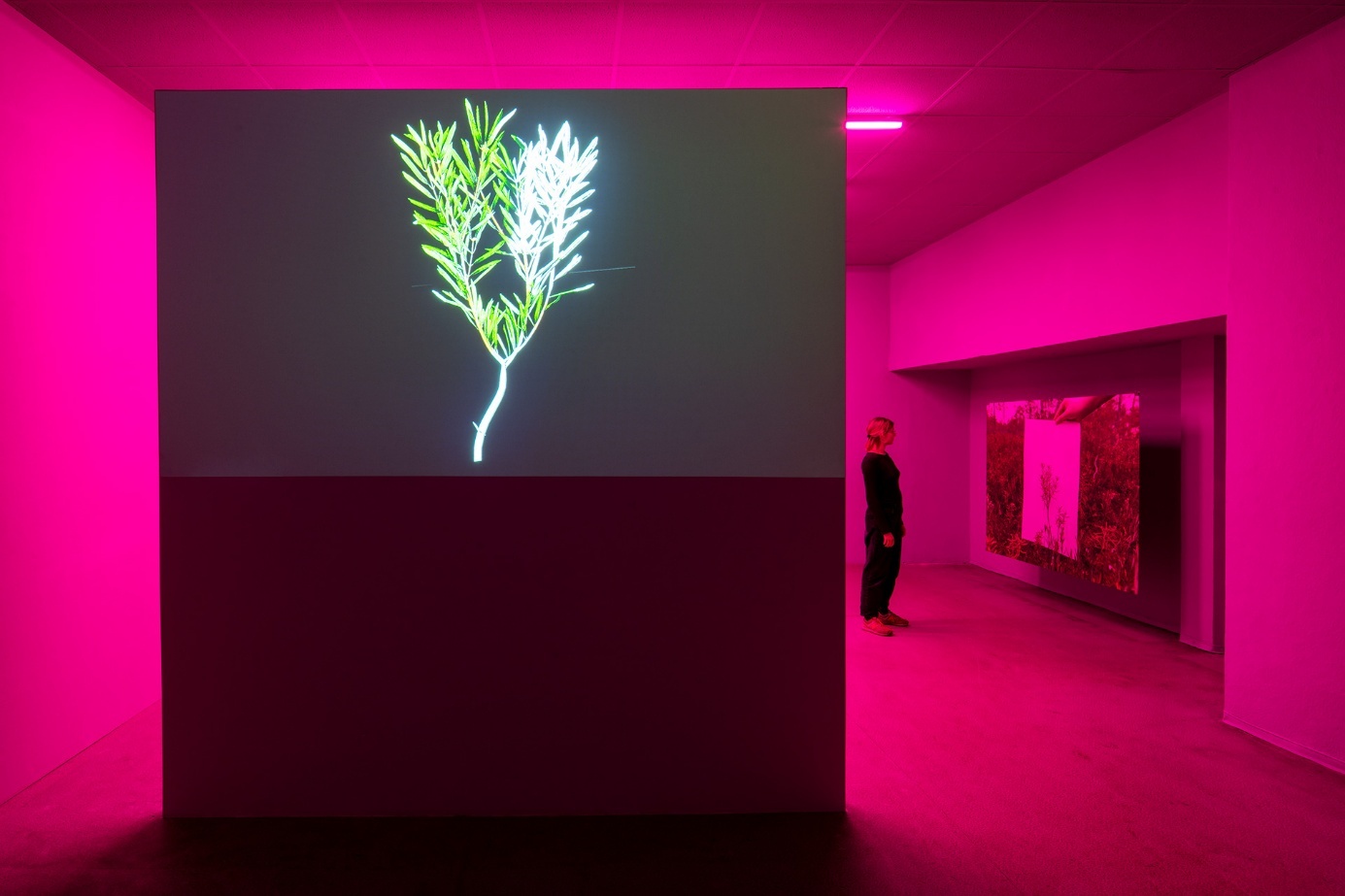
Two years later, in 2022, I build a second greenhouse for human plant relationships that was also focussing on peatland plants but this time more on their movements. Plants are not so immobile and rigid as we mostly tend to think. They are moving mostly unseen and very slow. But they are and in very many and surprising ways. We humans separate the movements in two categories: nastic and tropic movements. The separation between both is roughly speaking, between movements that are reversable and non-reversable. One example of the former is the opening and closing of petals in response to sunrise and sunset, while two examples for the latter are root growth and pollen dispersal via wind or water. For the artwork Nastien & Tropismen I developed generative algorithms that move seven digital plant avatars. The plants are again the protagonists of the exhibition, and in this installation, they move the human visitors through the exhibition.
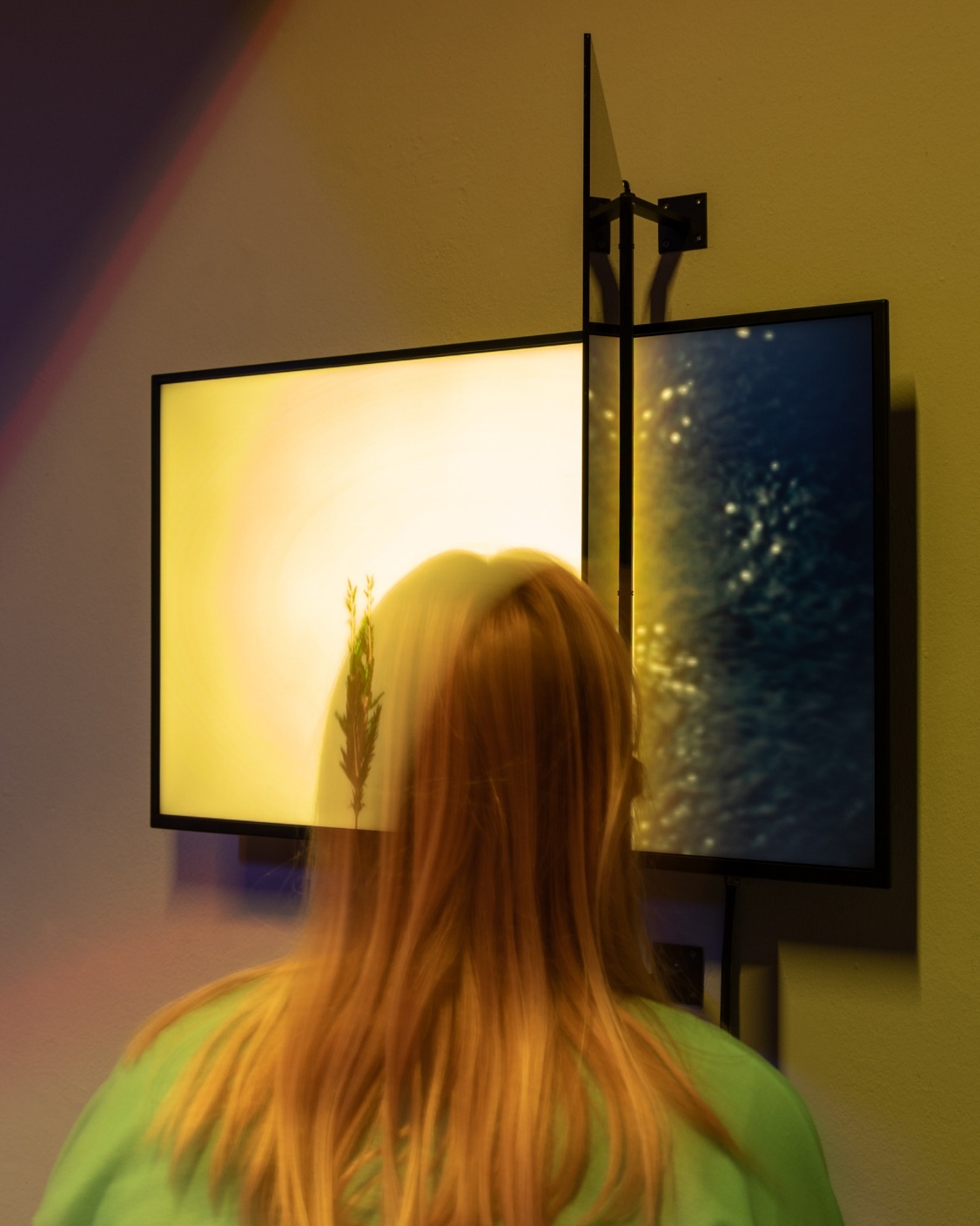
The three monitors are covered partly by black glass and visitors cannot see the full screen. They must bend or crouch down to experience the full image. Additionally, only one of the monitors is active at a time – so the visitors must follow the plant appearance. A new interest that arose from this work was the reversal of human-plant-hierarchies. Because I developed the perspective that it’s not us humans who is moving the plants (like in many interactive art installations where you wave your hand and virtual plants are following your movement or similar) but the other way around. Plants breathe life into us and they move us.
When visitors bend down and watch the other part of the monitor, they are exploring the afterlife of these plants. Because peatlands are always in limbo between life and death. Certain plants grow at their tops while decaying at their bases, a process that gradually forms peat. Because plant fibres remain partially undecomposed in waterlogged environments, peat stores considerable amounts of carbon dioxide. This makes peatlands an important ally in the fight against the climate crisis.
Video Nastien & Tropismen:
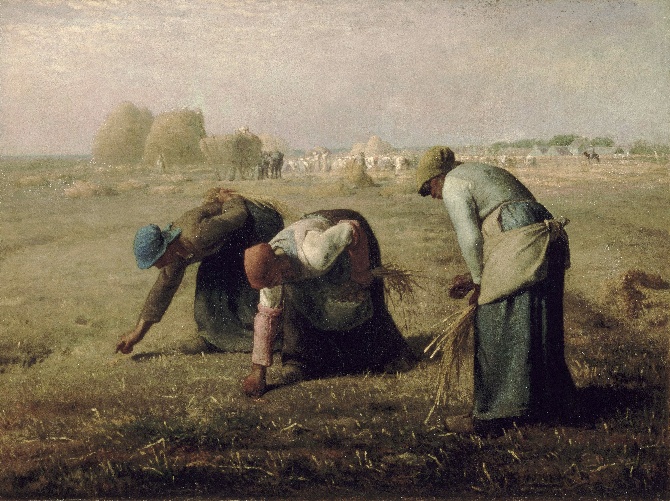
EC: In your new film “New Gleaning” you show how you were influenced by “Les Glaneuses” from Jean-François Millet, or the movie of same title by Agnès Varda, can you elaborate?
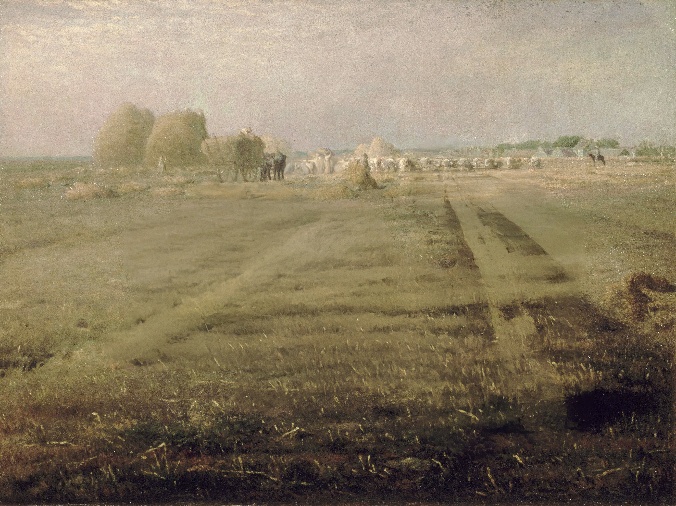
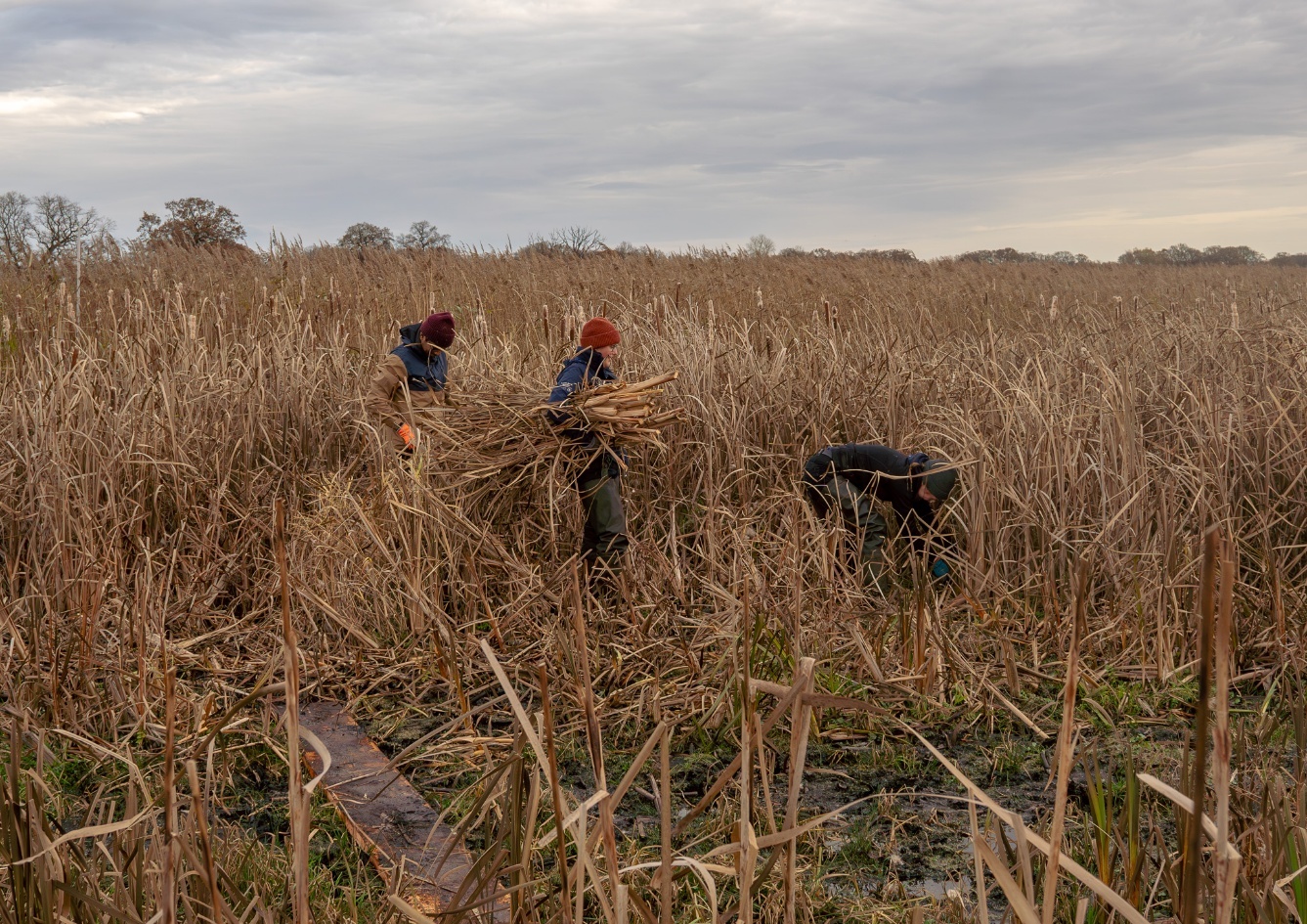
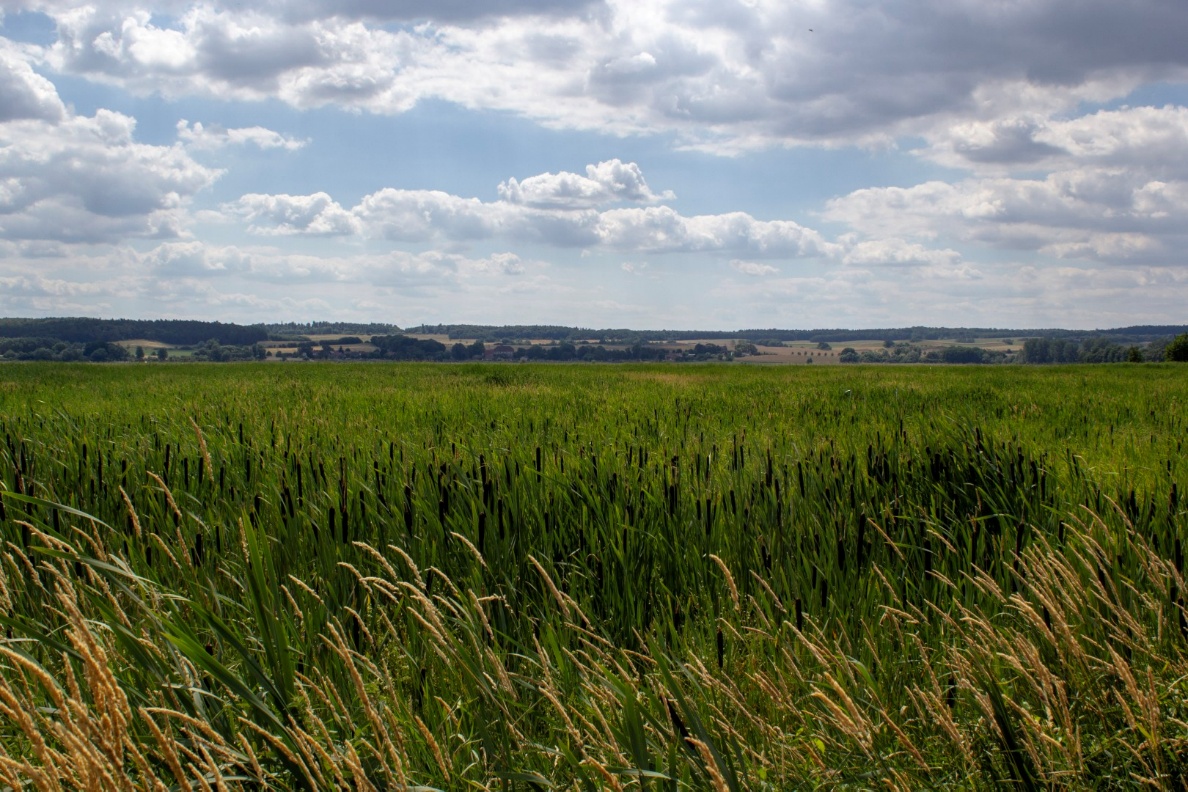
DH: The film was shot during the cattail harvest on a paludiculture in Mecklenburg-Vorpommern. Paludiculture is the term for an agriculture on rewetted peatlands. In the past most peatlands in Germany have been heavily drained and then used for normal agriculture. Since some decades its known, that they exceed carbon dioxide if they are drained and therefore, they should be rewetted. Scientists from Greifswald Mire Centre for example are exploring new practices and methods to do agriculture on wet land to allow the farmers to continuing earning money from these areas. But because these experimentations are in an early phase, many steps need a lot of women- and manpower and are done manually. I was very astonished when I saw people working here with their hands cutting and collecting the material that cannot be yet harvested with machinery. It was like a time portal to me that opened in my head, and I travelled back to one of the most iconic images of people working with there bare hands on a field: In 1857 Jean-François Millet painted “Les Glaneuses” that depicts three women gleaning from a field. In the film I am following the developments of the agricultural soils, starting from these six hands on the painting that disappeared at that time due to the industrialisation of agriculture and unto the hands I observed in Neukalen in Germany during the paludiculture harvest in 2025.
It’s a travel through developments that transforms farming into an industry and soils into a means of production. And it’s also a travel along dramatic changes of labour and its conditions but also on the perception of nature. By that time, some peatlands in Europe had already been drained, but this process accelerated as new technology made it possible to drain increasingly larger areas that were considered unnecessary or unproductive.
And because the time portal brought me to the gleaners I researched also about Gleaning as a part of the historical agriculture and the social sphere. Agnes Varda showed in her film that Gleaning was a part of France till very recently and she opened the perspective on the practice to a much wider understanding what gleaning nowadays would mean. And I think there was and still is a misperception of Gleaning and of women labour. The painting and its motive were a thread to many Parisians at the time it was painted because everybody was in fear that poor people like the three gleaners could start a new revolution. With the rise of capitalism, the state increasingly protected ownership and property and regulated gleaning, therefore. Liana Vardi shows in her article “Construing the Harvest“ from 1993 that it was not only women who were gleaning but that for a long time gleaning was an integral part of the seasonal cycle, and it was strengthening the rural communities. Also, in Germany the so called Allmende (also called Gemeingut or commons; shared resources that are used and managed collectively by a community) disappeared during the agricultural reforms in the beginning of the 19th century. I think that’s another major link that the time travel in the Paludicon showed me and the audience of my film: Paludiculture should not have the same extractivist attitude like current conventional agriculture, but it should be also an opportunity to reassess and reshape our relationship to plants and peatlands.
EC: Can you tell us more about the Paludicon concept?
DH: This term is based on the Rubicon model, a motivational psychological model developed by Heinz Heckhausen and Peter M. Gollwitzer in 1987. The term Rubicon is a reference to a historical event in 49 B.C., when Julius Caesar crossed the River Rubicon, the boundary between Cisalpine Gaul and the Roman Republic. By doing so, he made an irreversible decision that led to civil war. In the model, “crossing the Rubicon” symbolizes the moment a person commits to a decision — after which there is no turning back. I find it a very beautiful reference as in this image it is the body of water that symbolizes something so important to humankind. With my Paludicon concept, I want to mark rewetted peatlands as spaces that are more than just agricultural land: the Paludicon is a space where more than just humans weigh up, plan, negotiate, shape and deal with more than just human concerns. I want to search for new forms of reflection and connection, as well as new relationships between humans, plants and animals in old and new wetlands. I imagine the Paludicon as a decentralised space for thought, feeling and action that is located on the remains of all drained and rewetted peatlands.
And as I said earlier the shift towards paludiculture is not only a shift in agricultural practices but also an opportunity to shift our perception and relations to plants and peatlands. I want to invite audiences but also fellow colleagues on exciting endeavours and time travels, back and forth.
Currently I am planning two more parts of my series of Paludicon video works. The next one for example will be more about the history of the use of peatland plants, what it was for and why it was overthrown in the late 1920s in Germany. There is certainly a lot of knowledge buried under the rubble of time, but also under the debris of World War II.
Daniel Hengst, New Gleaning, 14 min, 2025:
EC: You also started to create soft toys made from peatland plants.
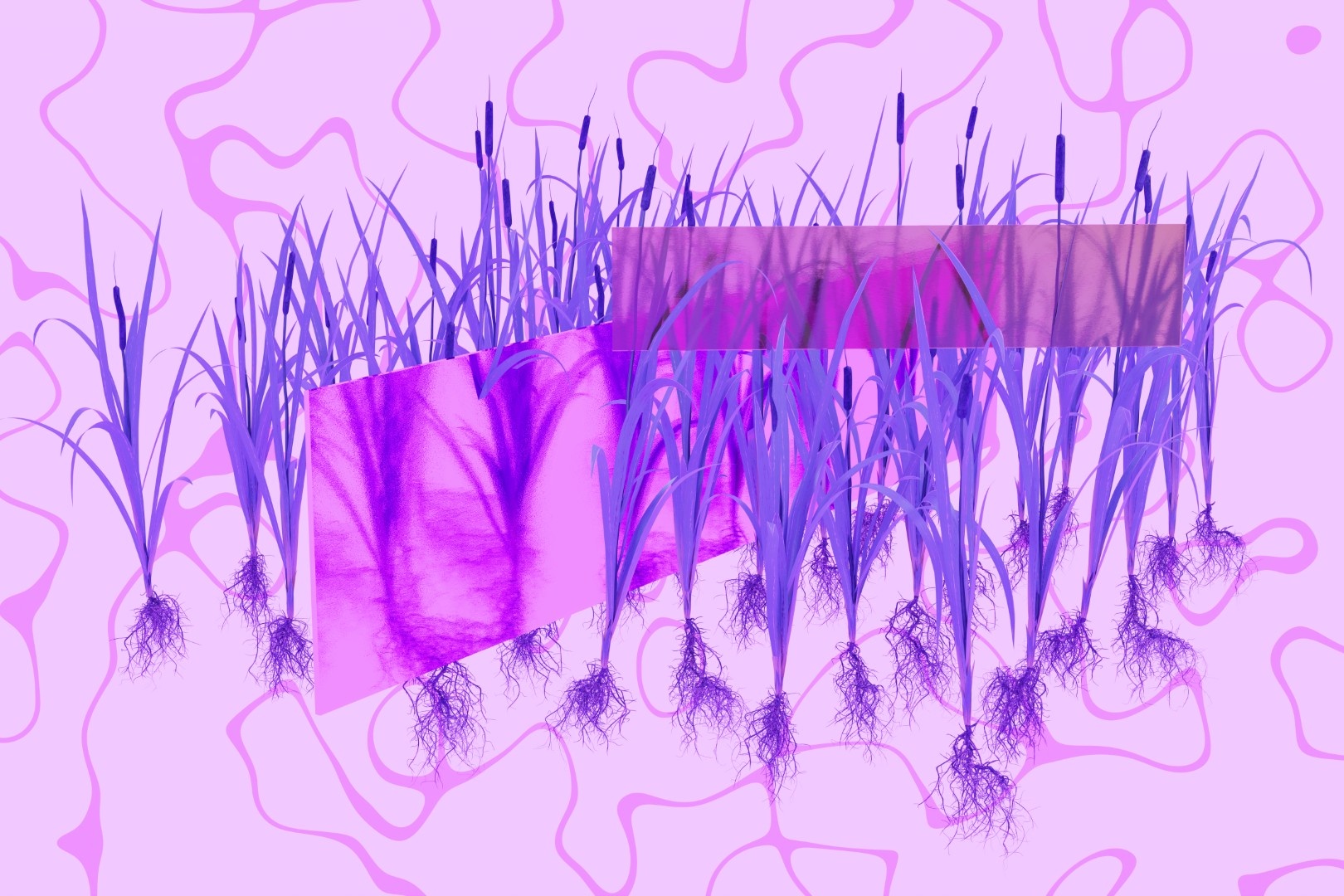
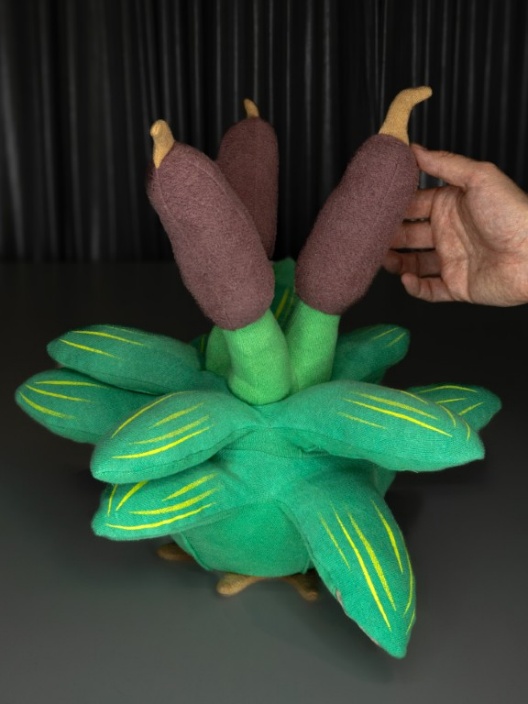
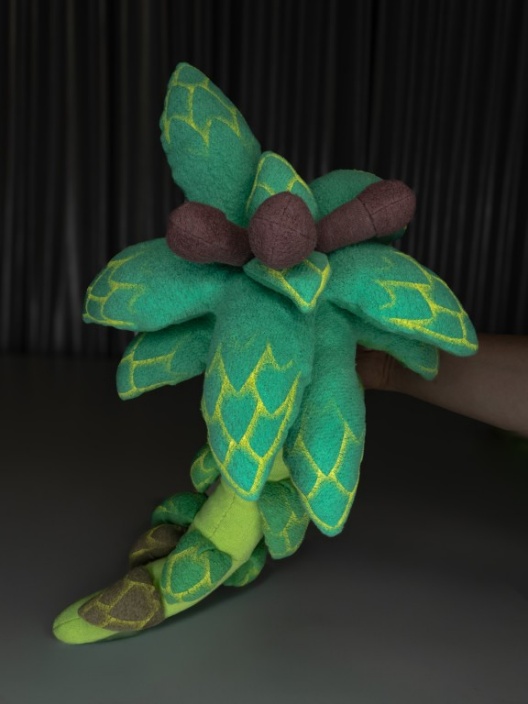
DH: Yes, the project is called Moore kuscheln (German for cuddling mires) and it’s the first non-digital artwork I ever created. The paludiculture in Neukalen and the peatland plants there inspired me so much, that I wanted to work with and about them. I aimed to create a sensual and tactile experience that allows me and the audiences of my work to delve into the subject of Paludiculture and the above-described changes in human-plant-relationships. The main protagonist should be again the plant itself. In artistic research I started to harvest cattails and created a filling material for soft toys out of the spikes that have millions of soft hairs when they are ripe. First step after the harvest was preparing the fibres for further processes. At ATB Potsdam (DE) we manually removed the reed seed hairs from the stems. With the help of compressed air, the plant fibres were separated into a homogeneous, soft mass. Some weeks later we examined these fibres for their processability at the Textile Research Institute in Chemnitz in Saxony (DE). We conducted tests on fire protection, durability, and to further improve the material properties of cattail seed wool. We also produced nonwoven fabrics from the cattail wool. And cattail wool can be used not only in soft toys plants, but probably also in jackets, blankets, or pillows. It has heat-insulating properties, and my historical research shows that cattails were also used for similar applications in the past. Together with a textile designer and technician Silvia Wald I was able to make prototypes of real soft toys from the digital designs I have made throughout the process.
Moore kuscheln is an artistic exploration of how soft, cuddly plants can encourage us to connect with them and form new relationships with their real-life counterparts. My focus is on how plants can serve as materials while still being appreciated primarily as valuable living beings, recognised for more than just their usefulness to humans.
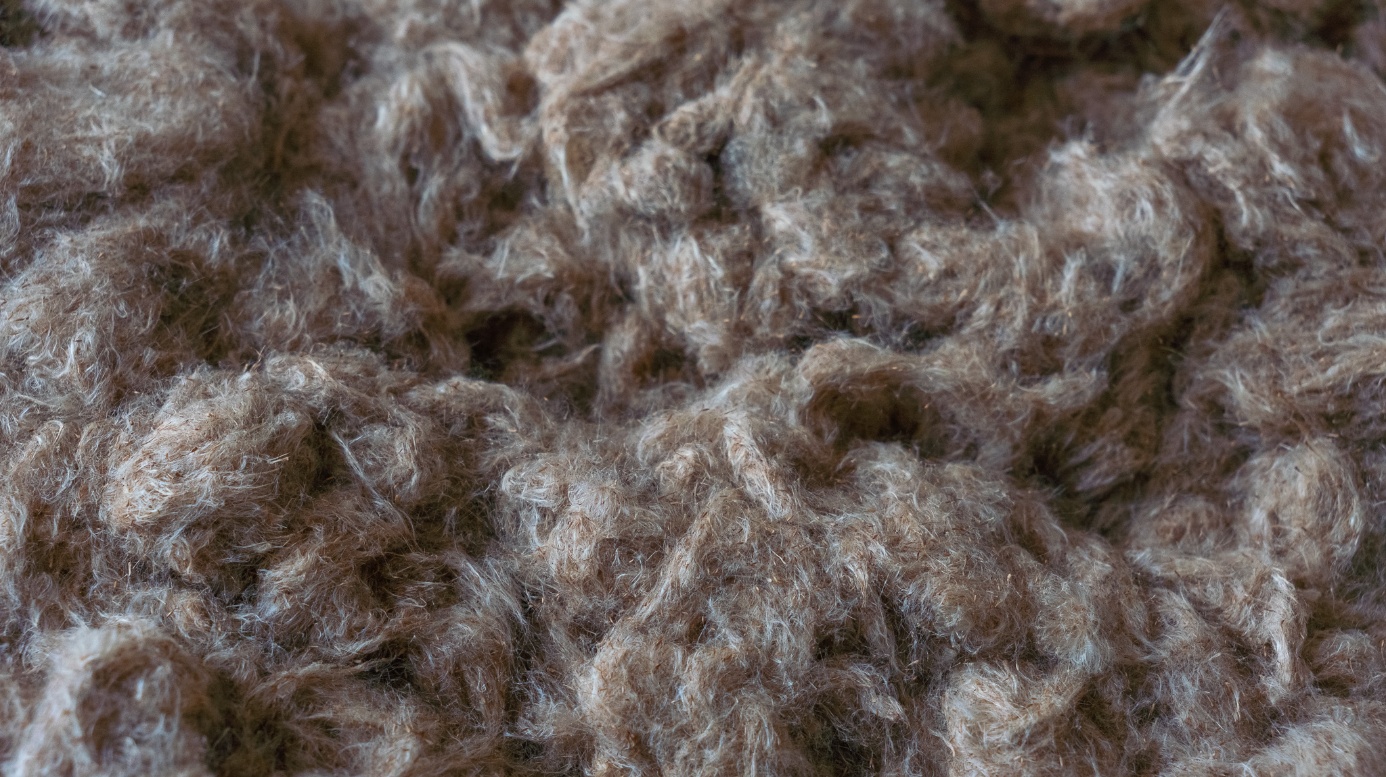
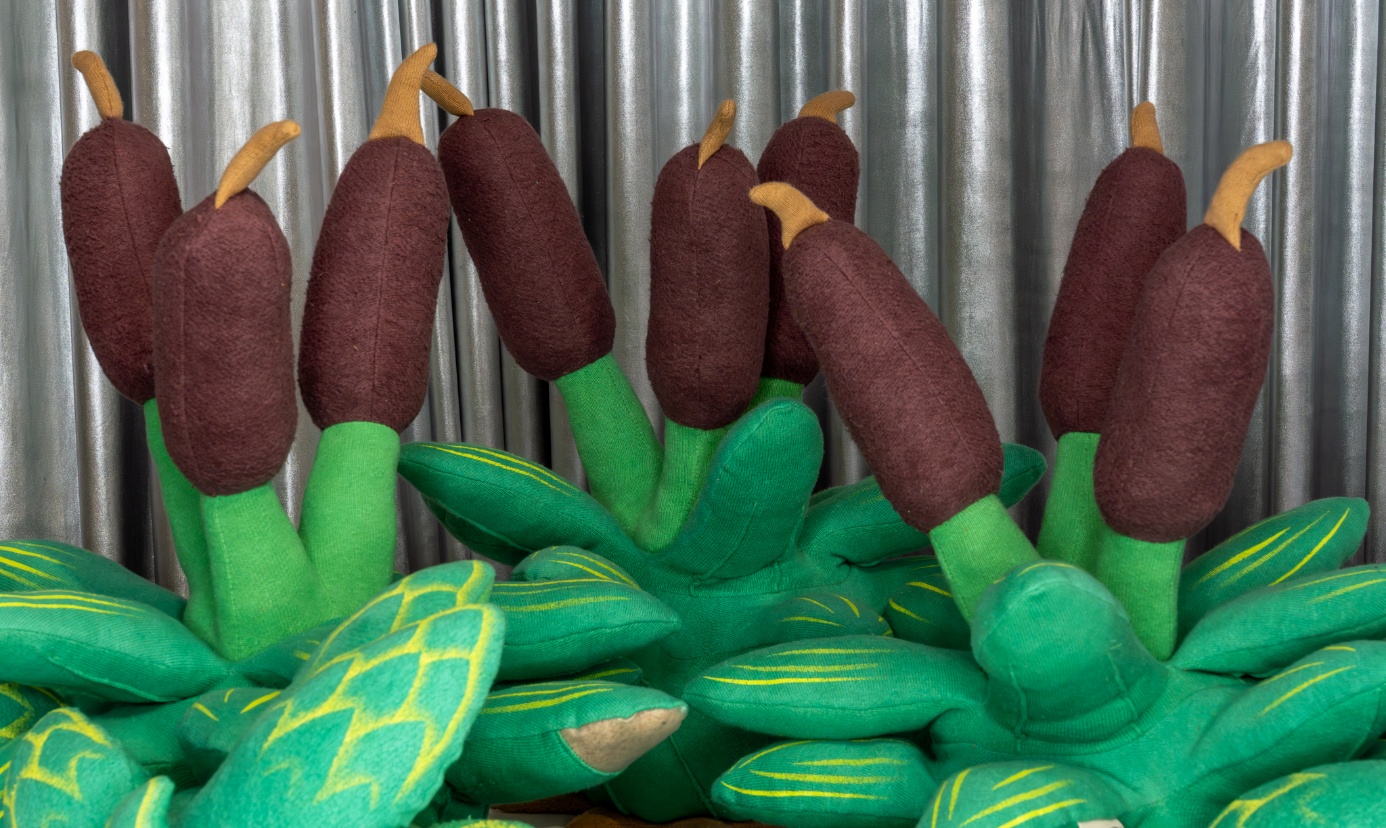
I have learned a lot during this process and will continue to do so. The production of the first six cuddly plants also served as a basis for documenting the textile designs in such a way that they can later be manufactured in larger quantities at an acceptable price in a factory.
Because my goal with the project is to create a cuddly bog exhibition with hundreds of cuddly plants of various species. I want to build a mobile and scalable greenhouse for human plant relationships that can be set up in a museums, galleries, nature conservation centres or schools for days or weeks. This place should be enchanting and immersive, inviting visitors to explore a desire for real plants instead of animals, human dolls, or abstract fantasy figures. Since the cuddly plants are filled with cattail seed wool from paludiculture, they allow us to experience the bog and the possible change not only metaphorically, but in a very real way.
EC: You were also developing a project at Tetem in Enschede, can you tell us more?
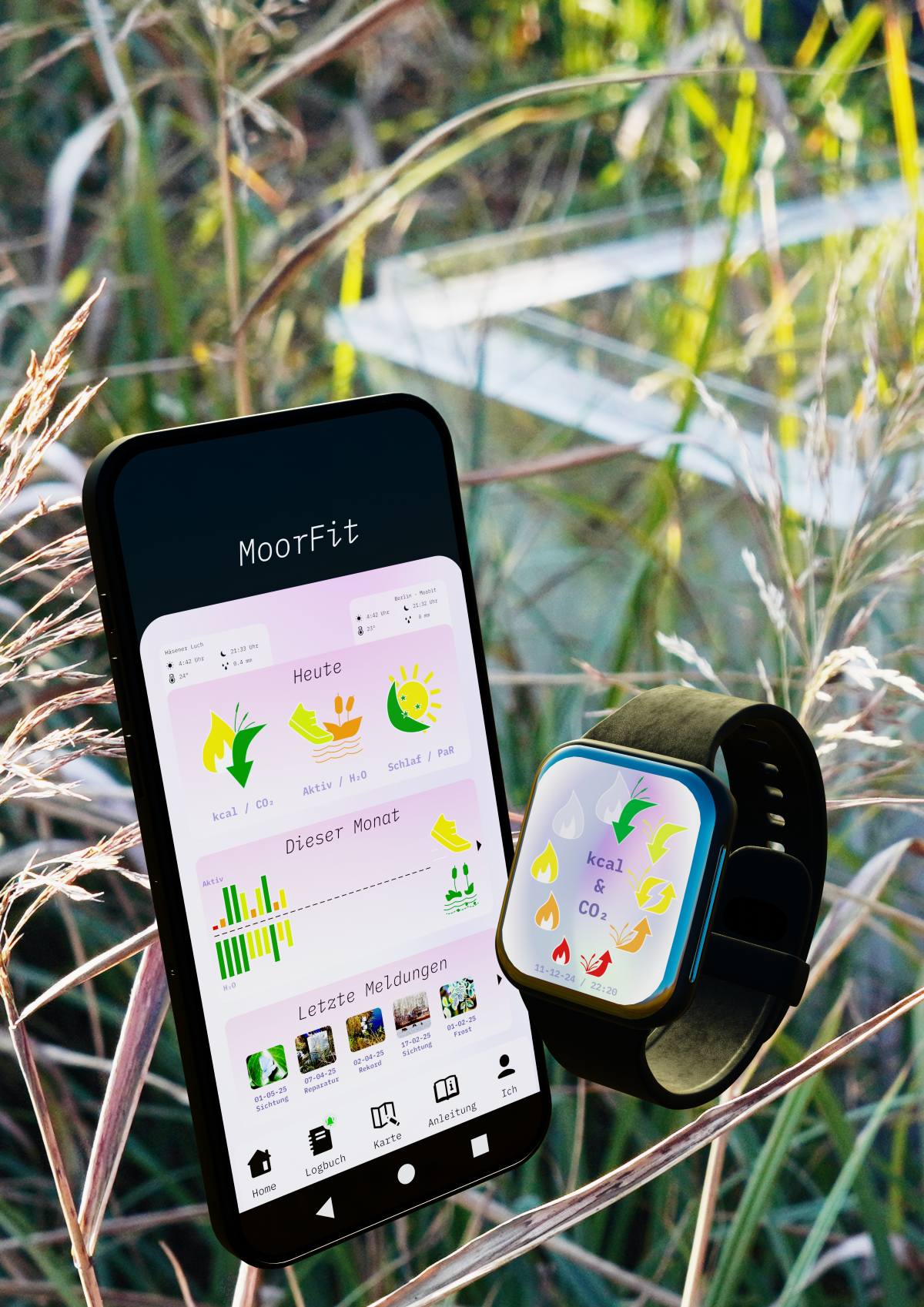
DH: It’s an ongoing project and I’m working for almost one year on it, and it’s called MoorFit – A fitness tracker for humans and peatlands. This artistic research explores relationship building to peatlands via health data and smartwatches. In 2025 I was invited to do a residency at Tetem in Enschede (NL) and for a workshop at Humbold University in Berlin (DE).
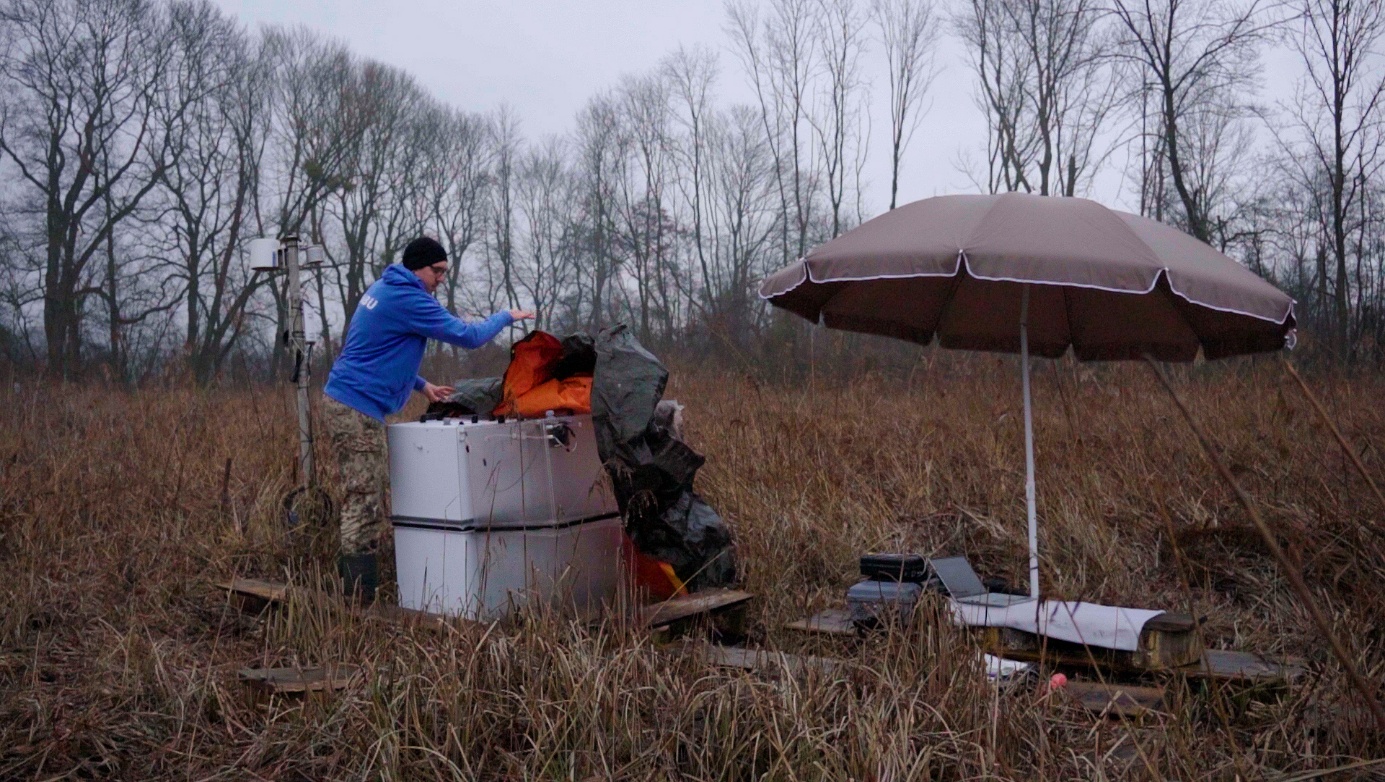
With the help of the NABU in Germany I learned and still learn how health data of a drained peatland is conceived, stored and examined during rewetting. At the same time, I learn how health data is helping people to live a sportive and healthy life. MoorFit tries to connect both worlds by expanding the understanding of health, both human and peatland health, as an outcome of a cohabitation and collaboration. Human health is not thinkable without the surrounding nature and drained peatland are becoming “healthy” through the intervention of humans. And healthy peatlands stay healthy through the absence of human interventions.
I am creating a software for a smartwatch that is connecting different health variables and real time measurements. For example: the kilo calories that you are burning in a day can be connected to the CO2 a peatland is either storing or emitting at a day. Another pair of data could be the sleep duration and quality and the so-called PAR (Photosynthetically Active Radiation), a value that measures the wavelengths in light that plants use to do photosynthesis.
For this project I’m working together with colleagues from NABU, Germany, the biggest nature conserving association in Germany, and specifically in a peatland that is called Häsener Luch, which is nearby Berlin.
I learned about measurements methods. How is the success of a rewetting measured? Because ion politics and economies it’s the data that supports and promotes a certain agenda. We are living in a world where even nature and restoration efforts must proof their success to be subsidised financially but also supported morally by the society. And this is what I find interesting, how do data sets come together? What is the data? What is the story of the data?
During the Residency at Tetem in Enschede (NL) I met very interesting researcher from the University of Twente. They showed me how to capture data from human bodies, and how science is working with the collected data.
After talking to Matthijs Noordzij, Professor of Health Psychology and Persuasive Technology I understood that the competitive mode of understanding and depicting the data (red=bad and green=good) is something that causes most of the time more bad outcomes or demotivates the people. Because its also against human nature: You cannot become better and better. Now I aim to develop a circular approach of depicting and connecting human and peatland health.
All the meetings with the scientists during the residency have been interesting for me to make that shift and to really take more non-numeric aspects of signs of health into account. F.e. the beauty of the butterfly cannot be measured as a numeric value. I want to send additionally push messages that will announce the existence of insects like the beautiful butterfly.
In the next year I want to concentrate on developing a prototype and invite around 10 to 20 peoples to wear the smart watch for some months. I want to shape the software further while people are using it but also learn from these users (experiencers) if and how their relationship to the peatland is changing.
And the framework I develop can also be used for other nature restoration projects. A nature conservation organization of a dedicated location could use the framework and transmit their own data. And users can sign up to connect with that peatland or a forest or a lake.
EC: What are your future projects?
DH: All these projects need more work, and I am continuing to explore paludiculture and the Paludicon as well as the health of a peatland and how to get connected through data. With Moore kuscheln want to create a huge cuddle plant exhibition with around 300 soft toys in the shape of fifteen different peatland plant species. This exhibition should travel also to cities and villages around former and future peatlands. For the creation process I am thinking about to incorporate workshops for younger people from rural communities as they sometimes don’t have so many opportunities and perspectives for themselves and the environments they live in.
The second project I am pursuing in 2026 is the prototype of the MoorFit Smartwatch and a testing phase with some people as well as a small exhibition of that process accompanied by a light installation using peatland health data. Maybe I can find any institution like the University of Twente to become a part of the process.
And I think for most of the artists a significant part of the year will be filled finding some money and partners to collaborate.
EC: Thank you.
DH: Thank you too.
More at Daniel Hengst’s Website
Link to Moore Kuscheln.