
NAFAS 2026 : The Invisible Dog takes a food walk in Tokyo
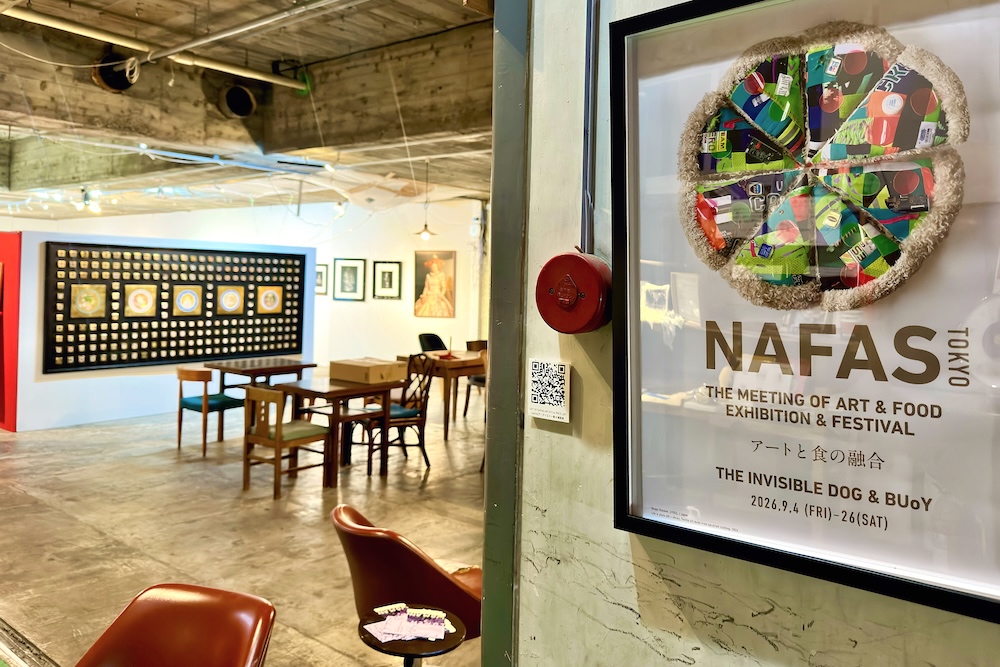
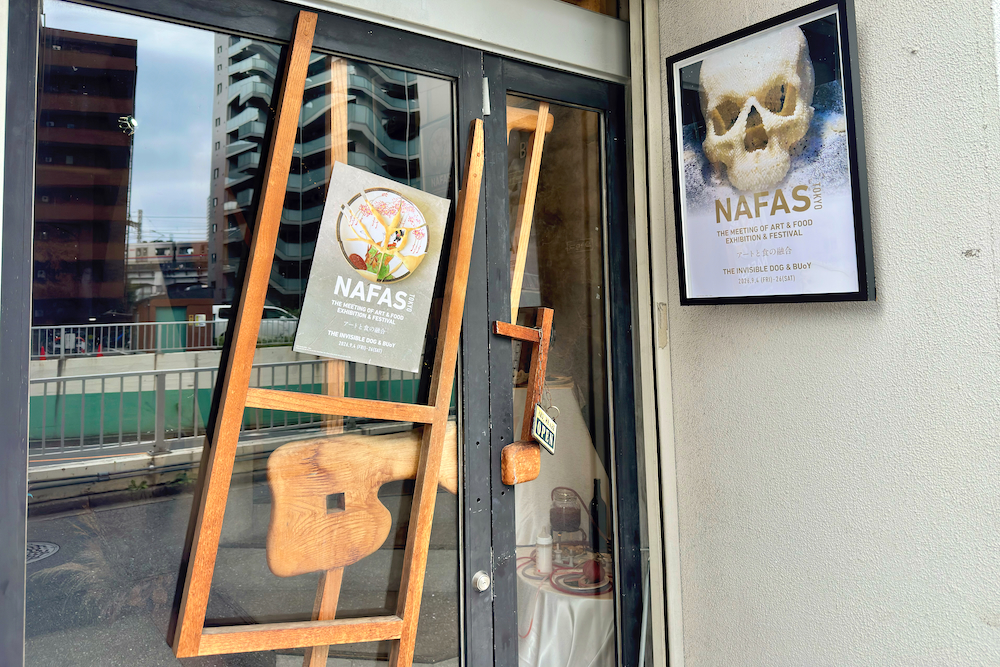
Ever since The Invisible Dog Art Center left its beloved building in Brooklyn over a year ago, its artistic and gourmet spirit has been roaming freely beyond its walls and overseas. From September 4 to 26, 2026, it found its niche in Tokyo. This autumn, Invisible Dog partners with the eccentric BUoY art center to host NAFAS – an exhibition celebrating the delicious and delightful meeting of art and food.
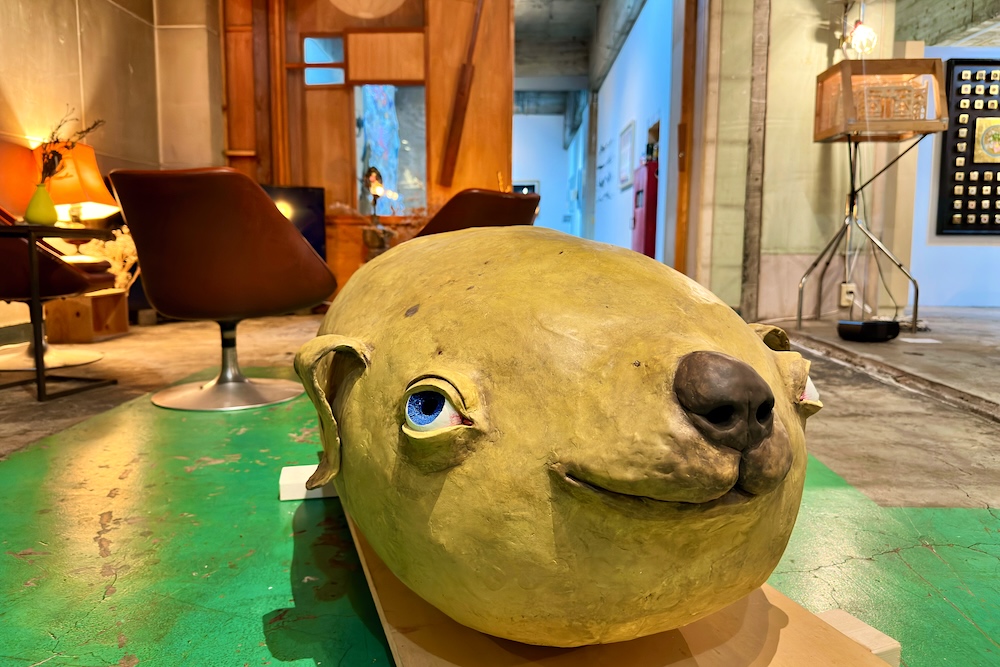
On NAFAS TOKYO’s first big weekend, BUoY is buzzing with word-of-mouth excitement that has drawn a curious and enthusiastic crowd. At the top of the stairs, a giant potato with a dog’s smiling face and blue eyes greets visitors as they enter the gallery. The sculpture’s playfully canine features are a signature of Stephen Morrison, one of Invisible Dog’s most loyal artists.
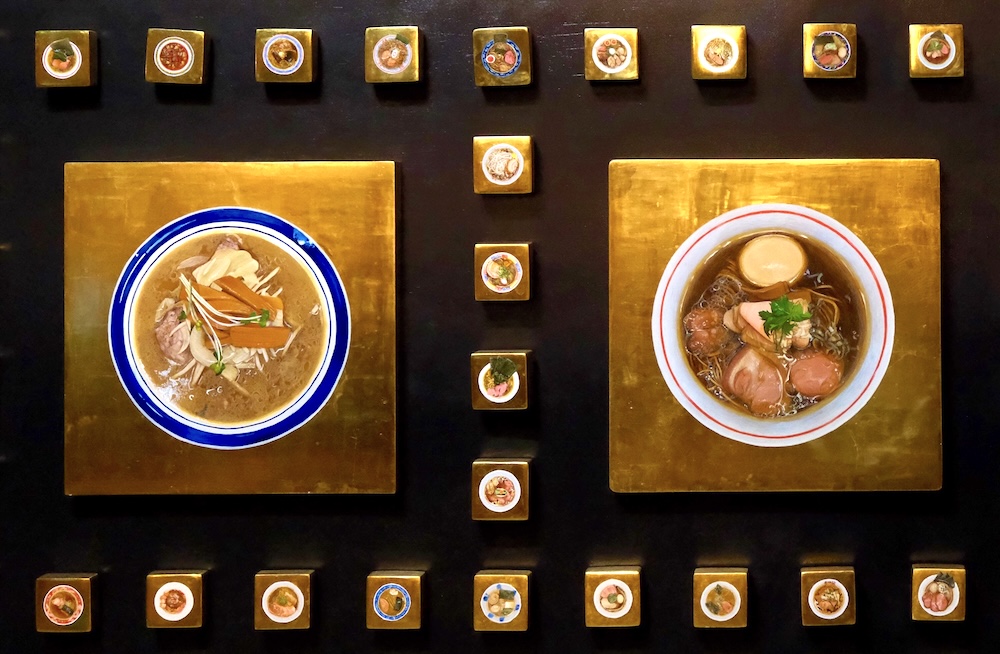
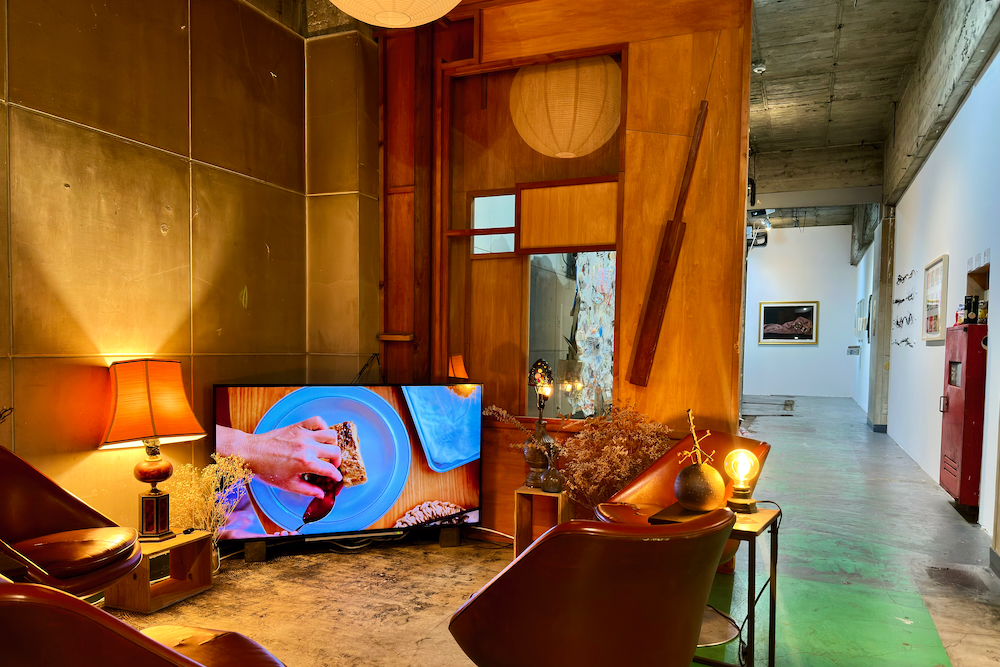
In this concrete space left deliberately raw, the eye is drawn to a majestic installation of gilded wood, whose 298 square blocks are meticulously dotted with tiny ramen bowls. Each painted bowl embodies the precious memory of a meal savored perhaps a bit too quickly. Right in front of her artwork, Nanami Hayashi and three of her friends are taking their time to eat dainty cakes, seated around a small square table in the café.
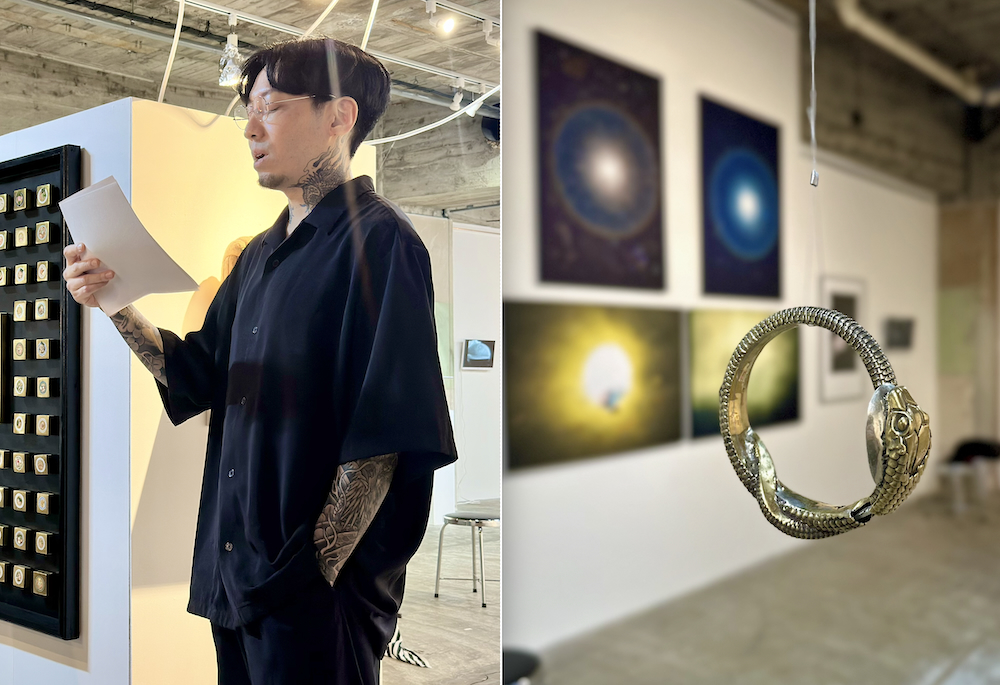
On the other side of the partition, poet Haku Kato, a shy, multi-talented Japanese artist sporting impressive tattoos, reads a poem about the presence and absence of spiritual nourishment to a handful of standing listeners. He ends his performance by tearing off a piece of the rice paper, which he immediately stuffs into his mouth, chews and swallows – an impromptu idea from the French choreographer and director Thierry Thieû Niang.
Lucien Zayan, founder of the Invisible Dog, is sitting on the sofa with a black coffee. It is he, curator by vocation and chef at la Salle A Manger by passion, who has been the driving force behind this gastronomic festival, ever since the first edition of NAFAS in New York in 2022.
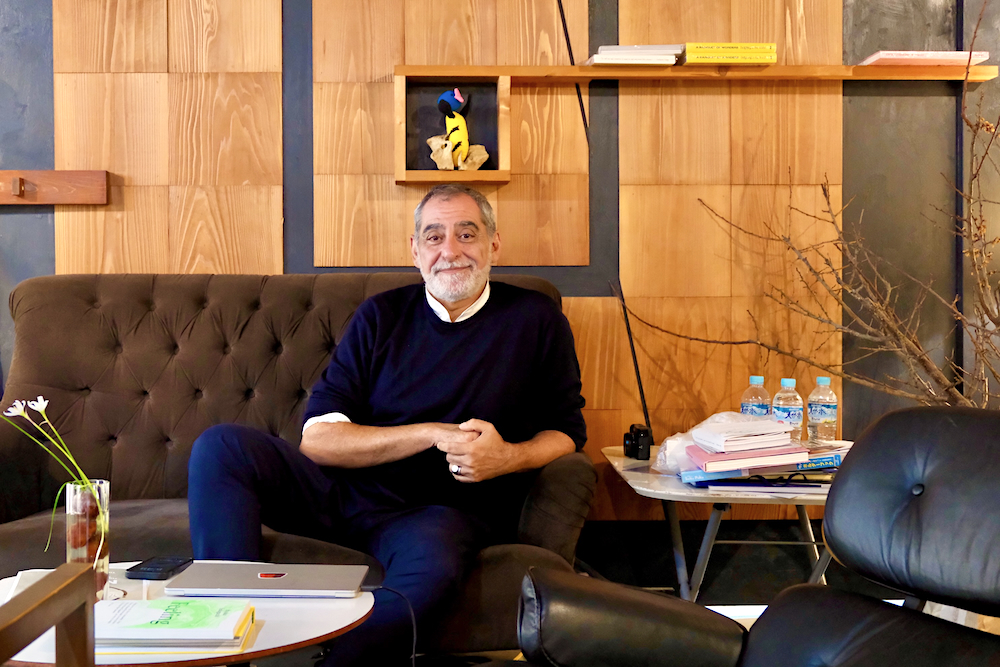
“Nafas, in Arabic, means breath,” Lucien explains. “But it’s also a gift that some people have to cook dishes that are not just good, but exceptional.” In the context of the exhibition, “It’s also the primary quality of the artists. They take something that seems insignificant to all of us and turn it into a universal work of art.”
At your own risk and peril
And what is more universal than food? This vital nourishment that flows through our senses to enter our bodies, and that emerges, much like us, transformed. A culinary ritual that requires a certain trust and a shared bond between guest and host, between the generosity of giving and the vulnerability of tasting.
Dripping inside in a closet, Nanami Tomita’s esoteric, alchemical installation The Layered Pulses of Living explores the very essence of taste, inviting us to consume, at our own risk, a mysterious coconutty infusion… drop by drop.
In a similarly conceptual, yet decidedly more visceral vein, the young artist Kao Okada led a paid culinary workshop that began with participants bringing samples of their own feces. The workflow consisted of charring the stools in a park to transform them into low-toxic ash, mixing the ash with water and flour, and baking the resulting dough into bread. It all culminated in a joyful tea party at BUoY café where the guests effectively ate snickerdoodle-like biscuits made with their own shit.
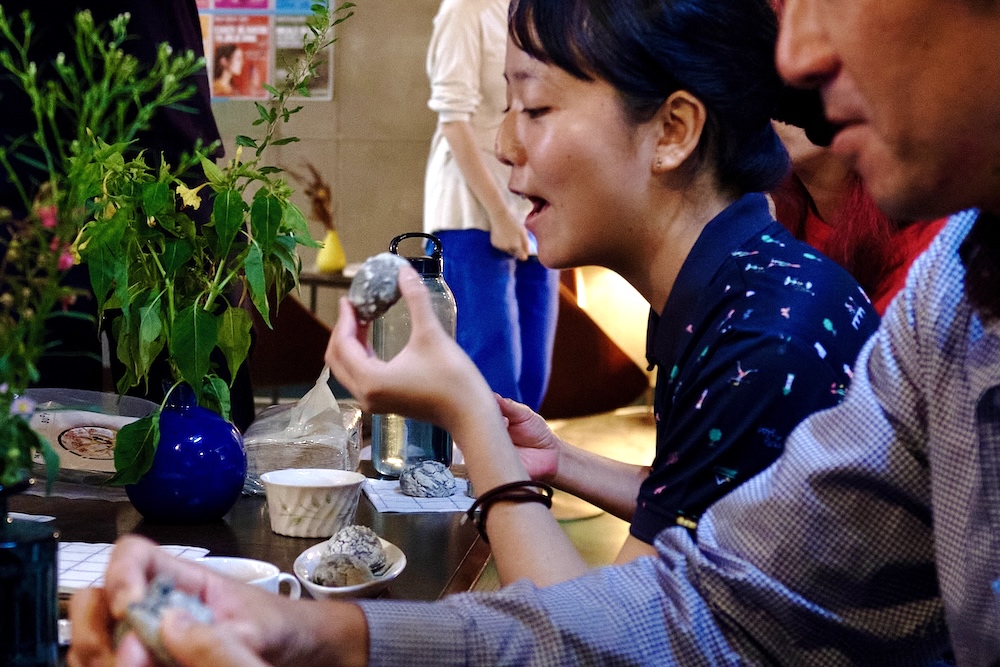
While the experience skirted around the taboo of scatophilia, the workshop’s premise stems from one of Okada’s memories from elementary school, which left her deeply shaken. A war survivor from Okinawa had recounted how, after all their food supplies ran out, they ended up eating their own excrement.
Nothing is created, nothing is lost
Blurred boundaries between clean and dirty, our bodies and society, the invisible undercurrents of human relationships… All these themes are expressed in the circulation of ingredients and materials, in a perpetual cycle of culture and consumption that, ideally, passes through artistic creation.
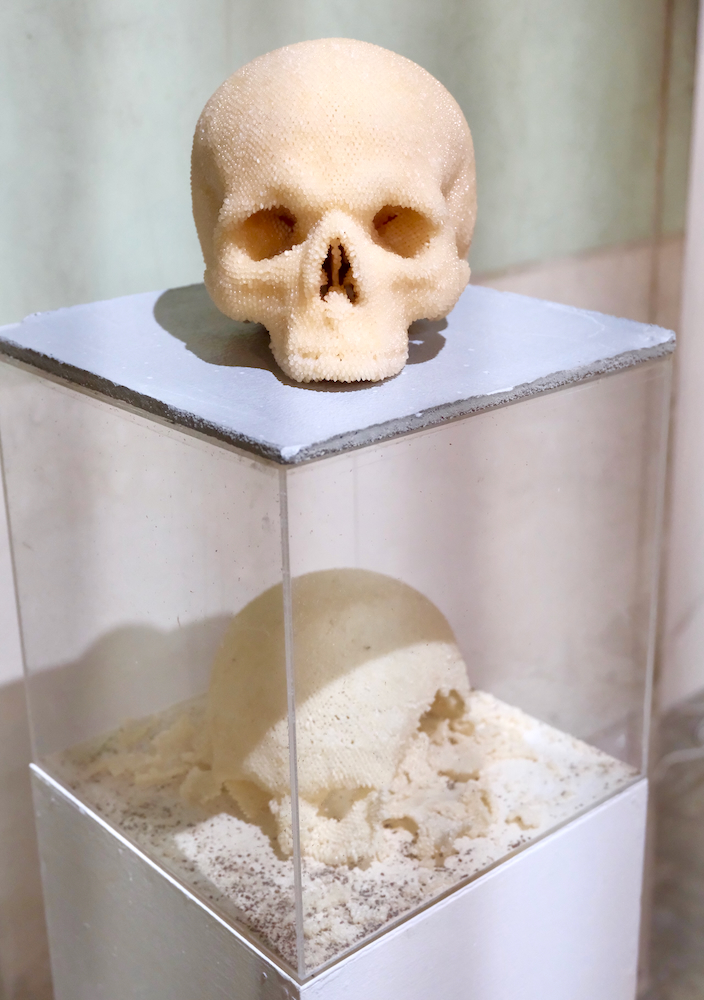
With his human skull sculpted entirely from grains of rice, Naoki Matsuda reflects on rice farming. What he had not anticipated prior to the exhibition was that he would find this 2013 piece, which had been lying in storage for years, half-devoured by insects. Food transformed into art naturally becomes food again, coming full circle. Although displayed exactly as it was found inside a transparent case for NAFAS, the original rice skull stops short of inviting visitors to eat the dead insects.
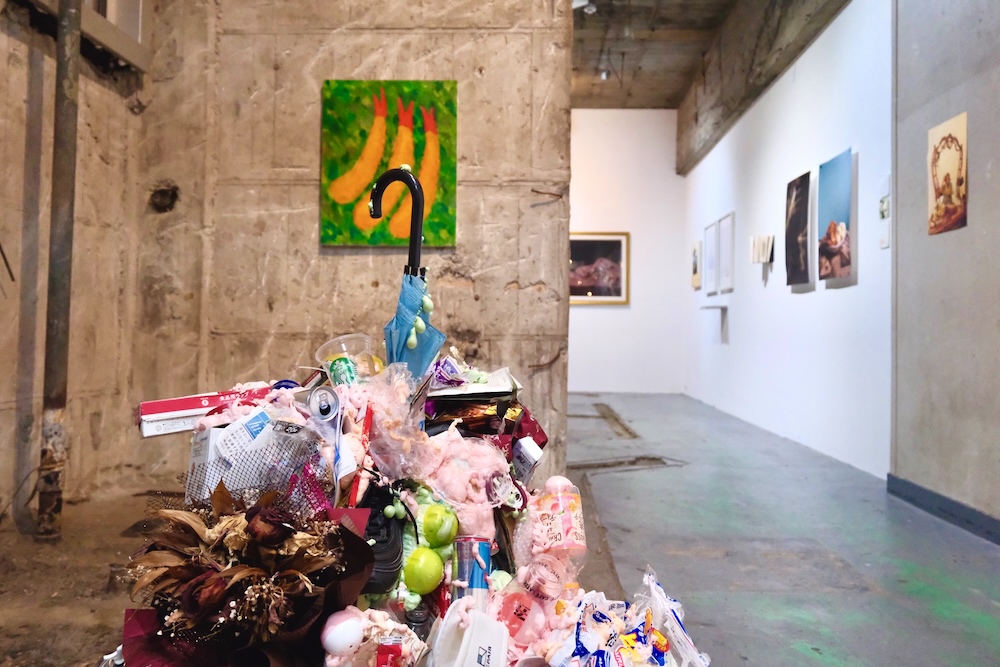
Among the majority of works created or installed specifically for NAFAS by young Japanese artists, Moéko’s Debris Stratum: Tokyo to Ibaraki compresses into a nebulous sculpture a collage of (mostly plastic) waste collected during a journey eastward from the capital.
The workshop led by California-based artist Tara de la Garza took the waste cycle even further, by upcycling the local plethora of plastic bags and other packaging into a novel “pleather” that participants could fold like origami to craft decorative lanterns.
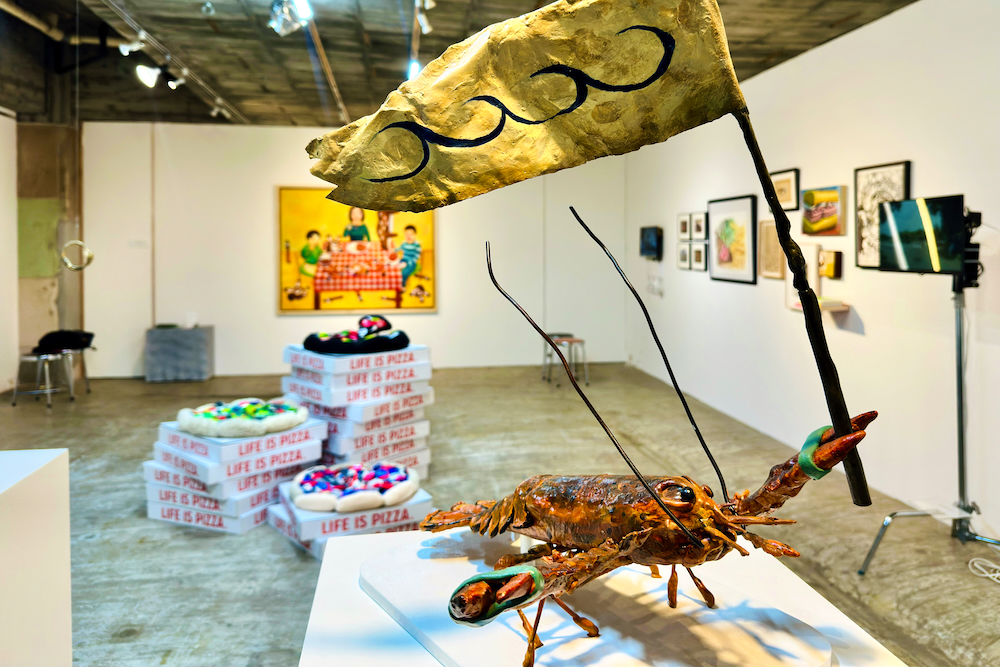
Gargantuan pizzas stitched together from recycled fabrics and other found objects by Shogo Chazono, with his nostalgic nod to fast-food culture, constituted the centerpiece of the main gallery space, as another one of NAFAS’s main dishes.
Fractured backstories
Well beyond the topic of food itself, NAFAS casts a wide net across various associated themes, where each artwork tells a story.
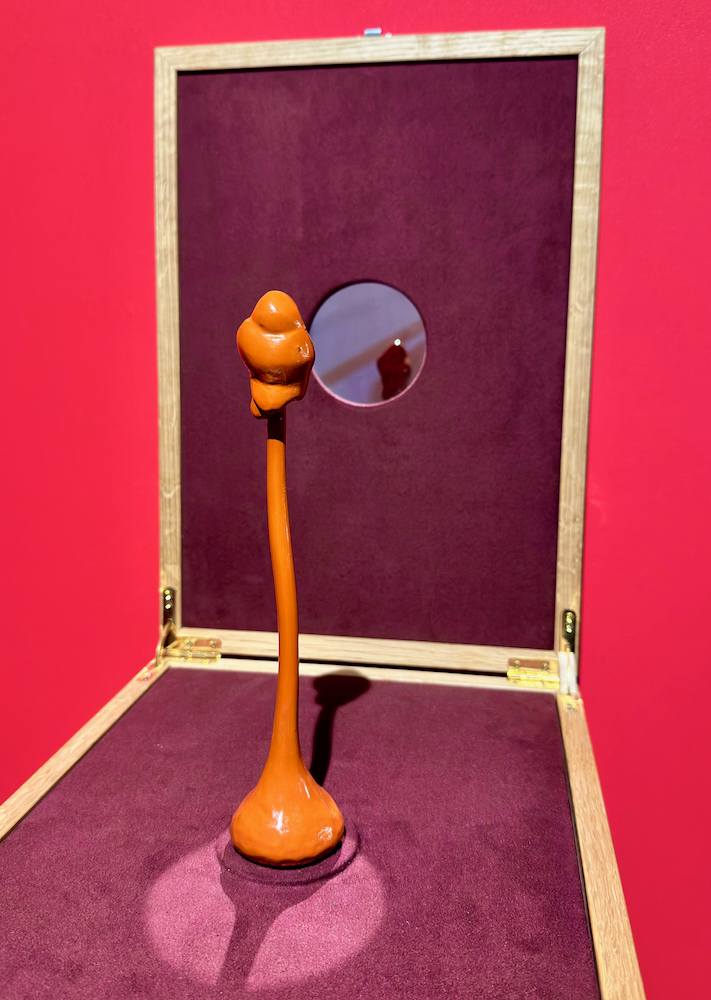
One of the most personal might be Koken Arakaw’s Jam Dipper. Throughout his life, the artist had various medical problems with his mouth, until finally at age 30, he decided to rebuild his mouth entirely: bone graft, jaw, gums and all of his teeth. Once everything had been redone, he suddenly discovered the sensations of his tongue. His curtained booth installation invites visitors to use their own tongues to lick the smooth tip of his red lacquered baster, and even watch themselves licking in the mirror.
Asuka Morita’s black-and-white circular projection Ham Scream, punctuated by hypnotic, metronomic beeps, tells us that a single slice of industrial ham is actually made from pieces of ham sourced from 12 different countries. What’s more, these slices are always sold in packages of 4: the default number of the nuclear family.
For Lucien Zayan, Shu Shiraishi’s large-scale painting Family Dinner is one of the show’s most intriguing, with its luminous, childlike style. “I was absolutely sure that the artist was a young woman,” says Lucien. “I could not imagine that it’s actually a 52-year-old man who works at the post office.”
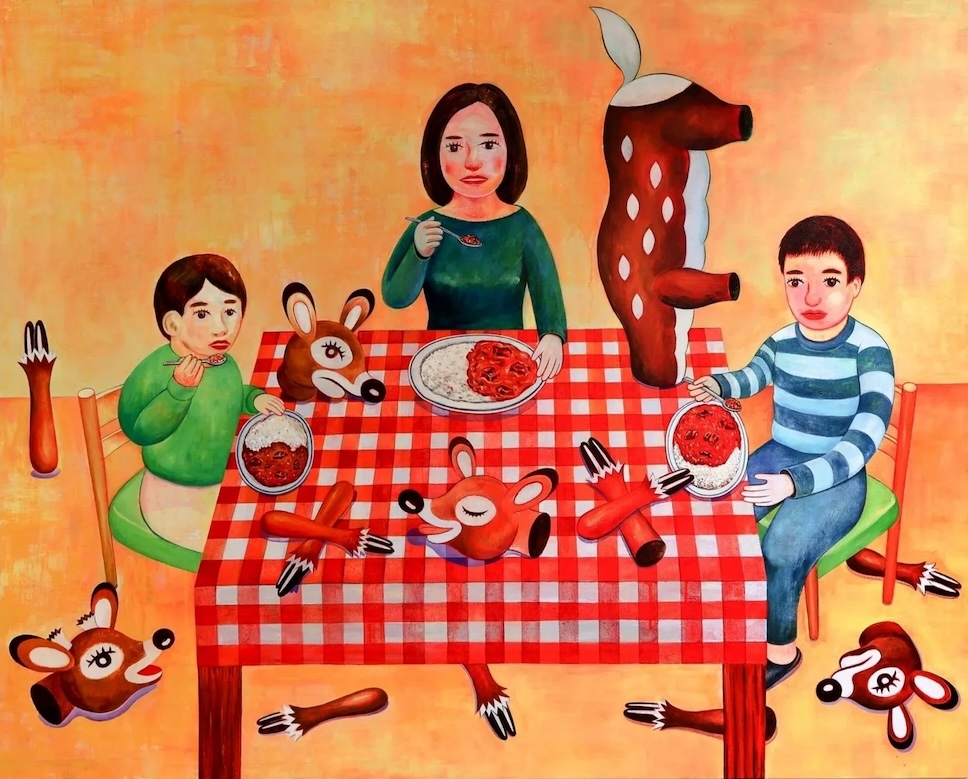
Nonetheless, the painting suggests multiple layers lurking under the surface of a complicated story. “Where is the father?” asks Lucien. “And what are all these animals with their head and feet cut off? All of a sudden this image of the perfect family eating curry together around the dining table transforms into another reality. In life we always try to show the best image of ourselves, but behind that is all the drama, all the pain, all the fractures of any given family.”
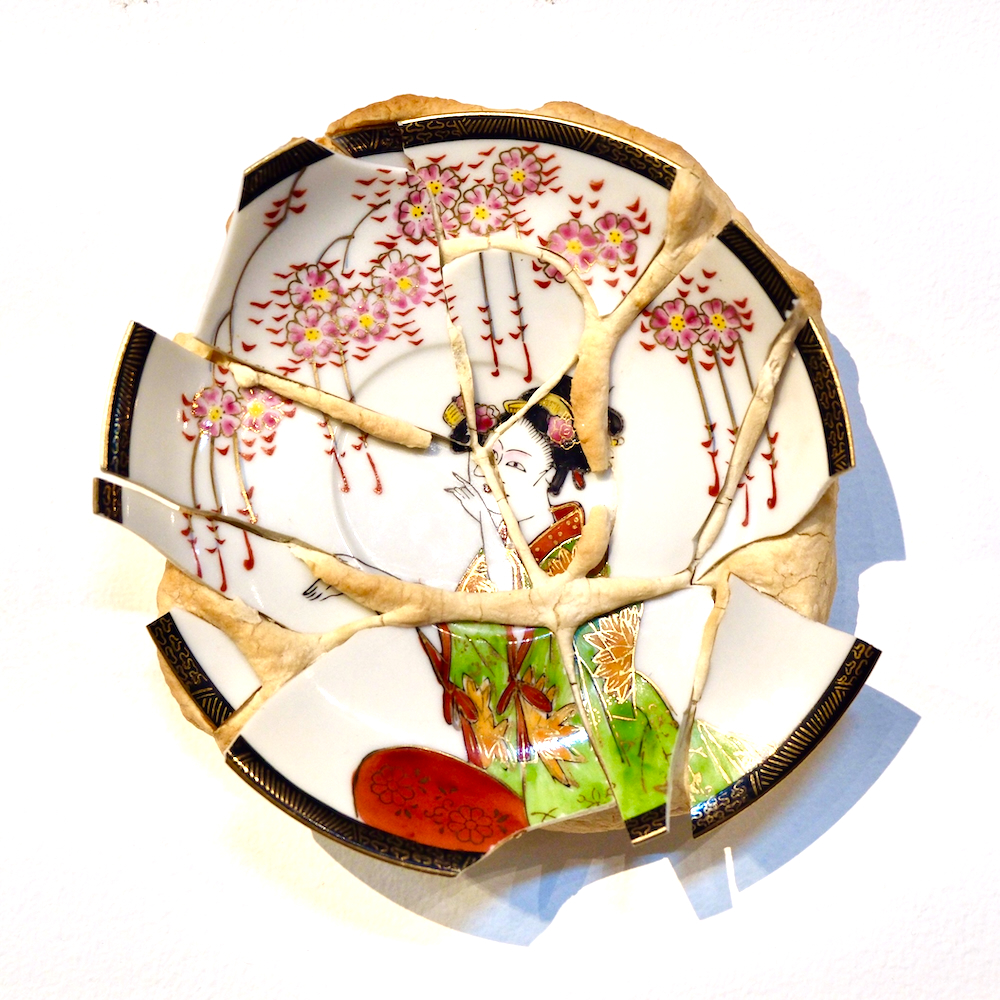
In Bread Repair, 21-year-old Taichi Hayashi also refuses to hide the wounds and aches in life. Unlike the traditional Japanese art of kintsugi, which consists of mending broken porcelain by filling in the cracks with gold, the artist uses the most basic food ingredients – water, salt, flour and yeast.
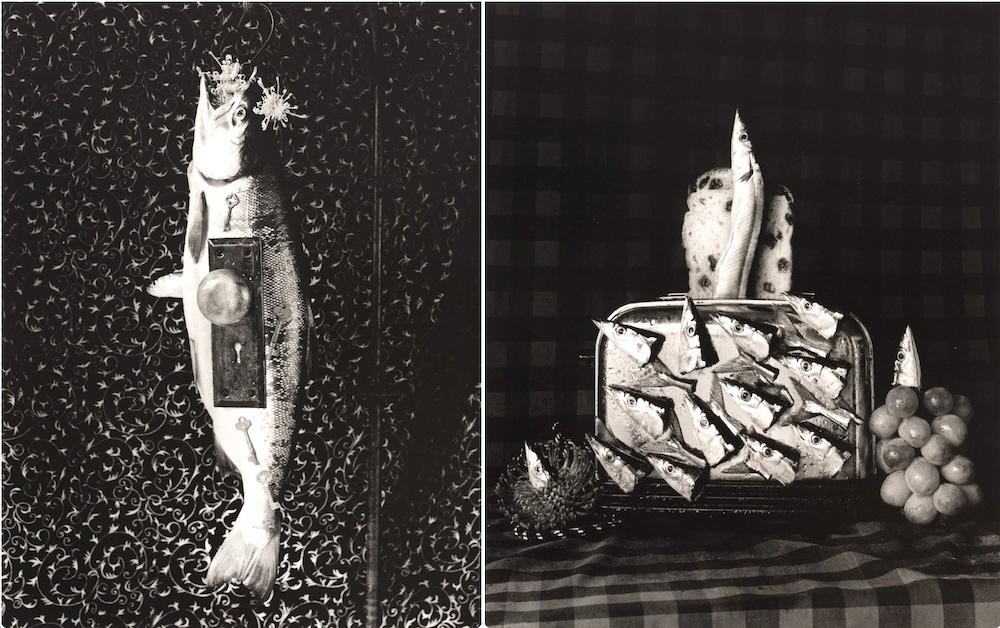
While the Invisible Dog remains faithful to its mission to support and promote emerging artists, everyone at NAFAS is quite proud to be exhibiting alongside Michiko Kon – a legendary photographer at age 70 who, according to Lucien, accepted to be in the show precisely because it was full of younger artists. Her classic surreal monochromes featuring staged fish heads lend the exhibition a timeless dimension.
A breath of bamboo
Thanks to its passionate director Kako Kishimoto, BUoY is a dynamic space that graciously breathes in the diverse flows that traverse it. The building once housed an upstairs bowling alley and a public bath in the basement, where the remaining bath tiles and humidity create a particularly intimate and acoustic environment.
Just as some artists set the long tables of the café for participatory meals or improvised encounters, others descend into BUoY’s concrete depths to stage dramatic, ritual or experimental performances.
Musician-composers Chatori Shimizu and devon osamu tipp are already familiar with BUoY, from its baths to its water closets. In fact, it was sitting on the toilet inside BUoY’s all-genders stall that devon played their shakuhachi in the music video of the experimental piece Mr. Plumber, composed by Chatori. In it, the traditional Japanese bamboo flute appears uniquely poised to boldly express acousmatic bodily sounds.
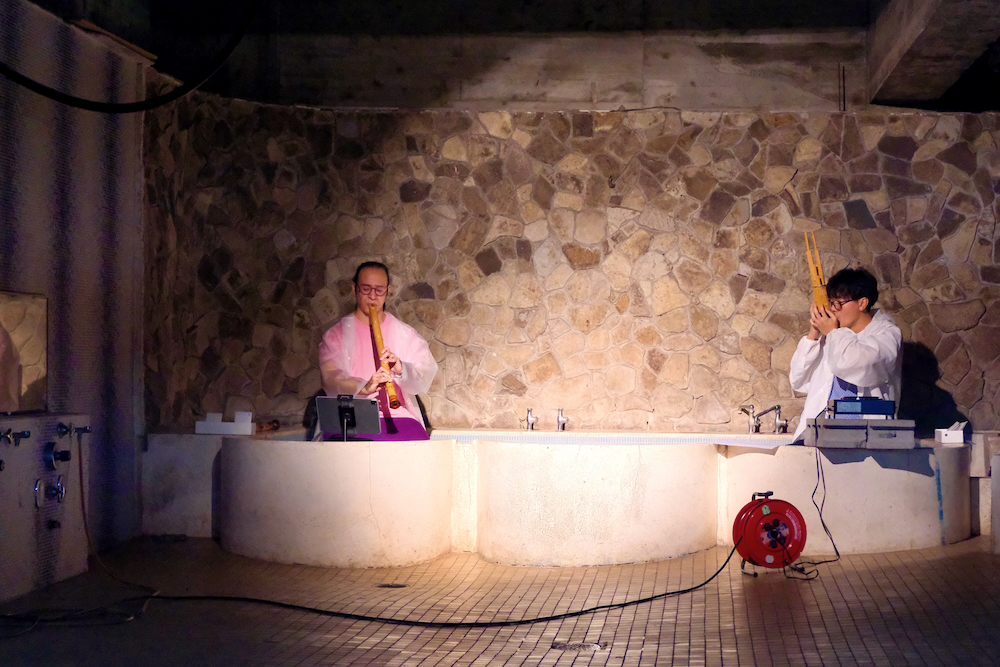
The duo reprised the piece this year for their Takenoko Lab, a collaborative performance for shakuhachi and sho : two traditional Japanese musical instruments made of bamboo, an organic plant material that we also use for food. Wearing raincoats in guise of lab coats, the artists distributed to each audience member a small envelope filled with exotic and aromatic spices to accompany each musical piece.
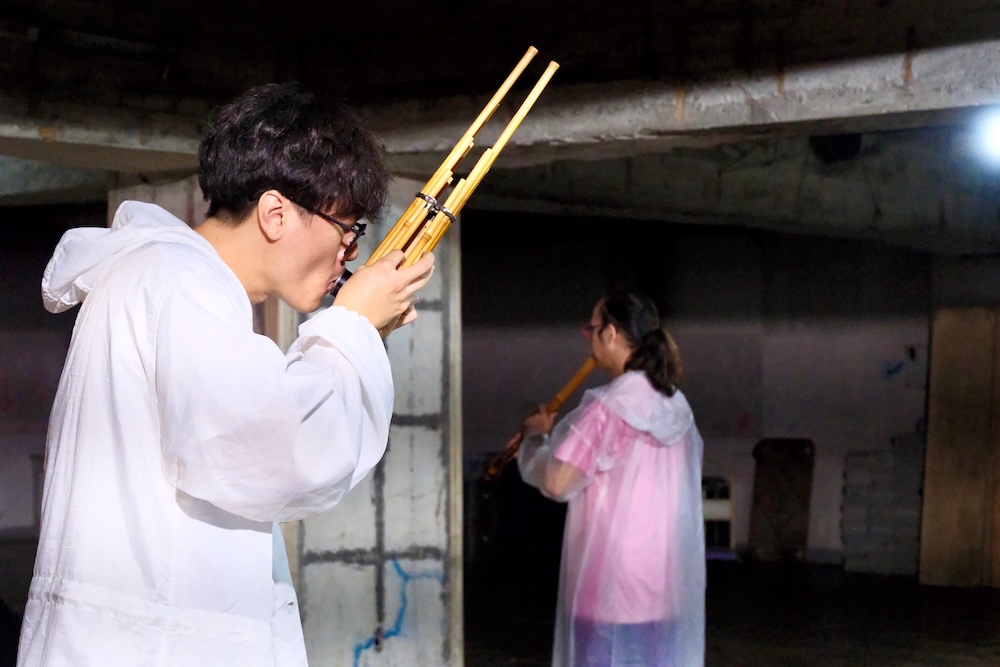
It was also a rare opportunity to hear a contemporary performance of the sho, a fragile and ancient reed instrument that dates back to the imperial court of Japan’s Heian period (794-1185). Once warmed up, Chatori’s sho produced an exquisite tone, more ethereal than a harmonica, as if singing to the cyclical rhythm of human inhalation and exhalation.
For their final musical improvisation, the two musicians moved slowly about the dark room, in and out of shadows and echoes, around pillars, between tiled floors and concrete walls – rounding out a multisensory spectacle that engaged all five senses, delicately infused with the living, breathing spirit of nafas.
The Invisible Dog takes a walk in Senju
More than an exhibition, NAFAS is a shared festival, a true celebration of trans-local community and the extended family that forms out of these multi-faceted exchanges around food, as well as the simple act of being together.
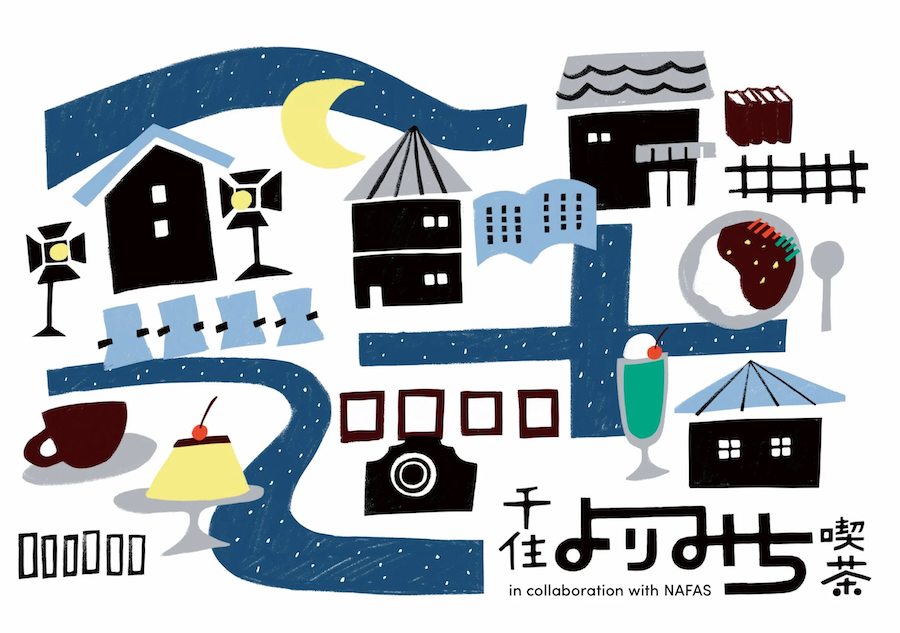
Beyond the walls of BUoY, in the tiny neighborhood of Senju in northeast Tokyo, the NAFAS community is already growing. During his stay in the area, Lucien initiated collaborations with a number of neighboring shops and art spaces, to whom he has sent NAFAS artists on several occasions.
The last week of the show, he invites the public to explore the vicinity of BUoY, which includes a bookshop, a small theater, a photography gallery, a Taiwanese bakery-café, and a Japanese curry restaurant. The curated neighborhood art-food walk is aptly titled Senju Yorimichi Kissa (Senju Detour Café).
Already on one quiet Thursday evening, NAFAS received a surprise visit. It was the couple who sells fruits and vegetables at Adachi Market. Lucien, who buys his produce from them every morning and had invited them to come see the exhibition, was visibly moved.
“I couldn’t have a better reward,” he says. “It’s good to have media coverage, to sell artworks, all that is very good. But it’s even better when you know that you will leave long-lasting memories.”
NAFAS TOKYO concludes on 26 September 2026 with a 10-hour performance in the former bathhouse by autistic artist-scholar and butoh dancer Julie Dind, exploring rituals of food (by preparing vegetables for cooking), the passing of time, and our collective experience.
The closing party ends with an informal meal of Japanese curry prepared by Lucien Chef Ambition, using Julie’s vegetables and Emmanuel “Gus” Reckel’s artisanal flatbread, based on a special recipe shared by the food writer Ryoko Sekiguchi.
NAFAS may have come full circle for now, but we know the Invisible Dog won’t let us stay hungry for long.
View the full program of NAFAS TOKYO 2026