
Ljubljana: a Soil Assembly at Festivities Under Siege
From 20-22 May, Soil Assembly joined artists, activists and cultural practitioners for “Festivities Under Siege” at Krater, in Ljubljana, Slovenia. The gathering brought together Practice Matters, Future DiverCities and Soil Assembly to explore resistance, solidarity and collective worldmaking amid today’s intersecting crises, with a focus on neglected urban contexts and anthropogenic ruins. Through shared discussions and practices, participants reimagined care and relationality as active cultural and ecological commitments.
Soil Assembly is a growing international network dedicated to advancing soil health literacy through artistic, scientific, and community-based practices. Supported in 2026 by the project SoilTribes, funded by the European Union, the European edition of Soil Assembly unfolds as a decentralized series of regional assemblies across Europe. Bringing together artists, farmers, researchers, educators, activists, and local communities, the initiative explores new pedagogies and participatory methods for understanding and regenerating soils. The 2026 cycle includes assemblies in Kyiv region, Ljubljana, Amsterdam, Münster, Berlin and Brittany, culminating in a hybrid international gathering at Spore Initiative in Berlin in January 2027.
Through workshops, performances, citizen science activities, and collective learning processes, Soil Assembly aims to strengthen transdisciplinary collaboration and foster new imaginaries for living with and caring for soils. By connecting regional experiences with global perspectives, Soil Assembly contributes to the wider movement for ecological resilience, cultural transformation, and democratic engagement around soil futures.
The second regional assembly in the series took place on May 22 at Krater in Ljubljana, Slovenia, as part of the Festivities Under Siege larger event, and addressed neglected urban contexts and anthropogenic ruins, treating soil not only as a material resource, but as a site of political, ecological, and collective negotiation.
Correspondance,
Over three days in late May, Soil Assembly joined a diverse group of fellow artists, activists, anthropologists, architects, curators, designers, ecologists, landscape architects, lawyers, pedagogues and cultural theorists from six continents at Krater in Ljubljana, Slovenia for Festivities Under Siege: a conference dedicated to modes of resistance and worldmaking amidst the polycrises of today. While Festivities Under Siege is the brainchild of Krater Collective’s Danica Sretenović and Gaja Mežnarić Osole, it synthesises three interconnecting organisational bodies: Practice Matters, Future DiverCities and Soil Assembly. Together, we exchanged strategies of enacting care, relationality and solidarity within cultural and ecological practices – words too often reduced to jargon and euphemism, but here redeemed of their most generative meanings.
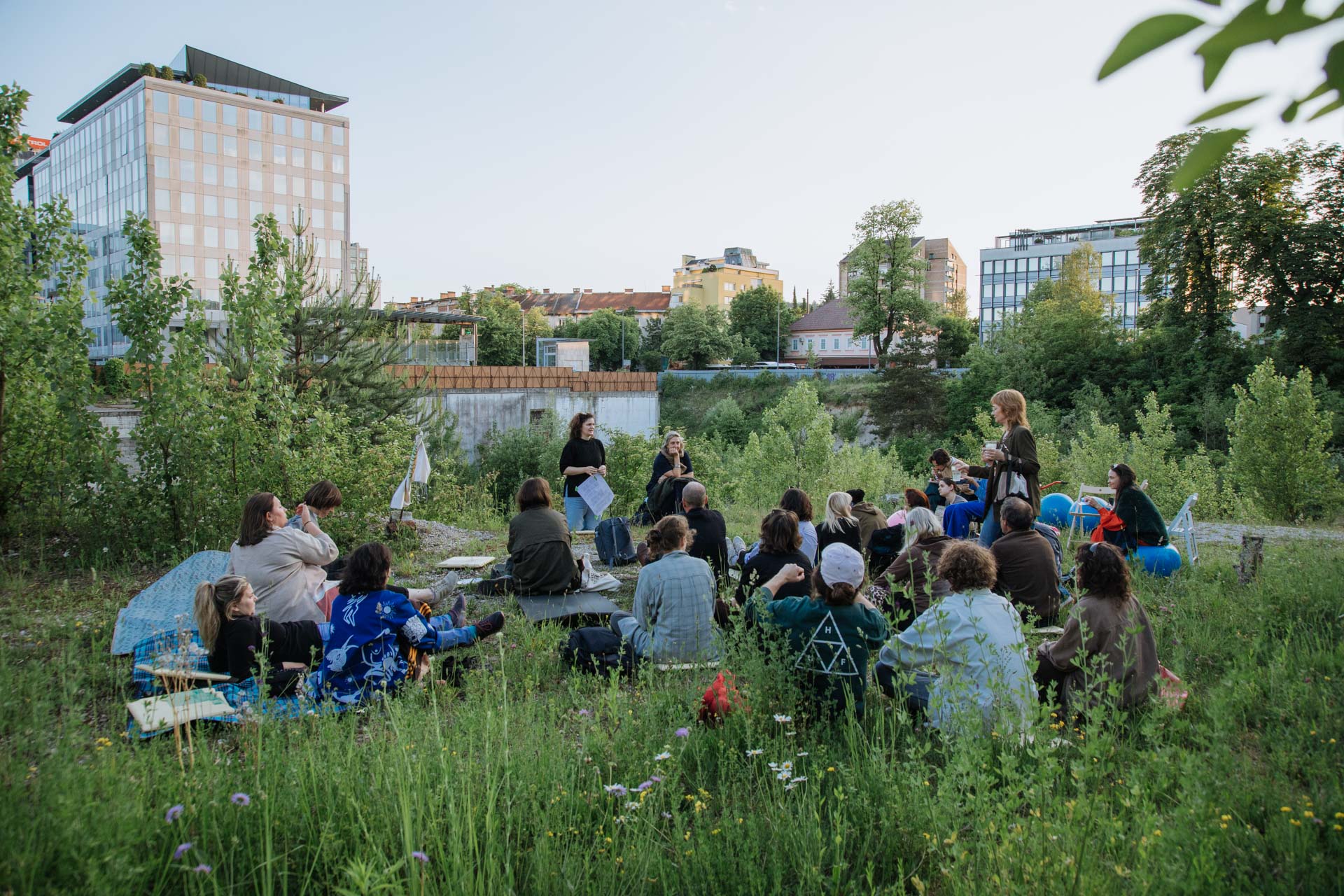
At the conference, Soil Assembly focused on two braided lines of inquiry: extending the ongoing work of Trajna – the parent body of Krater – on invasive plant remediation through exchange with sister projects and collaborators; and tracing the material consequences of soil-related administrative frameworks, including a historical inquiry into inherited politics and cultural attitudes towards soil. By mobilising funds for an investigation into how policy, land use and unregulated construction work shapes urban development in Ljubljana, the research addressed new approaches to thinking and working with soil in the city. In particular, Soil Assembly’s local iteration in Ljubljana foregrounded non-extractive and anti-colonial approaches to food and soil production, translating them into site-specific presentations and practical, tactile workshops, which treated soil not only as a material resource, but as a site of political, ecological, and collective negotiation.
Krater is situated on a 1.8-hectare ‘pending construction site’: a former military barracks still managed by the Slovenian Ministry of Justice. Left largely untouched for nearly 30 years, the site was gradually reclaimed by nature, but in the years since has become a home for a multitude of arriving more-than human and human species. Robinia groves meet sanctuaries of mature horse chestnut trees; an austere 12-meter deep gravel pit (the ‘crater’) has transformed into a burgeoning birch and pine forest; and a wealth of bird, insect and reptile species tangle amongst wild strawberries, raspberries and Japanese knotweed. While endemic and invasive species alike continuously reshape Krater’s biotope, its human collective undertakes constant discursive, experimental, and physical labour in an effort to both maintain and argue for its existence. Krater is a thriving space for multi-species encounters, but remains under constant threat of ‘extinction’ by the spectre of urban redevelopment.
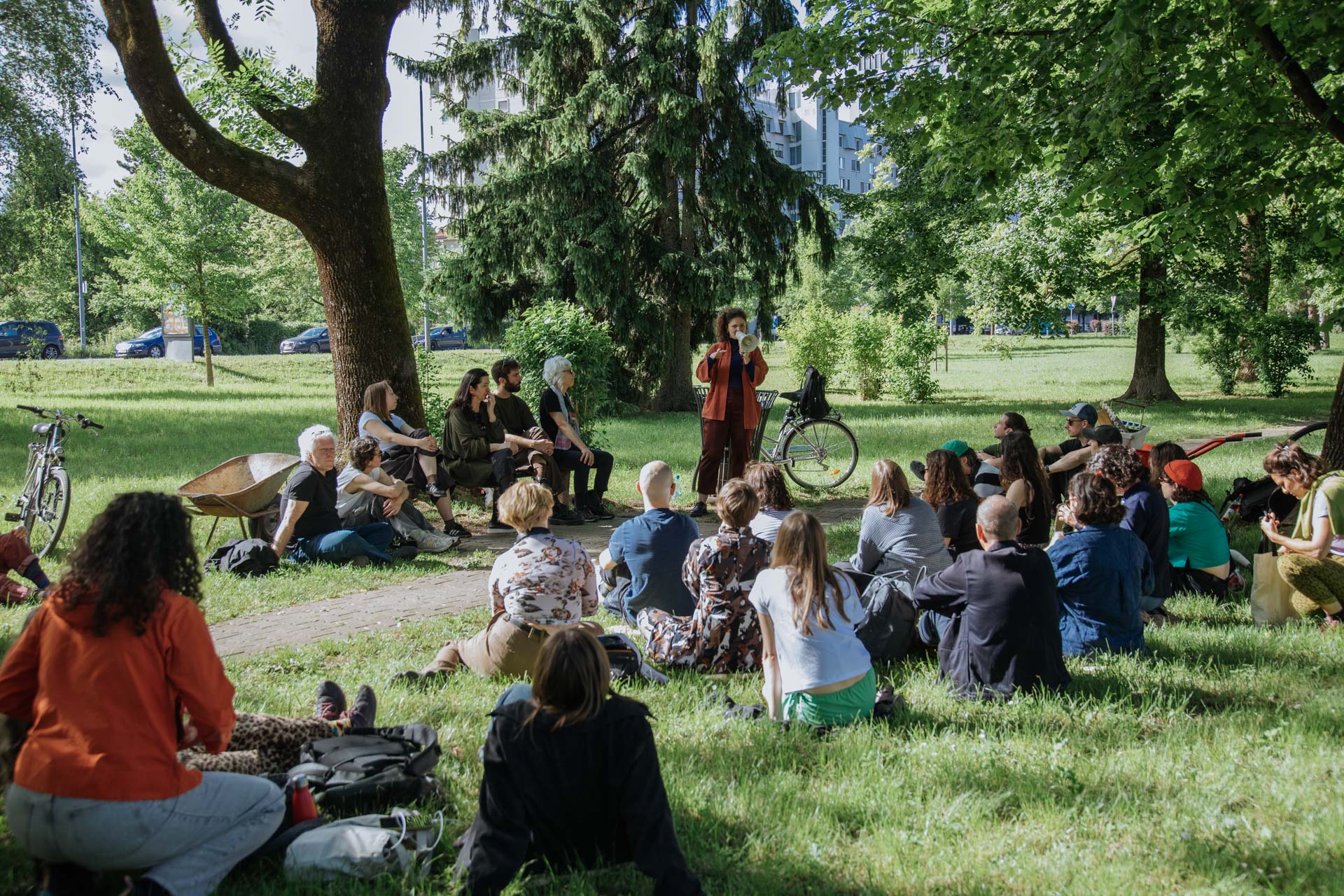
Far from the sedentary environs of most conferences, Festivities Under Siege was markedly ambulatory, taking place almost entirely outdoors, which forged a sense of immediacy and tactility to our activities. As we perched amongst dappled underbrush and roamed through neighbouring green spaces and construction sites, we shared not only what we do, but how we continue under increasing financial and political duress. The breadth of practices assembled for Festivities Under Siege was indicative of Krater’s global relevancy, but it also spoke to the urgencies at play: with the recent election of a far-right government in Slovenia, renewed threats of cultural funding cuts and support for corporatised urban development loom. Krater’s future – like so many autonomous spaces globally – is now more uncertain than ever. Many of the conference’s presentations and panels focused on this threat, seeking funding, legal, regulatory and organisational strategies to sustainably support independent ecological and cultural initiatives.
Organising Commonalities
At the centre of these discussions was Organising Commonalities, a roundtable organised by Practice Matters – a collaboration between IASPIS Stockholm curator and educator, Magnus Ericson and SALT Istanbul programmer, Eylül Şenses, which considers how art, architecture, design and spatial practices can respond to global crises. Hosted at Krater’s Abandoned Plants Sanctuary – an initiative dedicated to caretaking abandoned potted plants (spearheaded by Anamari Hrup and Eva Jera Hanžek) – Ericson and Şenses were joined by UK-based cultural policy expert Laëtitia Manach and curator and researcher Merje Laiapea for a series of presentations around regenerative practices within culture. Together, they presented methodologies that support commonalities between local communities and socio-cultural initiatives, which Manach discussed through the rubric of ‘quiet’ (administration, mediation, and experimentation) and ‘loud’ (growth, partnerships, and advocacy) organisational practices. Laiapea stressed the importance of practices that help to cultivate the ‘social soil’: the quality of our relationships and awareness, enabling communities to rethink what is possible. Indeed, in her closing remarks, Laiapea aptly noted that, “to support culture in a regenerative context, policy needs to unshackle itself from production and consumption alone, and nurture invisible processes.”
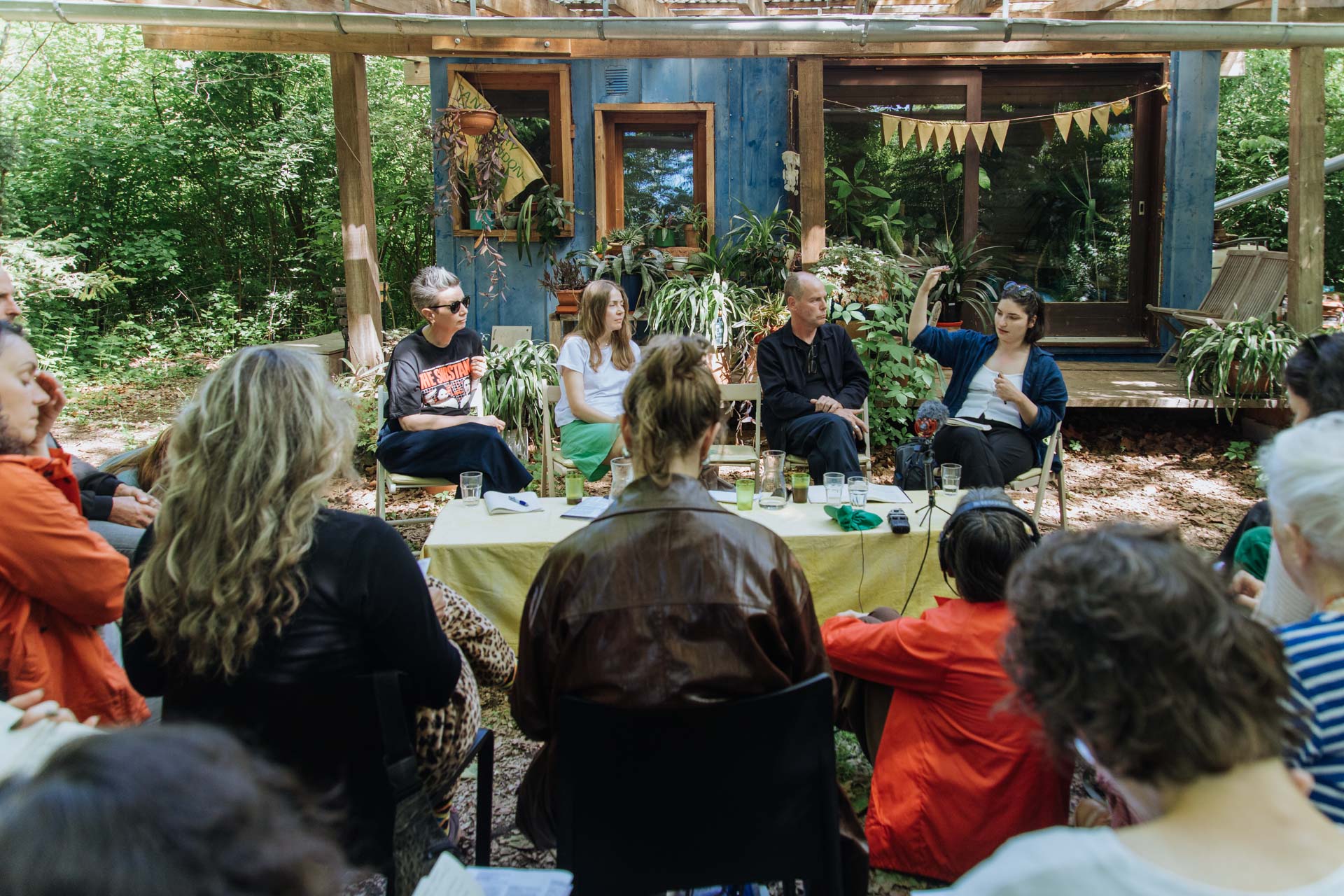
The panel then expanded to invite Pan Tzannetakis, of the self-sustaining refugee solidarity community Khora in Athens; Ludovica Battista, an architect whose research circulates around the grassroots liberated commons Terra Nostra in Casoria, an area near Naples known as the “land of fire” because of its toxic contamination; sisters Jelena and Nataša Prljević, of the intertwined initiatives Četiri Vode (Four Waters) and Hekler in New York City/Serbia; and Lisa Birgand, a cultural mediator at La Friche la Bel de Mai in Marseille. Each practitioner shared case studies relating to building socio-cultural and ecological infrastructure within local communities, offering nuanced counterpoints to traditional infrastructural models. At stake for these practitioners is autonomy: not only for the organisations they represent, but the communities they support in turn. Cultural strategy begins with the ground it is situated on, and the multitude of voices contained within it. In order to survive, Şenses noted in her closing remarks, cultural infrastructure must be both locally relevant and internationally connected.
Meditation on landscape maintenance
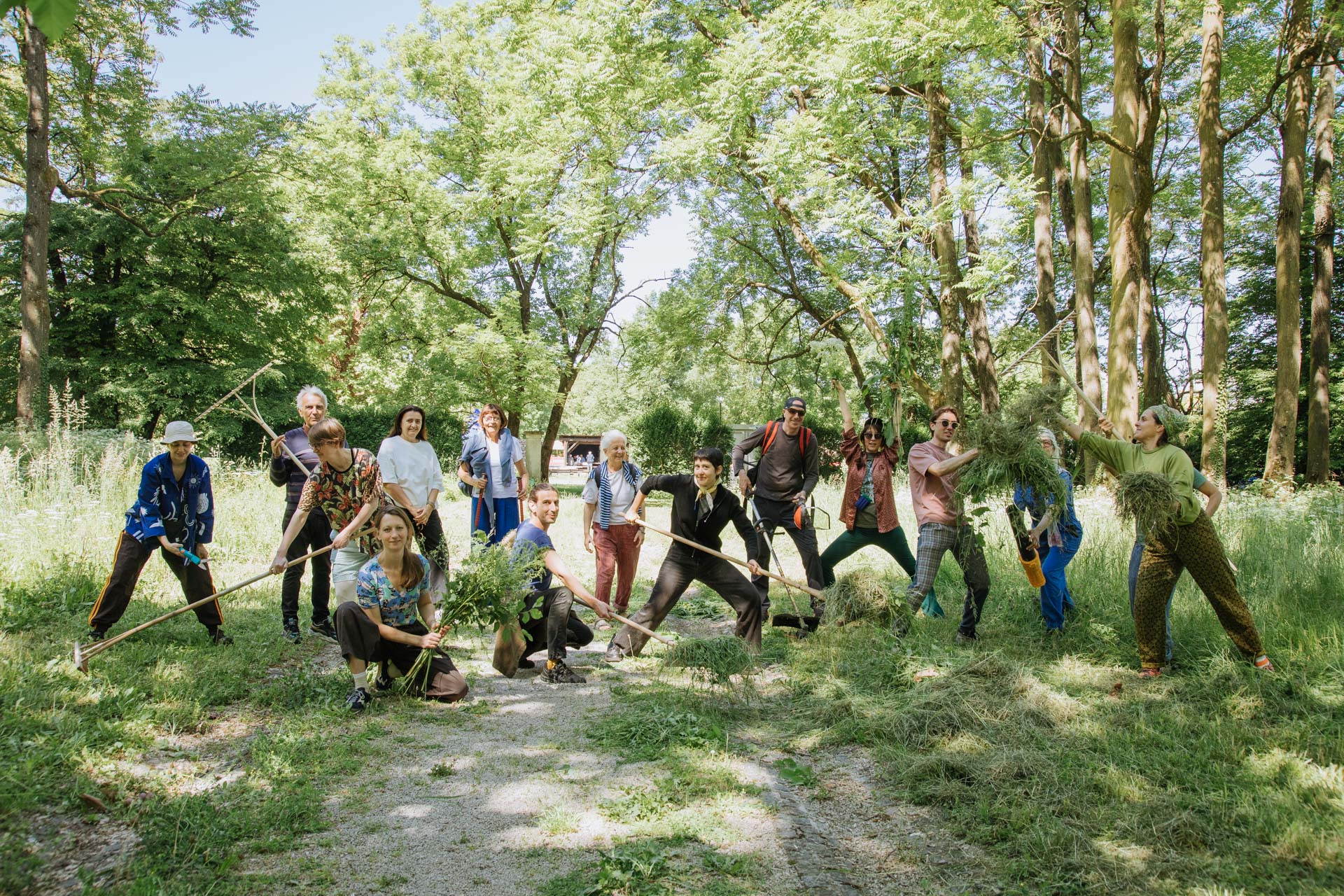
On the final day of festivities, artist Debra Solomon and choreographer (and Krater resident) Mathilde Vrignaud led a group of participants through a meditation on landscape maintenance by mowing the Museum of Architecture and Design’s park. This was followed by presentations from environmental lawyer Sabina Rodríguez van der Hammen, Ludovica Battista, and lawyer Jure Tuš examining legal strategies to safeguard collective and ecological spaces. A growing lack of political stability renders legal strategy all the more urgent, particularly when authoritarian governments increasingly choose to apply regulatory laws and deregulatory policy selectively. Such concerns were similarly reflected earlier in the week by Stockholm-based Brazilian architect Tatiana Pinto, who shared strategies of power-mapping political influence within real estate development and investment. Božena Stojić and Jovana Timotijević from Ministry of Space (Ministarstvo prostora), meanwhile, spoke from the nearby “Non-Aligned Park” about Belgrade’s grassroots citizen movements’ mobilisation to defend neighbourhoods and common spaces from development – calling upon Socialist-era Yugoslavian collective ownership and decision-making as models for contemporary land defense.
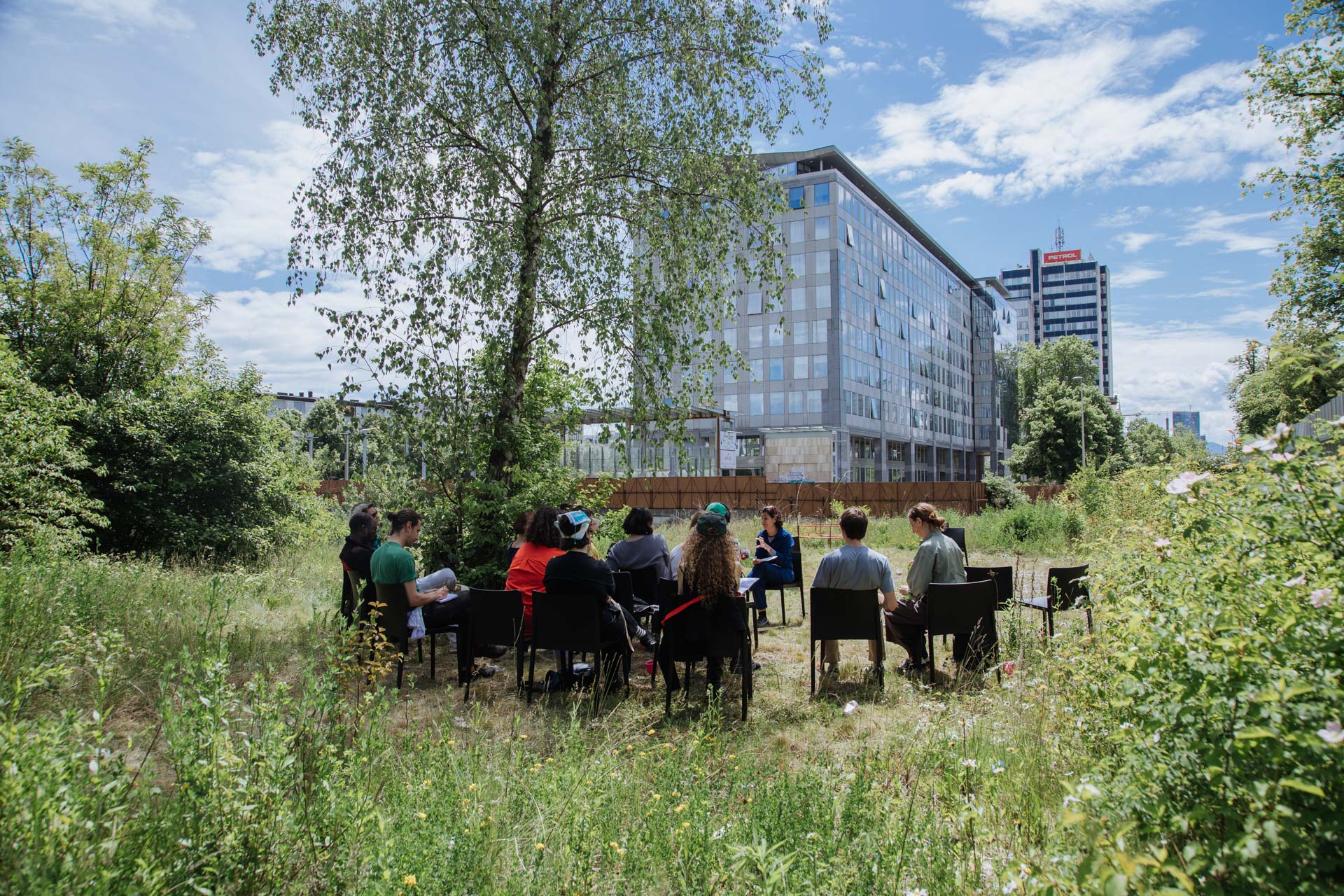
Indeed, cultural memory and the ways in which nature can be understood as integral to cultural heritage echoed throughout the conference, grounding our activities in the continuously unfolding socio-political histories of the region – from Ljubljana’s history of fascist resistance, to ‘Third Way’ Socialism to present-day neoliberal conservatism. On the afternoon of the second day of festivities, for example, we made our way to Bežigrad Library, where architect and researcher Gabriela de Matos joined us from São Paulo for an online lecture on her research into the history and future of Afro-Brazilian and decolonial architecture. From there, curator and art historian Zdenka Badovinac guided us through sites (in)formed by the former Yugoslavian Non-Aligned movement: a monument to anti-fascist resistance fighters; a former stadium built by Slovenia’s most famous architect, Jože Plečnik; and the locally dubbed ‘Non-Aligned Park’. Echoing de Matos’ descriptions of the dual need for opacity and visibility within marginalised architectures, the local histories Badovinac told often exist without names or fixed identities, but are no less exemplary of the daring pursuit of imagining an alternative future. These living, layered histories were made all the more acute as we found ourselves in a barren luxury condominium construction site at sunset. There, shards of ceramic fixtures and metal intermixed with gravel became a material memorial to a recently demolished community-led movement and dance centre. This ground then became a stage for Pan Zannetakis and designer Anna de Mezzo’s mourning ritual, in which participants shared their experiences of loss and displacement within their own socio-cultural and political ecologies: of a mentor, a community food forest, the olive trees of Palestine and Lebanon among them.
Anthropogenic soils
On the final day of Festivities Under Siege, Soil Assembly led three events dedicated to systemic attitudes and care towards soil. In the morning, Krater’s Andrej Koruza and anthropologist Enja Grabrijan led a series of workshops dedicated to soil regeneration. Grabrijan meditated on anthropocentric relationships to soil from an affective and linguistic perspective, highlighting historical attitudes towards its management that are rooted in a fear of the unknown, of decay, and of unseen creatures. Fittingly, this led into an energetic workshop led by Koruza on using invasive Japanese knotweed as biomass in organic fertilizer made with Bokashi bran – a traditional Japanese composting material that contains lactic acid bacteria, microorganisms and yeasts, which contributes to the rapid breakdown of plant material.
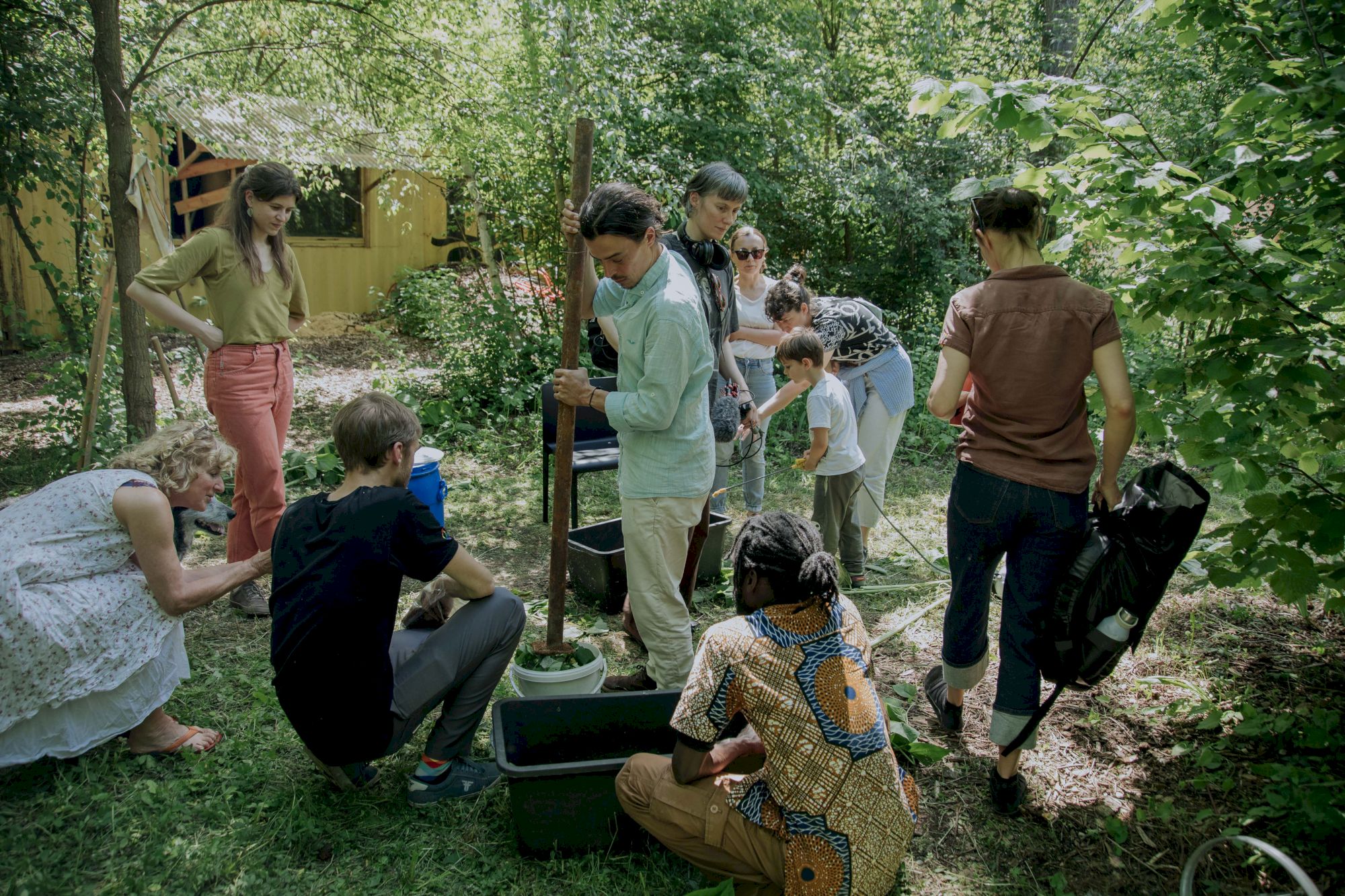
Krater’s treatment of Japanese knotweed is exemplary of their regenerative approach to soil ecology: here, the plant’s reputation as a rapacious, invasive species is troubled by its embrace as a raw material in food, fertiliser, dye and paper production. Rather than employ a ‘slash and burn’ methodology that seeks to eradicate so-called invasive species in the name of anthropocentric efficiency, Krater envisions a relationship forged through criticality, relationality, and non-extractive regeneration. So, alongside children (and incongruously, Slovenia’s two oldest veterinarians), our group set to work uprooting the knotweed (making sure to dispose of its propagative roots carefully), chopping it into pieces, mixing it with Bokashi and stamping it into vessels – all while singing rhythmic working songs from our respective homelands.
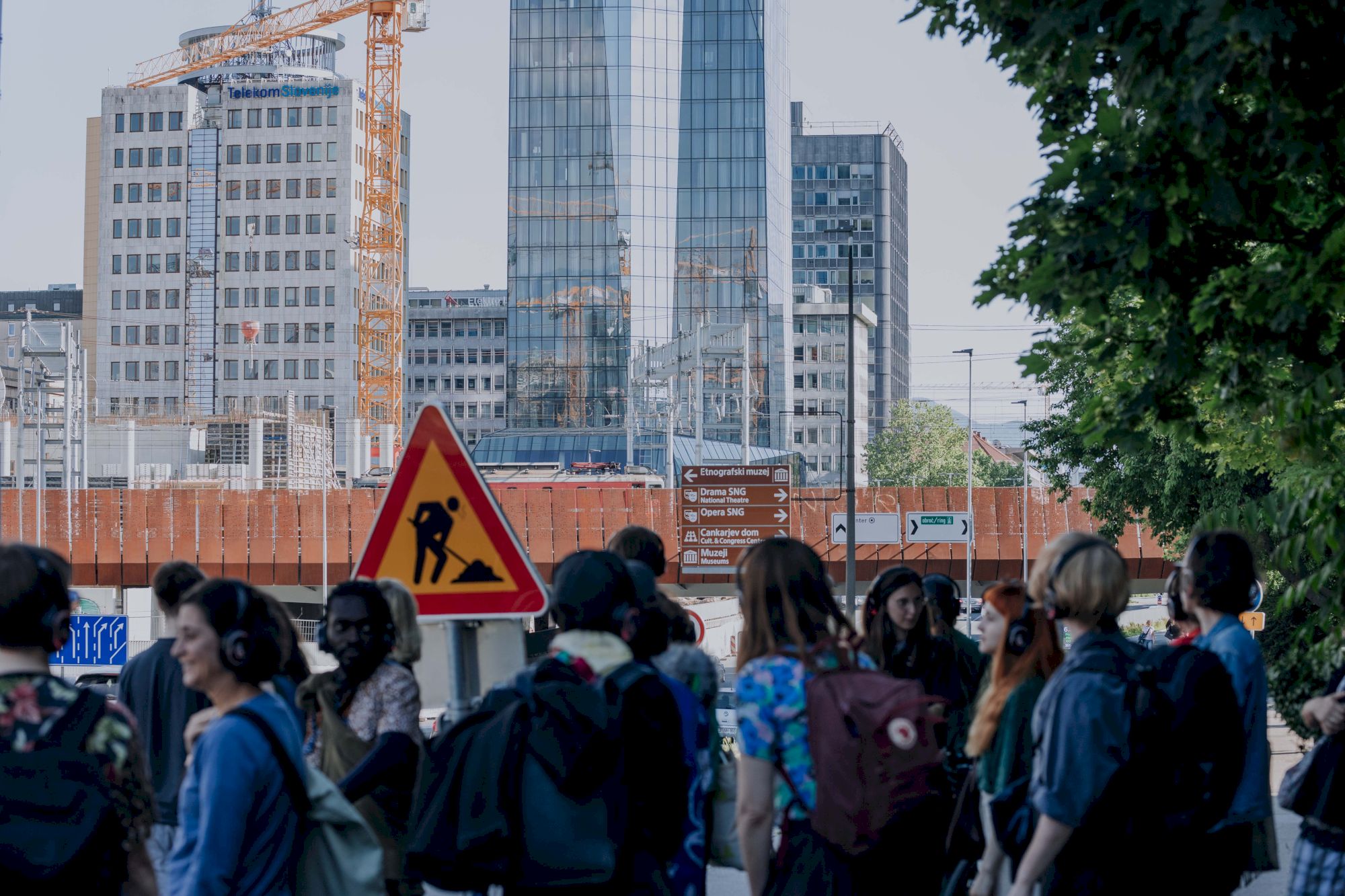
Later that afternoon, we gathered at Ljubljana’s central train station district, where Emonika – a large-scale ‘sustainable’ urban redevelopment scheme spearheaded by city government and private investment – is currently under construction. This was the setting for The Earth: Stolen and Reclaimed, a sound walk guided by architects Tina Božak and Altan Jurca Avci in collaboration with Julia Udall, an architectural researcher and founder of Sonic Acts of Noticing. Fitted with wireless headphones, we listened while Božak and Avci unfolded the story of Emonika from the perspective of systemic land and soil exploitation, tracing the history of the city’s urban and rail development through to Emonika’s clandestine, unregulated soil dumping methods on the outskirts of the city. Throughout, ambient wireless microphones and geophones shared amongst our group provided an aleatory urban soundscape: the grinding dirge of large-scale construction and traffic, intermittently disrupted by the microcosmic textures of passing plantlife, and errant questions from participants accompanied our explorations.
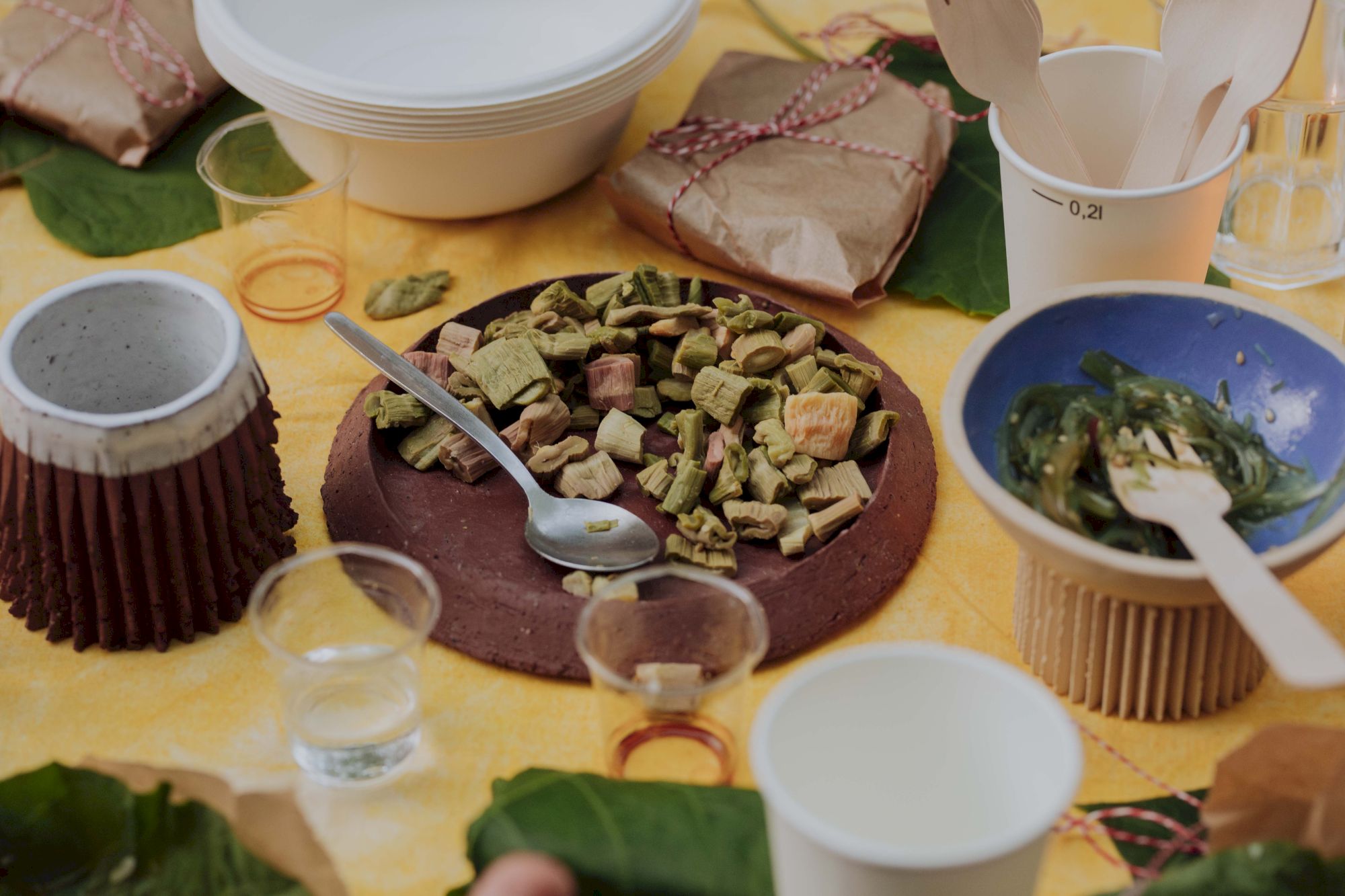
At nightfall, NotNot Atelier – a collaboration between Andrea Steves and Aki Namba, whose interdisciplinary practice explores food, ecology, and knowledge systems through participatory formats of art, pedagogy and collective inquiry – hosted Off The Books Tasting. Working with ingredient cards, collective reading, and food tastings, participants traced the colonial and political contexts embedded in the food we eat, using invasive/native taxonomies to reframe thinking around food, knowledge production, and ecological histories.
It was a fitting final event to synthesise the many urgent concerns of Festivities Under Siege, and to locate them in relation to the soil that is constantly reshaping, and being reshaped by, the urban landscape. The extractive methodologies employed by government and corporate entities in so-called ‘urban regeneration’ projects, such as Emonika, too often ignore slower, more relational processes in tending not only to the soil and the important microorganisms it holds, but the human and more-than-human life it supports. Krater’s stated purpose (at least in the eyes of the Slovenian ministry of Justice) is to manage invasive species within Ljubljana’s city centre. But Krater’s true purpose is far more expansive: it is a beacon of hope for feral ecologies and independent cultural initiatives worldwide.
As we reluctantly bid farewell to the participants and organisers of Festivities Under Siege that evening, I was reminded of an image from the ‘Carneval’ that took place on the first day of the conference, in which participants were invited to roam Krater to learn about its many activities. Along one forest path, Danica Sretenović emerged from the brush to offer a galvanising alternative to neo-colonial and neoliberal extractive policy. “We need to claim our world” she exclaimed through a megaphone. “We are not marginal, we are material, we exist. It’s the now, not the future that we are waiting for.”
More on Krater, Soil Assembly and SoilTribes.