
In Ukraine, the Ecostations Network is searching for solutions for restoring war-damaged soils
In May, the Ecological Research Station “Hlyboki Balyky”, a branch of the Ukrainian Ecostations Network, hosted a Soil Assembly on restoring soils damaged by military operations. The event brought together soil scientists, geologists, agrochemists, agricultural sector representatives, permaculture practitioners, environmental initiatives, and artists to discuss how to analyze damaged farmland and make it safe again.
Soil Assembly is a growing international network dedicated to advancing soil health literacy through artistic, scientific, and community-based practices. Supported in 2026 by the project SoilTribes, funded by the European Union, the European edition of Soil Assembly unfolds as a decentralized series of regional assemblies across Europe. Bringing together artists, farmers, researchers, educators, activists, and local communities, the initiative explores new pedagogies and participatory methods for understanding and regenerating soils. Each regional assembly is rooted in its local ecological and cultural context while contributing to a broader European and international dialogue on soil restoration, biodiversity, and environmental justice. The 2026 cycle includes assemblies in Kyiv region, Ljubljana, Amsterdam, Münster, Berlin and Brittany, culminating in a hybrid international gathering at Spore Initiative in Berlin in January 2027.
Through workshops, performances, citizen science activities, and collective learning processes, Soil Assembly aims to strengthen transdisciplinary collaboration and foster new imaginaries for living with and caring for soils. The project also experiments with low-carbon, distributed forms of international cooperation, combining local encounters with online exchange and open-access dissemination. By connecting regional experiences with global perspectives, Soil Assembly contributes to the wider movement for ecological resilience, cultural transformation, and democratic engagement around soil futures.
The first regional assembly in the series took place on May 16 at Ecological Research Station “Hlyboki Balyky” in Kyiv region and addressed the sad and serious issue of the impact of bombing on soil health.
Correspondance,
Why do post-war soils require special attention?
The agricultural sector accounts for about 40% of Ukraine’s export revenues, making soil damage not only an environmental issue but an economic crisis as well. Ukrainian farmers are currently facing a compounding array of aftereffects: blast craters, remnants of ammunition, burned military equipment, heavy metals, fuels and lubricants, wildfires, and disrupted water regimes.
To understand why these issues cannot be resolved by simply leveling the field out, conference participants started with a fundamental question: what exactly happens to soil after an explosion?
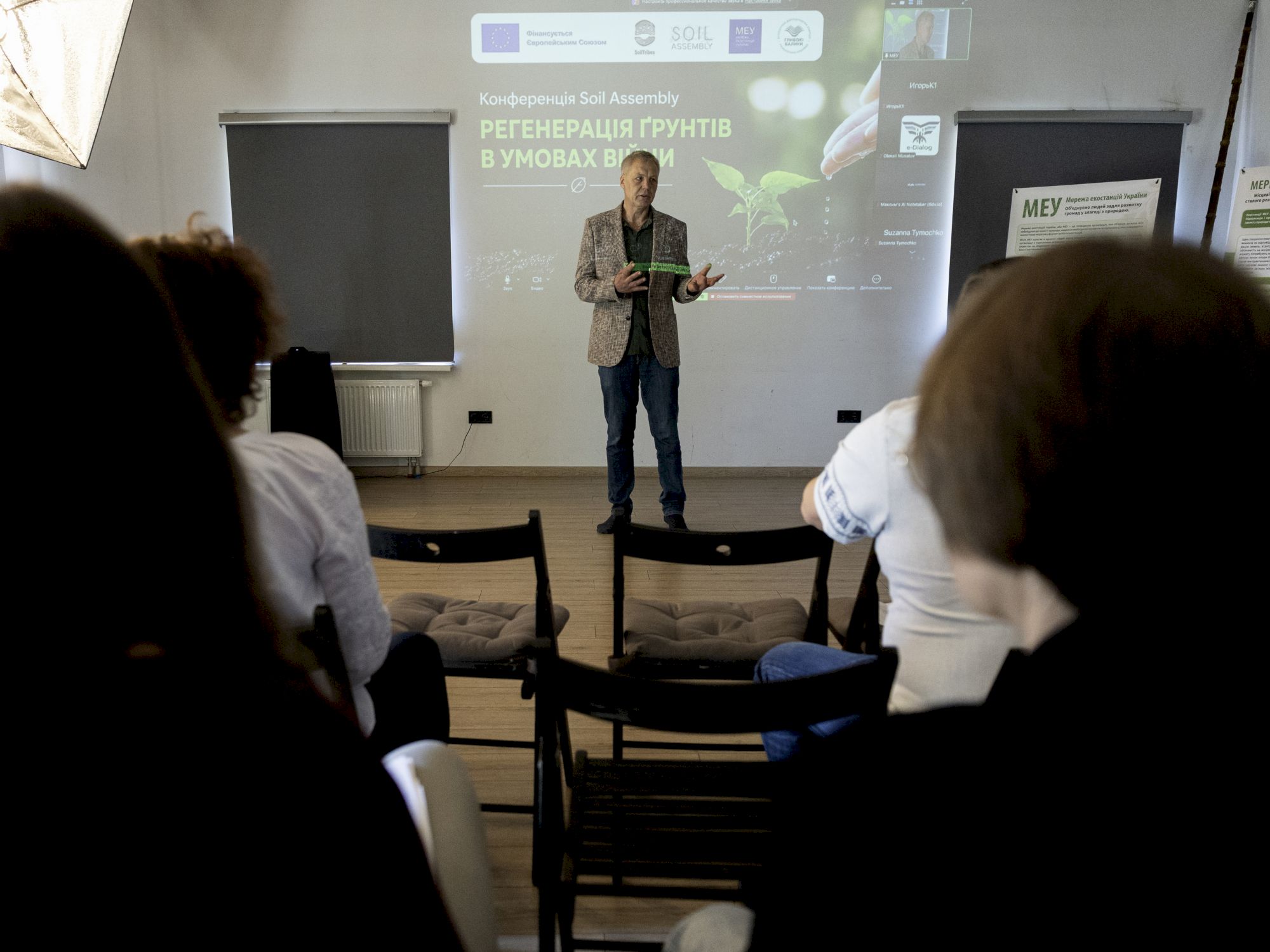
Kateryna Derevska, Doctor of Geological Sciences from the National University of Kyiv-Mohyla Academy, emphasizes that the aftermath of war extends far beyond visible craters. Vibrations from explosions can destroy landscapes, alter underground hydrology, and cause severe mixing of rock formations. Furthermore, at impact points, soil temperatures can reach up to 1000°C, causing particles of soil, sand, rocks, and remnants of explosives to fuse into granules, creating an entirely new soil structure.
Consequently, diagnostics stood out as one of the most critical issues of the conference. First, it is essential to determine exactly what has happened to a specific plot of land, and only then choose the appropriate method of restoration.
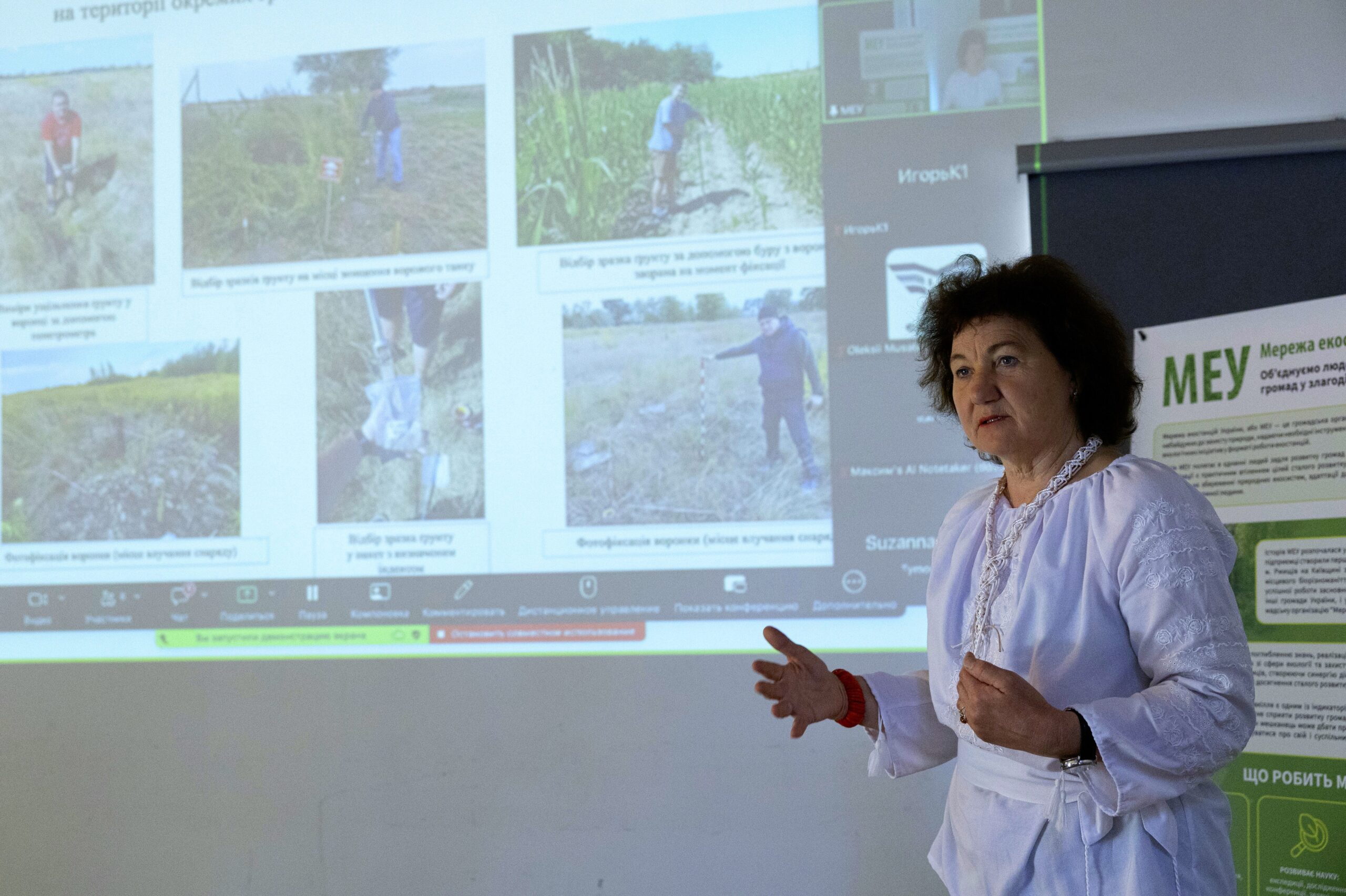
Olena Melnyk, a research fellow at the Bern University of Applied Sciences, Serhii Lavrenko from Kherson State Agrarian and Economic University, and Elina Zakharchenko from Sumy National Agrarian University presented the results of the project “War-Polluted Soil: Restoration and Remediation”. The team investigated soils in Sumy, Kharkiv, Mykolaiv, Kherson, and Donetsk regions, covering 30 farms. Thousands of samples were analyzed, with the results mapped out on the interactive Soil Monitoring Map (register here).
A key conclusion is that while Ukrainian soils do suffer from localized, point-source contamination, this does not rule out farming entirely. Olena Melnyk specifically emphasized the myths circulating around this topic — in particular, claims that all Ukrainian produce is contaminated with heavy metals. Such messaging can be a tool of information warfare, economic competition, or simply the result of misinterpreting scientific data.
Restoration methods already being researched and tested
Once diagnostics are complete, the next question arises: what should be done with the damaged soils? A wide variety of answers were proposed at the conference, ranging from nature-based solutions to biological products, biochar, warm beds, and phytoremediation.
Most often, farmers fill in craters on their own because they cannot afford to wait; they need to work, sow crops, and feed their families and communities. However, when a crater is filled in with unknown soil or simply leveled using topsoil from the surrounding field, it may not resolve the problem, but rather “stretch” it across a larger area.
During humanitarian demining, contaminated soil or soil suspected of contamination may be excavated and removed from the site, but it must then be properly disposed of. Svitlana Korsun, Doctor of Agricultural Sciences and Executive Director of the BTU Institute of Biotechnology, discussed biological products. According to her, the remediation of excavated, contaminated soil is feasible: in experiments, her team managed to reduce the content of petroleum products in real-world contaminated soil by 50 to 92%. Yet, this technology proved to be expensive.
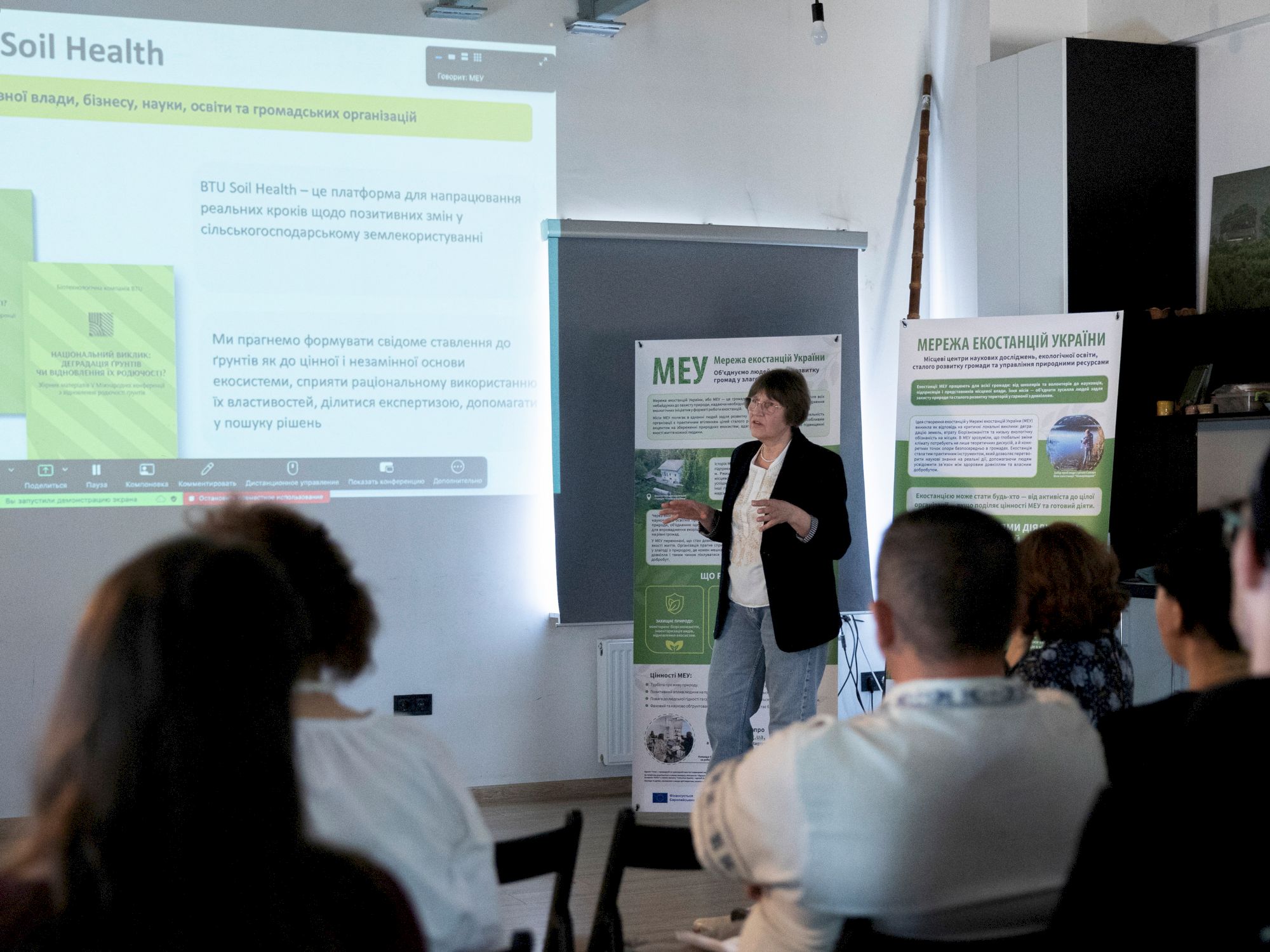
However, other solutions do exist. Iryna Protsenko, coordinator of the RECOVER project by WWF-Ukraine, spoke about how to make these options more accessible to farmers. The goal of RECOVER is to analyze available nature-based solutions documented in Scopus, systematize these methods, and create soil restoration strategies. While the project is still ongoing, it already categorizes solutions into two main strategies: removing contaminants or immobilizing them within the soil, utilizing methods like phytoextraction, biochar, and phytoremediation crops.
The effectiveness of some of these ideas has already been confirmed experimentally. For instance, Vira Rodionova, a certified instructor with the NGO “Permaculture in Ukraine”, presented an experiment on reclaiming shell craters in the Kyiv region. To restore the soil, they applied a patented Ukrainian technology known as Rozum warm beds: laying down organic matter, biochar, microorganisms, and bokashi to create a nutrient-rich structure for soil life. After a few seasons, stinging nettles began to grow on the plot — a clear sign that fertility was returning.
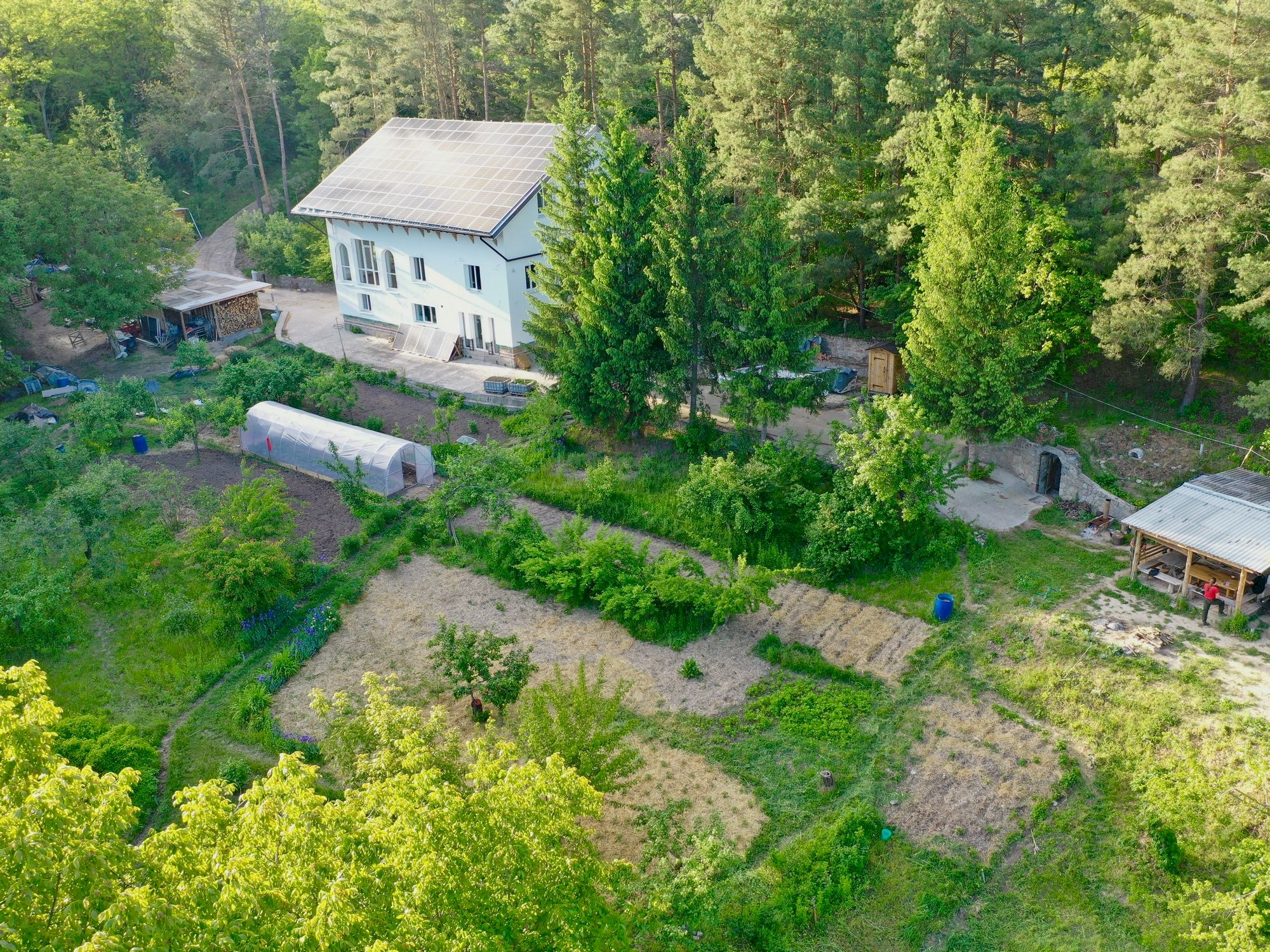
Bohdan Popov, head of the NGO “Ukrainian Ecostations Network” and director of the “Hlyboki Balyky” scientific branch, spoke about biochar as a soil conditioner. Thanks to its porosity, it can retain water, act as a buffer during droughts, and bind certain contaminants. At the same time, Popov emphasized that biochar must be produced from waste material rather than becoming a new driver of deforestation.
The practical dimension: what this means for communities, farmers, and the state
For farmers, damaged soils are not an abstract problem but a daily dilemma: can they sow crops, where should they take samples, what should they do with craters, and how can they avoid making the situation worse?
As part of the project presented by Olena Melnyk, Serhii Lavrenko, and Elina Zakharchenko, training sessions were conducted for farmers. They were taught how to work with laboratories, data, and satellite imagery, and an online course on sustainable farming practices was developed. The idea is not only to answer the immediate question of “can we plant here right now”, but also to help farmers preserve the land as a resource for years to come.
Yaroslava Shylyk, a creative technologist from the Zurich University of the Arts (ZHdK) in Switzerland, presented the Chornozem project — an alternative method for spatial visualization of heavy metal soil contamination. The team is testing a turmeric-based solution that can react to certain heavy metals and glow under ultraviolet light. A drone-mounted camera and a computer vision algorithm then help flag potentially affected areas where more precise laboratory testing is required. Additionally, the team plans to develop a demo version of the product; in the near future, they intend to publish a guide for farmers on how to mix the solution themselves and use the experiment to determine whether their land needs further laboratory analysis.
The Chornozem project (Yaroslava Shylyk, Kirill Kohl, Olivia Menezes) was awarded the Glass Microbe Grand Prize at the Biodesign Challenge New York in 2025:
Maksym Zalevskyi, president of the ecovillages network GEN Ukraine, brought the discussion into a broader economic context. He spoke about voluntary carbon credit markets, digital verification, regenerative finance, and support for small communities. His thesis: future restoration should not be limited solely to massive agricultural fields and corporate agro-holdings. The landscape is made up of smaller “puzzle pieces” — homesteads, windbreaks, ravines, nature reserves, frontline communities, and regenerative settlements, which can also receive support for taking concrete actions.
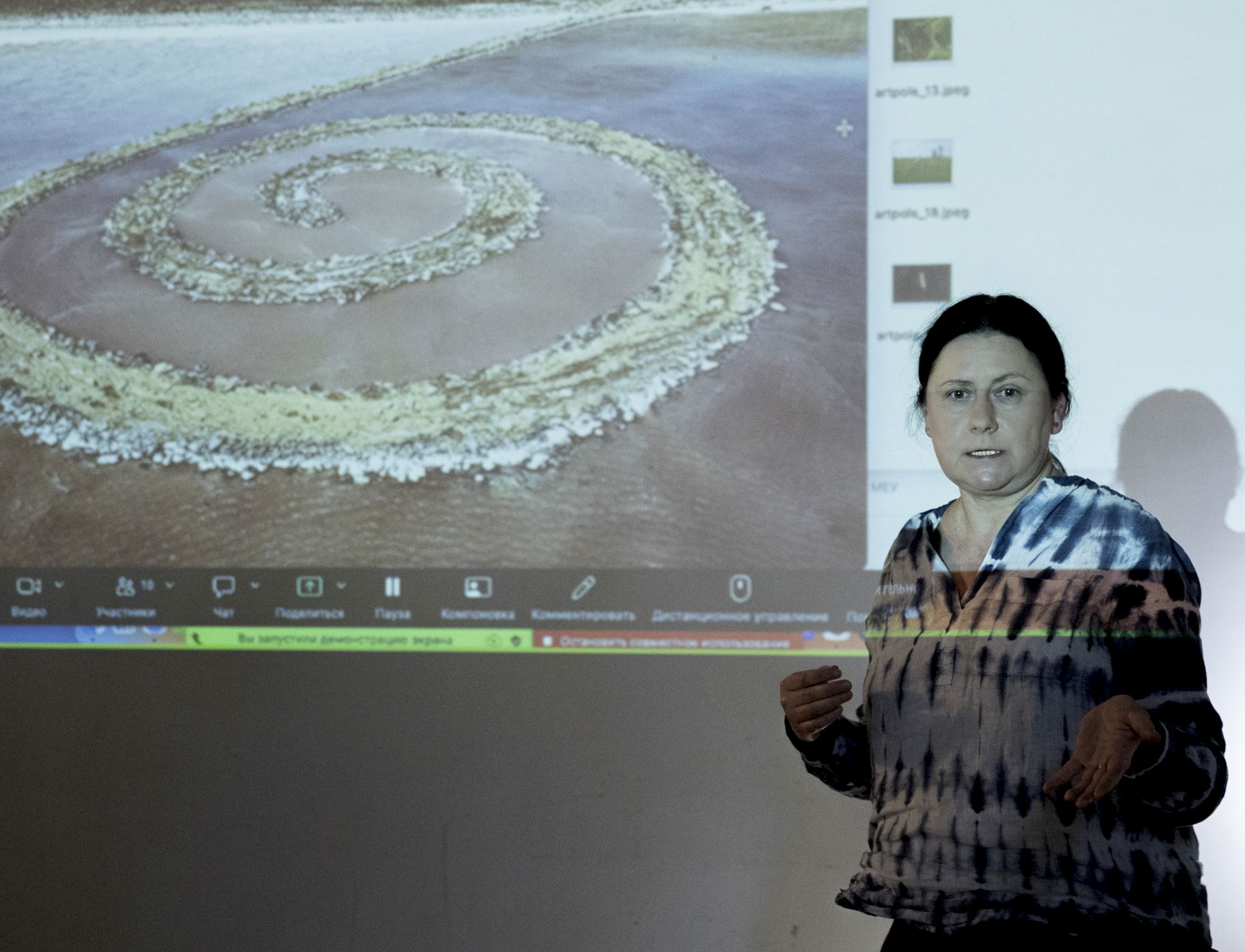
Myroslava Haniushkina, director of the ArtPole Agency, added a cultural dimension to the conversation. She spoke about land art as an art form that cannot exist separate from the landscape itself. Her presentation demonstrated that the earth can be a space for creativity, and that artistic practices can draw attention to environmental crises, help locals rediscover the beauty of their own landscapes, and process the heavy theme of lost territories.
The Soil Assembly at the “Hlyboki Balyky” ecostation proved that expertise in researching and restoring war-damaged soils is already actively forming in Ukraine. However, there is no one-size-fits-all solution. It requires field research, laboratory analyses, satellite monitoring, interactive maps, and experiments with biological products, warm beds, biochar, nature-based solutions, and digital verification.
Ukraine already has the scientists, practitioners, and initiatives working on these issues. What is needed now is systemic implementation, funding, a unified database, open sharing of results, and robust support for farmers and communities. This is the very foundation of food security and the country’s future recovery.

More on Ukrainian Ecostations Network, Soil Assembly and SoilTribes.