
AMRO festival: From the Ashes of the Burnout Machines
The Art Meets Radical Openness (AMRO) festival will take place in Linz from May 13 to 16, 2026. Read the curatorial essay for the event’s exhibition.
By Davide Bevilacqua, Arianna Forte, Noemi Garay, Lara Mejac, Diane Pricop
Burnout not only settles in the individual body as a state of exhaustion, it accumulates, circulates and disperses into a shared climate that stretches across technical systems, social relations and ecological processes. What happens at the margins of exhaustion, where systems falter or refuse to fully cohere? Could spaces emerge for tentative forms of connection, alternative rhythms and practices that do not reproduce the extractive logic of burnout?
“From the ashes of the burnout machines” is an exhibition project for Art Meets Radical Openess by Servus that highlights how individuals, societies and the environment are exploited and “burned out” by, among other things, an extractive and totalizing model of digitalization. The exhibition approaches digitalization not as an abstract or immaterial force, but as condition that permeates infrastructures, ecologies, and social life. Burnout becomes a diagnostic lens through which to understand the contemporary moment: a state produced by regimes of extraction, acceleration and exhaustion that operate simultaneously on bodies, environments and technological systems.
To articulate this condition, the exhibition unfolds through a series of interrelated clusters that trace the material, ecological, social and speculative dimensions of what can be called climate of burnout. These clusters are not discrete categories but overlapping fields of inquiry that reveal how digital infrastructures are embedded within broader political, economic, and environmental processes. Together, they challenge the dominant ideology of digitalization as frictionless progress, exposing instead its dependence on finite resources, invisible labor and uneven distributions of harm and offer strategies to for autonomous, collective regeneration.
Computation and Infrastructure
One of the clusters addresses the infrastructures of computation, foregrounding their material, spatial and energetic dimensions. Against the persistent myth of the “cloud” as a weightless and immaterial entity, the works gathered here insist on the physical realities of digital systems: land, water, minerals, cables and heat.
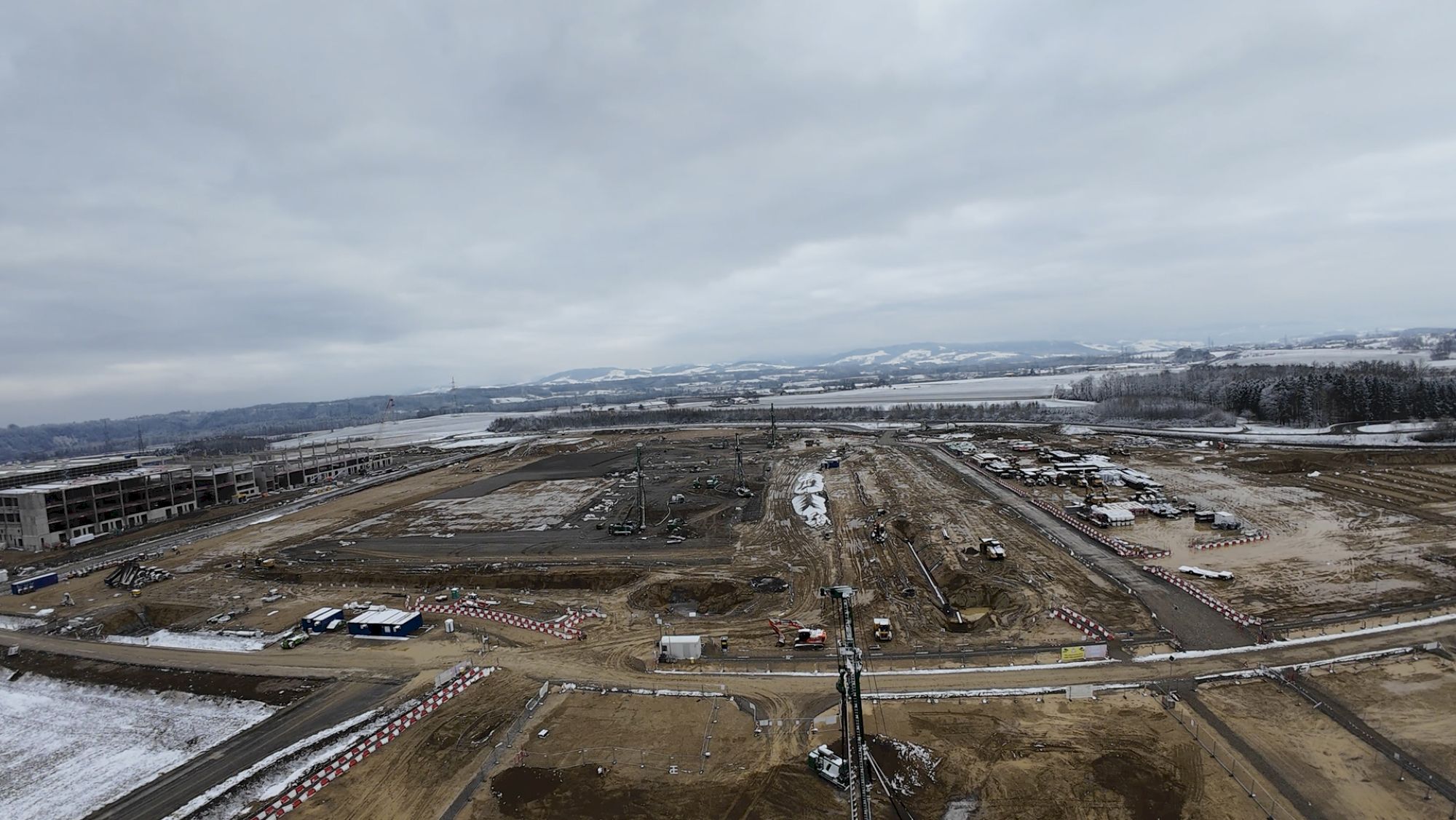
Christina Gruber’s Vaping Vampire exemplifies this approach by focusing on the construction of a hyperscale data center in Kronstorf, Austria. Through video, research, and participatory practices, the work renders visible the transformation of land and water systems required to sustain digital infrastructures. Fertile soil becomes sealed, water cycles are disrupted and local ecosystems are irreversibly altered—revealing how global data demands manifest as localized environmental violence.
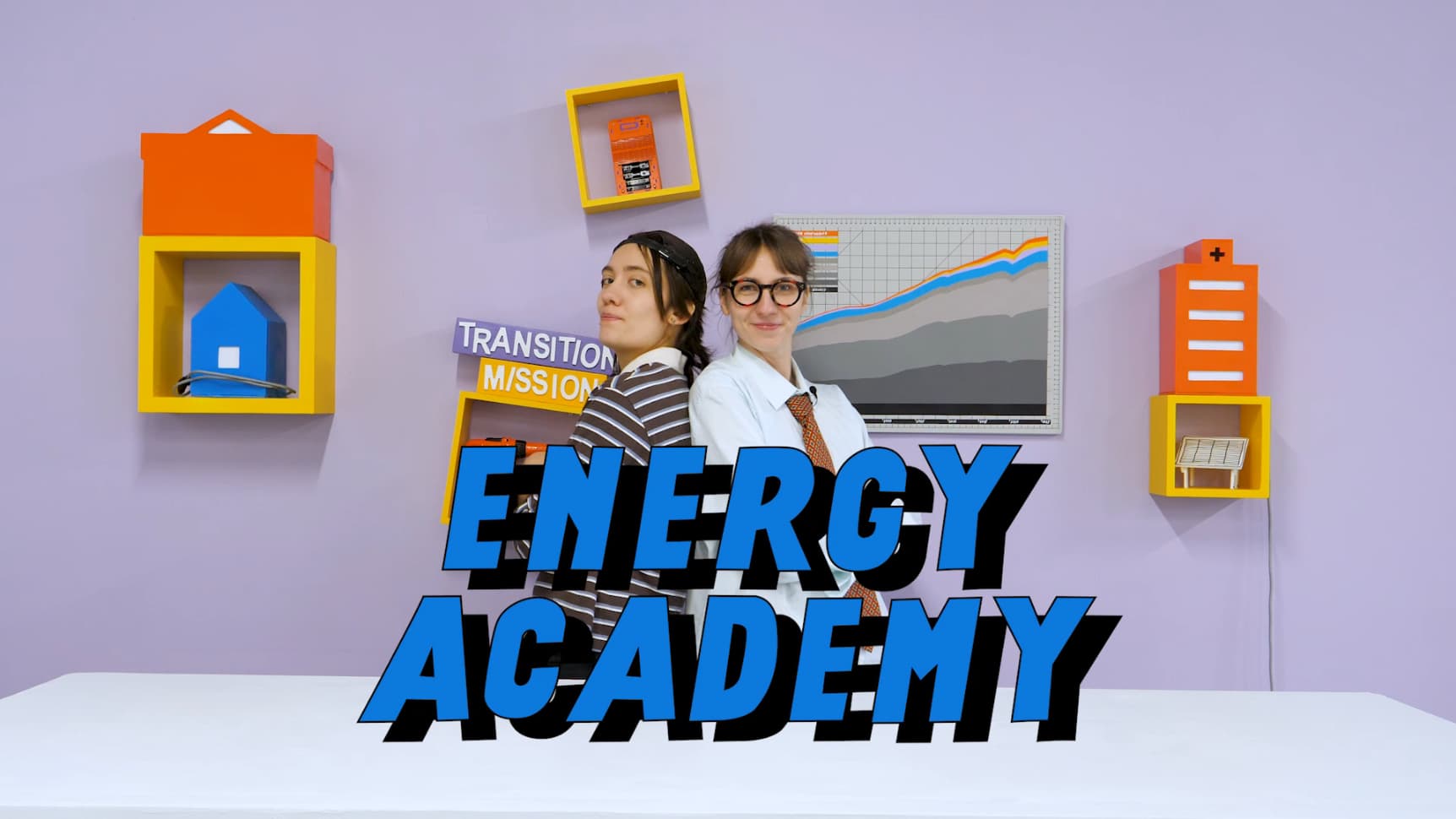
Similarly, Dasha Ilina and Marie Verdeil’s Energy Academy interrogates the narratives of techno-optimism surrounding renewable energy and digital transition. By juxtaposing large-scale battery technologies with everyday electronic devices, the work exposes the hidden resource extraction and energy consumption underpinning these systems, complicating the promise of a “green” technological future.
Ioana Vreme Moser’s research extends this critique by tracing the environmental impact of hardware production across temporal and geographical scales. Her work connects semiconductor industries and electronic waste to the accumulation of heavy metals in the Danube Delta, revealing how global supply chains produce localized ecological consequences. By revisiting alternative computational histories, she also gestures toward other possible technological trajectories.
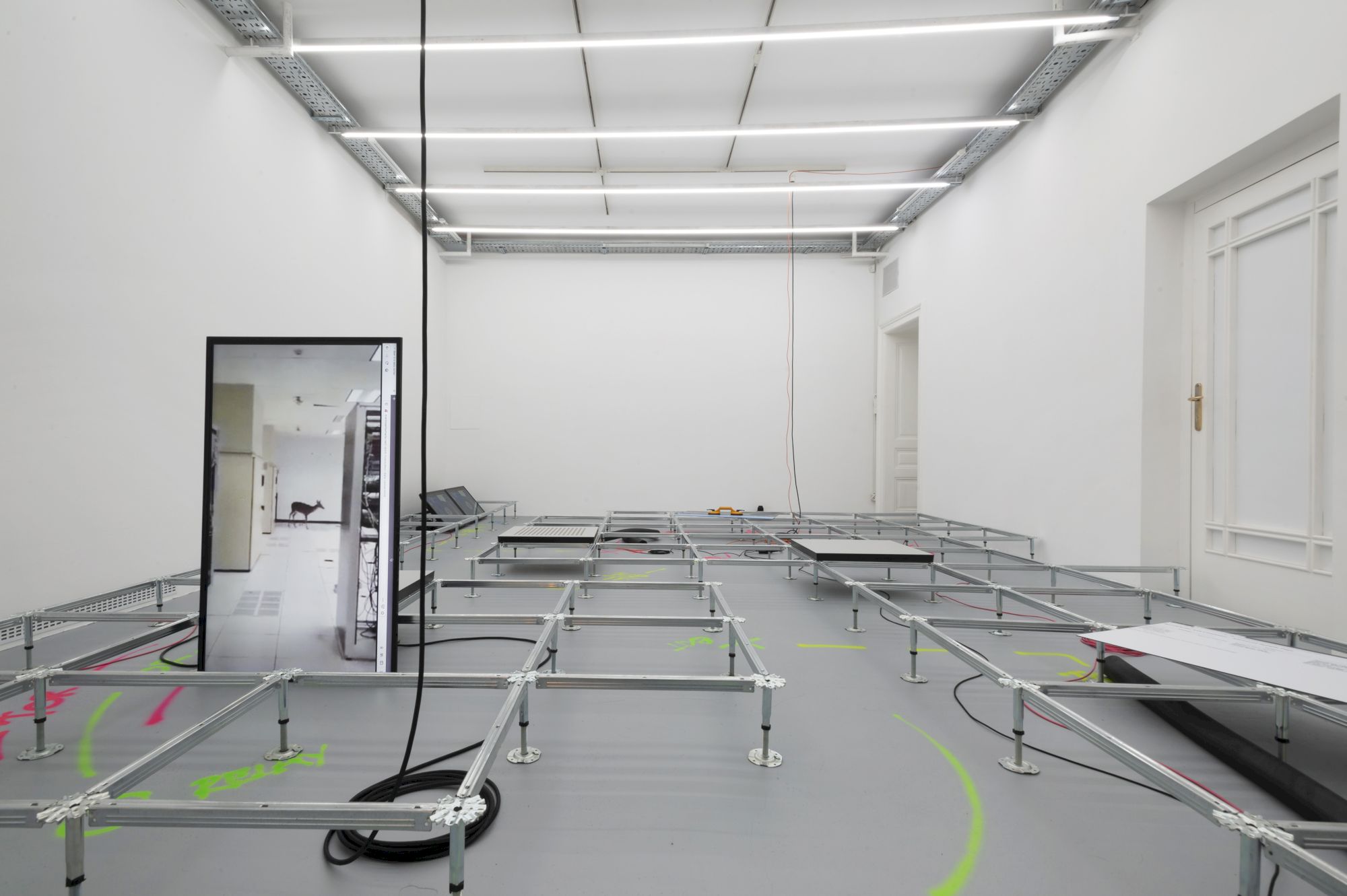
In parallel, Mario Santamaría’s A Deer in the Wide Web and Sam Lavigne’s Slow Hot Computer make perceptible the infrastructural strain and energetic cost behind everyday digital operations. Santamaría redirects data flows to reveal the hidden geographies and delays of network transmission, while Lavigne stages computational overheating as both a material condition and a metaphor for systemic exhaustion. In contrast, 868labs’ 868wearables proposes decentralized, low-energy communication systems that resist the centralization and scale of dominant infrastructures.
Together, these works reposition computation as a deeply material practice, embedded in ecological systems and political economies that demand critical scrutiny.
Environmental Costs
Building on this infrastructural perspective, another cluster focuses on the environmental consequences of digitalization. Here, the exhibition traces the often-invisible forms of pollution and degradation generated by the production, maintenance and expansion of digital technologies.
Ioana Vreme Moser’s fluidic installations materialize the accumulation of industrial waste in the Danube Delta, embedding polluted sediments within sculptural forms that map environmental transformation over time. Her work highlights the “butterfly effect” of industrial activity along the river, where pollutants from upstream industries, including those linked to electronics and energy production, accumulate in the delta’s fragile ecosystem.
Christina Gruber’s investigation into data center construction further emphasizes the ecological cost of digital expansion, revealing how soil sealing, water extraction, and toxic byproducts generate long-term environmental damage. Similarly, Repair and Redress’s I see (GP)U monitors the thermal and chemical impact of wastewater discharged from data centers into natural lakes, exposing a cycle in which water is extracted, processed, and returned in altered states that disrupt aquatic ecosystems.
Mario Santamaría’s work complements these perspectives by highlighting the energy-intensive pathways behind seemingly mundane digital actions. By slowing down data transmission, he reveals the infrastructural and energetic processes that sustain everyday connectivity, questioning the sustainability of a culture built on constant digital consumption.
Collectively, these works render visible the ecological feedback loops generated by digitalization, loops that connect extraction, consumption, pollution, and climate change in complex and often opaque ways.
Individual and Social Impacts
While digital infrastructures extract natural resources, they also operate through the extraction of attention, data and emotional labor. The third cluster shifts focus to these psychosocial dimensions, examining how digital systems reshape subjectivity, relationships, and political life.
In Infocry, the collective fantastic little splash exposes how digital infrastructures weaponize emotion through coordinated disinformation campaigns. By mapping patterns of inauthentic online behavior, the work reveals how affect becomes a tool for political manipulation, contributing to polarization and the erosion of collective trust.
S()fia Braga’s Platform Workshippers explores the blurred boundaries between labor, visibility, and selfhood in platform economies. Here, the pursuit of online presence becomes a form of ritualized self-surveillance, where personal life is continuously transformed into content and productivity. The work frames this condition as a form of digital devotion, structured by algorithmic systems that reward constant engagement.

Mara Oscar Cassiani’s Ai Love, Ghosts and Uncanny Valleys <3 extends this inquiry into the realm of human–machine intimacy. By engaging with AI companions and online subcultures, the work reveals how dynamics of domination, desire, and violence are reproduced within digital relationships. The machine, in this context, becomes a mirror reflecting the social pathologies embedded within human behavior.
Together, these works articulate burnout as a collective psychosocial condition, one produced not only by overwork, but by continuous exposure to systems that capture and manipulate attention, emotion, and identity.
Rebuilding and Refusal
In response to these conditions, the final cluster opens a space for alternative imaginaries and practices. Moving beyond critique, the works gathered here explore strategies of refusal, reconfiguration, and co-creation that challenge dominant computational paradigms.
Sam Lavigne’s Slow Hot Computer reimagines the personal computing machine as a site of resistance, where malfunction and overheating become acts of sabotage against systems of efficiency and acceleration. This gesture resonates with broader traditions of technological refusal, from Luddite movements to contemporary critiques of automation.
868labs’ 868wearables offers a more constructive approach, proposing decentralized communication systems that operate independently of global infrastructures. By enabling peer-to-peer exchange, these devices foreground autonomy, resilience, and collective maintenance.
Dasha Ilina and Marie Verdeil’s work on batteries similarly rethinks technological systems through participatory and collective practices, engaging with questions of energy autonomy, degrowth, and the commons. Ioana Vreme Moser’s Liquid Machines. Cartographic Computers revisits fluidics as an alternative computational paradigm, suggesting possibilities for computation that are materially embedded and less extractive.
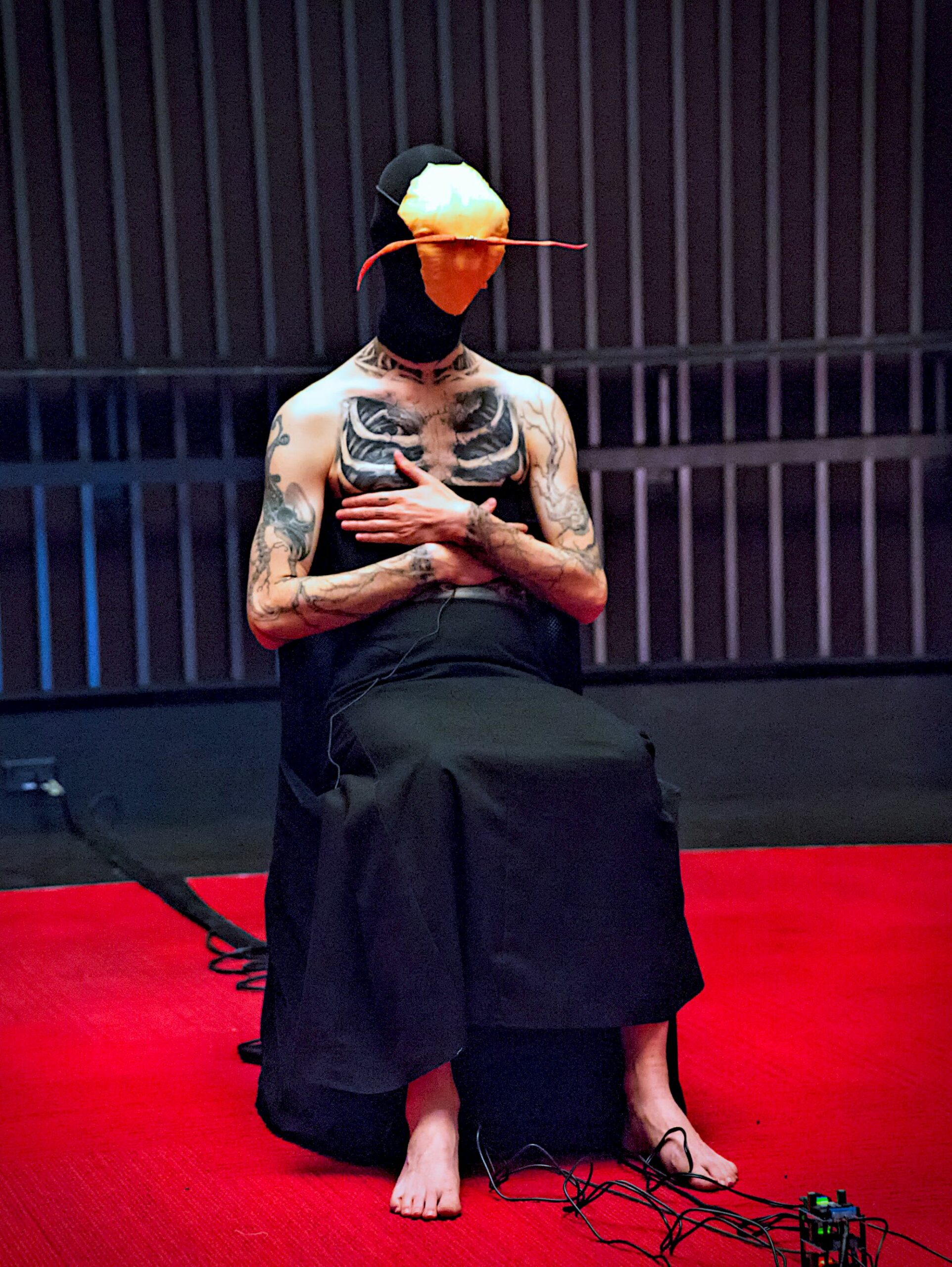
Finally, Marco Donnarumma’s Lestes imagines the machine as a living, responsive entity, enabling embodied and affective exchanges between human and non-human actors. In this vision, technology becomes a site of relationality rather than domination, opening new forms of co-existence.
These practices resonate with Ivan Illich’s notion of conviviality: tools that support autonomous and creative interaction rather than enforcing dependence and control. They propose that technologies can be reimagined not as instruments of extraction, but as infrastructures for shared agency and care.
Conclusion
Across its clusters, “From the Ashes of the Burnout Machines” positions current understandings of digitalization as a contested and very much material terrain. By bringing together perspectives on infrastructure, ecology, social life and alternative practices, the exhibition reveals how the climate of burnout is produced, but also traces openings for intervention and transformation. Rather than offering a singular solution, the exhibition opens a field of tensions and possibilities. It invites viewers to confront the costs of digital systems, to recognize their entanglement with broader ecological and social processes, and to imagine other ways of relating to technology.
In the ashes of burnout machines, the exhibition suggests, lie not only the traces of exhaustion, but also the potential for reconfiguration, for slower, more situated and more collective technological futures.
Art Meets Radical Openess is in Linz from 13-16 May.