
When in Fukushima, do as the surfers do
Each year for the past five years, on the anniversary of Japan’s devastating disaster of March 11, 2011 – the earthquake that triggered the tsunami that led to multiple nuclear meltdowns in Fukushima – an eclectic group of individuals gather at a traditional wooden house in Hirono and learn to surf the waves, just down the Pacific coast from the decommissioned reactors. Interview.
In 2025, I had the privilege of participating in the 4th edition of “Let’s Ride the Waves on March 11th” in Fukushima. This year, host Yuko Takahashi shares her backstory and thoughts on this informal, ritual event. Impressions of an intimate gathering around local history and surfing community, reflecting on the past and facing the future, together.
engawanoie 縁側の家
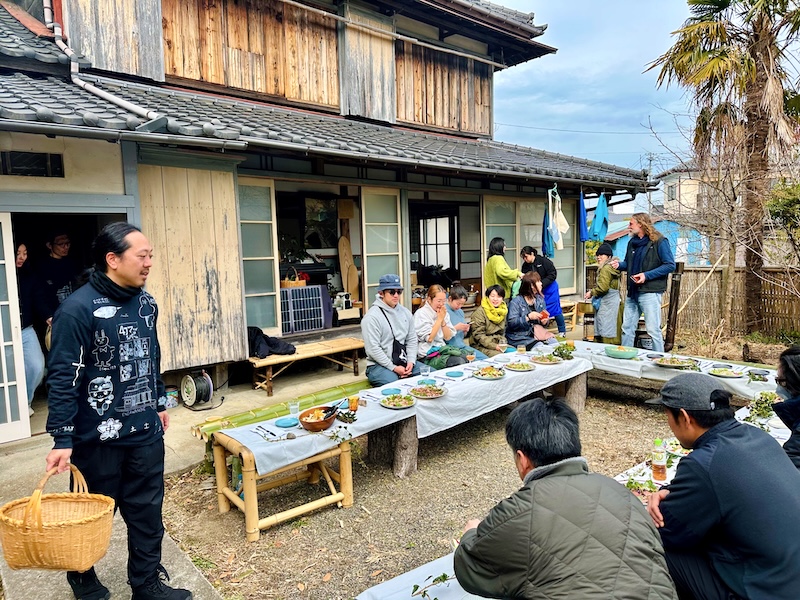
By mid-afternoon on March 10, the friendly, casual pre-event is already well underway. The traditional wooden house sits behind a large courtyard, which bustles with people mingling, drinking out of organic handheld vessels, sitting on bamboo stalk benches, standing around improvised tables made from long planks laid on raw stumps.
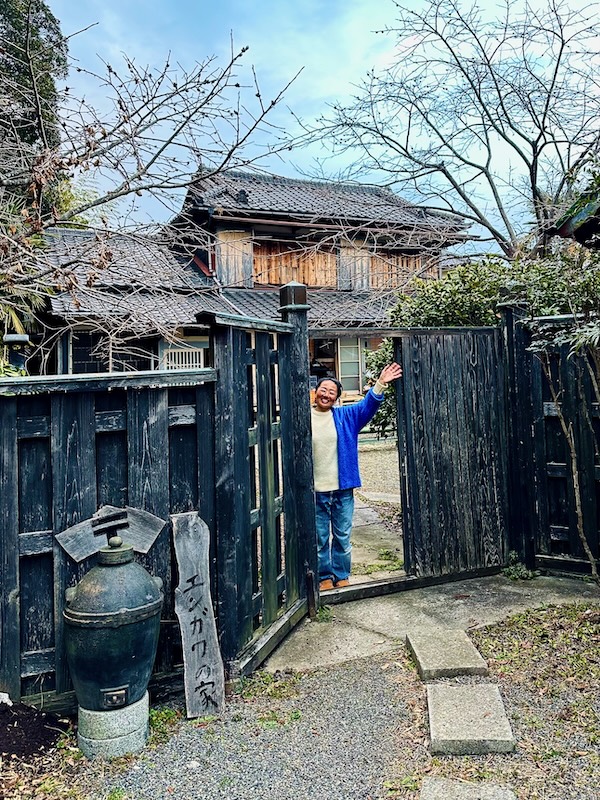
engawanoie almost seems to be alive, permeated by the excitement, its eponymous veranda (engawa) opening out to let fresh air and energy flow freely through its rooms. The 68-year-old house has a deep personal history, ensconced at the end of a path that fades into the overgrowth, situated just off the coast of Hirono, the southernmost town of the notorious “danger zone” in Fukushima prefecture.
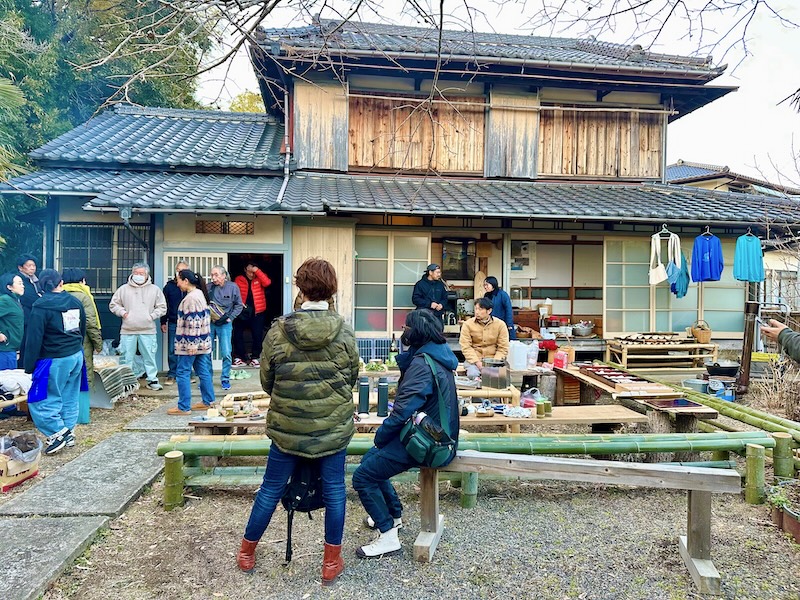
“Welcome to my house,” says Yuko Takahashi, a woman I only knew up until then as the sleek Swiss Embassy officer in Tokyo. Yet she is also a genuine Fukushima local born and raised, no less a surfer at heart, so at home here in the coastal countryside. Oversized sweaters, baggy jeans, comfy leather clogs, a warm smile and a confident laugh.
The house had remained quietly uninhabited by humans for more than three decades before it survived the 2011 disaster and its aftermath. Yuko acquired the property with the land in 2016, joyfully reviving it as engawanoie: a cultural space for social gatherings, art exhibitions, film projections.
Artist Kika Suzuki is busy pouring wholesome hot welcome drinks: home-brewed artisanal herbal teas, made from wild plants that she foraged in the nearby town of Tomioka, inviting us to connect with the fertile soil. Even her earthly ceramic vessels are imbued with natural elements from the surrounding region, infused with hot liquids that seep through their pores. I refill my cut bamboo cup with each brew: mild and soothing, subtly sweet, warming me inside out. Omotenashi in the wild.
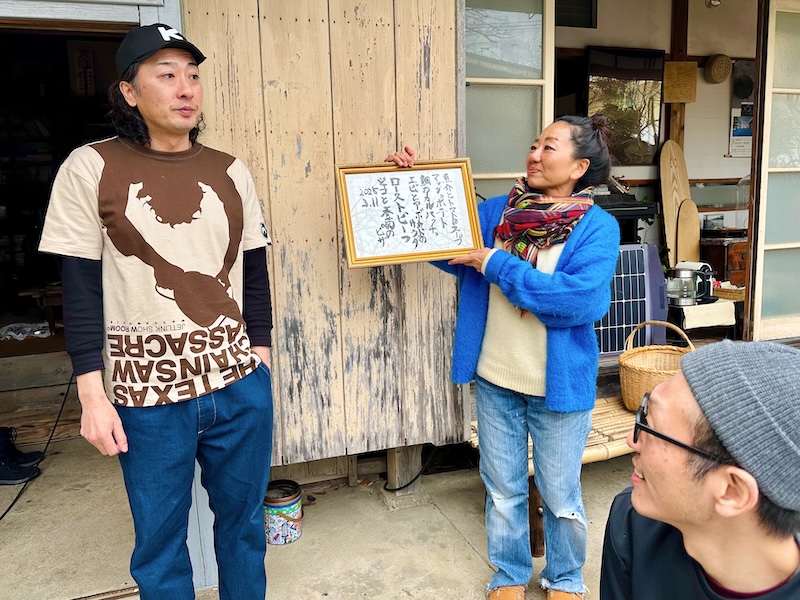
Yuko’s brother Hide lives and cooks at engawanoie, ever since he quit working at restaurants and bars in Roppongi, Tokyo, to relocate back to his hometown of Hirono. He currently works as a cook for TEPCO reconstruction workers at the decommissioned Fukushima Daiichi power plant in the towns of Okuma and Futaba. On March 11, he serves us a masterfully catered lunch of sea bream carpaccio, romaine lettuce salad with shrimp and avocado, buttery mashed potatoes with tender roast beef… and homemade pizza fired in a charcoal brick oven hand-built by their father.
Then, at exactly 2:46 p.m., we hear the sirens. Everyone stops talking, stands up and observes 1 minute of silent prayer, until the sirens cease. After we sit back down, we go around the table, one by one, as each person shares a few words about what this day means to them.
View this post on Instagram
2026 marks the 5th anniversary of “Let’s Ride the Waves on March 11th”, co-organized by three individuals: Soichiro Mihara, an artist whose glass-encased Geiger counter chime “Bell” is permanently exhibited at engawanoie; Yosaku Matsutani, a media studies professor at Otemon Gakuin in Osaka, whose intellectual demeanor and black round glasses remind me of the Japanese painter Foujita in roaring 1920s Paris; and surfer Yuko Takahashi, who spoke with me online ahead of this year’s event, directly from engawanoie.
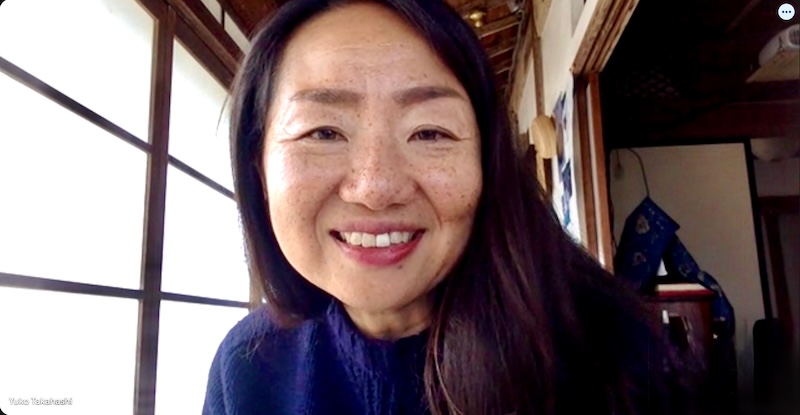
How did you come to acquire this traditional house in Hirono, Fukushima?
Yuko Takahashi: Hirono is my hometown. I was born and raised in Hirono, until I was 18 when I moved to Tokyo for my studies. After the disaster on March 11, 2011, Hirono found itself in a very unique position, as a boundary, or border town. The Futaba-gun district comprises 12 towns that were strongly affected by the nuclear radiation, all within a coastal span of about 30 kilometers. Hirono is the southernmost point of Futaba-gun, and at that time was the northernmost final stop on the Joban train line. So it became a crucial hub for the region’s reconstruction.
Hirono is just north of Iwaki, on the border line separating the dangerous zones. This was decided by the Japanese authorities, but of course, radiation doesn’t have any borders. So even though the town was under an evacuation order, my father was one of the first to go back to work as an engineer at the Hirono power station. Right after the disaster. Then in 2012, when the evacuation order was lifted for Hirono, this town began encouraging residents to return. After just one year… So my mother joined my father.
At that time, my parents’ house was very damaged, so I couldn’t stay there, even though I wanted to see them. Finally around 2014-15, once my parents’ house was completely repaired, I started to visit Hirono more frequently. And I was deeply inspired by how much the land was transforming. Every time I returned, it was so dynamic, so inspiring.
What kind of changes did you notice over time?
During the first few years, of course, the damage from the tsunami was very obvious. In the east part of Hirono, you would see cars and houses turned upside down, the area was really struck hard by the disaster. But every time I returned to Hirono, that kind of object had been removed, and day by day, some ugly, easily constructed houses or apartment buildings suddenly appeared. And the damaged road, so soon you could use it again.
Seeing this huge transformation, everything being rebuilt step by step, I felt that this land is kind of alive, organic, like us. The road, even the sea walls, everything, human made, cement, the construction itself is also kind of organic, all part of one big planet. Like us. Some people were talking about the big sea walls or rapid construction very negatively. I agree, but as I say that, I really feel that I am a part of the planet. Everything is part of our human activities, it’s a kind of natural evolution.
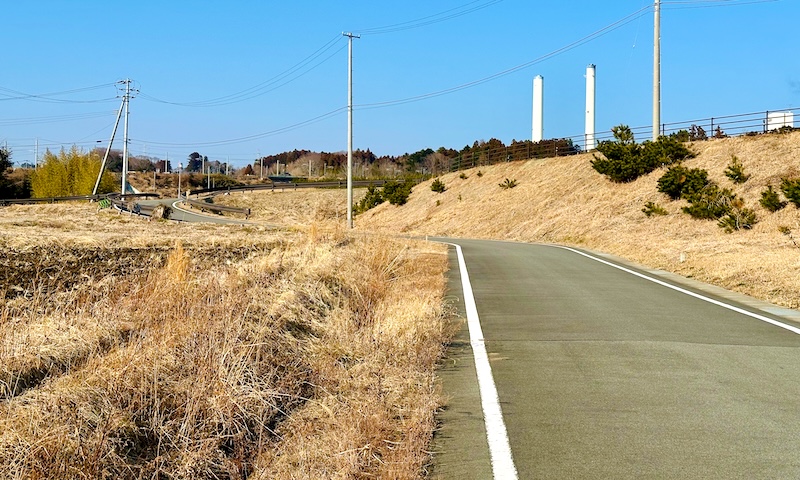
So watching this dramatic transformation gave me a lot of thoughts. And it gave me a concrete theme that I’m still working on today – boundaries, and the body and embodiment, these questions of where do we place ourselves? I felt a strong desire to share, through art, these changing landscapes with my friends, and I wanted a place where I could host them. And that’s when I learned about this house.
engawanoie?
It was love at first sight. I was just standing over there, from outside the gate. I just saw this house from there. It was almost the same like today. Even after being abandoned for 30 years, and a strong disaster, I mean, it should have been damaged by the earthquake. But it looked like nothing had happened. Nothing damaged, and the garden was perfect. It was so quiet, and it was beautiful. Even before stepping into the garden or entering the house, I finalized all the paperwork to take over the property, I was so sure. That was in 2016.
The house was originally built in 1958. It belonged to the grandparents of my parents’ childhood friend, Masako-san. And Masako-san’s daughter, Kana-chan, is my best friend. Later I found out that they had done some light maintenance on the house before the disaster, and that since 2011 my father had been voluntarily coming over to help cut the overgrown trees. That was why it looked so perfect from the outside.
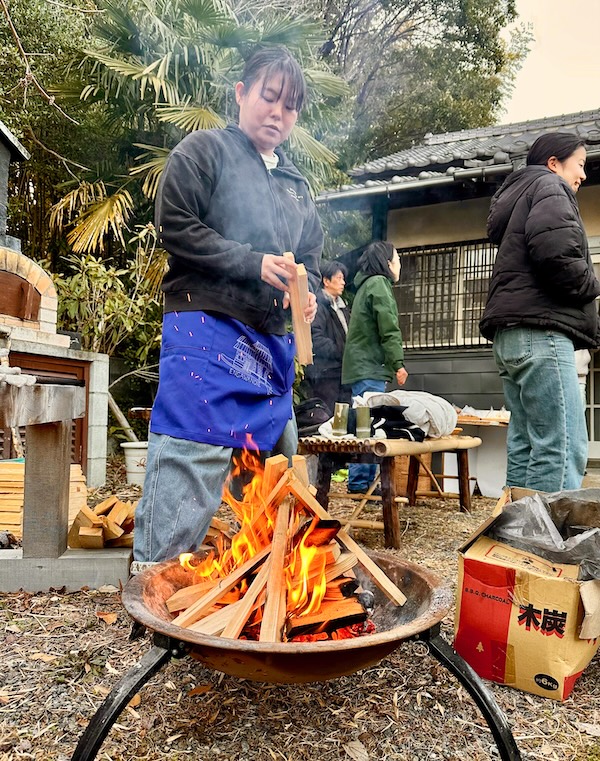
But when we actually entered the house and checked, we found that it did need some repair work, especially the roof and the walls. We were finally able to welcome guests to engawanoie in the spring of 2017. We hosted an unveiling, a special open house where we lit the symbolic first fire. About 15 friends came, most of them from Tokyo.
What eventually inspired this annual gathering of “Let’s Ride the Waves on March 11th”?
It was one evening with Soichiro and Yosaku, who had already visited the house several times, and Yukiko Shikata, who had also attended the original opening of engawanoie. We just had dinner cooked by my brother Hide. Since I go surfing every morning, I felt a bit bad that I couldn’t spend that time with them the next morning. I thought it would be nicer if we could all go together. So naturally, I asked them: Why don’t we go surfing together tomorrow? That was how it all started.
It was the first time surfing for all three of them. Matsumoto-san, a local surfer who was with us at dinner, also came. And when we arrived at Iwasawa Beach, as usual, a lot of our local surfer friends were there. So I introduced the three of them to our local surfers, including the three legends [Gan Sakamoto, Katsuji Suzuki and Osamu Sekine, who first discovered this surfing spot in the 1980s].
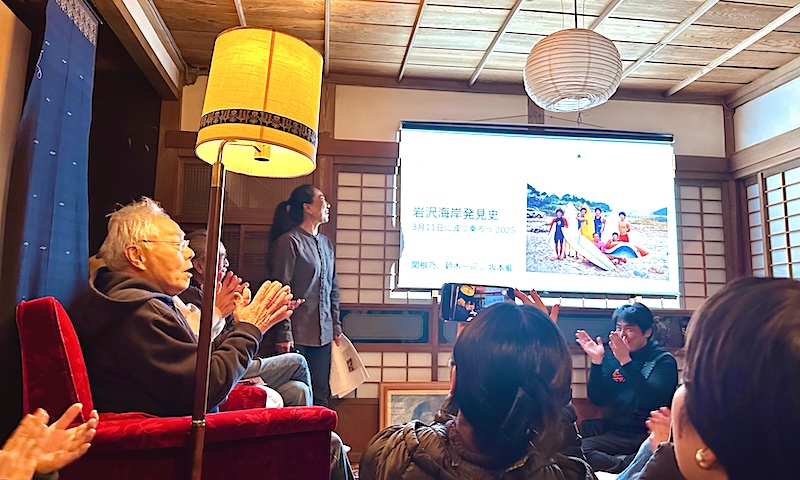
I remember that day, Yosaku and Soichiro were fascinated. They had so much fun, and I can still see them laughing, with big smiles, and they are positively surprised. I also remember that Shikata-san, she is not used to doing activities and sports, right? But she so bravely tried surfing too. It was so cold for her and she was so tired, but when I asked her, Do you want to take a rest? She said no. She was so brave to keep doing it. That I remember. I thought it was wonderful.
Then later, Soichiro suggested turning their experience here at engawanoie into an annual event called “Let’s Ride the Waves on March 11th”.
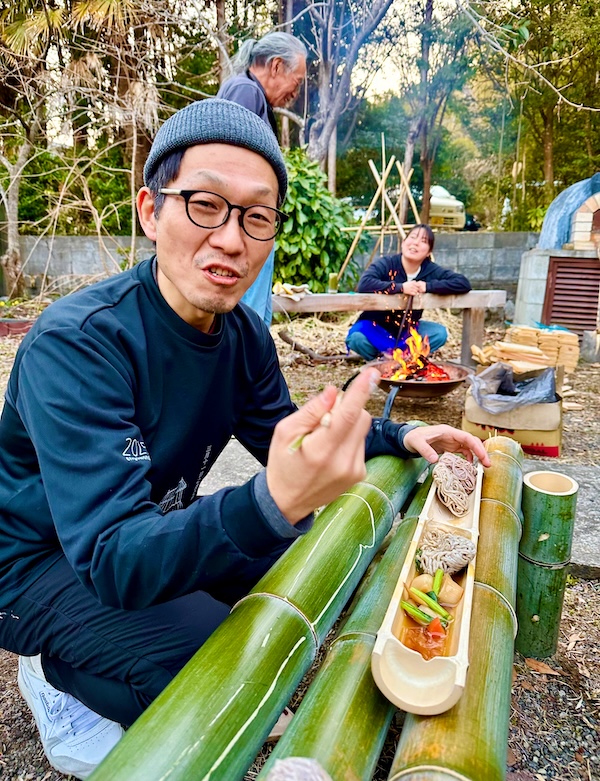
That’s the beauty of this event, that we have no rigid intention. It’s all very organic. All walks of life just naturally gather. I think this happens because the three of us organizers come from different worlds. Soichiro as an artist, Yosaku as a researcher, and I am a local surfer. Another surfer is a professional diver for the damaged power plant, for instance. Different communities blend together and create a joyful atmosphere.
How did you come to meet people like Adam Doering, the Canadian “Surf Studies” professor from Wakayama University?
It was one day in winter, on a really cold winter day. It was still during COVID, so I stayed here in engawanoie and Hirono almost all the time, working from home. That meant that I could surf, literally, every day. Every single morning, including in strong, huge cold, rainy, storm conditions. The waves were massive, and very cold.
So on that day, myself and two other local surfers went to surf at the beach in Tomioka Port. Then came Adam and Simon, his colleague. They were so shocked to see us going out to surf in those conditions. They had just come to this area for research, they did not expect that anyone was actually going to surf. So they came to talk with us. That was the first time Adam and I met.
And then he also introduced you to people like Juik, the Indonesian surfer in Aceh, who joined the event at engawanoie through live video streaming?
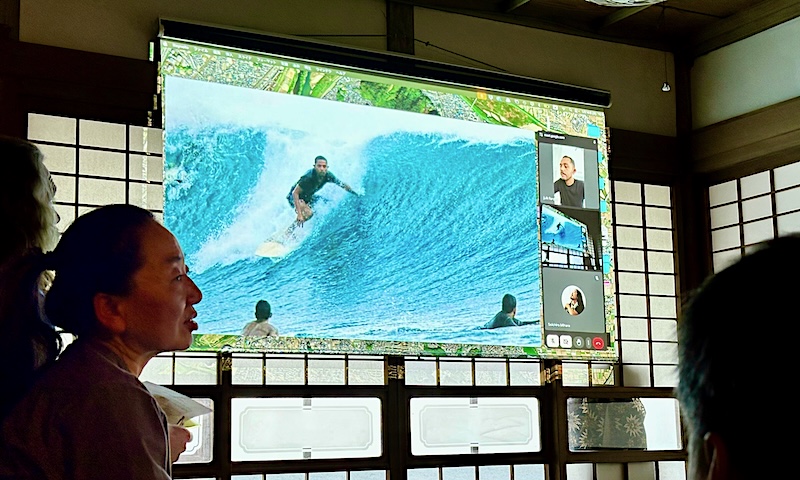
Exactly. After Adam and I met on that legendary day, we communicated little by little, and he also visited me several times, with his students. We surfed together and continued to communicate. Then one day, he invited me to join an online symposium organized by the International Centre for Aceh and Indian Ocean Studies (ICAIOS).
So I talked about the surf situation in Fukushima. Juik was there in the audience, along with the main contact person, a woman named Ika. So we became friends, and both Juik and Ika came to visit me in Hirono last year. Ika will also come to join this year’s March 11th event. So we have a lot of layers, different people meeting, and we are keeping it rolling, like a snowball, getting bigger and bigger.
Actually, how did you start surfing yourself?
Growing up here in Hirono, the ocean was always a part of our life. We love the ocean. My brother and I were literally ocean people, really good at swimming and spending all day at the beach in summer. We saw the ocean every morning. Even from my parents’ house, we could hear the sound of the waves.
Then March 11th happened. At that time, we didn’t know when we could return or exactly what was going on with our hometown. Everything was unclear after the disaster. Nobody knew anything. A lot of my friends and neighbors were affected by the tsunami, and we were all depressed. My childhood friend told me that her sister is really afraid of the ocean now. She didn’t want to see or feel the ocean, because her house had been hit by the tsunami and everything was swept away. Talking about our situation and her situation, I thought, it was so sad.
So one day I said, Let’s go back to the ocean. First I suggested to try diving, because I heard that a senpai had opened a diving school in Izu. So four of us went diving, and we were so enchanted, so happy to be feeling the ocean again. That was in the spring of 2011. Then I really got into diving, every weekend, I went to diving school and enjoyed the ocean. But then I got an ear infection, and the doctor said that it was a bit dangerous to keep on diving intensively.
So then I thought, well, what about surfing? That’s okay for my ear. So I started surfing in summer 2011. I took lessons in the Shonan area, because at that time I lived in Tokyo. And I really loved surfing. Every weekend, Saturday morning, I went to Shonan and then back in the afternoon, then Sunday morning, I went to Shonan again. It was a kind of routine. Then when I went back to Hirono, I found that some surfers had already returned to Iwasawa Beach. So I shifted my weekend routine from Shonan to Hirono.
What is it about surfing that is so… addictive?
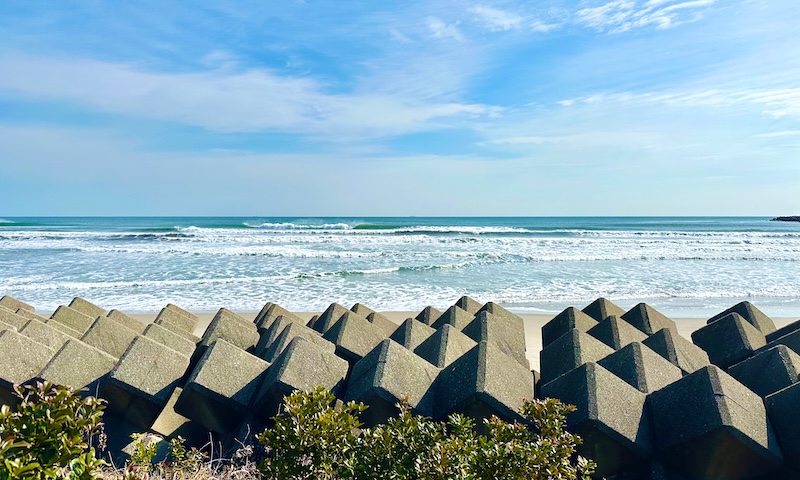
Yes, “addictive” is a really good term! If you go to surf, especially in the morning, you feel kind of in tune with the planet. Or that day. After you jump in the water and you see the sunrise, you are ready to start your day. You are charged up, and you are tuned to the planet.
Why did you decide to host the “Let’s Ride the Waves” event on March 11th?
The question is open. Again, this event doesn’t have a deep meaning. Not at all. We are open to everything. I go surfing every morning. Why not on March 11th? When I surf, it feels so good, you can become one with the Earth. So won’t you join me? Let’s surf together! That’s really it. Like the Aceh word “ngupi” – no reason, just hang out together and just be together. This is kind of our way of inviting each participant to reflect individually on March 11th.
During the 3rd and 4th editions, we had participants from the younger generations, university students, who experienced the 2011 disaster during their very sensitive childhood, junior high school years. Having such a wide range of generations highlighted multiple layers of the March 11th disaster. It’s a key feature of the event, with a high number of repeaters. That’s why the program continues, in a relaxed way, and is constantly being updated year after year.
You started hosting this event in 2022, and the “Let’s Ride the Waves” t-shirts say 2022-2032. What happens after 2032?
After our first year organizing the event, we decided that we would do it for 10 years. Actually, it should say until 2031. But anyway, this year marks the halfway point of the event. [We are publishing a book to mark its 5th anniversary this summer 2026.]
Our dream is for people to practice “Let’s Ride the Waves on March 11th” in their own way, whenever they want. So then we won’t have a formal event, but if you want, you can just naturally drop by engawanoie. Or if you want to do some surfing or meet people, whenever, it’s totally fine.
And my final goal is for a beautiful rumor to spread across the world: If you ride a wave on March 11th, something wonderful happens. This is my dream. That’s it. So I hope that we will enjoy being together, looking forward to having this event for the 10th time. Then I think it’s enough. We enjoy this period. Then we let it go, and let’s see what happens.
Riding the Sea Dragons
(Excerpt of my contribution to the upcoming 5th anniversary book)
Fukushima is sunny but windy, the air crisp. I wear a thick black wetsuit that covers my entire body from the neck down to the extremities of my hands and feet, a skin-tight buffer against the surrounding elements. The ocean is already pushing and pulling me as I wade shyly into waist-deep water carrying a long pink board. I sense a maritime battle ahead.
To my surprise, I don’t feel at all cold. On the contrary, emboldened by my super bodysuit, I have the urge to venture out further and go in deeper, to feel the density of the saltwater buoying me upward as I begin to relax into the flow. In this surfing enclave of Iwasawa Beach, we’re all in it together.
Suddenly, I hear “Jump!” as the instructor gestures for me to lie flat on the board. I hop on, balancing my limbs with the excitement in my core. “Paddle!” he shouts, as I feel a vague surge coming from behind. I paddle furiously, bobbing and splashing as the ocean roars behind me. And then, I feel the board rise underneath me, overtaken by the speed of the wave, raging forward in a sprint that frustratingly fades into the shallows before I can stand up to its full power.
Next time, I’m ready. Starting from further out into the sea. Jumping farther back on the board at just the right time. Finding that sweet spot that makes me feel like I’m smack in the saddle, riding a slithering sea dragon, sliding across its rippling scales, till it finally dives back into the sand.
More on engawanoie.