

2nd Gardeners Assembly at Zone2Source. Credit: Thomas Lenden
During a full moon weekend, on the evening of May 30 and the day of the 31st, artists, gardeners, farmers, researchers and enthousiasts gathered in two artists gardens of Zone2Source, a testing ground on art and ecology in an urban park in Amsterdam, to engage in experiments rethinking our relationship to soil and the garden as active participants in ecosystems.
When is art a garden, and when is gardening art? While the garden for centuries was an important inspiration for artists, more recently it is no longer the representation of the garden but gardening as artistic practice that has surfaced in contemporary art dealing with ecological inquiries. While still appearing as a micro-world in which concerns of the world at large are being depicted and a new world foreshadowed, the garden and gardening has become a site and a practice for artists to reshape our relations with our living environment. Questions such as, what is gardening as an intervention when we imagine the garden as a place for multispecies collaboration, and how do we humans participate constructively as material, spiritual and relational bodies in the garden, means actively exploring our role in ecosystems while acknowledging the need for cultural transformation at the heart of ecological crisis.
The garden as art and art as gardening
Zone2Source as a testing ground for art and ecology in an urban park, that once was designed for a world exhibition on horticulture, the 1972 Floriade. We inhabit these modern and colonial spaces, which brought together flora and fauna from all over the world in one place and one soil, differently, exploring alternative imaginations and practices of living and being in a shared world through artistic imaginary and practice. Offering our glass pavilions, artist gardens and outdoor spaces as a living lab to artists for research and projects around ecological inquiries, we create spaces for collaborative public human and more-than-human meaning-making and learning through embodied and artistic methods.
Gardens have become increasingly integral to Amsterdam’s cultural landscape. Many art spaces have developed gardens alongside their exhibition programs, while artists adopt gardening itself as an artistic practice. At the same time, community gardens have proliferated across the city, often blurring the boundary between collective cultivation and artistic research. What these initiatives share is a desire to cultivate different relationships with the earth. These developments formed the backdrop to the second Gardener’s Assembly (the first one took place during the exhibition Future Gardening: Gardening as artistic practice for multispecies worldbuilding late 2024 and was the start of an ongoing Future Gardening exchange network in Amsterdam) organized as part of Future Gardening @ Soil Assembly, an event supported by the Horizon Europe program SoilTribes. This two-day program invited artists, gardeners, researchers and local communities to explore gardening as a shared cultural and ecological practice.
Nocturnal Ecologies, evening of May 30th in the Shadow Garden
Future Gardening @ Soil Assembly, organized by Alice Smits, director/curator of Zone2Source, together with Anne Diestelkamp whose cultural work centres around gardens and gardening, began on the night of the full moon in the Shadow Garden, a former walled Belgium cloister garden we maintain since 2021 together with artist collective the Onkruidenier. This collective, consisting of artists Jonmar van Vlijmen and Ronald Boer, explores through artistic practices how we as human bodies and spirits can engage the garden, as a shared multispecies environment, reshaping our relations from a different understanding of our dependencies on life around us. For this evening devoted to nocturnal ecologies we organized a program of readings, talks, and workshops, in which the Onkruidenier was joined by Anne Diestelkamp, Chen Zou and a group of participants.

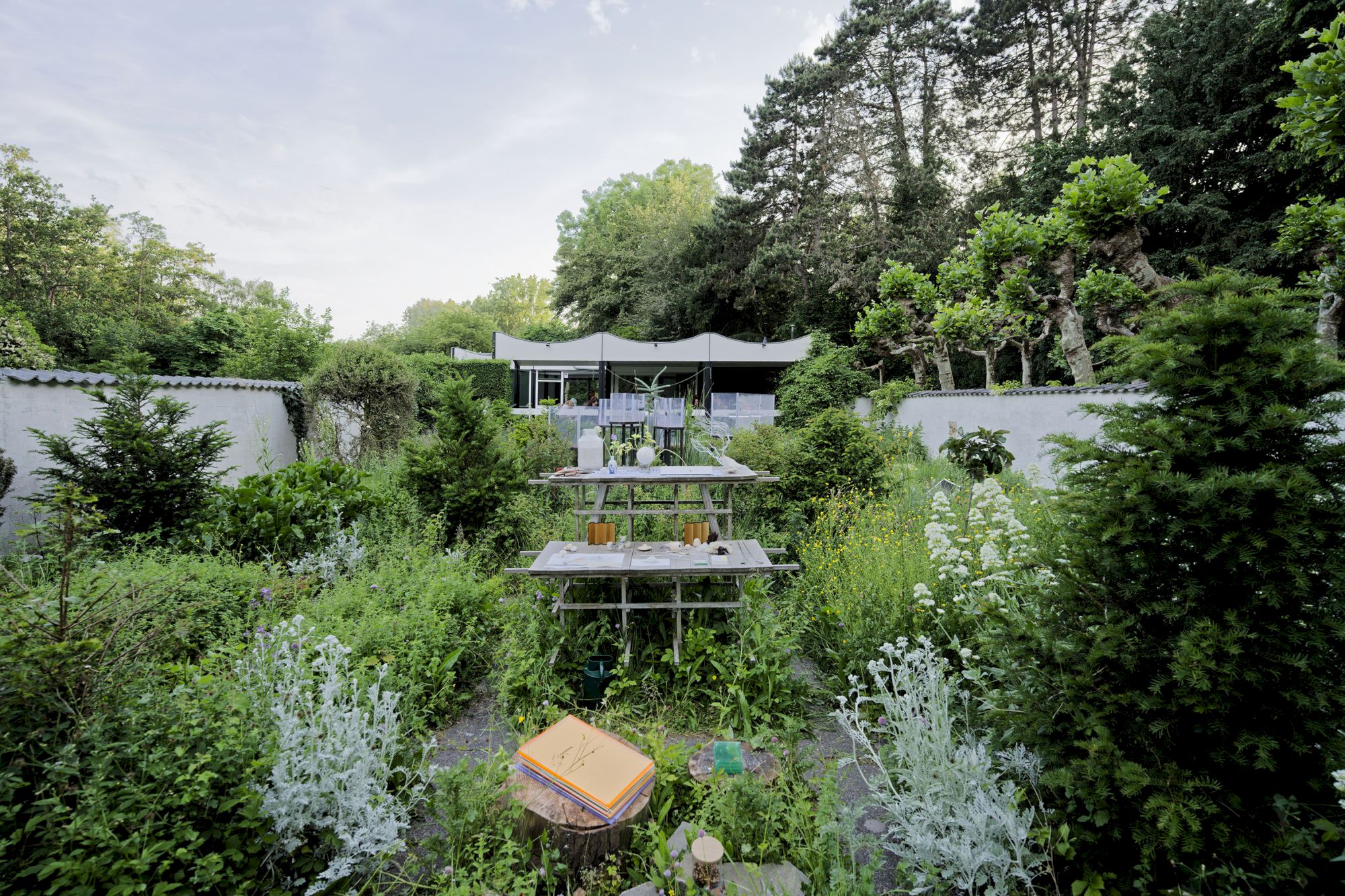
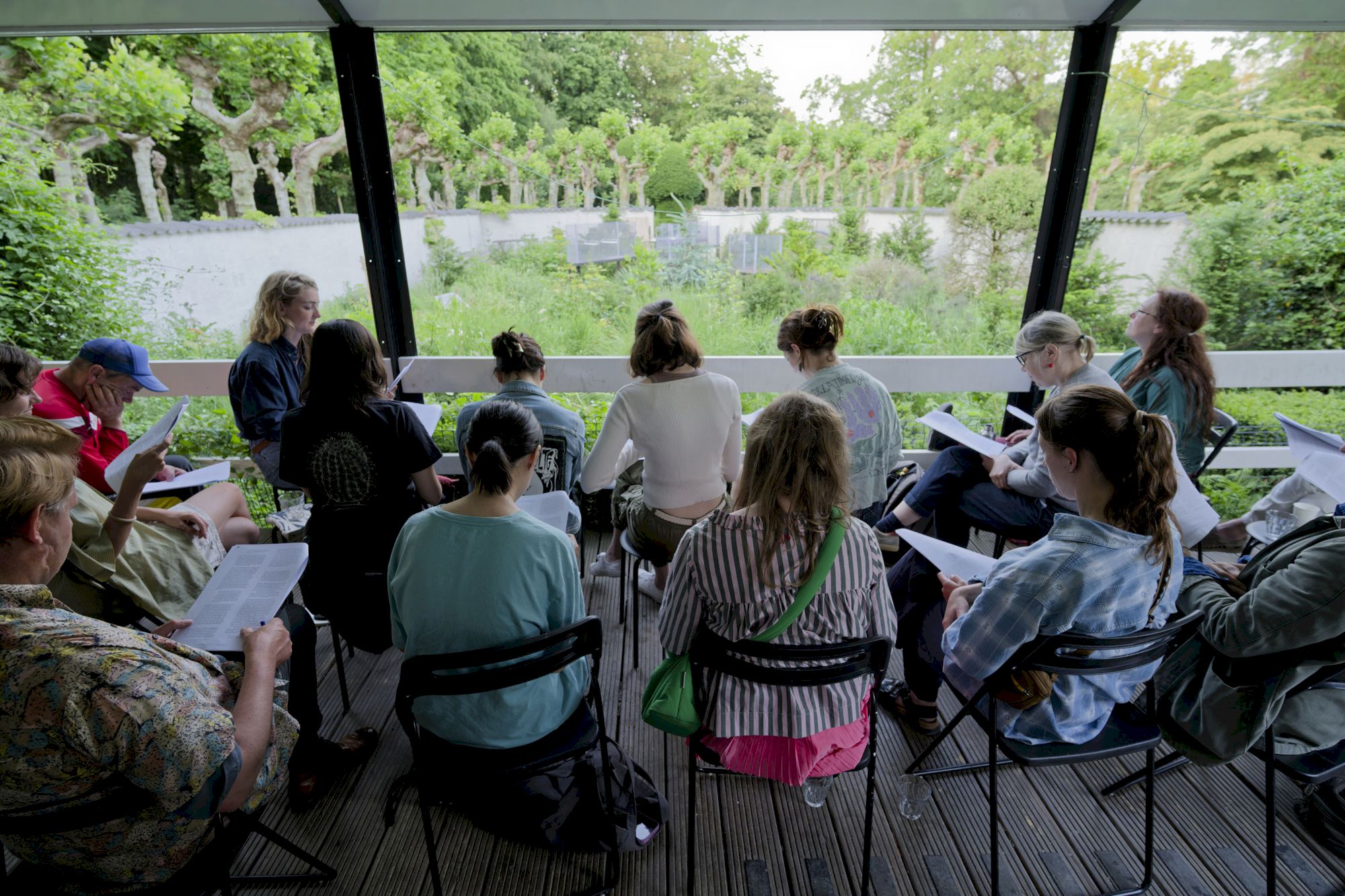
Gardens are associated traditionally with sunlight, productivity, and growth. Nocturnal gardening, though, is shaped by darkness and altered perception. It invites a slower and multi-sensory engagement with ecology and creates a space for close attention, care, and imagination. The evening opened with a collective reading by The Perennial Reading Group – an open reading group led by Anne Diestelkamp, which meets in gardens across Amsterdam to read about ecologies. Seated on the veranda of what was once the Belgian Pavillon of the 1972 Floriade, we overlooked its former monastery garden. Enclosed by whitewashed walls, it is planted with young conifers, Jupiter’s beard, sage, mint, evening primrose, tall grasses, buttercups and wild oregano.As daylight slowly faded and dusk settled over the garden, we took turns reading out loud texts by Anaïs Tondeur, Germain Meulemans and Beatrice Zerbato, each exploring the intertwined relationships between soil and atmosphere, darkness and subterranean ecosystems. We spoke about caves and underground worlds, about the consequences of light pollution, about moths and bats as overlooked pollinators, and the countless ecological processes that begin only after sunset.
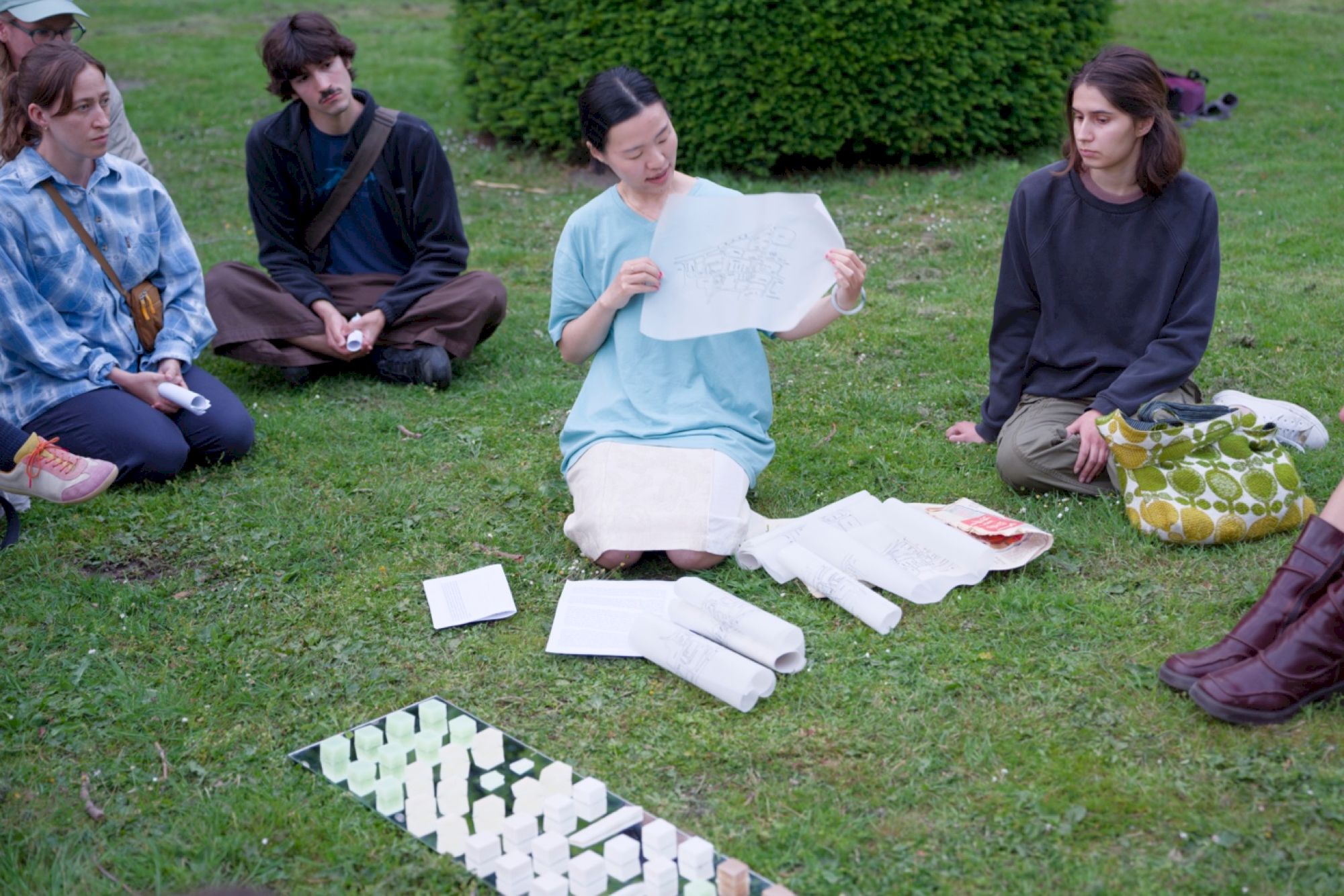
The reading was followed outside the gate of the Shadow Garden by a food intervention by artistic researcher Chen Zhou, who explores darkness and the invisible processes unfolding underground. For the occasion, Zhou created an edible landscape of layered four-color jellies that translated the vertical stratification of the earth into food. Each layer represented a different condition of the landscape: government-led ecological transition through newly planted trees, an artificial topsoil covered with moss, the underground concrete left behind by a former cement factory, and the deeper soil beneath. By inviting participants to consume this geological cross-section, Zhou drew attention to the ways landscapes are often presented as clean, stable and “natural” while the complex—and sometimes contaminated—histories below the surface remain concealed.

As night fell, de Onkruidenier finally opened the gates to the walled Shadow Garden. Darkness had settled over the park, and the garden hummed with moths. Night-blooming plants had opened their petals now, their white blossoms reflecting the moon. Against this backdrop, de Onkruidenier staged a quiet, almost ceremonial intervention. The garden walls are topped with dark gray, S-shaped roof tiles, some of which have disappeared over the years. A new, white porcelain roof tile by artist Jacqueline Heerema, who explores the relationship between clay and the moon, was placed carefully into a gap, completing the roof and connecting the earthly material of clay to the celestial rhythms above.
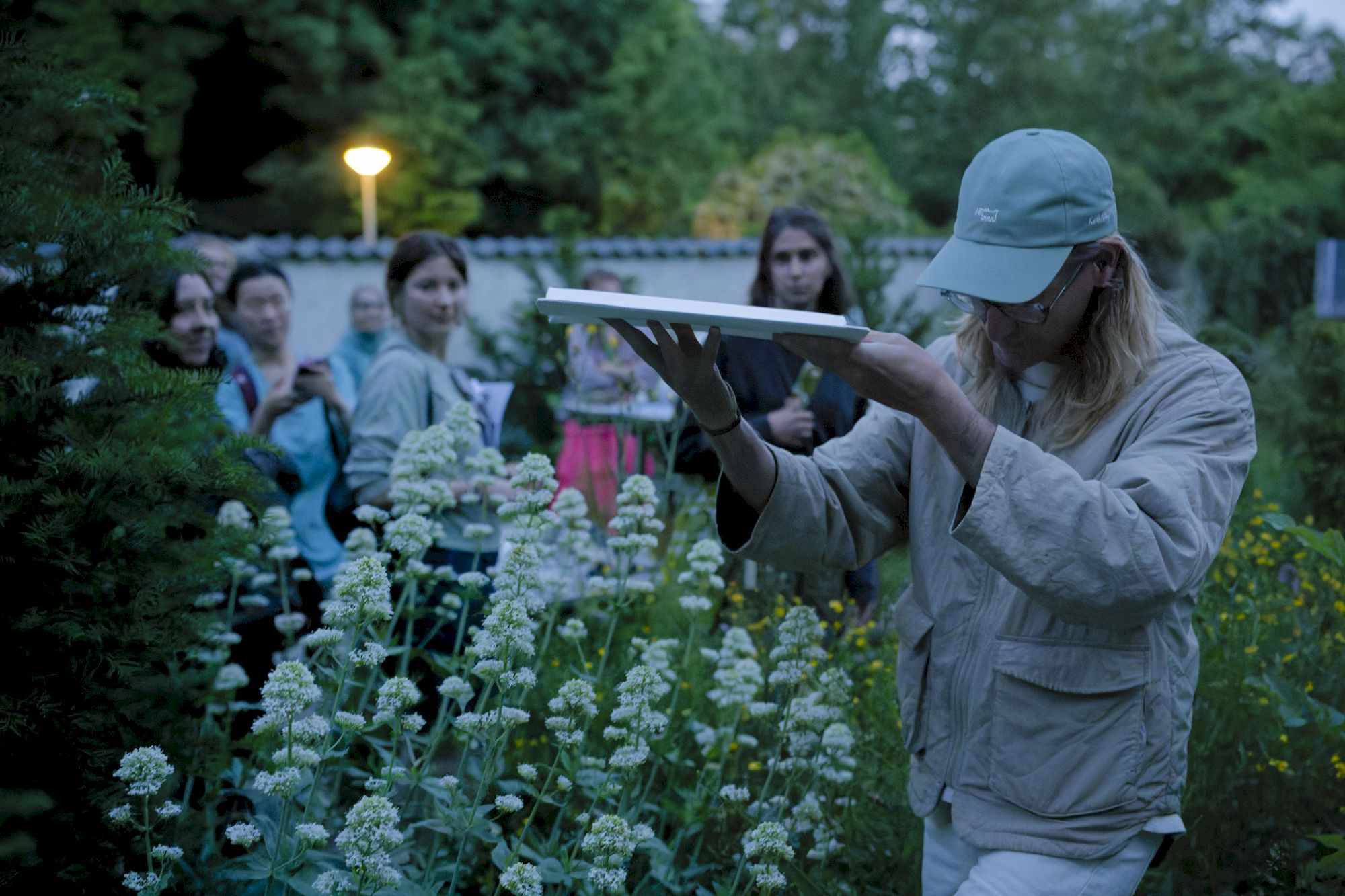
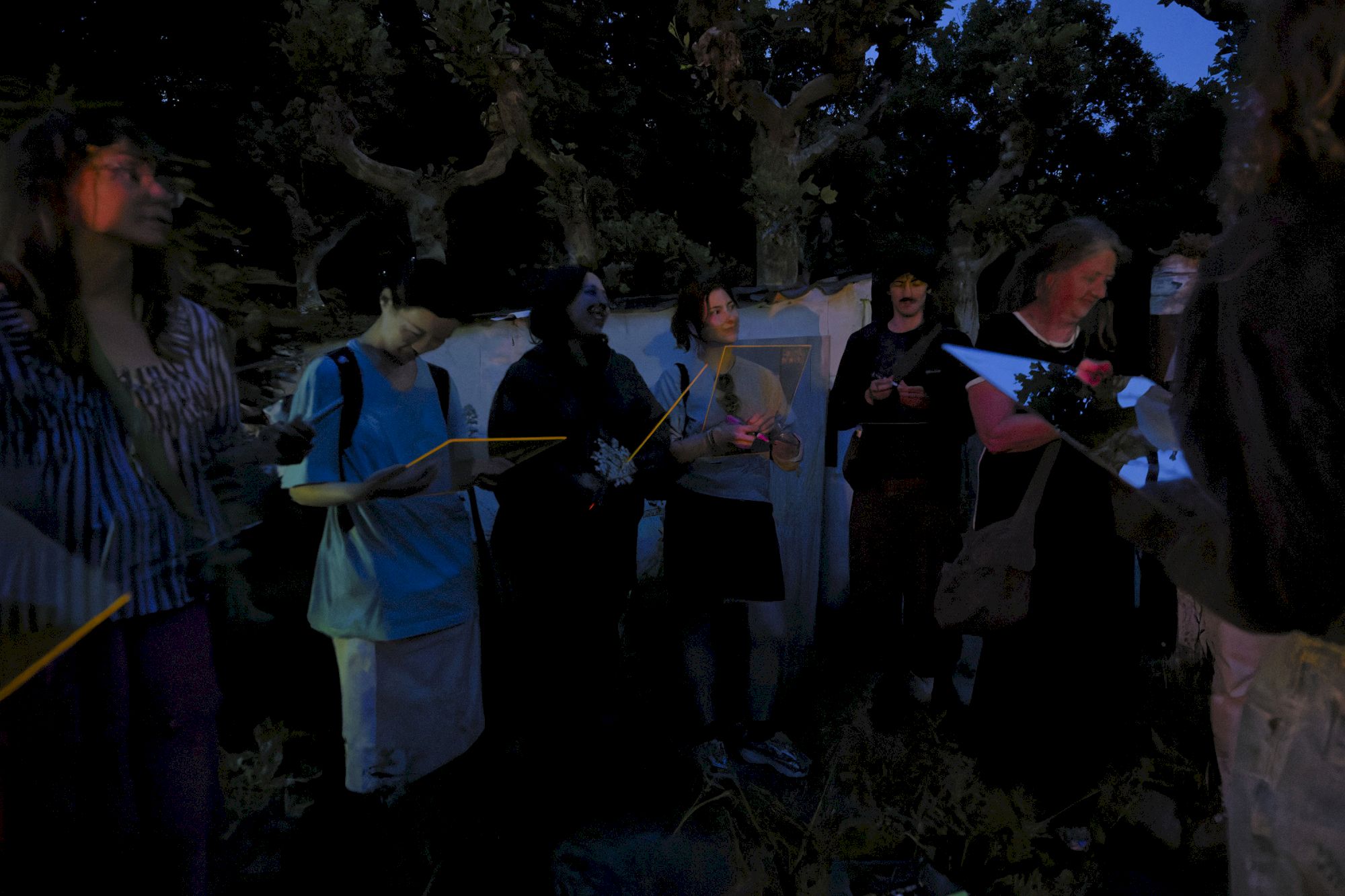
Bats had begun circling above us by then, darting through the air in pursuit of moths. This was when we began our night-pollination workshop. De Onkruidenier and Anne Diestelkamp invited participants to imagine themselves as moths for the next hour, navigating the park primarily through sense of smell rather than sight. Equipped with transparent plexiglass sheets and pens, we dispersed into the darkness, pausing beside elderflower, jasmine, linden and rhododendron.
2nd Gardeners Assembly, May 31st
The next morning we returned to the gardens for the Gardener’s Assembly. We gathered in the artist garden of the artist collective Genomic Gastronomy, located a stone’s throw from the Glazen Huis where Zone2Source hosts its exhibitions, in a former animal enclosure where the basin which housed two seals during the 1972 Floriade is now turned into a small pond. Here, the collective, consisting of Zack Denfeld and Catharine Kramer, has since early 2024 explored the technologies and ecologies of human food systems through cultivation, observation and experimentation.
The workshop Soil & Taste Test opened with a ceremony to rename the Genomic Gastronomy Garden “Extreme Salad World”. Inspired by near-Arctic gardener Stephen Barstow’s legendary 200-plus-ingredient salad garden, the workshop imagines a biodiversity-maximizing kitchen garden packed with as many edible plant species as can reasonably fit into a small urban plot. Rejecting monoculture and agricultural efficiency, the garden embraces what the collective describes as “vegetal hedonism”: a dense landscape of perennial and unconventional edible plants. The city becomes a place of extreme cultivation and flavor.
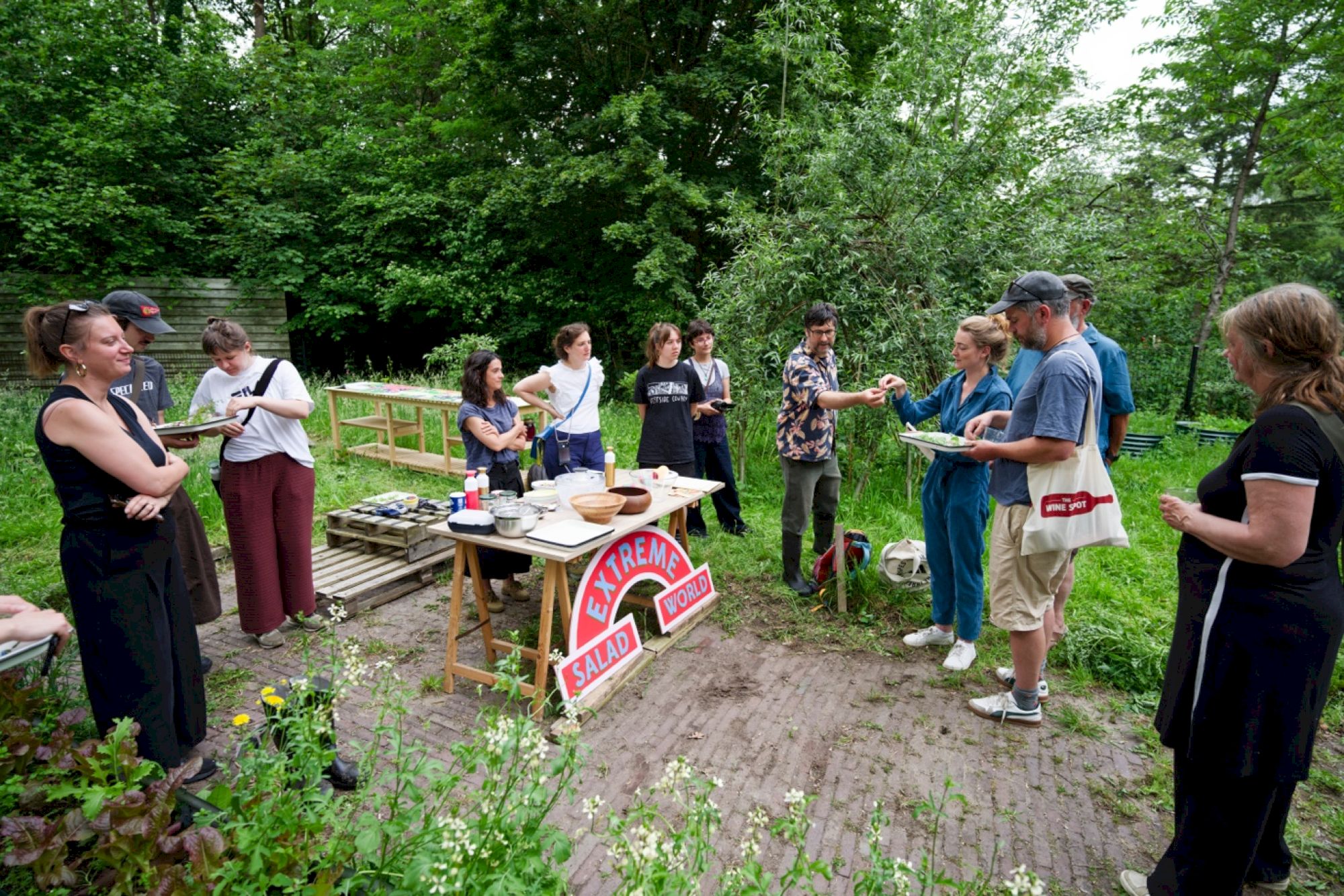
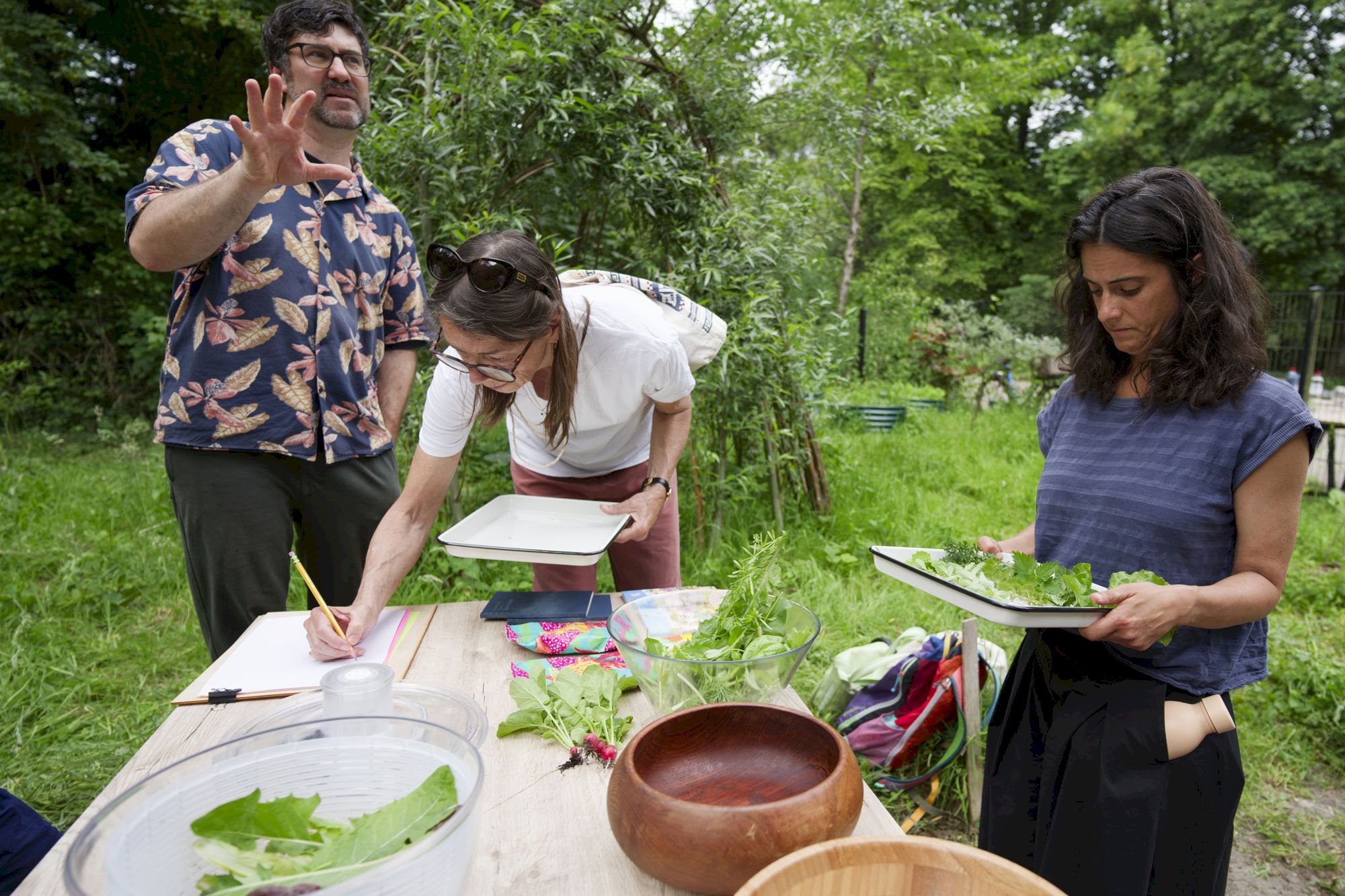
With enamel trays in hand, we wandered through the garden, on the lookout for anything that struck us as edible. We spotted dandelion and plantain, geraniums and daisies, nasturtium and nettle, sticky weed and sorrel, ground ivy and wild garlic. Using custom software, we documented the garden’s late-spring edible biodiversity, and artist Zack Denfield explained how each plant interacts differently with the soil and how, together, they form a regenerative ecosystem. By the end of the workshop, our collected specimens had become a small herbarium and an extreme salad: the dozens of edible plants that we’d gathered were transformed into an exceptionally biodiverse meal. Lunch was served on a tablecloth printed with a map of European soils, with dishes arranged according to the distance they had travelled: from the hyperlocal (foraged on site), to the regional (North Holland), to the bioregional (Atlantic mixed forests of Europe), all the way to the continental.
The afternoon, for which we moved to a field of grass surrounded by willows in front of he Shadow Garden, was dedicated to the 2nd Gardener’s Assembly: we had invited participants from across Amsterdam whose practices revolve around gardening in very different ways: artists, community gardeners, activists, educators, researchers and neighborhood organizers. Their gardens were equally diverse: they were nomadic, urban, rural, they were on rooftops, run by communities or artists, and they had activist agendas. What they shared was a deep commitment of caring for the soil around them.
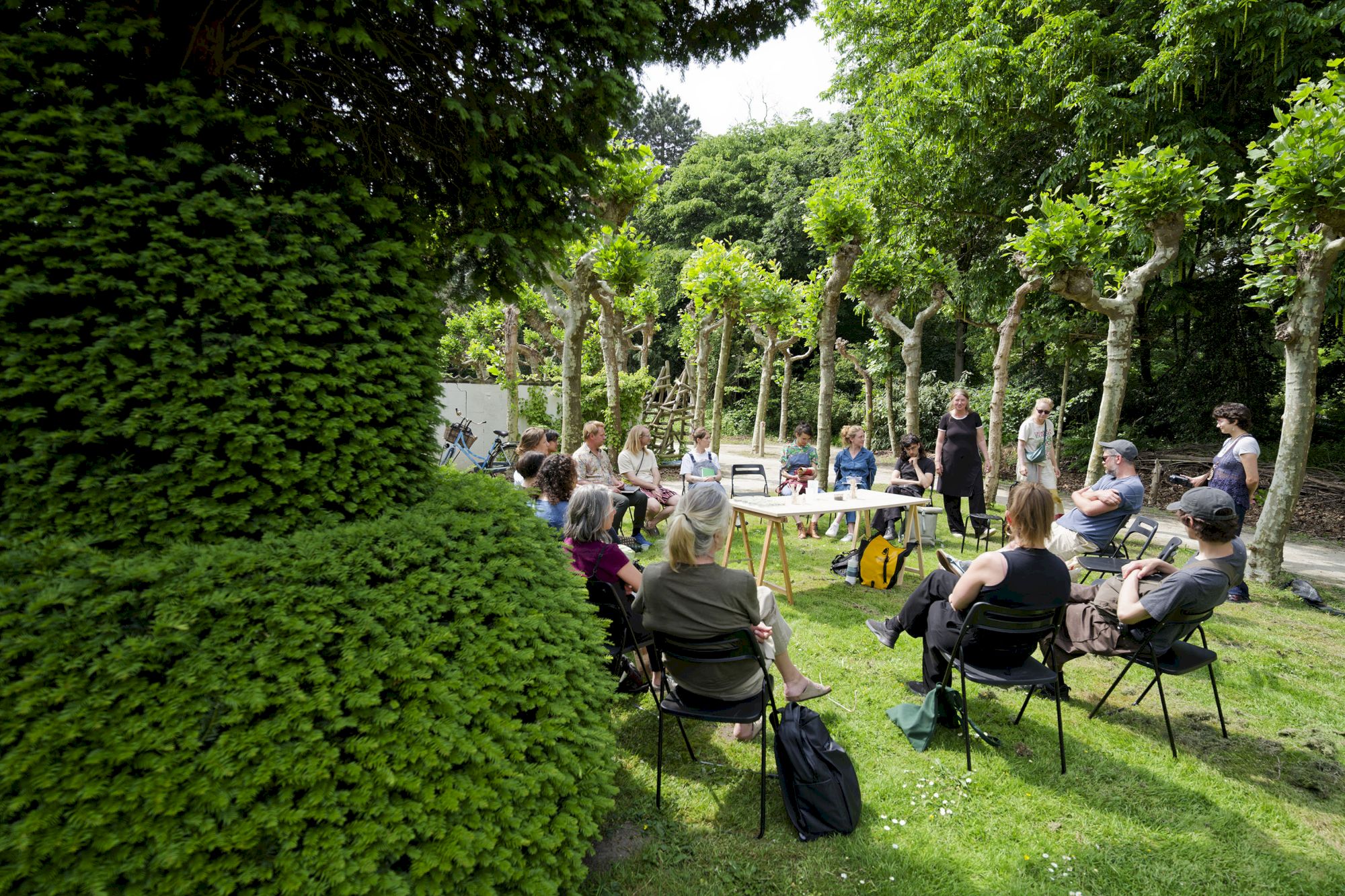
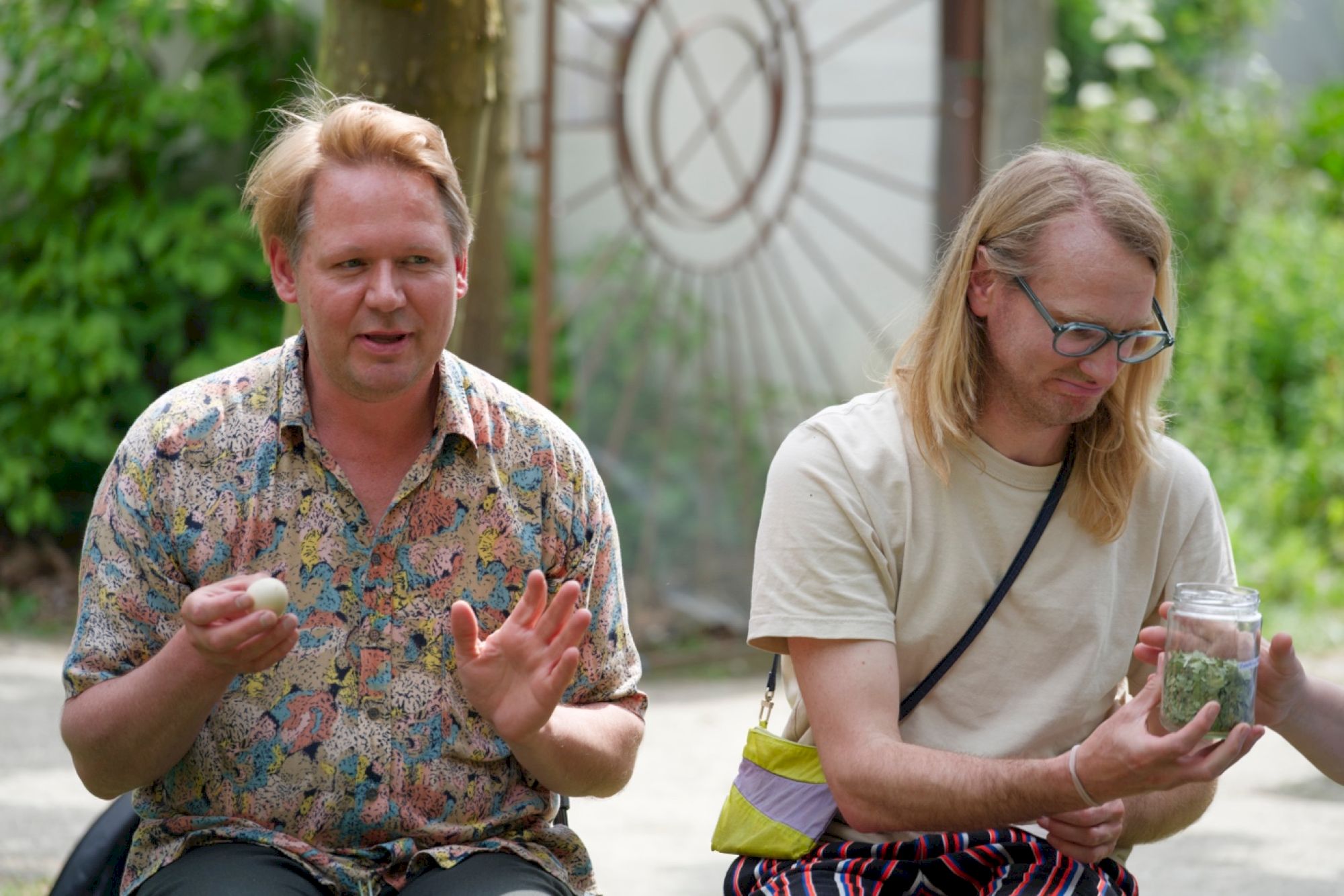
We had asked all participants to bring a particular object from their garden—a tool, a seed, a leaf—as well as a handful of soil. Gathered in a circle in front of the Shadow Garden, these objects became prompts for storytelling. One participant spoke about what they called the smallest tree on earth; another carried a thumb-sized notebook filled with delicate drawings that documented the seeds they had planted over the years. Someone else had brought goose grass, remarking that it was “the only weed I don’t feel guilty pulling out.” As the circle continued, we listened to stories of compost heaps, difficult clay soils and self-seeding plants. The soil that each of them had brought, it seemed, was not simply a substrate, but an archive of memory and labor.
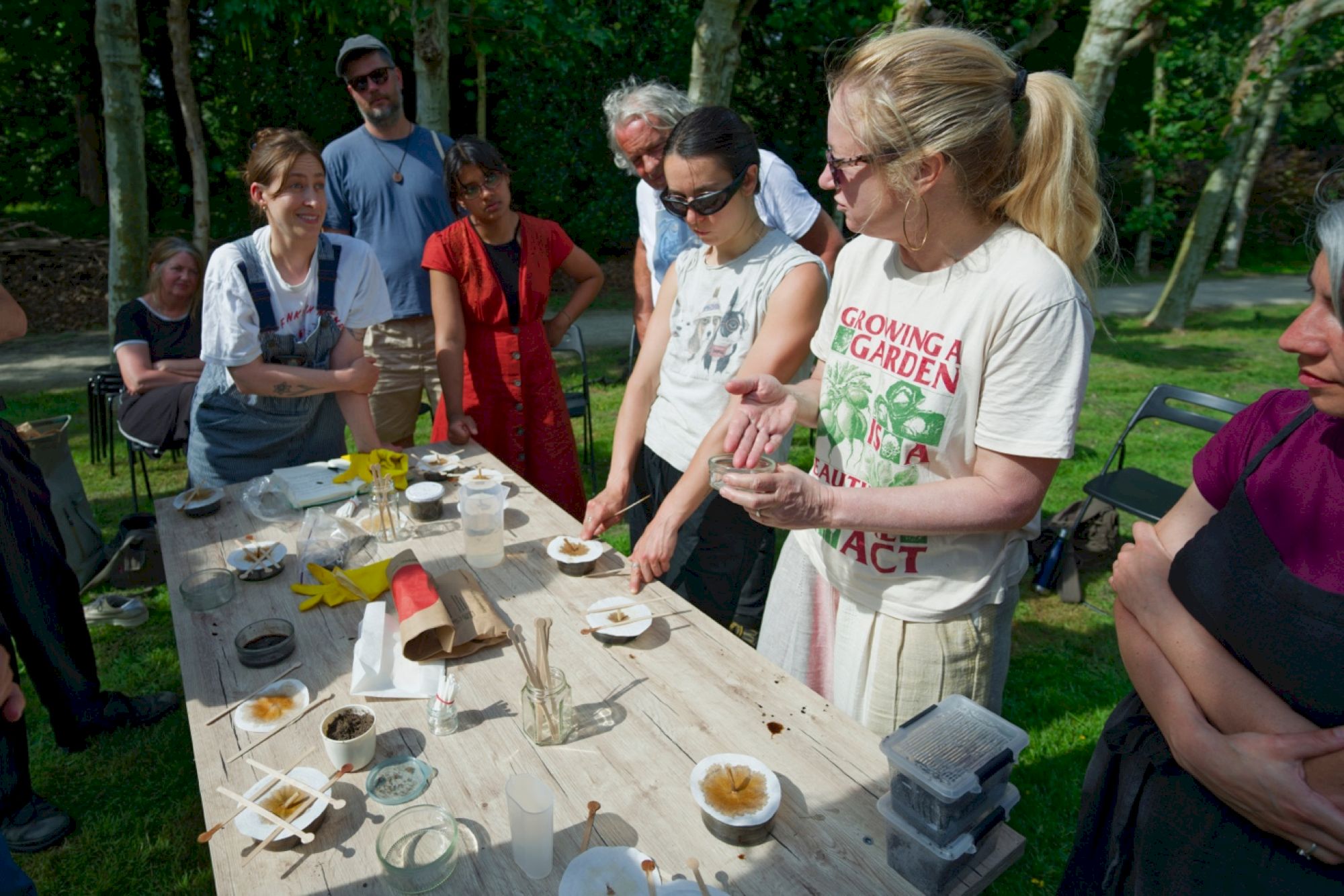
As part of the assembly, the artist-educator Dana Wait facilitated a chromatography workshop that allowed us to create “soil portraits” from the samples we had brought with us from our gardens. The scientific technique, commonly used to assess the health of soil samples, produced intricate circular patterns whose colors and textures differed strikingly from one sample to the next. These images, side by side, revealed the remarkable diversity of Amsterdam’s soils and became the source for further storytelling on connections to soil.
Towards the end of the day, we invited participants to share their ideas and visions for a gardener’s network. Since our 1st Gardeners Assembly we started a garden network based on the idea to visit, exchange and learn from eachothers gardens, and we shared a deep wish to expand our gardeners network to visit eachother on a regular basis. Writing down our desires and ideas for a gardeners network conversations ensued on how we can empower eachother and build on collective structures. All these gardeners – the artists, the activists, the community facilitators, the urban farmers, the enthousiasts – shared the same challenges and were asking themselves the same questions: they are all dealing with ever dryer summers; they respect the weeds; they are eager to learn from each other and, most importantly, they want to nourish the soil and connect other people to an understanding of soil health as the key to ecological regeneration.
More on Zone2Source and Soil Assembly
More on SoilTribes