

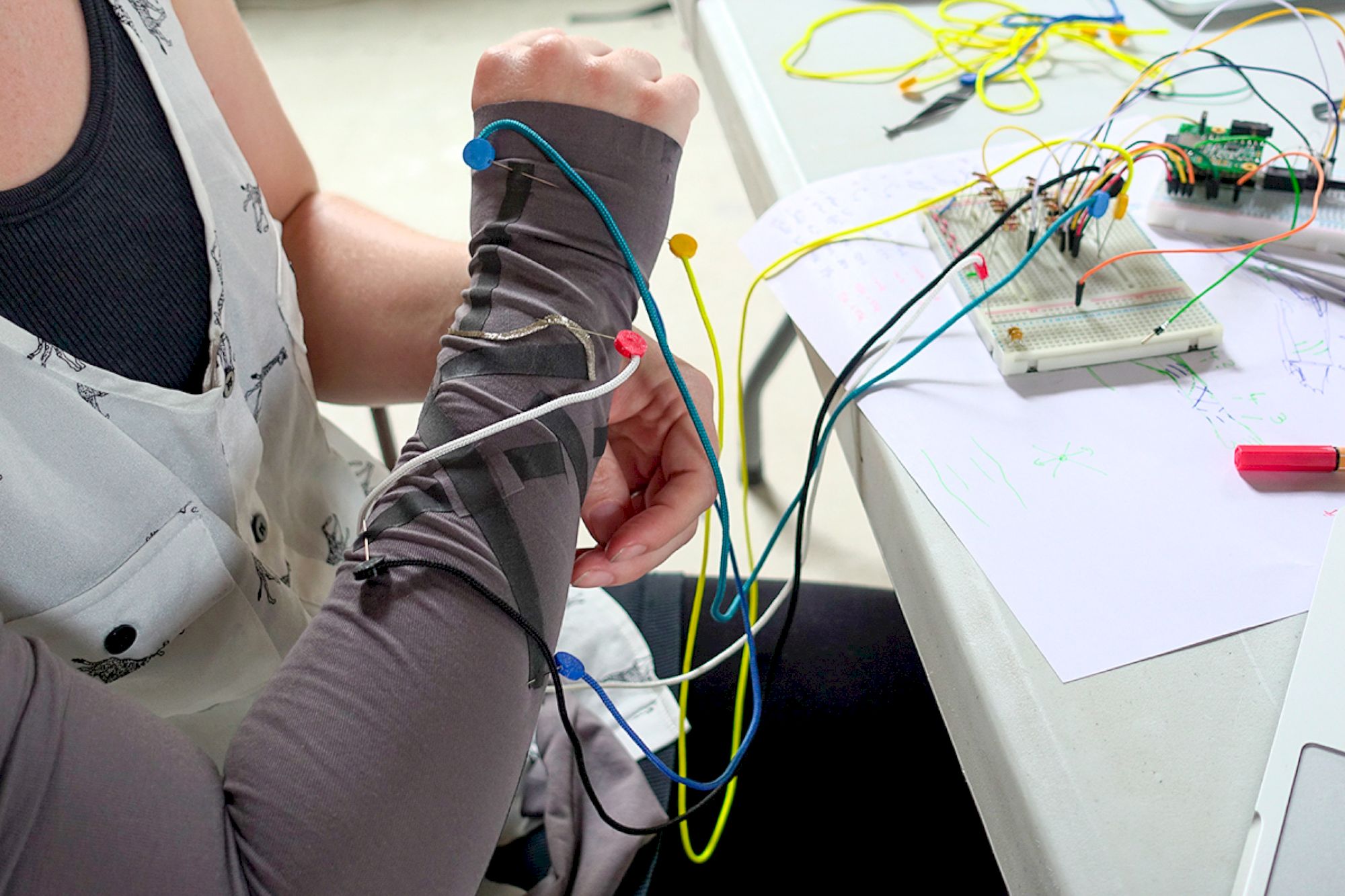
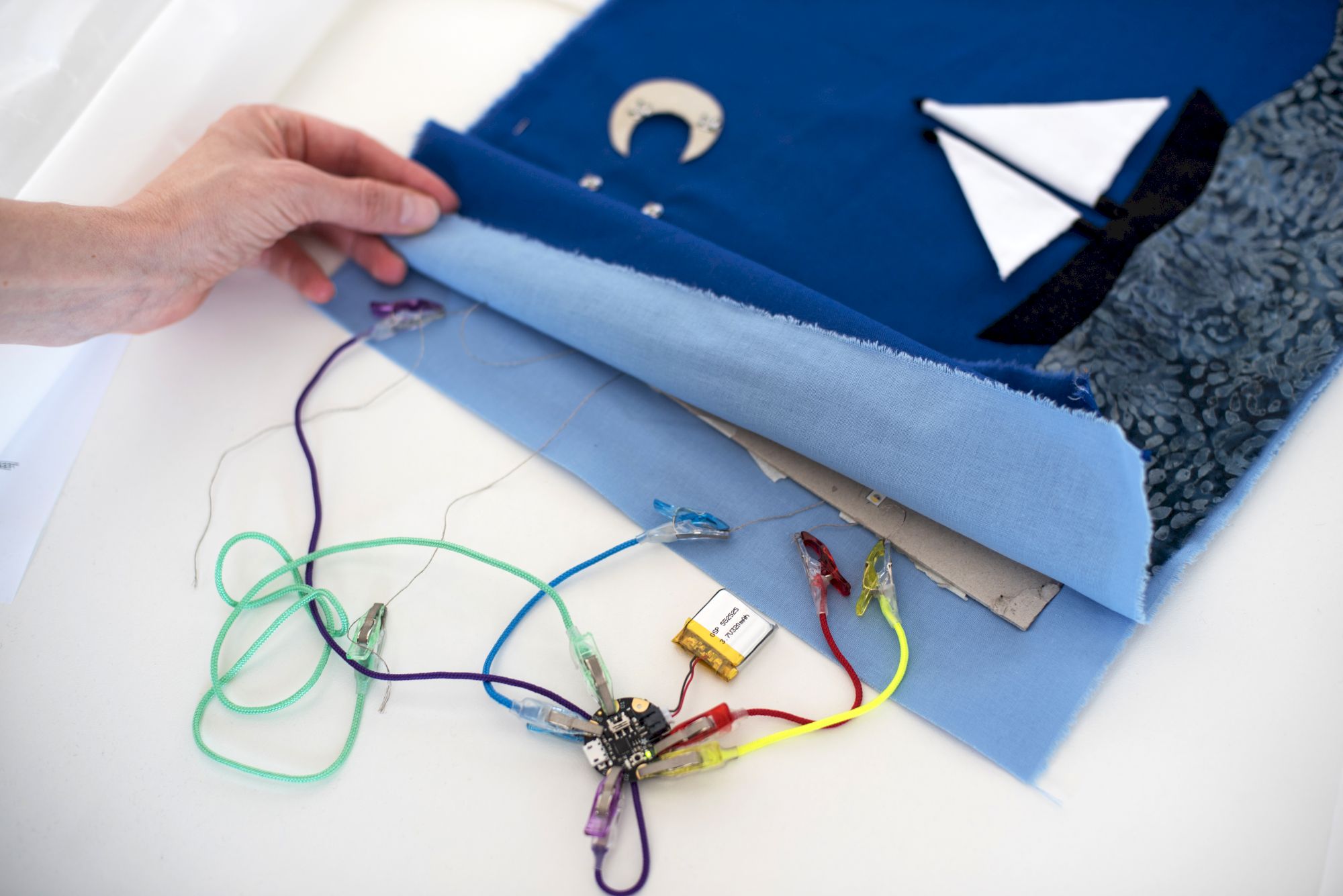
Pin Probes used to measure a sensor sleeve and connect it to conventional electronics at Summer Camp, an eTextile community meeting in France. Credit: Irene Posch
Makery is publishing several essays excerpted from the 3d Feral Labs Node Book, “Fa Fa Futures”. This chapter by Irene Posch reflects on the role of tools in shaping collaboration, inquiry, and knowledge production within lab-based and community-oriented practices.
The Feral Labs Node Books are a series of interconnected publications produced by the Feral Labs Network within the framework of Feral Labs (2018-2021) and Rewilding Cultures (2022–2026). Combining theoretical reflection, artistic research, ethnography, speculative writing, and visual documentation, the books foreground practice-based knowledge and experimental forms of collaboration. The Feral Labs Node Book #3: Fa Fa Futures explores how feral artistic and research practices interact with institutions, infrastructures, crises, and systems of control. The volume focuses on accountability, survival, care, and the continuation of practices beyond temporary funding structures.
by Irene Posch,
Discussions about labs often centre on spatial-social co-presence—the ways people interact and collaborate within shared spaces. However, in this article, I want to shift the focus towards the tools we use that shape these interactions. While a lab, a setting, or a community can itself be considered a kind of tool, my attention is focused on the tangible materials and instruments we use, and how we, both individually and collectively, have the power to transform them. Prototypes, collaborative settings, and temporary communities play a crucial role in this process, enabling us to inquire, propose, and experiment with new tools.
In this article, I recount my own journey of creating tools for electronic textile practices—a field that bridges electrical engineering and textile crafts. What began as a small exploration among a handful of practitioners evolved into a multi-year project spanning diverse collaborative settings. These settings—spaces for critical discussions, making, and reflection—allowed us to consider new tools not just as preferable or ideal but as possible, enabling a broader inquiry into not just what but how we (can) make, which, in turn, shapes our practices, perspectives, and culture.
Personal practice as driving force for new tools
Textile crafts are among the oldest arts practised by humankind, dating back to the prehistoric making of strings. Since then, they have played essential functional and aesthetic roles, shaping human experience, development, and civilisation over centuries. Electricity, on the other hand, has only had a sustained impact since the late nineteenth century, while digitisation followed almost another 100 years later. These different histories, traditions of production, and areas of application distinctly shape the thinking, understanding, and productive means of textiles, electronics, and computation.
While these fields are markedly interdependent, textiles and (electronic and digital) technology are predominantly considered to be orthogonal. They are often associated with disparate gender stereotypes: textile crafts with domestic, female work, and electronics with skilled, male tasks. My practice of many years is situated within this intersection. I explore textiles and electronics that condition and propose distinct qualities and assumptions, and the specific inquiries and insights their intersections may allow (Composition 1 below).
The actual act of combining textile and electronics within artistic, experimental, and functional artefacts inspired me to closely study the tools used in these processes. There are very practical reasons why it is important to reconsider the tools we use: in any given craft, there are only a few techniques that do not require any tools and can be performed with hands alone; therefore, tools as a means of production determine, control, and structure what is possible, shaping the actions that can be performed in any area of making. However, beyond purely practical implications, the consideration of tools is also central to any investigation of craft, being even “intrinsic to a politically aware investigation of craft—all the more so in a postdisciplinary environment” (in Adamson, G., The Invention of Craft, 2013). In this sense, a tool’s form, function, and cultural embedding cannot be considered neutral, as they potentially include or exclude specific experiences, insights, and goals—whether explicitly or implicitly. Historically established stereotypes might surface, suggesting who uses the tool, in what domain it is used, and what artefacts it brings into being.
What started as a practical necessity gradually shifted into “the making of objects that go on to make other objects … [as] a distinct form of research and discovery, one that operates only indirectly on the finished product” (Adamson). And while my practice is both the starting point and a test bed for the development of new tools, I consider it an essential part of my entangled research and design approach that new tools are not mere static objects to be looked at but active interventions proposed to the larger community of practitioners.
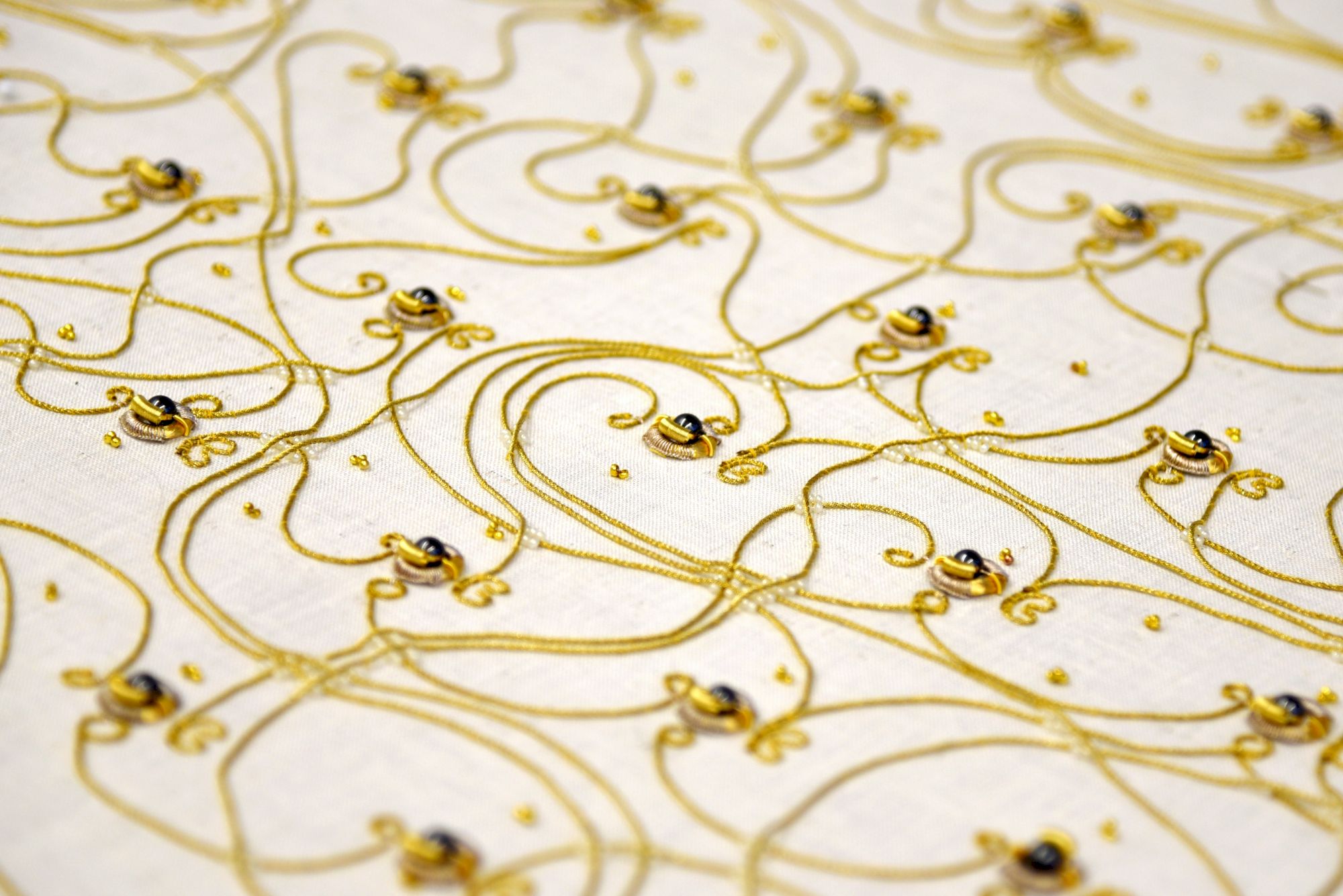
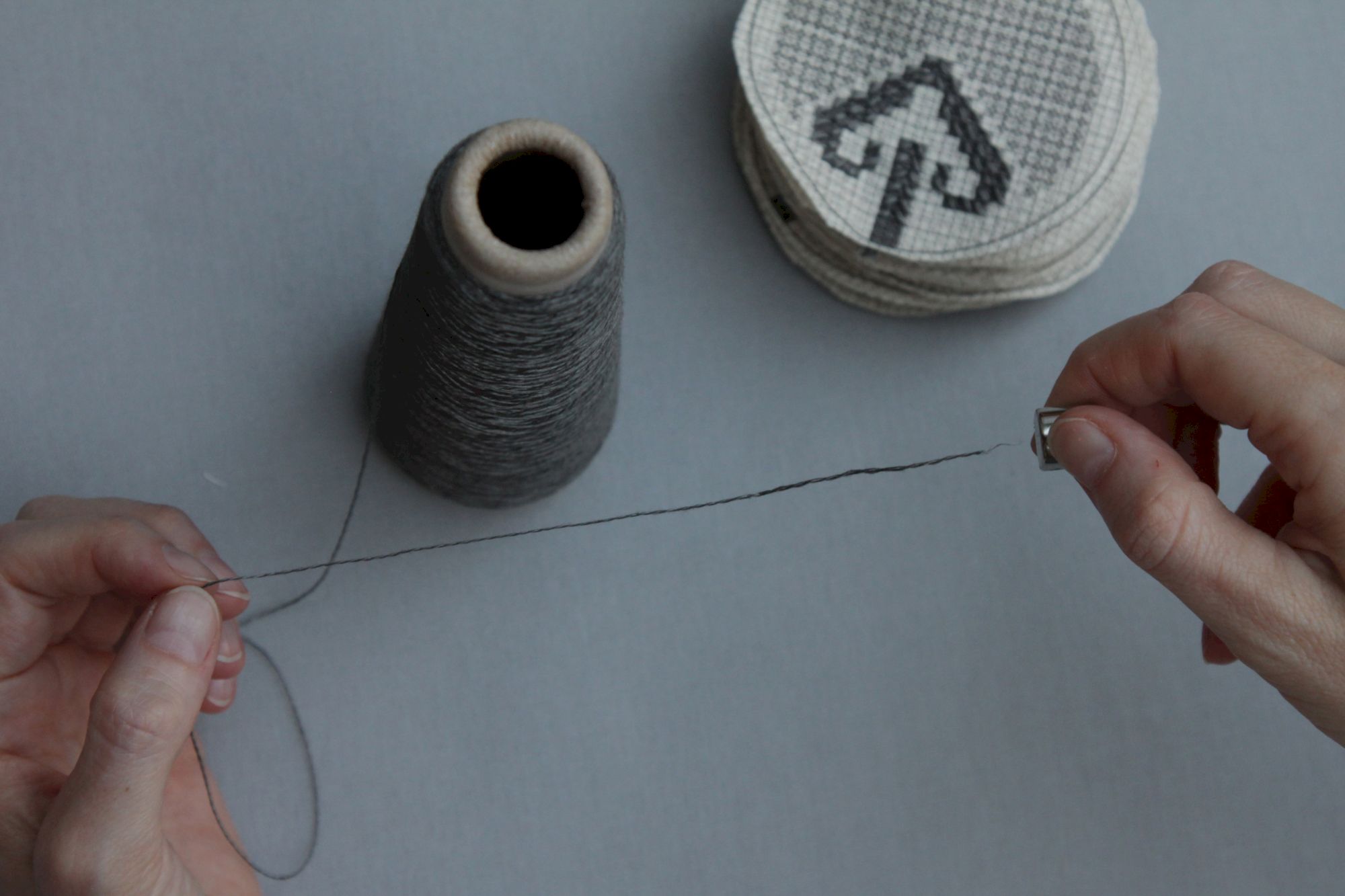
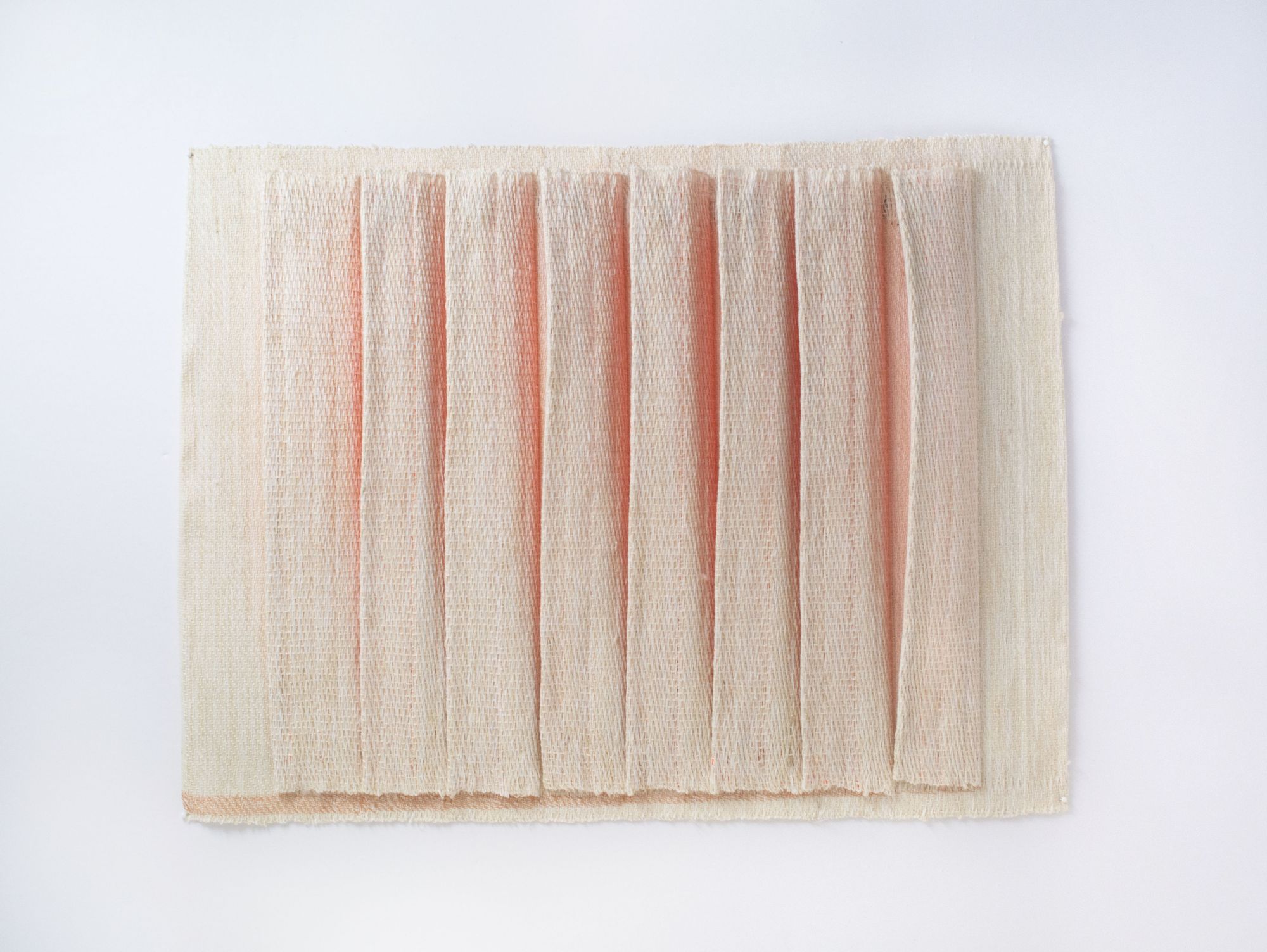
Composition 1
Examples from my practice: exploring textiles and electronics as craft, materials and artefacts that condition and propose distinct qualities and assumptions, and the specific inquiries and insights their intersections may allow. The Embroidered Computer (2018, in collaboration with Ebru Kurbak), Not North (2019, in collaboration with Talia Mukmel), Magnetic Reverberations (2023, in collaboration with Elizabeth Meklejohn and Laura Devendorf). Photo credits (top to bottom): Irene Posch, Talia Mukmel, Elizabeth Meiklejohn.



Make believe what could be
In conventional electronics, testing continuity is typically done with a multimeter—a robust, multifunctional tool for measuring current, voltage, and resistance. By touching the device under test with two probes, a user can instantly read the electrical value on the display. In electronic textiles, the measuring tasks remain similar, but the design space differs substantially. Circuits are individually fabricated from soft, often delicate fibres rather than wired with insulated cables. Because designs are custom-made, each connection must be newly conceived and tested in the making.
Standard electronic probes thus often fall short when used with fabrics and threads: their probes may not be well suited to make precise contact with thin and flexible materials, or may be damaging to fabrics, making it hard to establish good electrical contact. Textile tools, by contrast, have been refined over centuries to manipulate delicate threads into exquisite results and in the process allow for precise and firm yet gentle contact with textile material. They are often made from metal, which means they are also conductive.
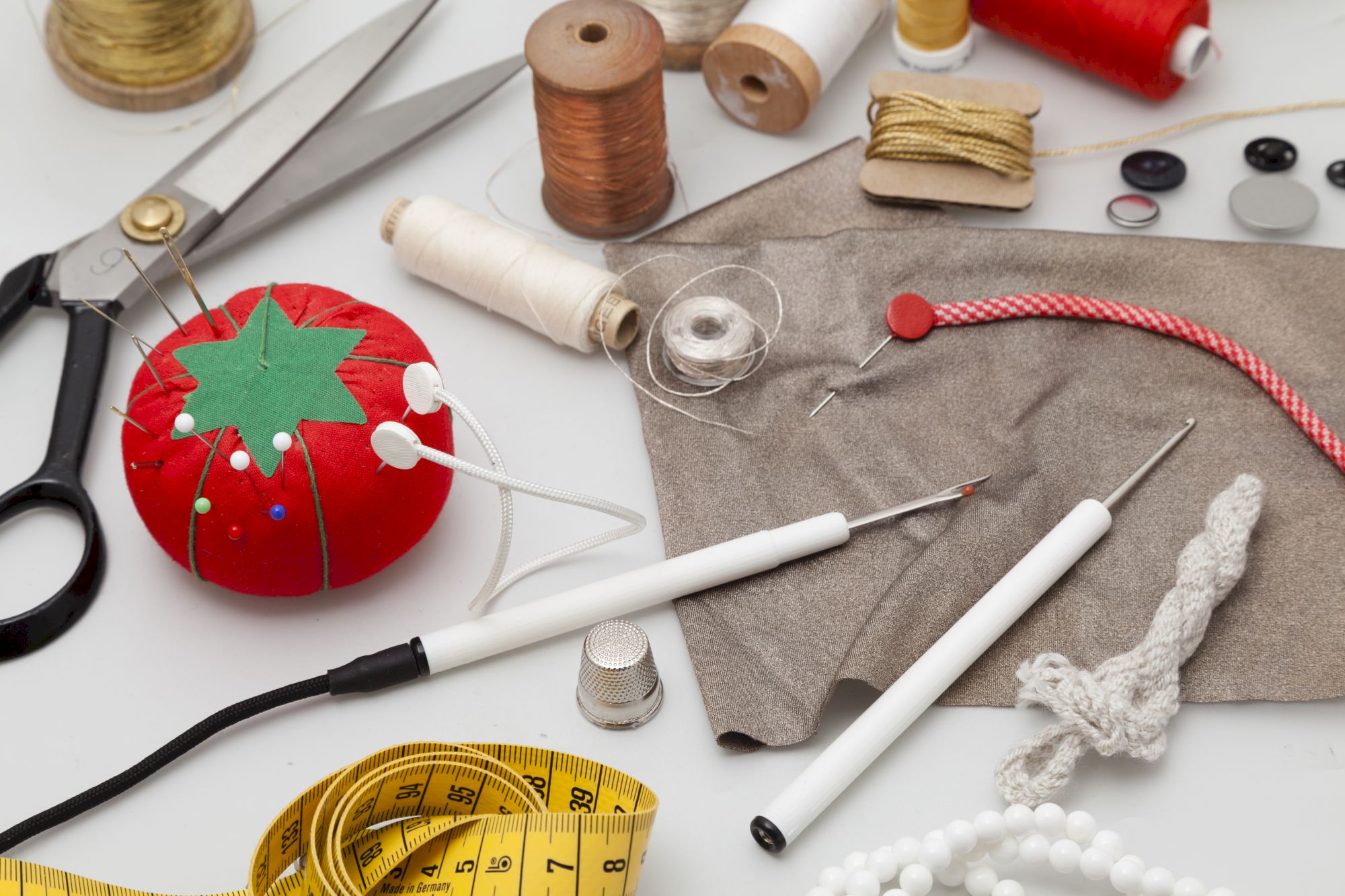
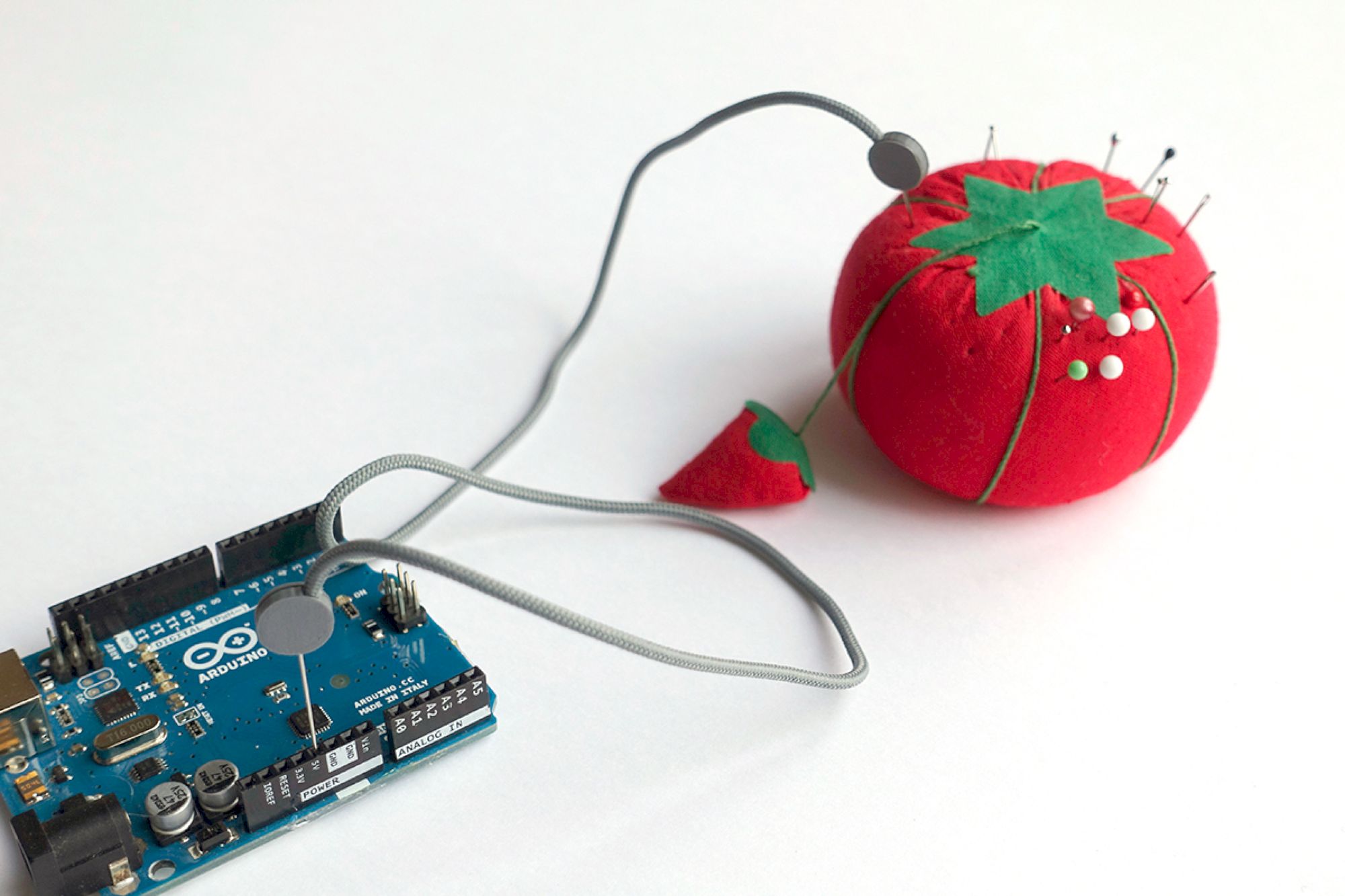
Based on the reflective observation of actual needs within my practice and my explicit choice to value textile crafts and textile materials in the context of electronics, I speculate what tools more suitable to an integrated electronic textile craft may look like. I propose a selection of new tools inspired by pins, needles, and hooks—tools with such strong associations to needlecraft and sewing that they are often seen as symbiotic with the practice. In repurposing them as electronic probes, I create tools that allow a temporary electric connection to textile-based circuits and, in some instances, even permit construction with textiles. Their wiring is lightweight and flexible so as to not tear or damage delicate constructions (Composition 2).
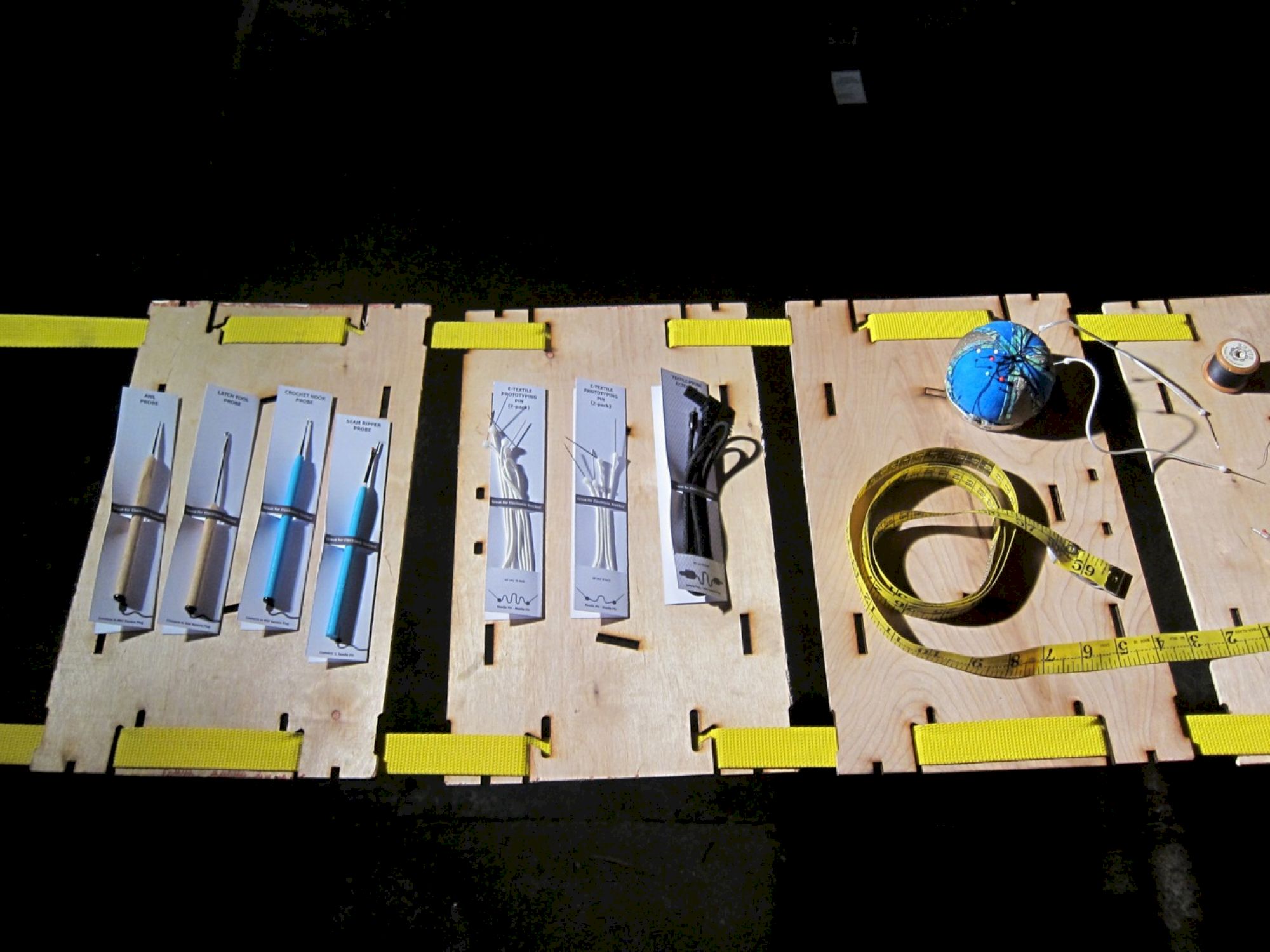
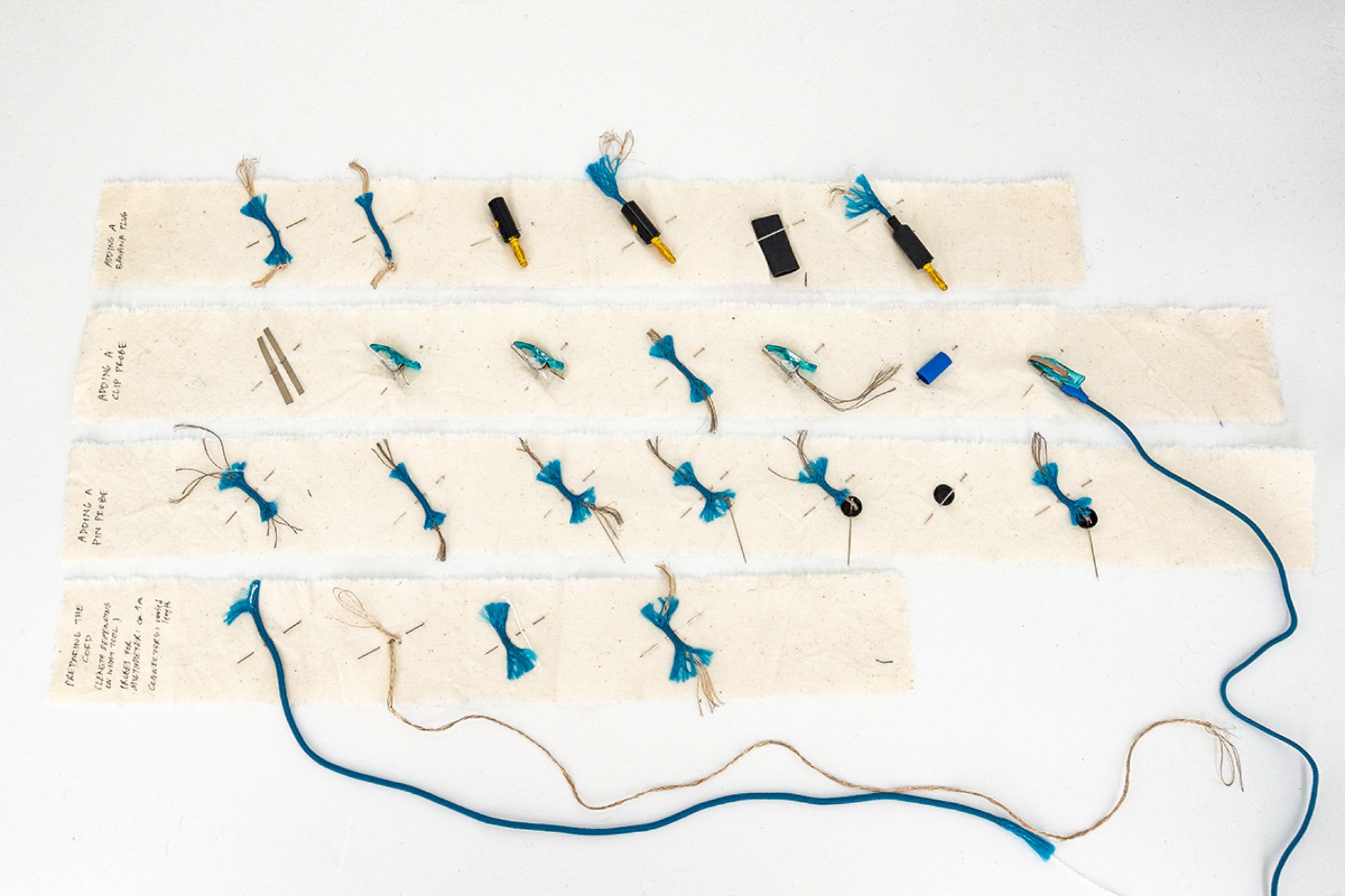
I consider the results possible and potentially preferable tools—plausible alternatives. To enable others to engage with these new tools, I demonstrated their use, presented them as products, shared open-source instructions for reproduction, and hosted hands-on workshops (Composition 3). This was to allow others to relate to and use these tools, and to explore how they may transform making in an emerging field.
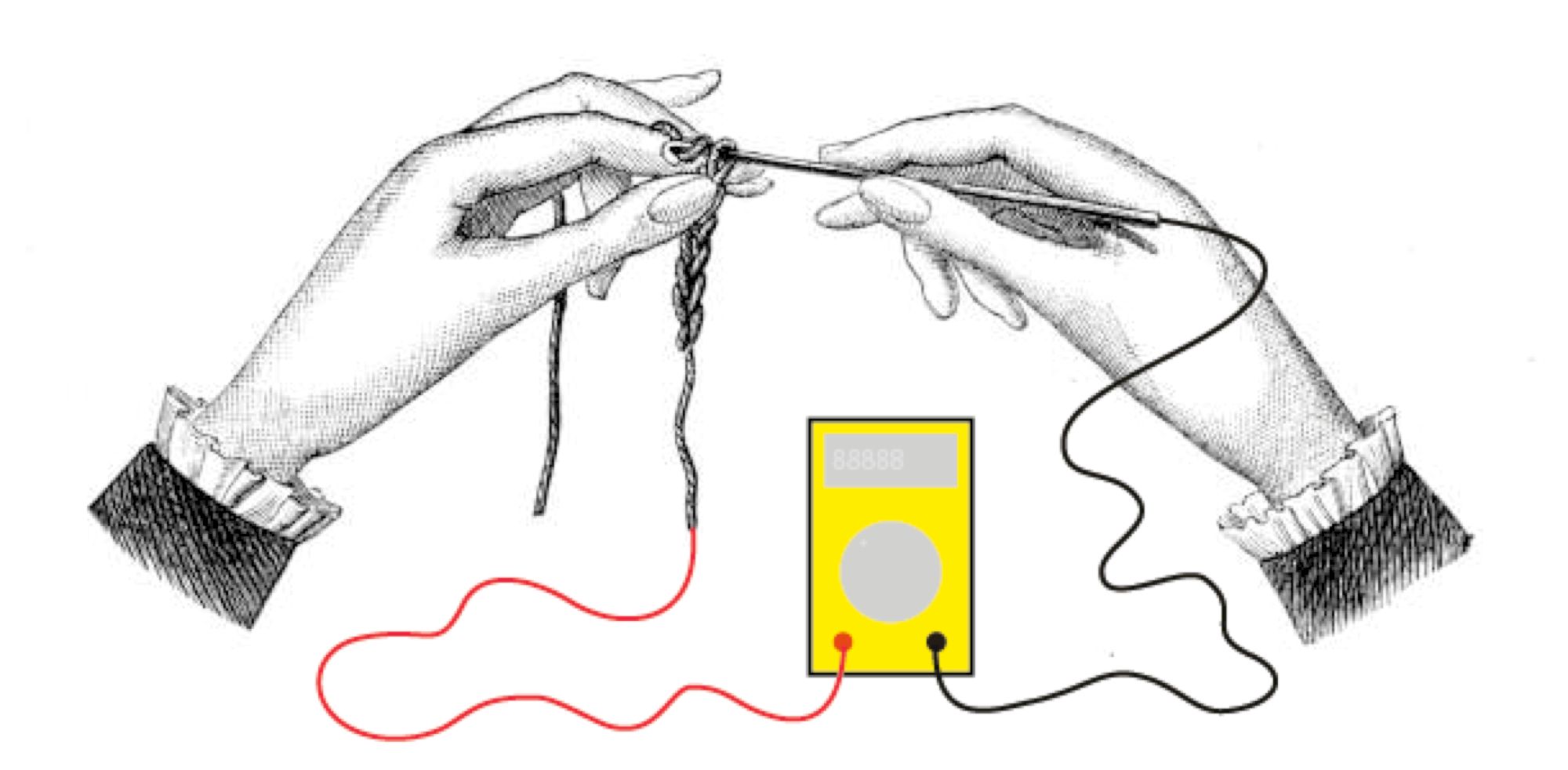
Composition 2
Examples of proposed new tools: illustration depicting the process of measuring resistance while crocheting; Connectable Needlework Tools as part of an eTextile making space; Prototyping Pins connecting an Arduino Board with a pin cushion. Photo credits: Irene Posch.

Composition 3
Examples of make-believe and collaborative meaning-making: Schmiede Werkschau presenting new tools as packaged products; physical step-by-step instructions to make new tools; workshop on how to make new tools. Photo credits (top to bottom): Irene Posch.

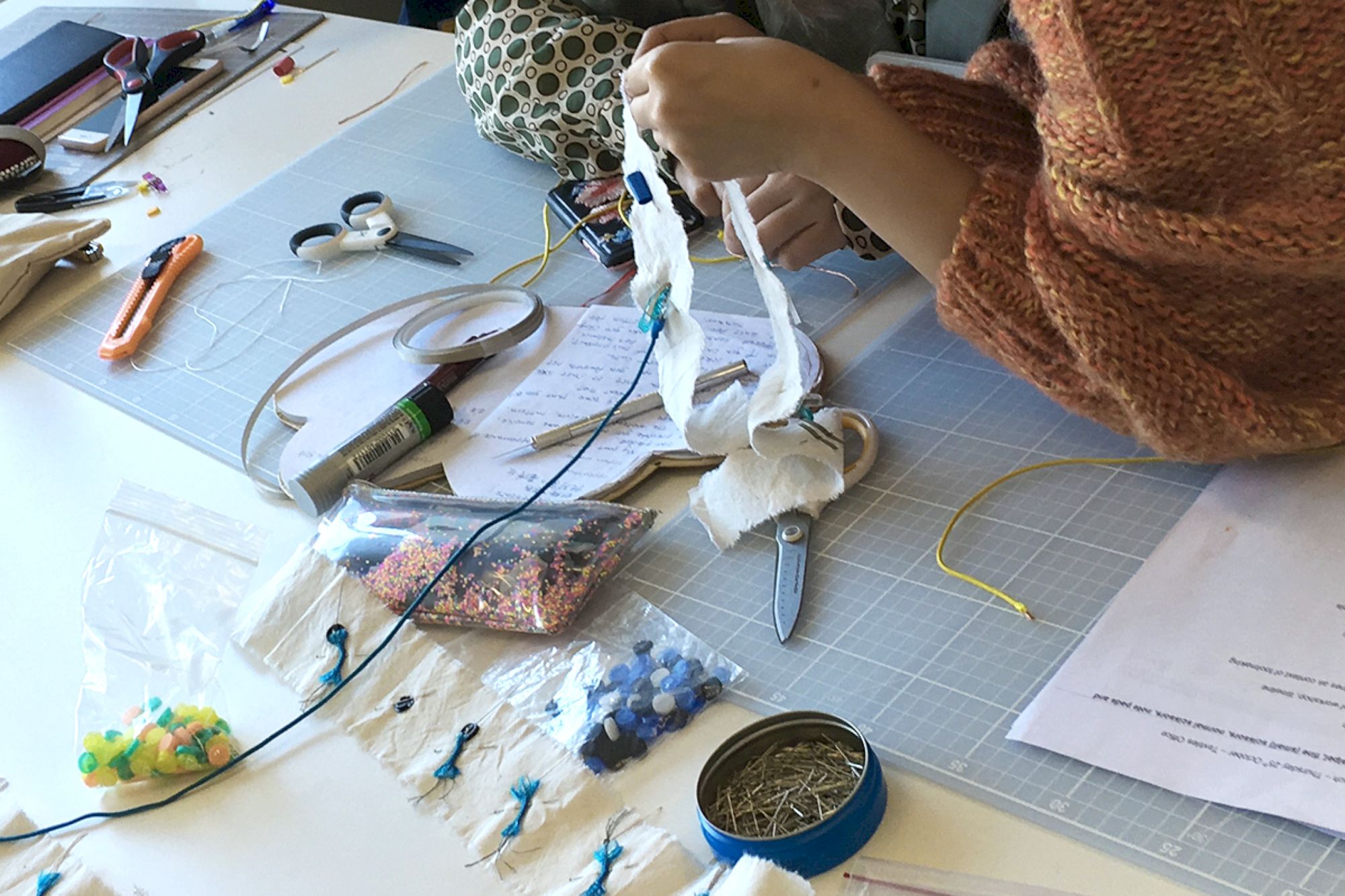
Making meaning together
Offering workshops to make designing new tools accessible to others quickly evolved into an essential method for investigating current tool use, needs, and assumptions. It allowed both the multiplication of tools and a rich setting to discuss their relevance to a practice, thereby expanding the research: not only were new tools proposed, but participants began to make new tools by themselves.
Studying the collaborative making of tools showed how the production of one’s tools could expand the understanding of a practice: it could bridge the divide between the conditions that bring a practice into being and the practice itself. This confrontation engaged users across a spectrum of expertise more directly than theoretical arguments about the tool’s design and potential could.
To novices, it proved a valuable first encounter with eTextile characteristics and materials, allowing them to learn about the routines, tools, and qualities that define the practice. To practitioners, the possibility of making alternative tools provided an opportunity to reflect on their core practices, reconsider past approaches, and challenge previously accepted limitations. It provoked active considerations of the dominance of the tools used until then, as well as their limitations.
A repeated articulation within these workshops of how the new tool designs addressed existing needs, sometimes previously unrecognised by practitioners, has shed light on how tools implicitly embed and prescribe the “right” or “only” way and on the trade-offs between pieces of equipment. Whenever participants adapted the designs, they once again expanded their understanding beyond the given possibilities, reconfiguring the tools towards new meaning/making within interdisciplinary practices.
Eventually, the multiplication of tools allows assumptions to be tested in practice beyond my own work. The following examples describe and illustrate emergent craft routines (Composition 4).
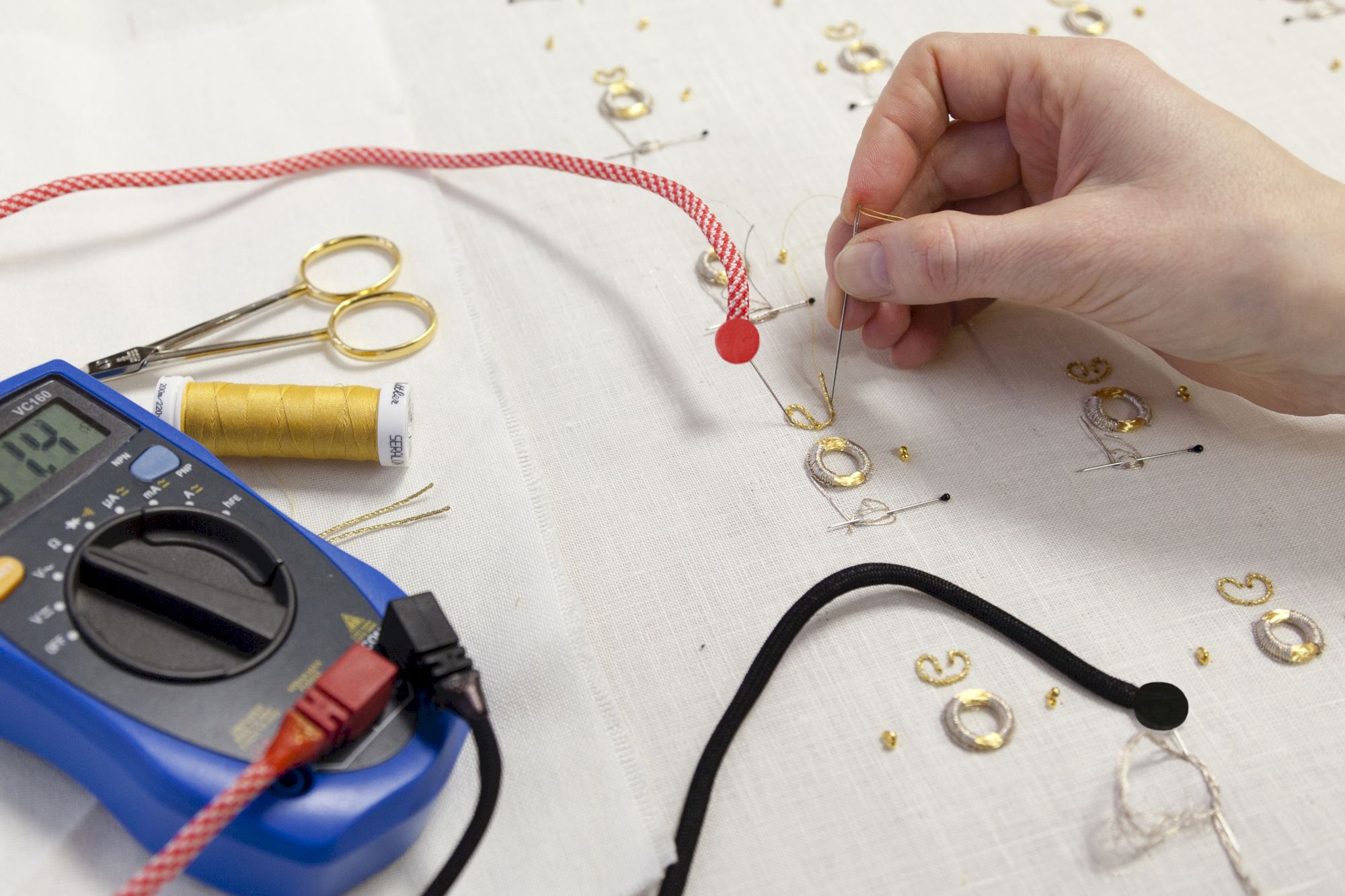
The work on The Embroidered Computer included connecting coils made from very thin copper wire to metal threads, with as little resistance as possible. A typical scenario was to first embroider the connection. Then, the needle is put down, the multimeter picked up, and the probes carefully placed on the golden thread to measure the resistance. If the contact is good enough, the multimeter can be put away, and the needle picked up again to proceed with the embroidery. If the contact has too much resistance, a reiteration is needed to improve the stitches on the connection. It may be necessary to go back and forth several times between different tool sets to measure and manipulate the embroidery.
A few sessions in, I proposed the Pin Probes to the professional embroiderer helping with the gold embroidery work. The Pin Probes could be pinned directly into the metal thread and left there without damaging the embroidery. Having completed the first connection with the help of the new probes, the professional embroiderer said: ‘It’s like operating on a live patient! You immediately see the [electric] effect of your actions and can respond in real time!’ She was then able to reflect and act on her stitches based not only on the qualities visible in the embroidery but also on their electrical quality, continuously displayed as a change in resistance on the multimeter. Being able to observe the changes introduced by individual actions or stitches is essential for transforming the making process from discrete steps of trial and error and tool switching into a continuous conversation with the material at hand.
Further along in the making, she also noticed how pinning through the fabric allows contacting the conductive material on the back of the fabric without turning the embroidery around. These new routines, resulting from the use of new tools, have noticeable impacts both on the ergonomics of the tasks and the understanding of the effect individual routines have on the electronic functionality. It saved the disruption of having to switch tools, allowing simultaneous focus on the textile and electronic qualities of the crafted artefact instead.
Another example concerns the making on the body—the testing of wearable textile sensors in action. In this context, it is essential to minimise the disruptions that a measuring instrument causes to the sensor. Participants discovered the Pin Probes leave far smaller marks on the textile sensors when worn because the connection through the pin leaves minimal marks and because the textile cable is lightweight and flexible.
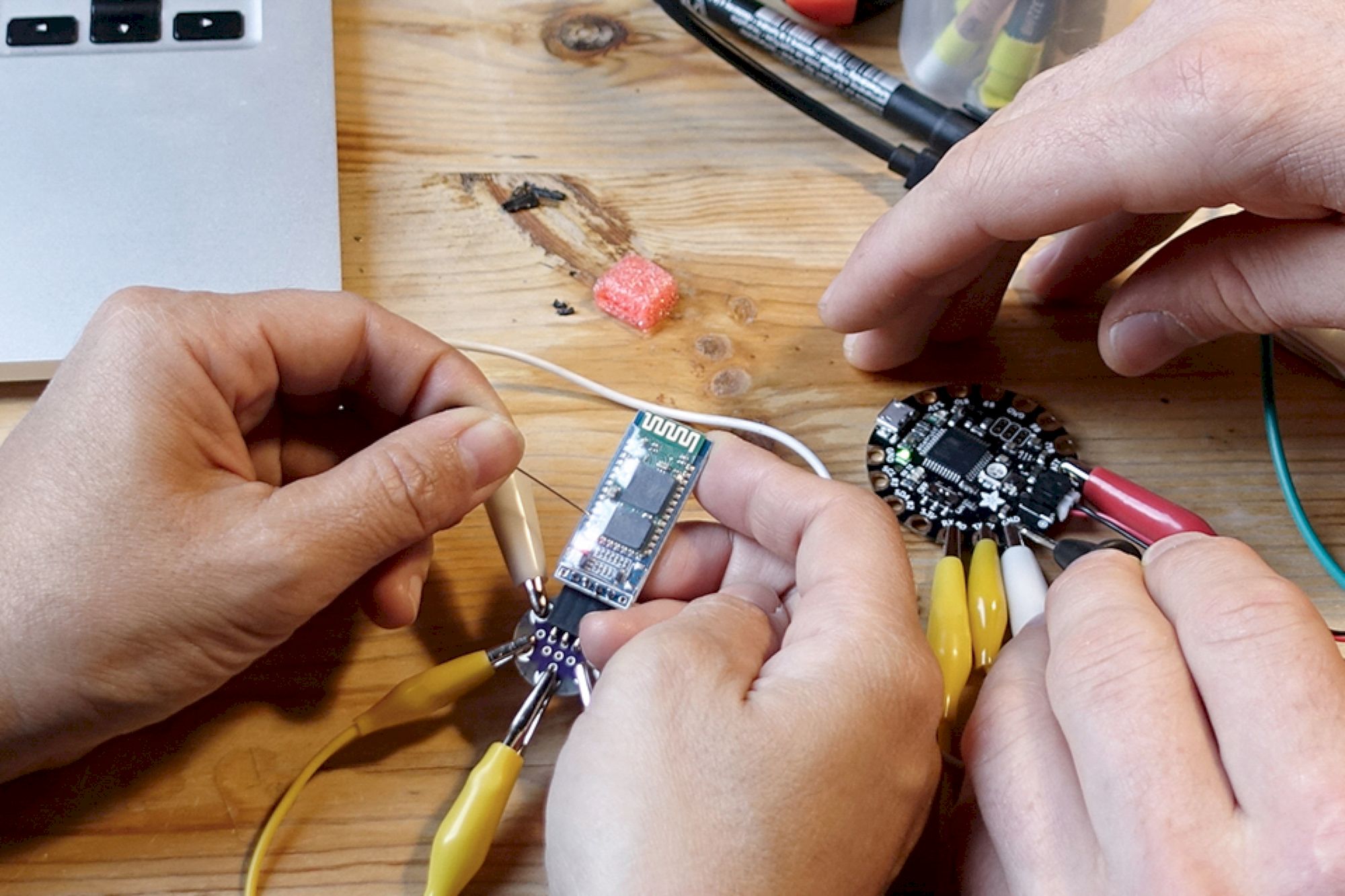
The proposed tools have also increasingly been used on conventional hardware. Participants noticed the Pin Probes plug neatly into JST connectors and allow testing an IC chip through its plastic insulation, piercing but not damaging it.
As a by-product of the collaborative making and using of new tools, new materials were discovered that could potentially prove beneficial to eTextiles beyond their use as tool parts. This was especially the case for the materials used to make a Textile Cable, i.e. the paracord material as a new way to insulate conductive lines while preserving the flexibility and softness of the textile material, and to use new types of conductive threads, in this case, thicker and more conductive copper threads previously hardly used within eTextiles. Another example would be the use of diverse forms of pins as electrical conductors, not just as probes but as interactive or prototyping elements.
I wasn’t thinking of any of these scenarios when I set out to rethink the tool space. These routines were simply not possible beforehand; instead, they evolved because new tools were physically available in the workspace and immediately usable with a multimeter. One person’s description of the Pin Probes as “one of those things that are obvious after you see them” sheds light on the seemingly inconspicuous details that may shape a practice. It is in small statements like these that the dominance of what we consider given becomes apparent—and how these assumptions shape how and what we practice.
Composition 4
Examples of new tools in use: Pin Probes used to embroider a computer; Pin Probes used to measure a sensor sleeve and connect it to conventional electronics at Summer Camp, an eTextile community meeting in France; during a residency at osmo/za, Ljubljana, produced by Zavod Projekt Atol and Ljudmila. Photo credits (top to bottom): Irene Posch, Irene Posch, Irene Posch, Katja Goljat.
Crafting tools, crafting cultures
What I described may seem like small practical changes, but I argue they are accompanied by fundamental conceptual changes. A tool paves the way for other things to happen. The particular function it can carry out defines the making space. The use of a tool as a distinctly technological artefact “facilitates people’s involvement with reality, and in doing so, it co-shapes how humans can be present in their world and their world for them” (Verbeek, 2006). Depending on the tool, specific aspects are amplified, while others are reduced, influencing human perceptions, actions, and experiences.
In making electronic qualities perceivable within crafting routines, these new tools place tinkering and prototyping within the textile domain and embed textile crafts within electronic making. They allow for a continual dialogue with open-ended textile and electronic form and function. Instead of reacting to discrete measurements taken after the fact, they integrate electronic and textile crafts. They enable what Donald A. Schön called reflection-in-action: providing crafters the means to “see” the (electrical) change they introduced through their craft actions, making it possible to enter into reflective conversations with the design situation. Such ad-hoc qualitative judgement also allows for what Tim Ingold described as wayfaring behaviour: to be responsive to what is continually revealed, being alert to the diverse cues that, at every moment, may prompt an adjustment. These abilities to interpret the material feedback and exercise nuanced changes with dexterity and care are essential qualities of a craft process.
My work with eTextiles made apparent how the choice of tools shifts inherent conditions of making, defining what is possible and what can be perceived as possible. Discussions with practitioners further disclosed the tools’ potency beyond practical engagements, into social and cultural realities that shape a field, shedding light on the inherent conditions of making that define its margins and potentials.
In front of a more general audience, the tools’ mere visual form provoked mixed reactions—ranging from disinterest to intrigue—as their reference to “women’s skills” challenged the norms of the male-dominated field of electronics. Some felt invited to contribute the skills they already had, while others dismissed the tools because of their association to needlework. These responses not only highlight that tools are never neutral but also show how intentional design can introduce new skills and materials into making practices and help disrupt stereotypes. Hence, I argue that tooling is specifically crucial in the context of emerging technology practices, as these lack an example of how things are done and are also expected to be widely influential. (Re)considering the tools that configure our involvement with these emerging realities means—leaning on Verbeek’s words—no less than (re)shaping how we can be present in our future world and how it can be present for us.
As Donna Harraway writes in Staying With the Trouble: “It matters what matters we use to think other matters with.” That is, designing tool alternatives to the status quo matters for considering what materials and routines are core to a practice; proposing new tools matters for shaping its metaphorical, social, and cultural grounding; using new tools matters for revealing different potentials and functionalities within a practice, and possibly different approaches to it. And this matters, especially for enabling emerging hybrid electronic practices and new technological futures.
Bibliography
Adamson, G. (2013). The Invention of Craft. Bloomsbury Visual Arts.
Bardzell, S. (2010). Feminist HCI: Taking Stock and Outlining an Agenda for Design. In Proceedings of the SIGCHI Conference on Human Factors in Computing Systems (pp. 1301–1310). ACM Press.
Beaudry, M. C. (2006). Findings: The Material Culture of Needlework and Sewing. Yale University Press.
Gordon, B. (2011). Textiles: The Whole Story. Thames and Hudson.
Fernaeus, Y., & Sundström, P. (2012). The Material Move: How Materials Matter in Interaction Design Research. In Proceedings of the Designing Interactive Systems Conference (pp. 486–495). ACM.
Haraway, D. J. (2016). Staying With the Trouble: Making Kin in the Chthulucene. Duke University Press.
Hughes-Riley, T., Dias, T., & Cork, C. (2018). A Historical Review of the Development of Electronic Textiles. Fibers, 6(2), 34.
Ingold, T. (2007). Lines: A Brief History. Routledge.
McCarty, C., & McQuaid, M. (2014). Tools: Extending Our Reach. Cooper Hewitt, Smithsonian Design Museum.
Parker, R. (2019). The Subversive Stitch: Embroidery and the Making of the Feminine (Reprint ed.). Bloomsbury Visual Arts.
Peppler, K. (2016). A Review of E-Textiles in Education and Society. In Handbook of Research on the Societal Impact of Digital Media (pp. 268–290). IGI Global.
Perner-Wilson, H., Satomi, M., Posch, I., & Kurbak, E. (2016). TOOLS WE WANT.
Posch, I. (2017) ETextile Multimeter Probe.
Posch, I. & Fitzpatrick, G. (2021). The Matter of Tools: Designing, Using and Reflecting on New Tools for Emerging eTextile Craft Practices. In ACM Trans. Comput.-Hum. Interact, 28(1), 1–38.
Pye, D. (1968). The Nature and Art of Workmanship. Cambridge University Press.
Rosner, D. K., Shorey, S., Craft, B. R., & Remick, H. (2018). Making Core Memory: Design Inquiry into Gendered Legacies of Engineering and Craftwork. In Proceedings of the 2018 CHI Conference on Human Factors in Computing Systems (pp. 531:1– 531:13). ACM.
Schön, D. A. (1992). Designing as Reflective Conversation With the Materials of a Design Situation. Research in Engineering Design, 3(3), 131–147.