

Silent Neighbors exhibition on the Shibuya River in Tokyo
For a few days in winter, metaPhorest magnified underwater microscopic communities thriving in one of Tokyo’s most urban waterways. metaPhorest director Hideo Iwasaki shared some thoughts behind their intrinsically site-specific exhibition “Silent Neighbors” on the Shibuya River.
From the JR train platforms at Shibuya Station, exit through the New South Gate. Turn left, walk across the pedestrian bridge above the railway tracks, take the escalator down one floor, then walk down the grand steps to the ground.
Welcome to the street level of Shibuya Stream, a relatively new commercial development that includes a lively strip of restaurants and cafés, seamlessly connected to the tentacular Shibuya Station and the towering Scramble Square shopping mall, not to mention a high-rise hotel and the corporate headquarters of Google Japan.
Below it all, just a stone’s throw away from Shibuya’s famously chaotic Scramble Crossing, lies the area’s natural artery since the Edo period – a narrow waterway that streams southeastward through a few more neighborhoods before eventually flowing into Tokyo Bay.

This is the Shibuya River, which has a deep history of its own. From the late 19th century, the naturally flowing river became increasingly engineered, narrowed and lined with concrete. By the 20th century, it was treated more like a drainage canal around Shibuya Station, polluted by industrial and household waste. And by the time Tokyo was basking in its peak post-war growth, large sections of the Shibuya River were completely covered by concrete and converted into underground culverts.
Still today, much of this ghost river’s 2.4 kilometers is entirely invisible. Only in the past couple decades has the city made efforts to clean up the waterway (it is officially cleaned every few months) and more recently, revitalize the open section between Shibuya and Ebisu stations as a recreational urban promenade.
Who would have imagined that the Shibuya River is also home to entire ecosystems, starting at a microscopic scale?
Silent Neighbors
As part of Dig Shibuya 2026, an annual weekend-long event to promote the commercial areas around Shibuya Station, the bioart collective metaPhorest was given carte blanche to create a site-specific exhibition at Shibuya Stream. So naturally, they looked into the river.

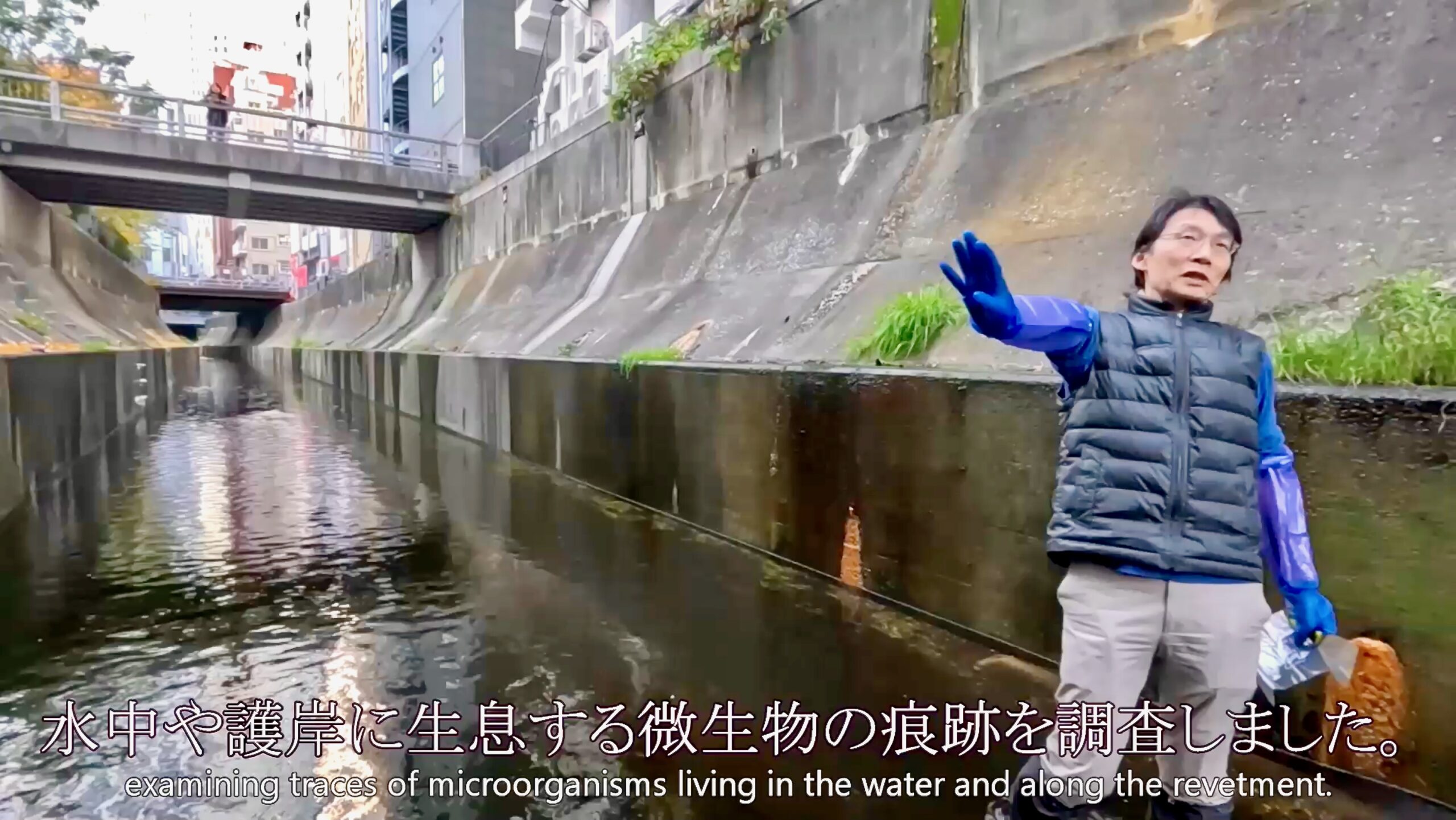
“It looks like a very artificial (man-made) river,” says Hideo Iwasaki, professor at Waseda University and director of metaPhorest. “But of course, we have always been interested in biological systems. So we focused on what types of biodiversity are reconstructed in such an artificial region. On the very first day that we started investigating the composition of the river, we found that it’s really rich in biodiversity – especially in algae, or bacteria combinations.”
Over the course of a year, Iwasaki and five other metaPhorest team members – Tomoki Matsumura, Akira Fujioka, Hanna Saito, Toru Nakajima and Tomoya Ishibashi – elaborated the Silent Neighbors project to “encounter the beings that inhabit the Shibuya River”. At the same time, staff at Tokyu Corporation, which owns and manages the Shibuya Stream complex, engaged in lengthy negotiations with the Shibuya Ward Water Bureau as they sought to agree on a balance between historically rooted, high-tech installations and outdoor, round-the-clock security and meteorological concerns.
Chimeric Bioflora
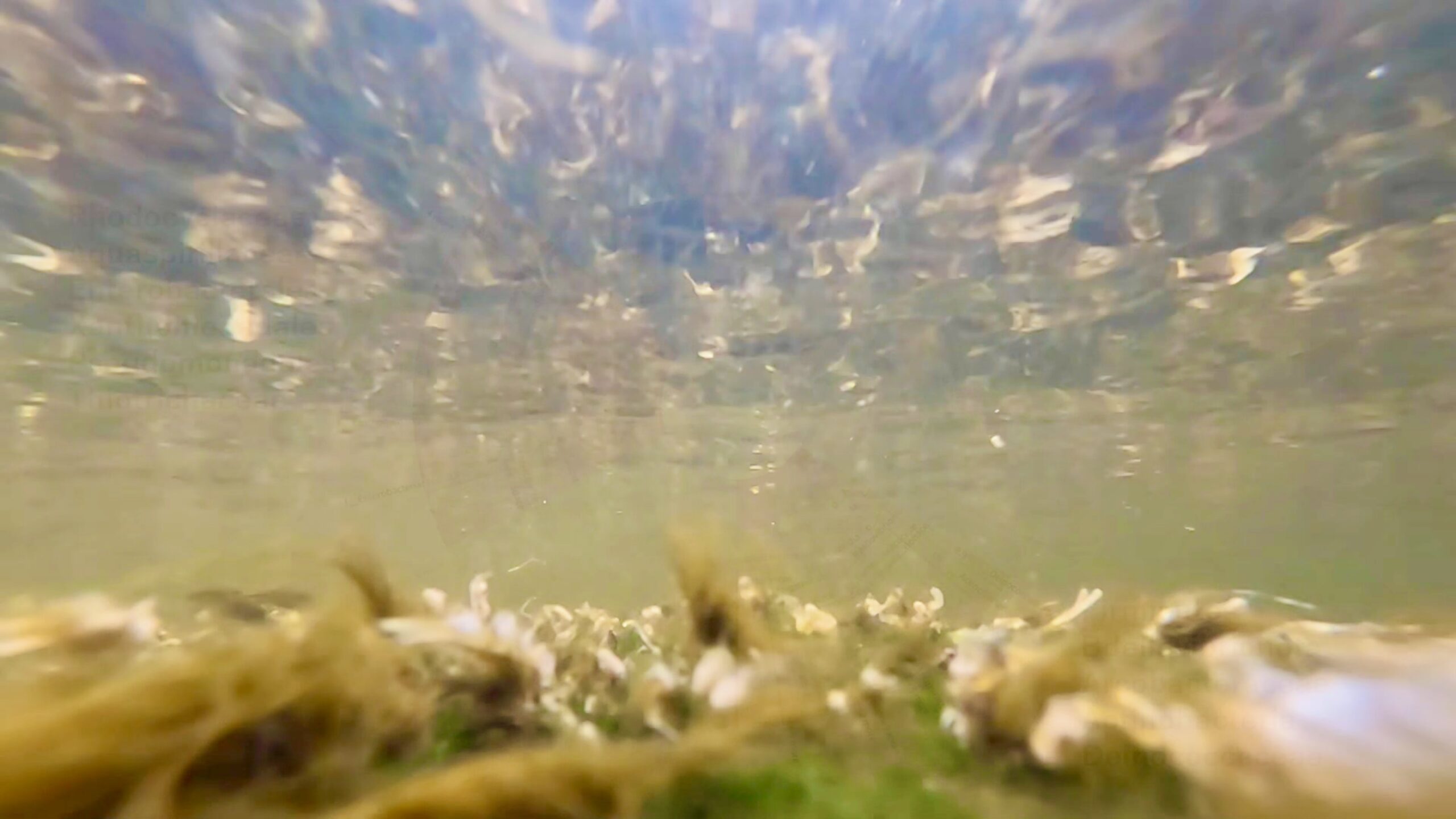
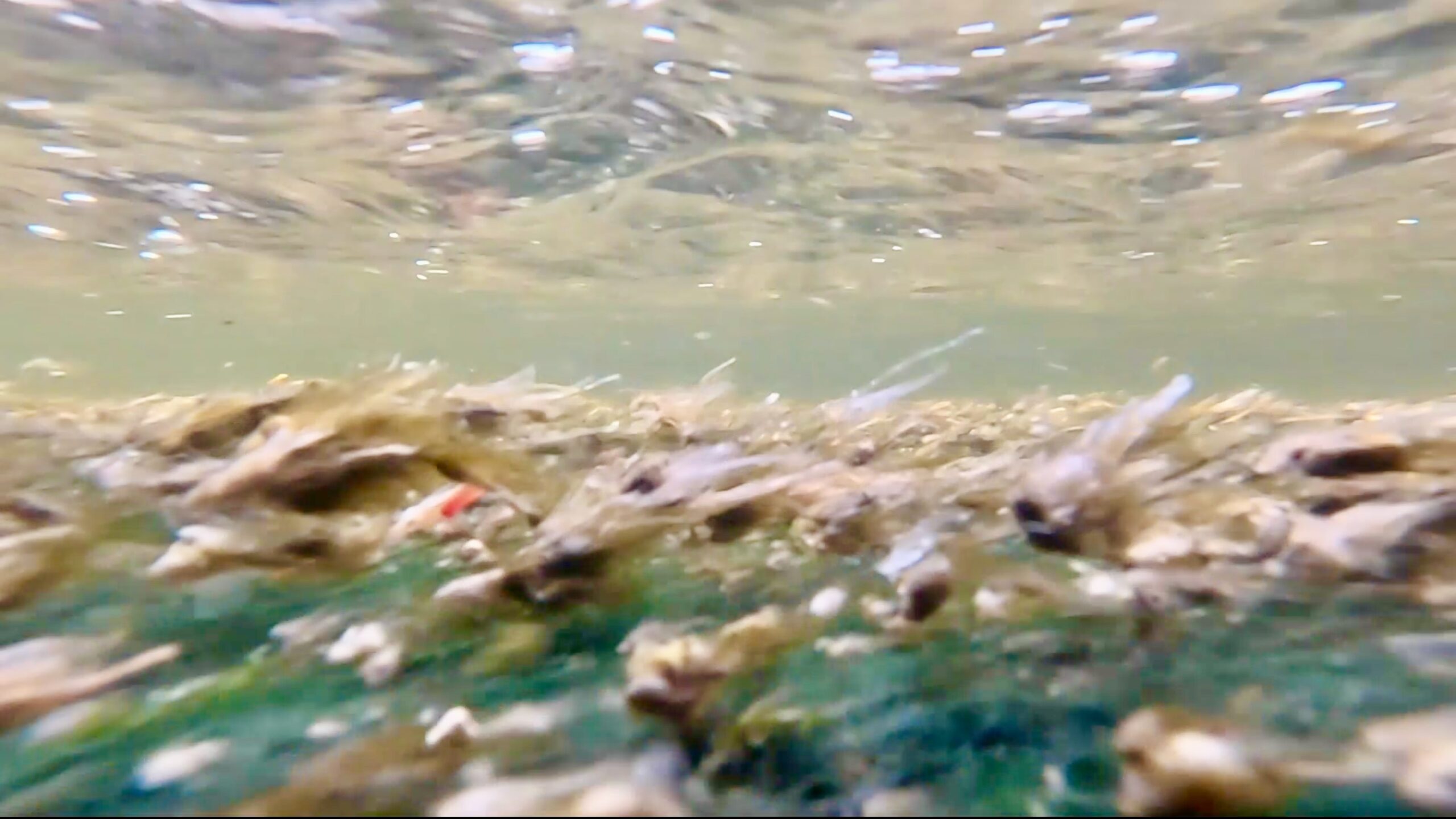
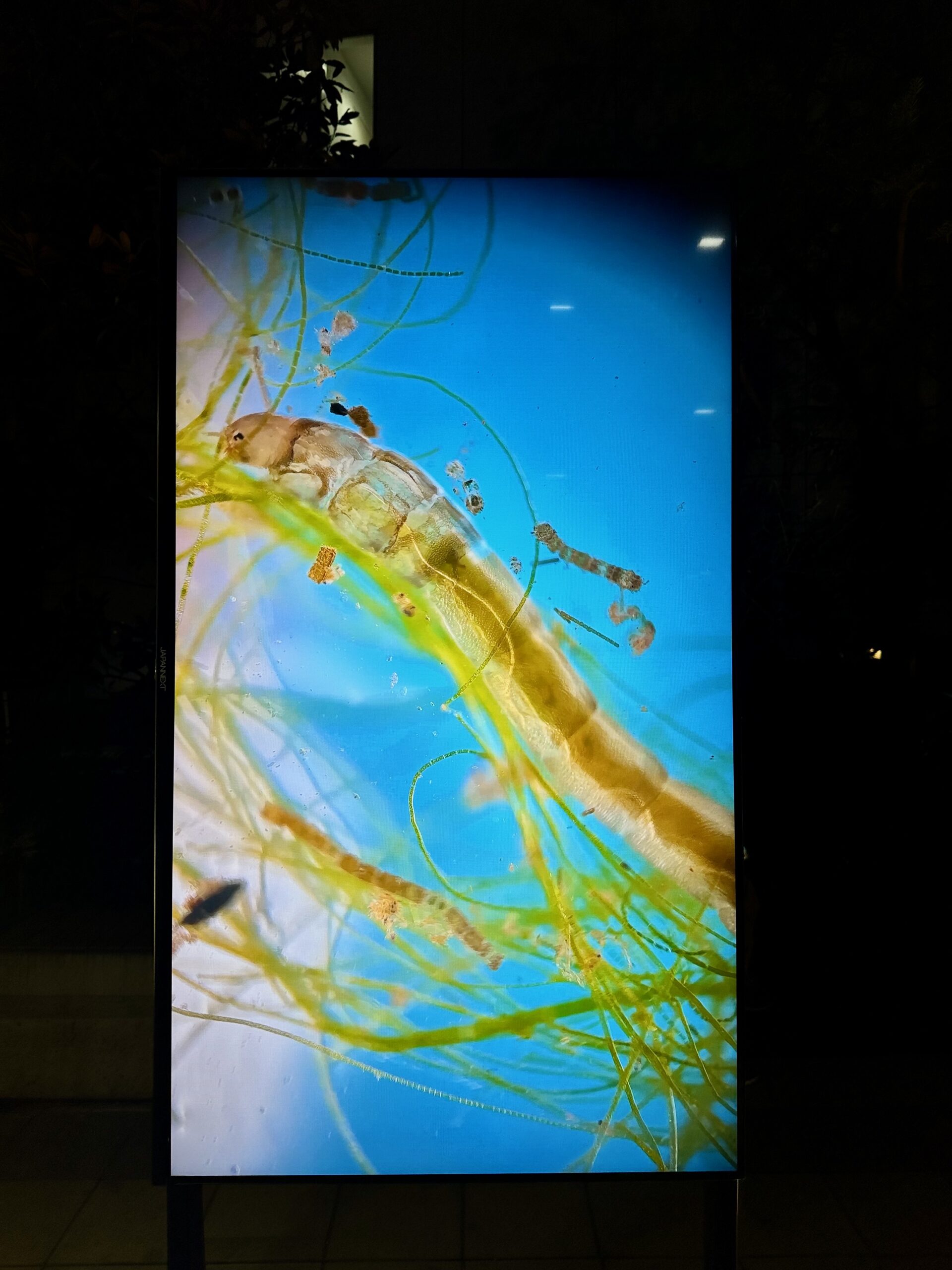
Out in the field, one of the biology team’s first surprises was the dynamic world of chimeric flora revealed by underwater video footage. They discovered an entire forest of yellowish filamentous diatoms – single-celled algae with glassy shells made of silicon, which combine with concrete and serve as food for midge (Chironomidae) larvae. The non-biting adult midges in turn help recycle nutrients and are preyed on by birds. Underneath the diatom forest mottled with white pieces of paper waste is another layer of green algae (Ulothrix).
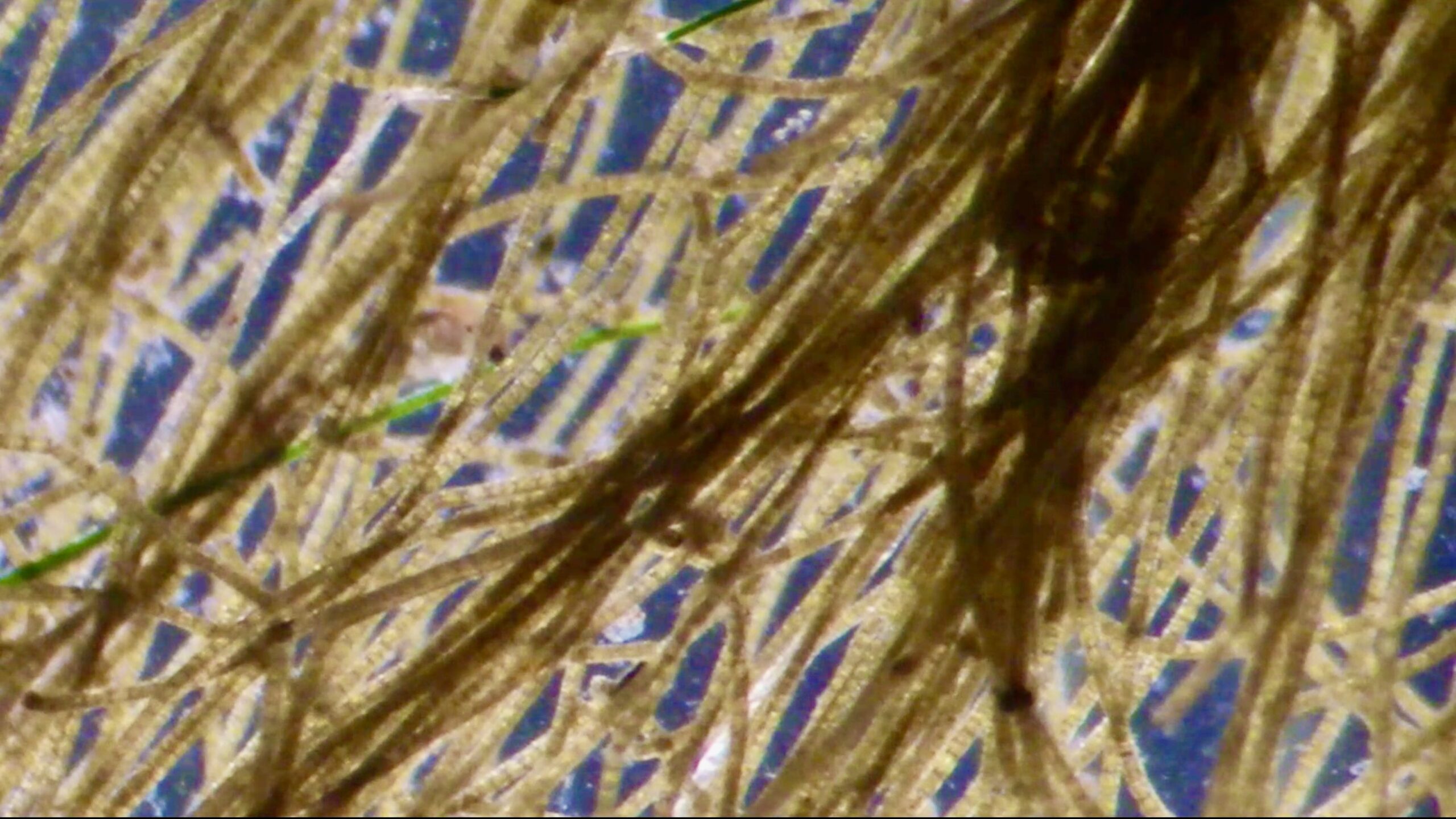
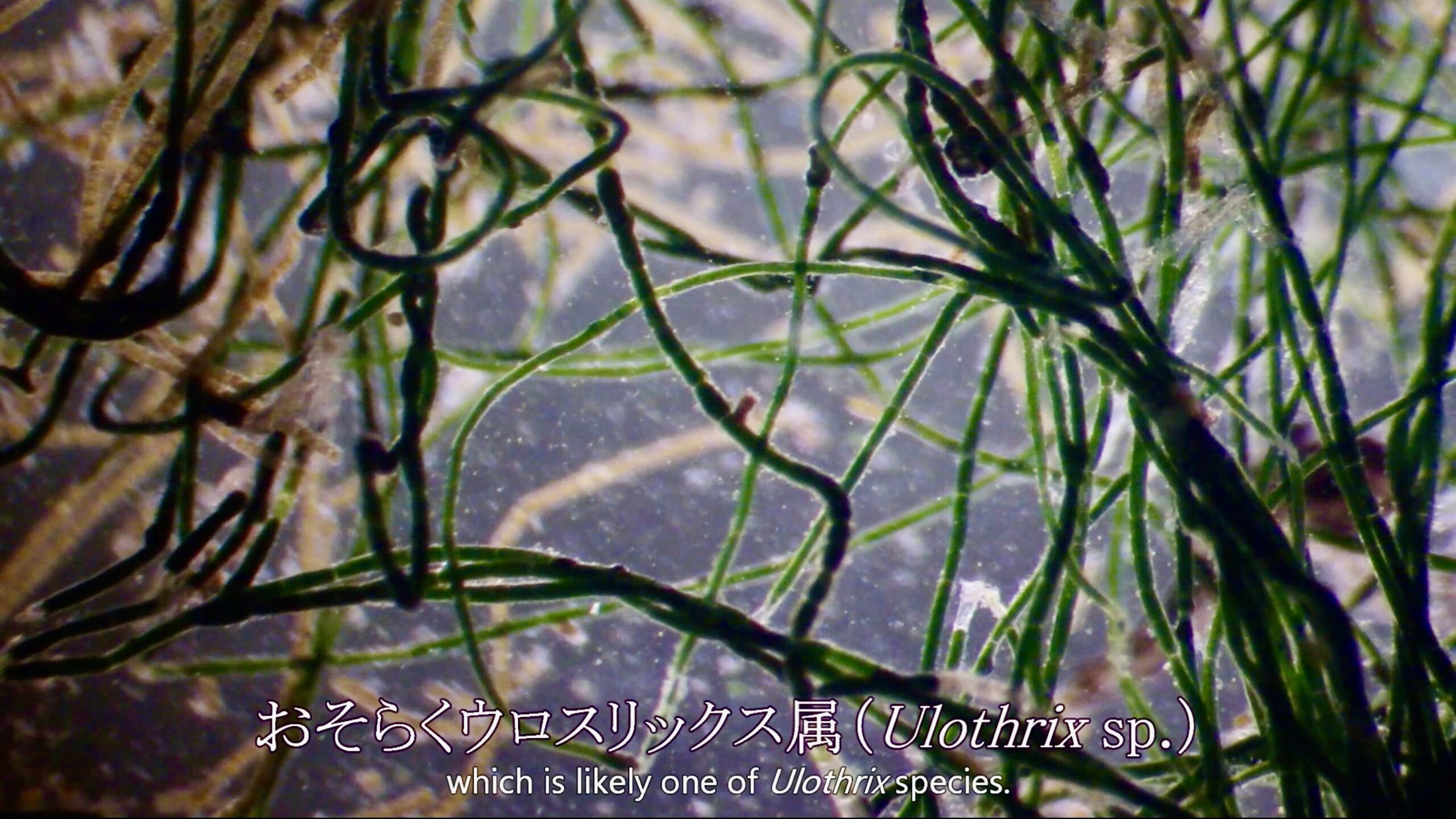
“Of course, it could be seen as something very dirty, but to me, it’s really vivid, like a population of small animals,” observes Iwasaki. “I was very surprised and impressed. Scientifically it’s also very interesting, how this type of structure emerged, the pattern information of biological systems, how the natural population combined with our human artifacts to produce such a weird structure.”
For the Silent Neighbors exhibition, metaPhorest projected both microscopic and macroscopic video footage of this diatom forest on giant screens stretched out across the river, in a surreal superposition of co-existing worlds just above and below the surface of the water.
In parallel, Tomoya Ishibashi also waded in to see what he could forage out of the river. In addition to a number of gadgets, batteries, and a knife, he found a metal microphone stand, a bicycle chain and platform boot studs, which he staged into his final installation.

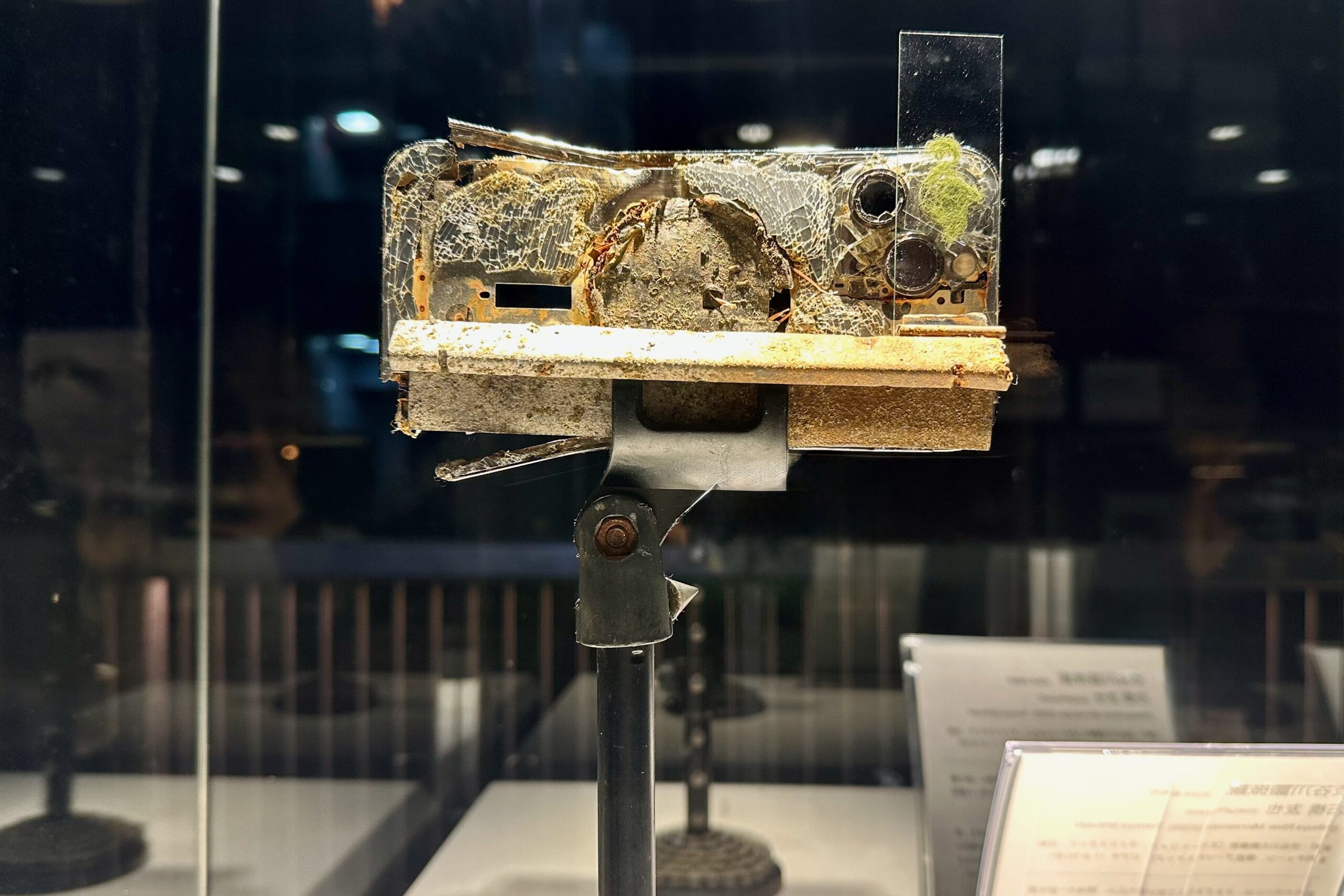
But the jewel of his riverine bounty was a broken iPhone with camera lens intact. Following a concept that he had first experimented in the Arakawa River in the north of Tokyo, Ishibashi modified and augmented the smartphone lens system into a functional DIY microscope, which he used to observe local microorganisms in the river. This makeshift tool effectively magnified a fascinating scene in a water sample from the Shibuya River placed on a slide glass, making it visible to the naked eye.
Beside the transparent box exhibiting Ishibashi’s beautifully gutted smartphone-cum-microscope, Silent Neighbors presented a short film documenting Ishibashi’s process, concluding with striking magnified images of a midge larvae feeding on a diatom in its native environment.

Urban Microbial Ecologies
In total, the metaPhorest team members collected samples from 13 different sites along the Shibuya River, with the mission to analyze and shine light on its various resident ecosystems. As part of their scientific approach to Silent Neighbors, Iwasaki posed a specific question: “Does the combination of algae with high levels of artificial objects facilitate some special kind of microbiodiversity?”
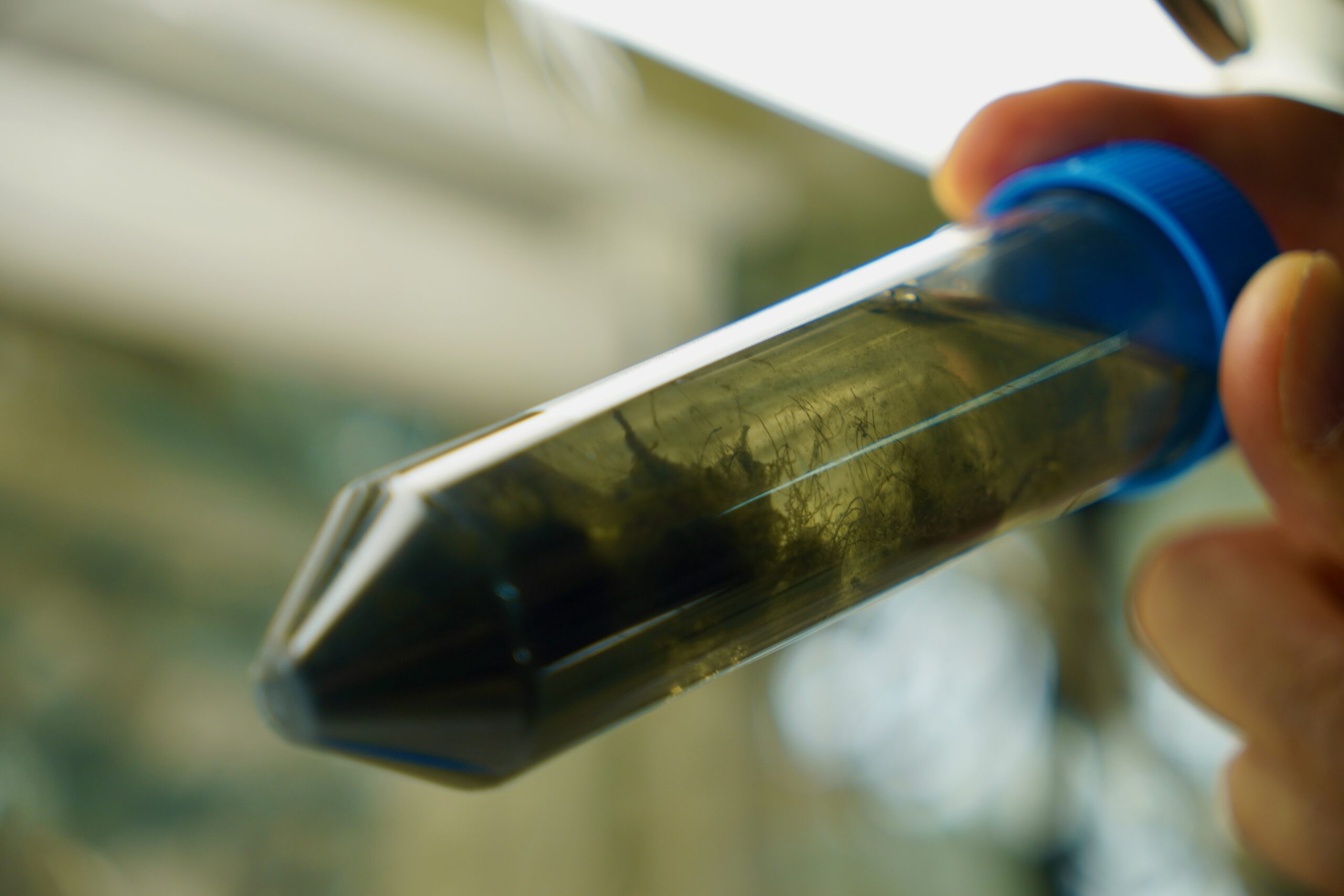
So metaPhorest collaborated with Biota, a Japanese company specialized in metagenomic analysis, to compare the DNA of bacteria living in artifact-rich zones vs. bacteria living in relatively artifact-free zones. As it turned out, DNA analysis revealed very distinct microbial communities. Artifact-rich zones were home to a much wider range of special bacteria: anaerobic and fermentive bacteria, sulfur-metabolizing bacteria, spore-forming bacteria, as well as bacteria that prey on other bacteria.
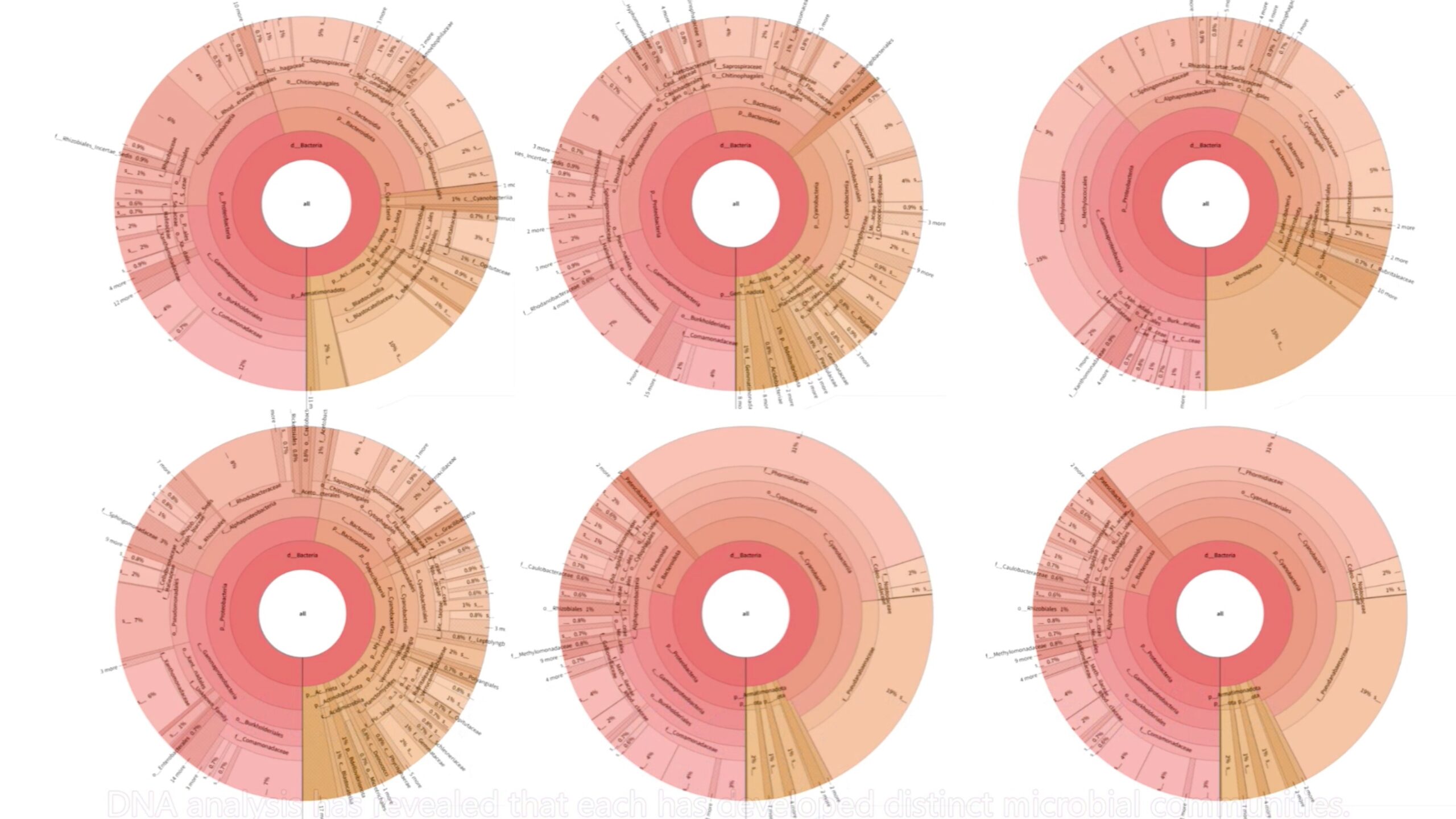
The notable increase in these particular types of bacteria was another surprise to the team. Although they seem to be characteristic of urban rivers, Iwasaki remarks: “Additional bacteria manifests that the more artificial domain is much more complex. And because it is richer in anaerobic bacteria, it probably means that locally, anaerobic conditions occur in such artifact-rich chimeric structures.”
Revetment Spirits
Meanwhile, the bacteria populations of samples collected from the various drainage channels along the river were completely different, reflecting the open-air conditions of the drains. But even at a macro level, each one seems to express a unique personality, visibly displaying different colors, in a spectrum that ranges from iron-rich rust to chlorophyllous green.
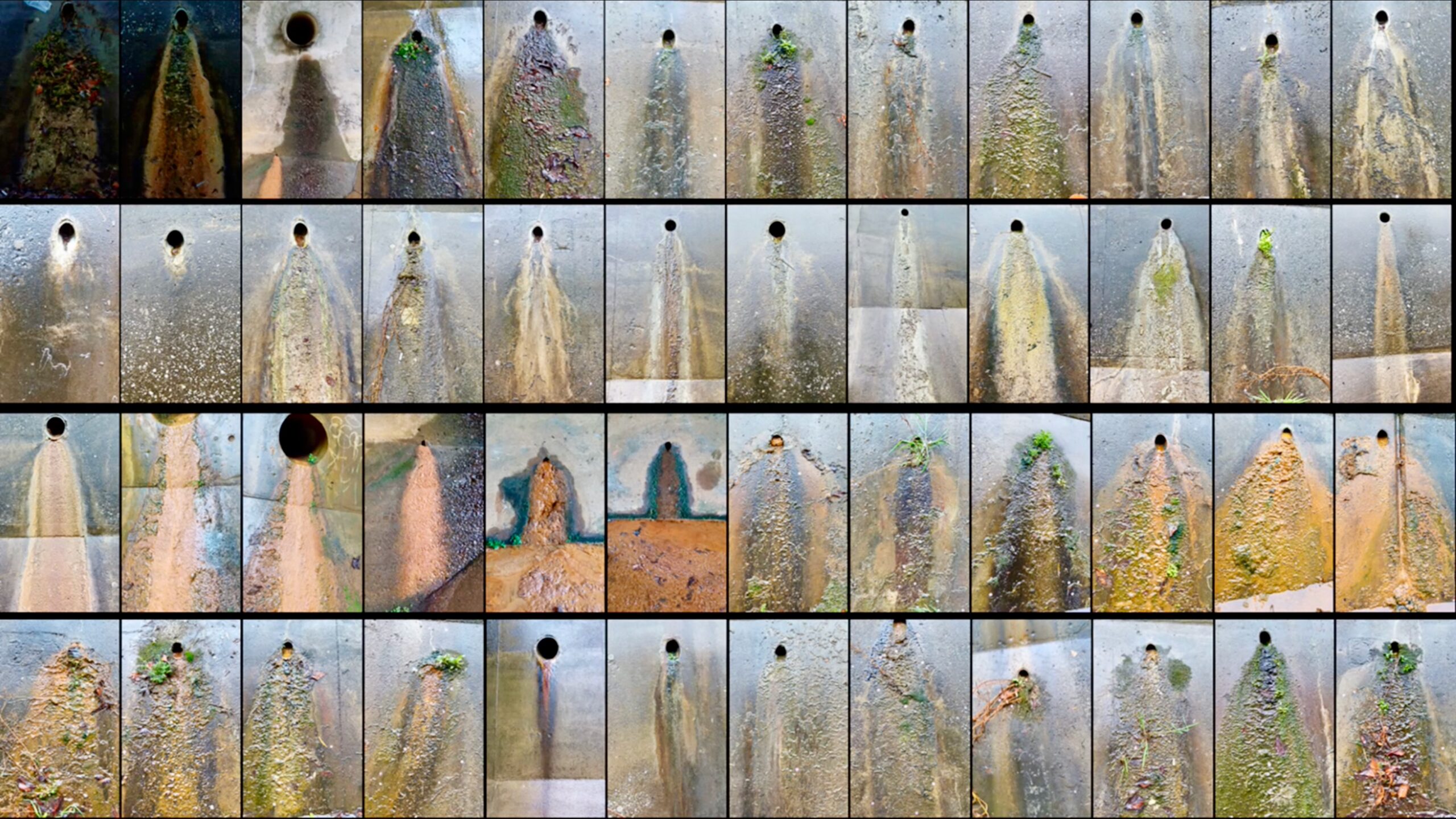
During the Silent Neighbors exhibition, various drainage ditches were alternately lit up at night. metaPhorest playfully baptized them “Revetment Spirits”, as with a little imagination, the aura of their vaguely cloaked anthropomorphic shape resembles a western saint or a buddhist monk. However, Iwasaki is also aware that some people may be reminded of a more serious aspect of the Shibuya River’s history: as Tokyo was being heavily bombed during World War II, many injured people jumped into the river and died.
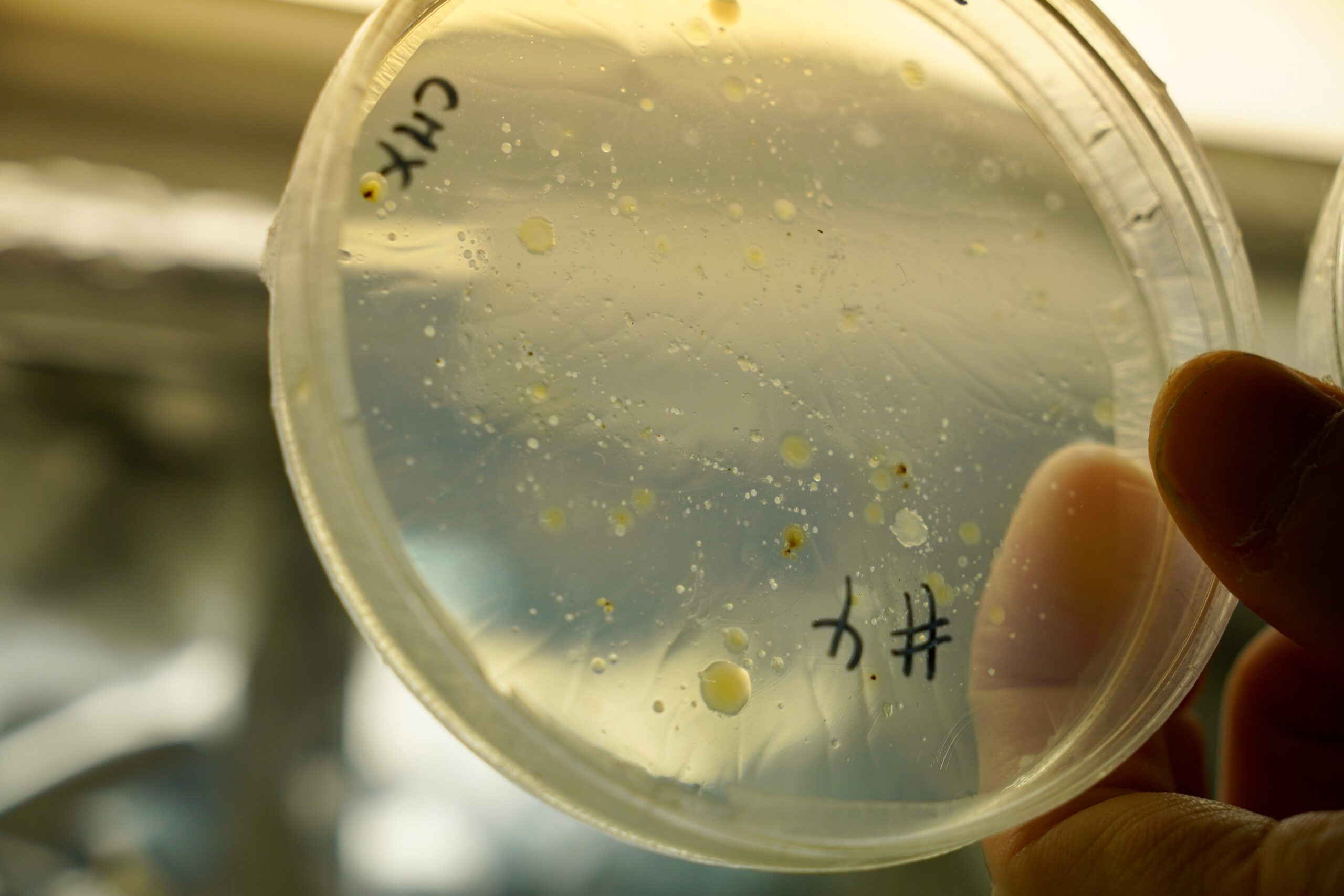
DNA analysis of the samples from the drainage ditches is ongoing. After learning their individual bacterial compositions, Iwasaki plans to use synthetic biology to revive the spirits, or something like them.
“If you learn the pattern formation principle or mechanisms and change the parameters, you can regenerate slightly different patterns, to depict different types of spirit,” he says. “An initial idea was that a similar color represents a similar bacterial composition. But in reality, the composition is quite different, so it’s not that simple… We have a lot more to learn from the spirits.”
Silent Metaphors
While many contemporary urban art projects focus on environmental ecology from an activist point of view, metaPhorest’s perspective is more pointedly poetic. Iwasaki simply invites us “to look underneath the surface and see these living things, to hear the individuality of these living creatures.” Hence our Silent Neighbors thriving in the cacophony around Shibuya Station.
“Usually, you cannot hear their voices,” says Iwasaki. “The voice is a metaphor of individuality. What is the difference between voice and sound? It is whether or not we presuppose the presence of individuality. You cannot imagine the voice without individuality. So this project is a window to see the individuality of organisms.”
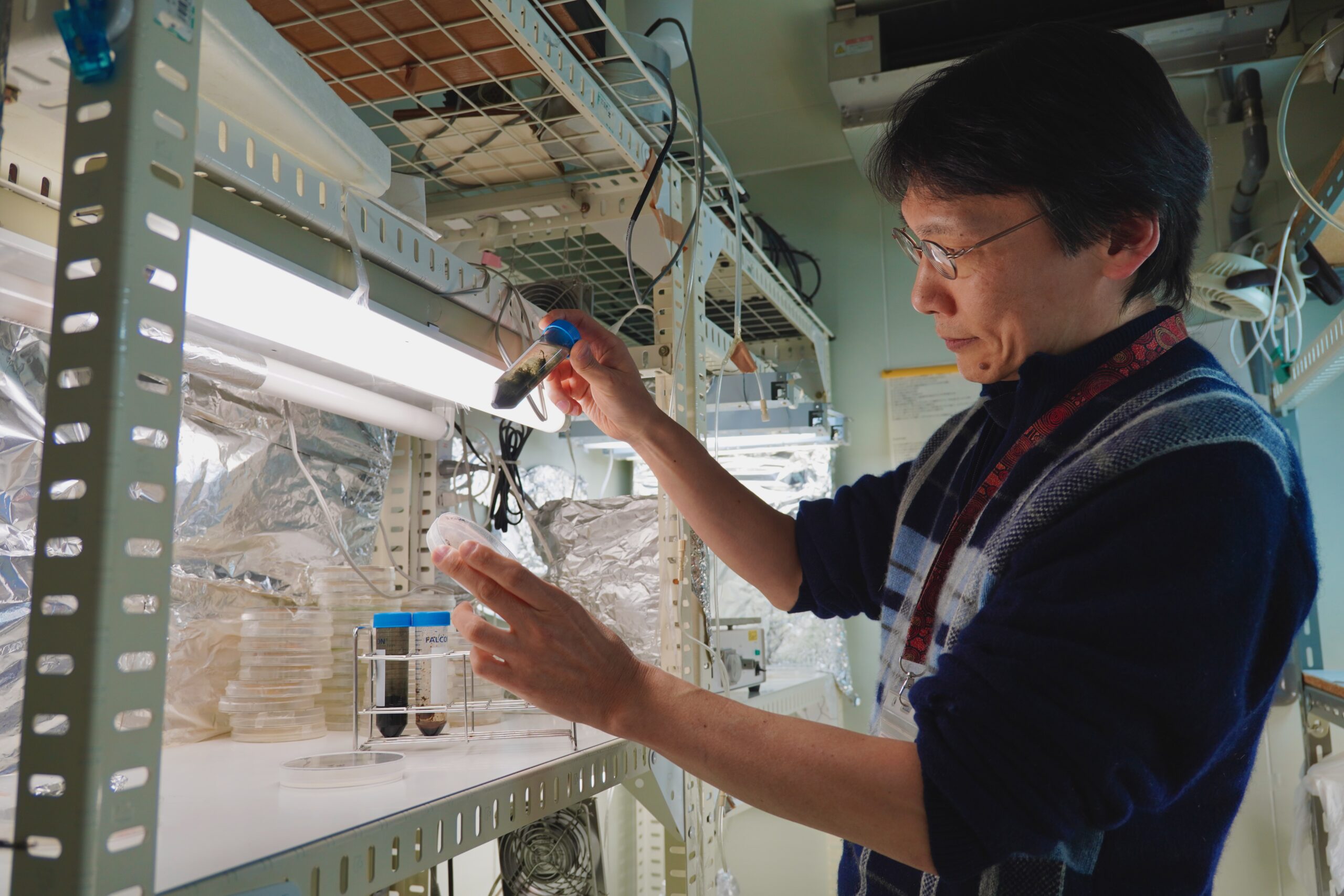
Speaking of metaPhorest: “Metaphor is just a window to see differently. It’s a very important and interesting way to face multi-layered issues. Metaphors can connect different things. Of course, scientifically, it’s not always very useful, but the ambiguous balance between the risk and the richness (of discovery) is itself a metaphor.”
More on metaPhorest